Private Eyes

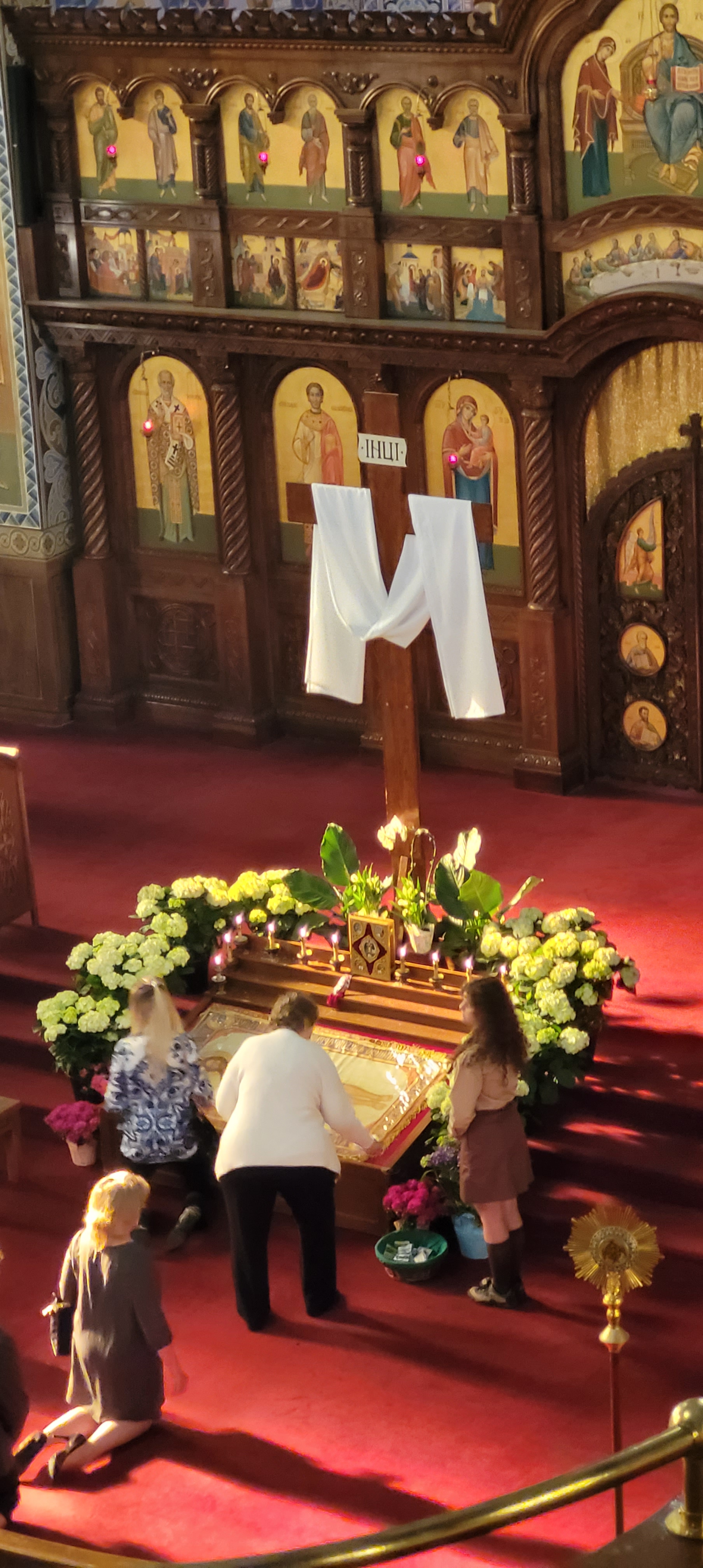
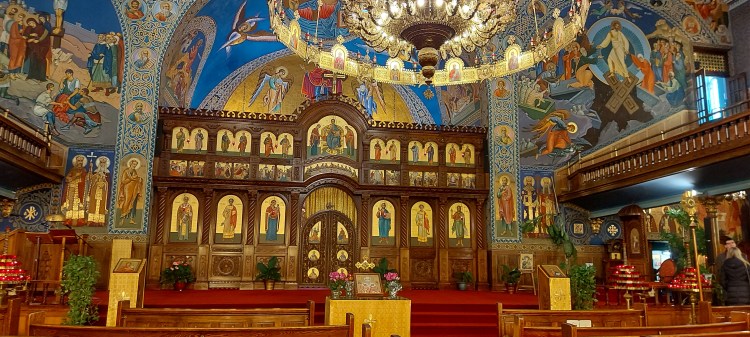
The curtain pulls aside. The priest opens the Royal Doors of the iconostas, looks out into the nave then turns around to the sanctuary as the congregation stands, the choir singing. Mass has begun.

We have been attending this Ukrainian church since last fall, Olga reconnecting to her roots. I don’t understand a word, save for Amen. I recognize parts of the mass; the first reading, the gospel, the homily, the Lord’s prayer, communion. I follow Olga’s lead as she stands or kneels or sits, blessing myself from left-to-right at the beginning and end of the service, forgoing the countless right-to-left crossings in-between.

Otherwise I think and listen and watch.

Shortly after the first hymn and everyone has sat down, another priest emerges from the vestibule, crucifix in hand, planting himself in a chair perpendicular to a pew situated in a corner. He is ready to hear confession at the front of the church, to the left of the congregation in plain sight. I grew up with the sacrament of penance being conducted in a closed box, priest awaiting on one side, penitent entering the other, doors closed, dimly lit, separated by a screen, making the participants largely hidden from each other. My own experience has been minimal, partaking sparingly for a few years after grade eight at St. Robert’s when the class was confirmed together. I cannot remember the last time, and I am no longer clear of the steps and the words. 

The set up here at St. Nicholas attracts my attention. I notice the constant movement, wondering  if anyone else glances over regularly. People pay heed if only to determine when best to join the line. It is longer this week as the days close in on Orthodox Easter. Confessants want to be absolved before partaking in communion, watching the mass from the side of the church, waiting their turn. The devout family gathered in the pews to our right are regular. The father and teenage daughter have already headed for the queue. There are more parishioners today.  

Each one approaches in earnest, heads bowed, leaning in, whispering. Some longer, some shorter. The priest bends towards them, listening intently, nodding on occasion, looking away. Then with a slight turn toward the person, not making eye contact, he begins to speak with intention, explaining, using his hands for emphasis, ending with a blessing, more pronounced with the wooden cross in his hand. The person makes way for the next.

There is a young boy, 12 maybe, who finishes, gets up and heads back to his seat, a look of accomplishment on his face, twinkling eyes of mischievousness, one of those “I just got away with something” smiles. His looks are innocent so I am trying to imagine the content of his confession, trying to remember my sins at that age. It may have been gleefully egging on the fisticuffs which regularly broke out in the schoolyard, or the mocking cries of “caw, caw” to  Mr. Crow, the janitor, as he cleared the school roof of tennis balls, or standing by as the boys from the reformed school protested in Dutch for being harassed crossing the St. Robert’s property. I cannot recall if these were the source of my confessions, or if I described the thoughts in my head, or if I mentioned my sins of omission. I don’t know for what sin I would be asking forgiveness from the priest today.

A kerchiefed, old woman hobbles to the pew, hunched over in a dark, full length, woolen overcoat. She appears known to the priest because he stands with her approach, remaining there to hear her confession, saving her the difficulty of kneeling, the painfulness of raising herself up again. She is immediately followed by a long haired, young woman who bounces to the pew, fashionably oversized beige sweater atop a pleated short skirt revealing her long legs.

Men, women, teenagers in equal numbers. Old, older. Sunday best, modest dress, casual attire. It continues for the full length of the mass, one after another after another, stopping only to hear the gospel.

I don’t feel compelled to join the line. I think about my actions and inactions, my words and responses, my thoughts and judgements. I will share them with Olga later and reflect some more. I might pray.

Otherwise they are private, not to be poured out before the eyes of the church.

867-5309

Call me (call me) on the line
Call me, call me any, anytime

Don’t call 867-5309. It’s not my number.

It used to be 519-451-5900 growing up. It’s gone.

Don’t call 416-622-3095 either. It is not my number anymore.

It was my number for almost 40 years, starting when Olga and I bought that hole-in-the-sky condominium in 1984. The dial phone hung in the kitchen, modern beige, with a curly retractable cord which allowed you to sit down for a conversation. It was our only phone. And because Olga made the arrangement, it was listed in the phone book as O. Decock. On numerous occasions colleagues or acquaintances would remark they could not find me in the white pages.

The number, 416-622-3095, followed us to our next home, a three bedroom bungalow a few blocks away in the same neighbourhood. We thought ourselves lucky to keep it, not needing to memorize a new one, not having to change our contact info with work or the bank or the municipality or the church or with our friends and relatives. Easy. And it hung again on the kitchen wall, dial, off-white to match the wallpaper. The television was in the basement, so a person had to scamper up the stairs to respond to the ring before it woke the kids, lift the receiver, slightly out of breath, to discover who could be calling at this hour.

When we moved to our current house, different area, same city, the number continued unchanged. Fortunate because the volume of contacts had grown. This time the previous owners left only an empty jack, on the wall, in the kitchen, again. We thought to modernize by acquiring a push button phone, eschewing an answering machine thinking if it was important, they would call back. We did concede to a second phone in the basement recreation room, with the television and VCR, (we did not subscribe to cable) to save racing upstairs to answer a call while watching a movie. We still had to scramble from the second floor when the ringing beckoned us from our beds in the night. As we graduated to cordless, years later, there would be one on each level, although none in children’s bedrooms.

Internet, computers, wireless, cell phones, smart phones, blue tooth, text messaging; the acceleration of communicative devices and software slowly rendered 416-622-3095 obsolete.

The landline’s only purpose was to provide an avenue for strangers to invade the home.

“We are in your neighbourhood doing ductwork.”

“You have won a free cruise.”

“If you do not pay the fine, you will have to show up in court.”

“We are conducting a market survey.”

"您是免费奖品的幸运赢家"

Call display helped screen the callers but it did not stop the ringing and the announcements.

“Call from 1-800-234-9056”

“Call from 1-888-567-3712”

Enough.

Called Ma Bell, on my cell, to cancel, saving 50 bucks a month.

416-622-3095 is gone, dead.

Call or text using the smartphone instead. I carry it everywhere: backyard, cottage, driving, walking the dog, another country, in the bathroom. Welcome to the modern world.

Appelle-moi mon cheri, appelle-moi
Anytime, anyplace, anywhere, any way
Anytime, anyplace, anywhere, any day

On my cell.


Wake me up before you go-go

What time is it?

For that matter, what day is it?

The flickering flat screen at the far end of the dining area suggests it could be Sunday. Images of gesticulating men and women, arms raised in praise, swaying to the rhythm of electric guitars, unheard voices singing in unison, a lighted cross in the backdrop.

If today is Sunday, then is this Accra?

No, otherwise I would not be sitting here groggy, waiting for the server to offer another cup of Americano coffee. I am in Nairobi, country number six, although this one did not stamp my passport.

I have not arrived.

I am in transit, half way through a five hour layover at the Jomo Kenyatta Airport, landing for a very early breakfast on a flight which left Johannesburg at 1:15 am. I can scarcely believe my own words. The plane was near full of fellow travelers, eyes shuttered, head lilting, mouth agape, hands clutching blankets in desperation. Please let me sleep.

The suitcase has been my closet the past 15 days, only my suit escaping to avoid the irreversible wrinkles. Never more than three nights in any spot, busy every day, up early for another tour, a ride to the airport, not sleeping well in anticipation, not in my regular bed. I hope the suitcase accompanies me on the next leg.

It managed to traverse from Toronto to Amsterdam to Johannesburg to Victoria Falls (waiting there while we visited Botswana) to Cape Town to Johannesburg and presumably it is languishing on a trolley here in Nairobi, ready to be loaded for a flight to Accra shortly. Not lost yet.

I might as well head to the gate, need a change of scenery, need to move these legs, need to get off my butt.

What time is it again?

Christmas Wrapping

“What should I get my grandfather for Christmas?”

The question seems preposterous, so I keep manipulating the paper, head bent over the irregular present, attempting to find the best fold for the wrapping on my latest task. Why is this young boy asking advice from us, total strangers, within our square booth, in the midst of a busy Toronto mall?

Emily is unphased and responds while deftly cutting a perfect straight line through the toy box design.

“That question is hard to answer because I don’t know your grandfather. What does he like?”

“I don’t really know.”

There is a crowd in front of us, gathering, watching our work. I look up. A young boy, probably twelve or thirteen, a little taller than the rest of the posse, perplexed, honestly enquiring, waiting for some guidance on where to begin the evening’s shopping.

“Well have you thought about something he likes to eat, maybe a box of candies or a package of mixed nuts?”

“Yea, that might work. He would like that. I will get my grandfather a box of candies. Thanks.”

“How do you make the ribbon curly?”

That last question is directed at me, from a different person, as I am adding the finishing touches.

“Wait around for a moment and I will show you.”

I tucked the elongated strand under the previous knot, criss-crossed the two ends and pulled it tight.

“Now you open the scissors, like this, drag from the bottom to quickly scrape the dull side, and voila – curls.”

“Cool. Thanks,” and the boys disperse, disappearing into the flow of a seemingly endless throng of people.

“Where does this one go, Olena?”

She is the one responsible for me being here tonight. Indirectly. Olena has been volunteering at the food bank. This week the work involved a shift at the booth, three days before Christmas, wrapping presents for shoppers, five dollars for a small gift, ten for a large one, all the money a donation for the charity. She needed another person and invited Olga, her mother, my spouse, to help, who in turn recruited me in “supporting our daughter”. Difficult to say no.

“It belongs with the larger one here. Can you work on this bunch next? The guy is going to be back in about fifteen minutes. He doesn’t care what kind of paper, just as long as each one is different.”

A sweat top, with a hoodie, matching sweat pants, and a pair of blue clogs. No boxes. Stores don’t appear to be supplying them and we don’t carry any in our booth, so it requires some creative paper machinations. Again. Clothes have been the most common commodity, primarily those for relaxing. Mittens, hats, housecoats (“I definitely think this one needs to the striped paper.”) Toys r Us has been a popular source. Hot Wheels, back packs, stuffed toys. Rachel, the high school student accumulating volunteer hours is tackling several from two 30ish guys, still in their dusty work clothes, attempting to ensure something will be under the tree. Knock off a few items from the list, quasi-professionally wrapped, contribution to a good cause. Not bad for one evening of work.

“Dad. can you help out this woman? She has been waiting. Mom, can you give Dad a hand?”

Non-stop since 3:00 pm, there is finally an opportunity to sit down at 6;30, a lull, some calm before the next onslaught of creams, watches, Metallica t-shirts, and more sweat tops. Many young men scrambling, woman managing packages and children, Mary who wants to take a picture of the decorated package before sending to her son (“I did this by myself for years…. try taping the corner before folding. Yes. Perfect.”); a kaleidoscope of people and backgrounds, hoping their selection will bring a smile to a parent, a child, a girlfriend, a grandfather, wanting to share their thoughts, this moment, this season of giving.

Christmas is my favourite time of the year.

Then suddenly we laughed and laughed
Caught on to what was happening
That Christmas magic’s brought this tale
To a very happy ending.
Merry Christmas, Merry Christmas,
Couldn’t miss this one this year.

Common People

“Can I take your picture?”

The three young women responded with blank looks at me before glancing to each other, shrugging their shoulders, either for lack of understanding or for signs of agreement amongst themselves. They were sprawled alongside the curb, amongst empty pails and sacks of red onions, tired, exhausted, scarves wrapped tight atop their head, faces fallen, arms and legs hanging. I thought it to be a perfect picture of working in the market.

I pointed to my camera, then back at them, “a picture?”. They turned to a woman nursing her child, who smiled and explained, to which they demurely shook their heads whilst waving their hands at me, “no, no”. I moved on.

Earlier, weaving through the people jamming the market, I encountered an older woman, sitting amongst her wares, bags of various nuts, singing, banging her tambourine, grabbing my attention and curiosity. A quick stop and a photo garnered an angry admonishment, beckoning me, but I kept walking, pretending not to understand, an easy answer from the lone white guy in the crowd. I had not expected the resistance.

My intention on all my excursions is to capture the faces and situations of the people, not just the architecture and scenery. Most of those in India, for example, were obliging and co-operative, posing proudly alone or along with me. In Tanzania, the Maasai were oblivious to my camera, although they were a stop on the pre-arranged tour, and were anticipating a purchase of their crafts after the display of dance and song. My Ghana guides accommodated my requests for a photo, Asante asking one for himself.

They were being paid, perhaps viewing the request as their job, which I interpreted as friendliness. The market experience had me being more cautious, taking pains to ask, sometimes directly, other times through my guide. I wasn’t very successful.

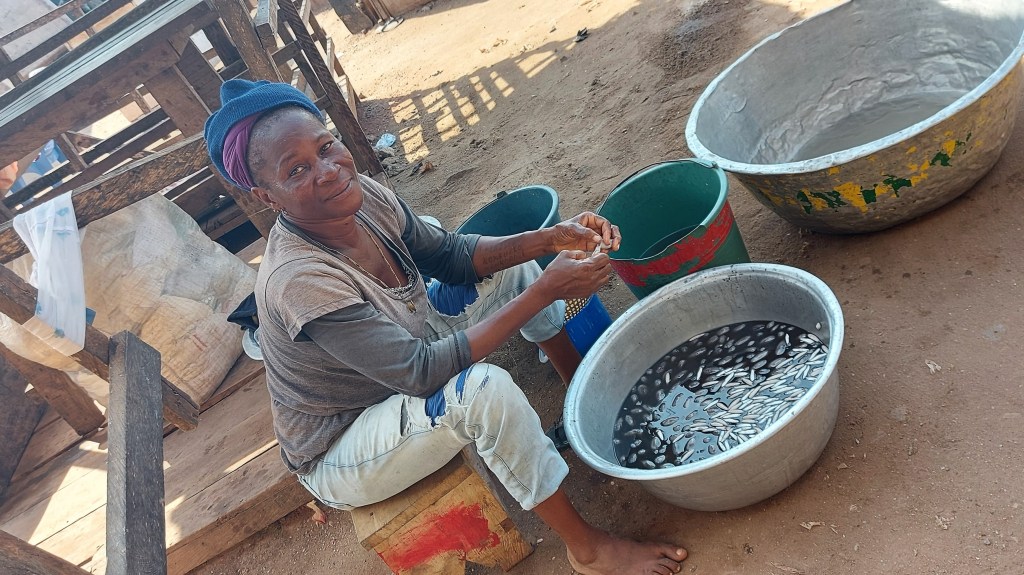
During a walk through a fishing port, we encountered an old woman, alone, peeling squid, meticulously, deliberately, one after another, tossing the remains in one bucket, dropping the cleaned fish into another. I hoped to the capture the image, asking Kwame, our guide, who then translated to the woman. She reluctantly agreed.

After I showed her the result, I turned away, catching Kwame, out of the corner of my eye, handing the woman a bill of undetermined denomination.

“Did you just give her some money? I have money and would have done the same had I known. Let me repay you.”

“Not to worry, not to worry.”

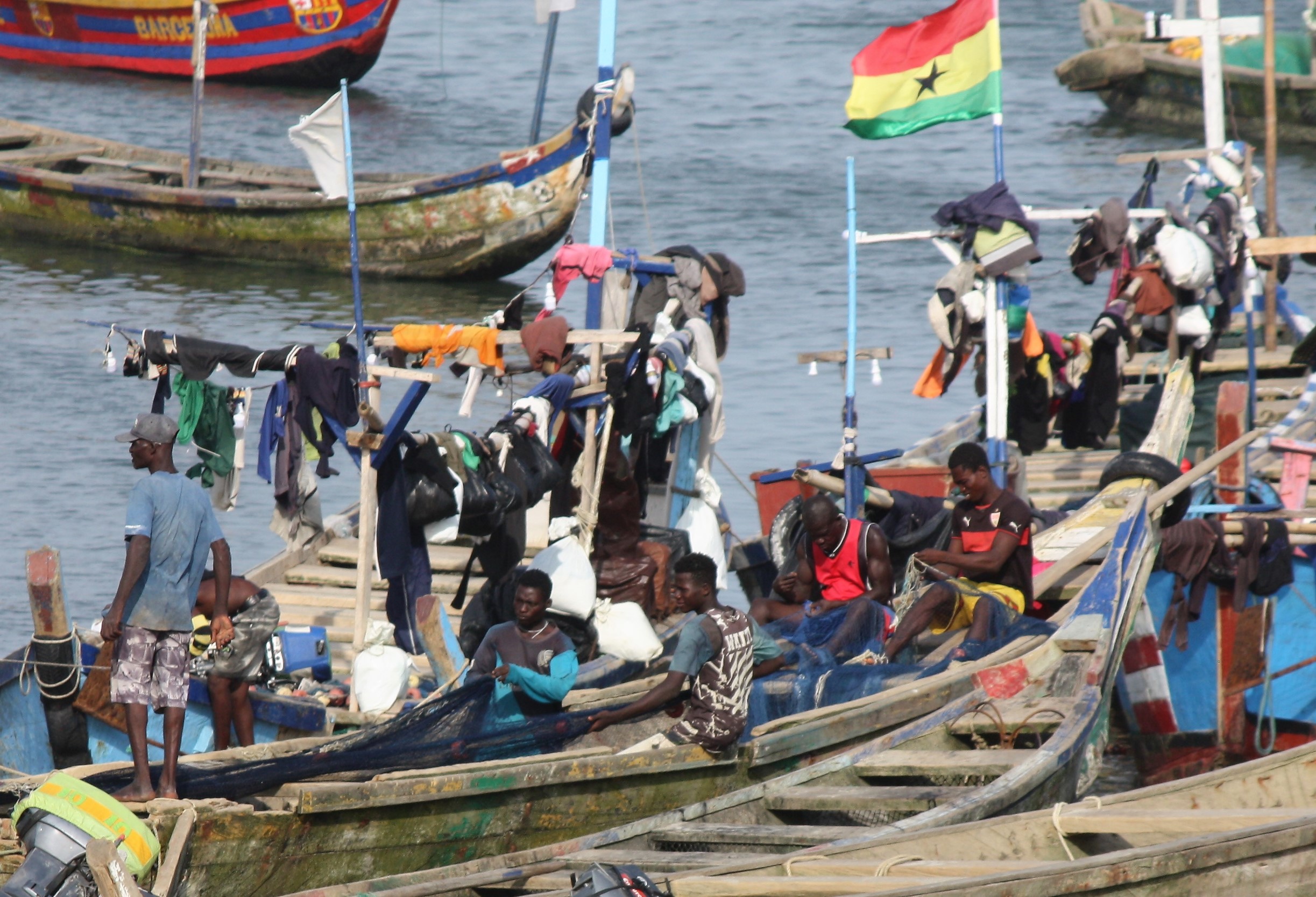
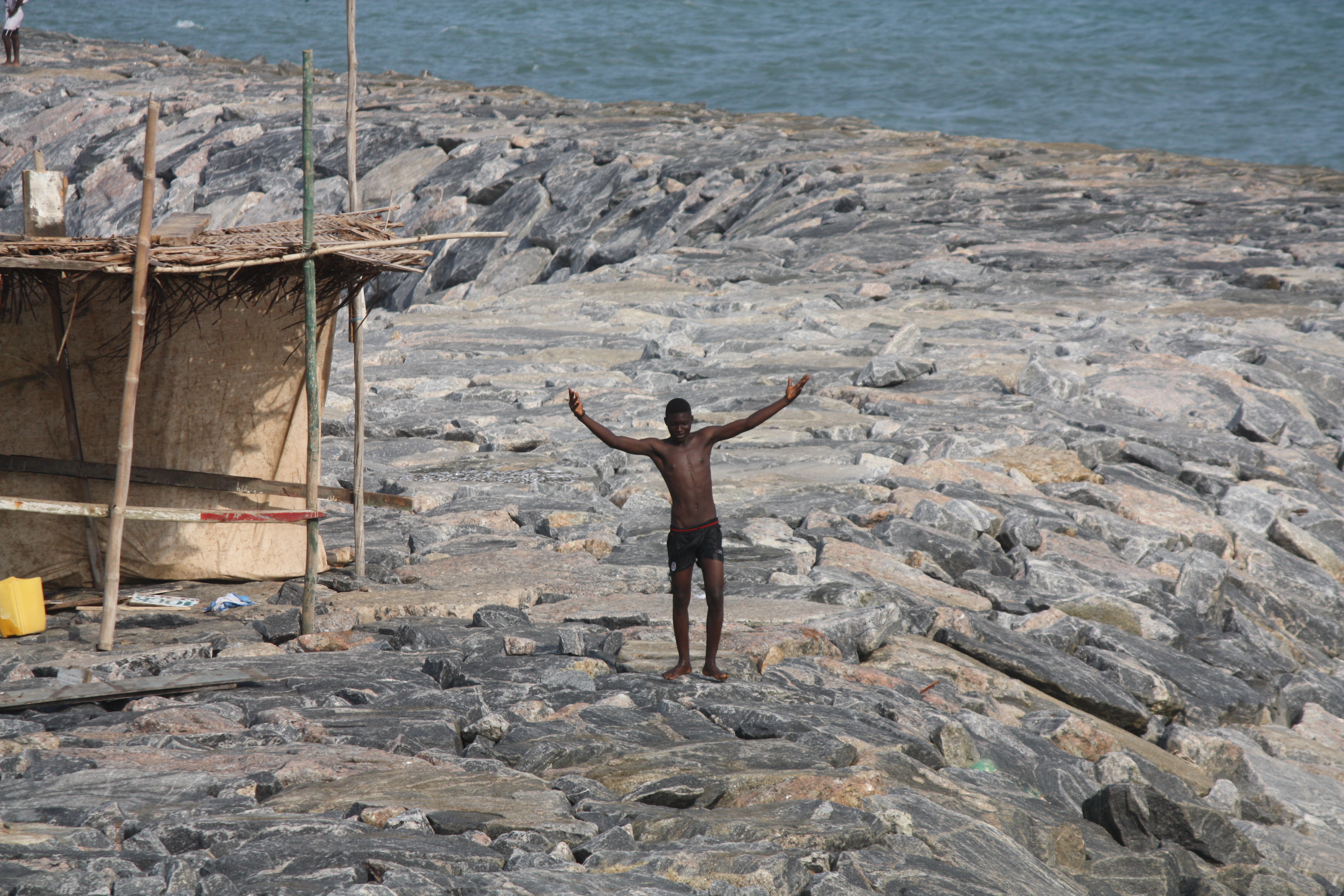
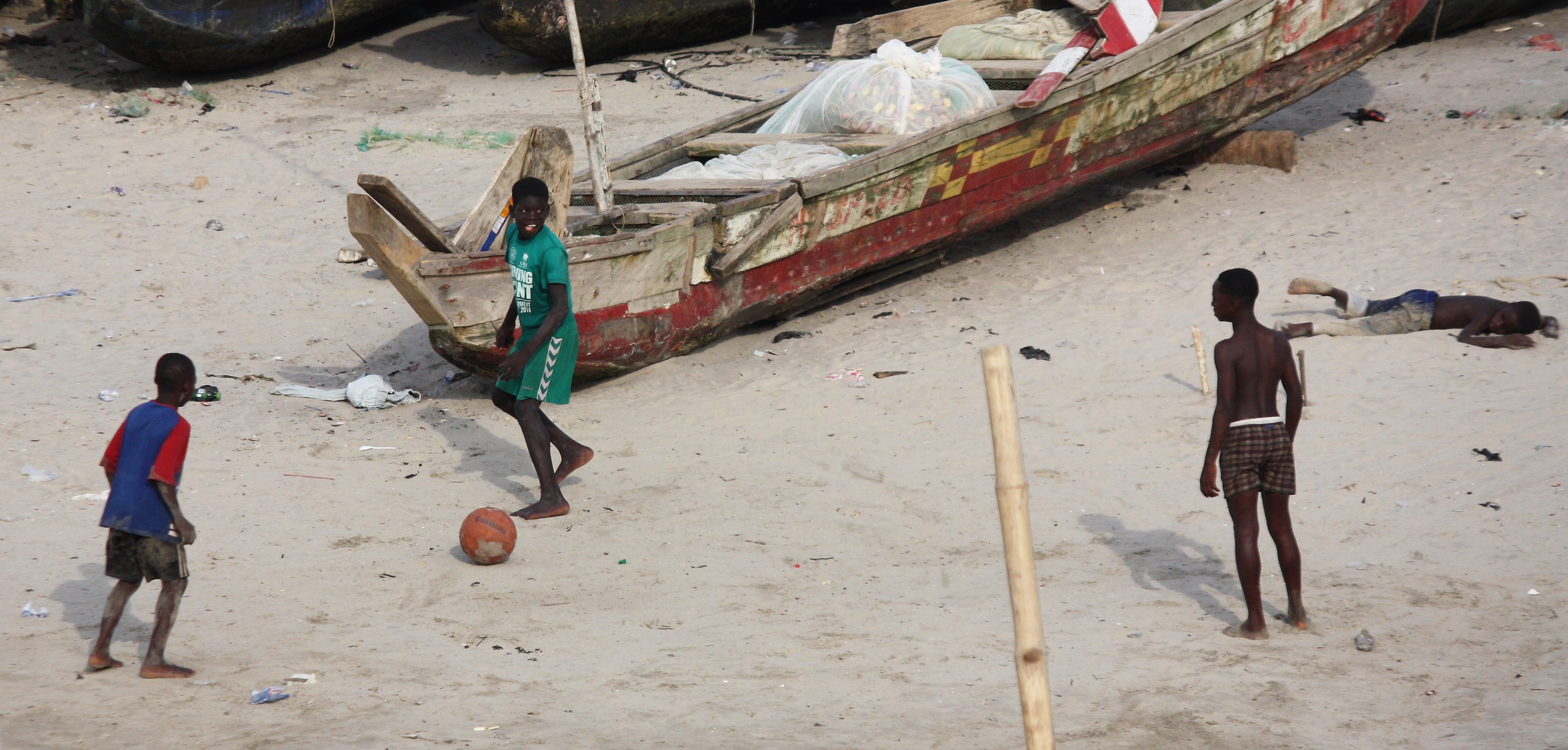
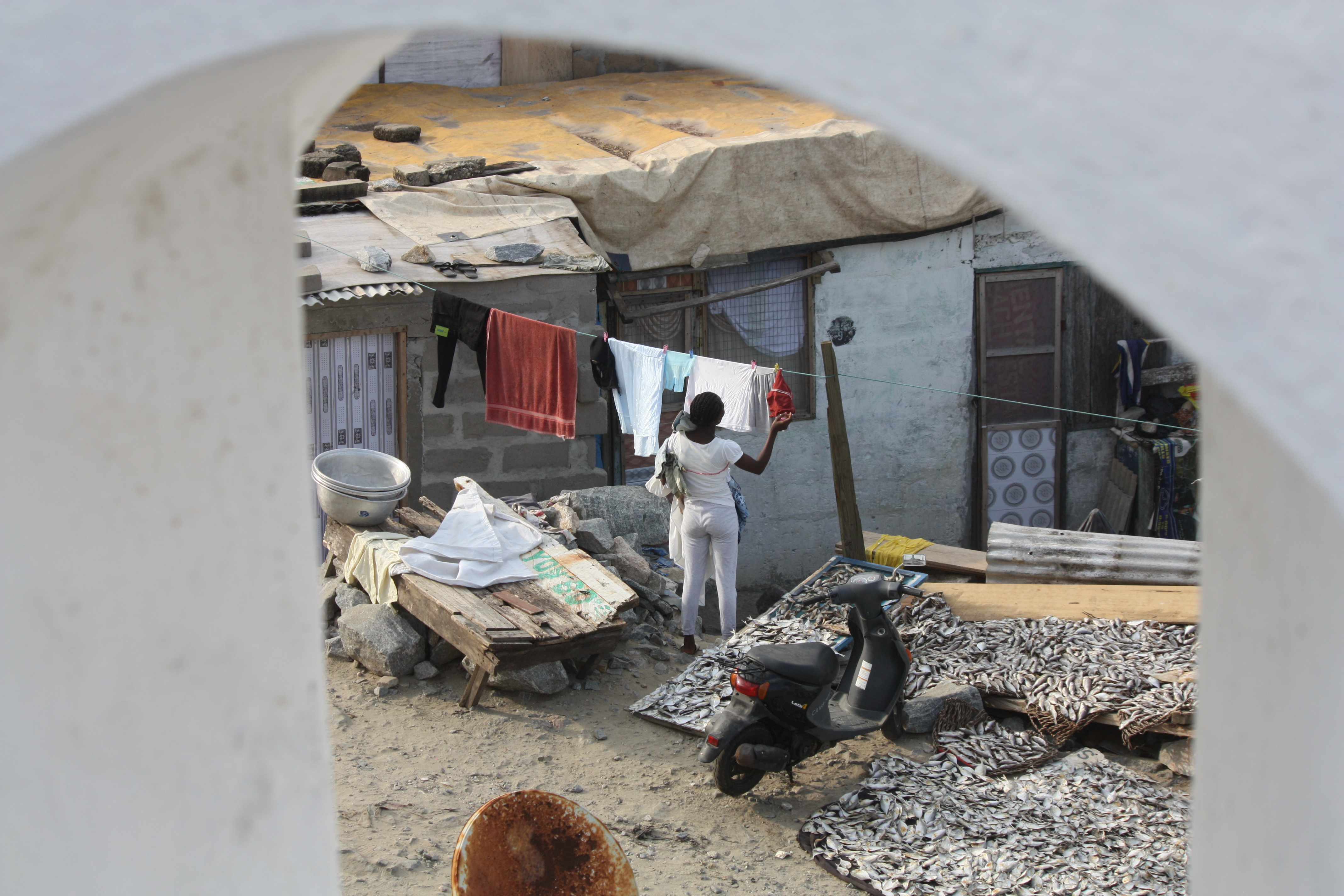
I was considerably more circumspect the rest of the day, utilizing the zoom lens of my DSLR to capture people from a distance, themselves unaware a photograph had been taken. From the heights of the castle walls overlooking the busy grounds below, I captured whole scenes, surreptitiously including Ghanaians attending to their business or their play. Then, with the miracle of computers and photo software, I managed to conjure some personal close up shots.

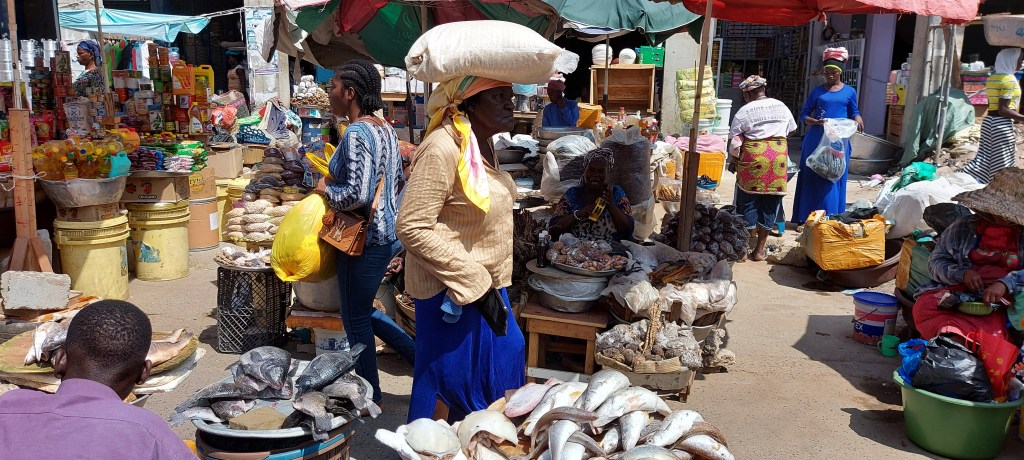
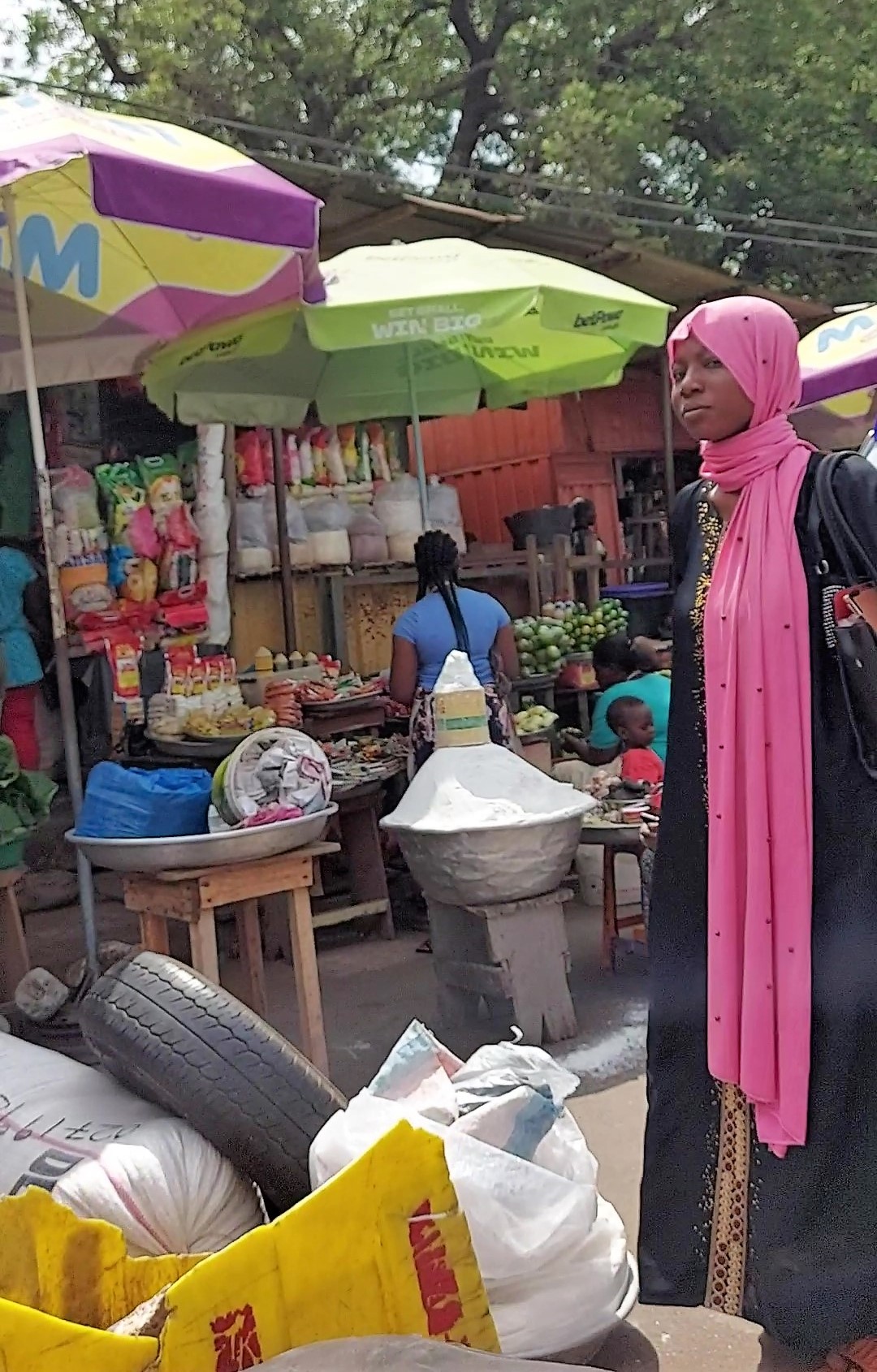
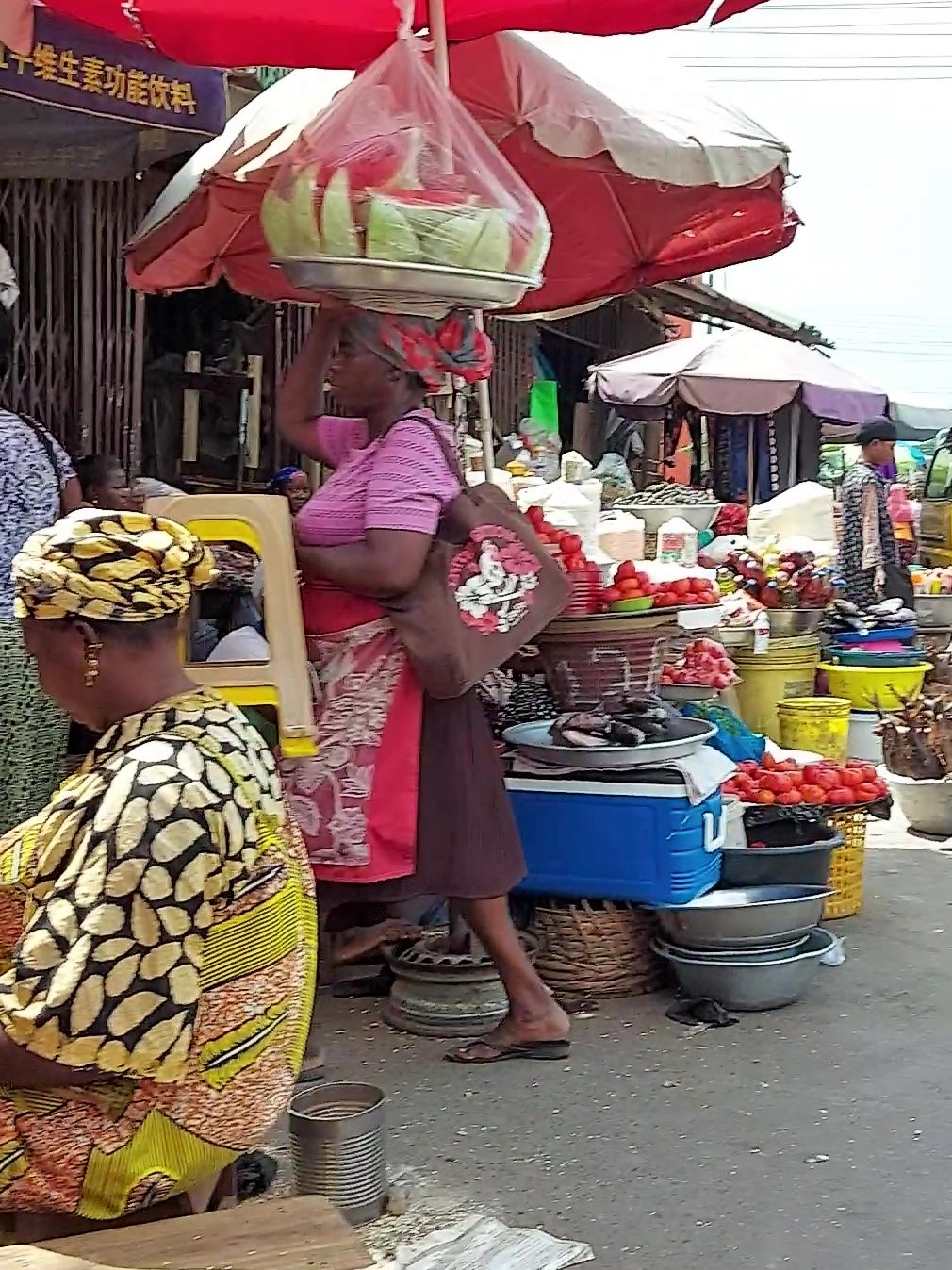
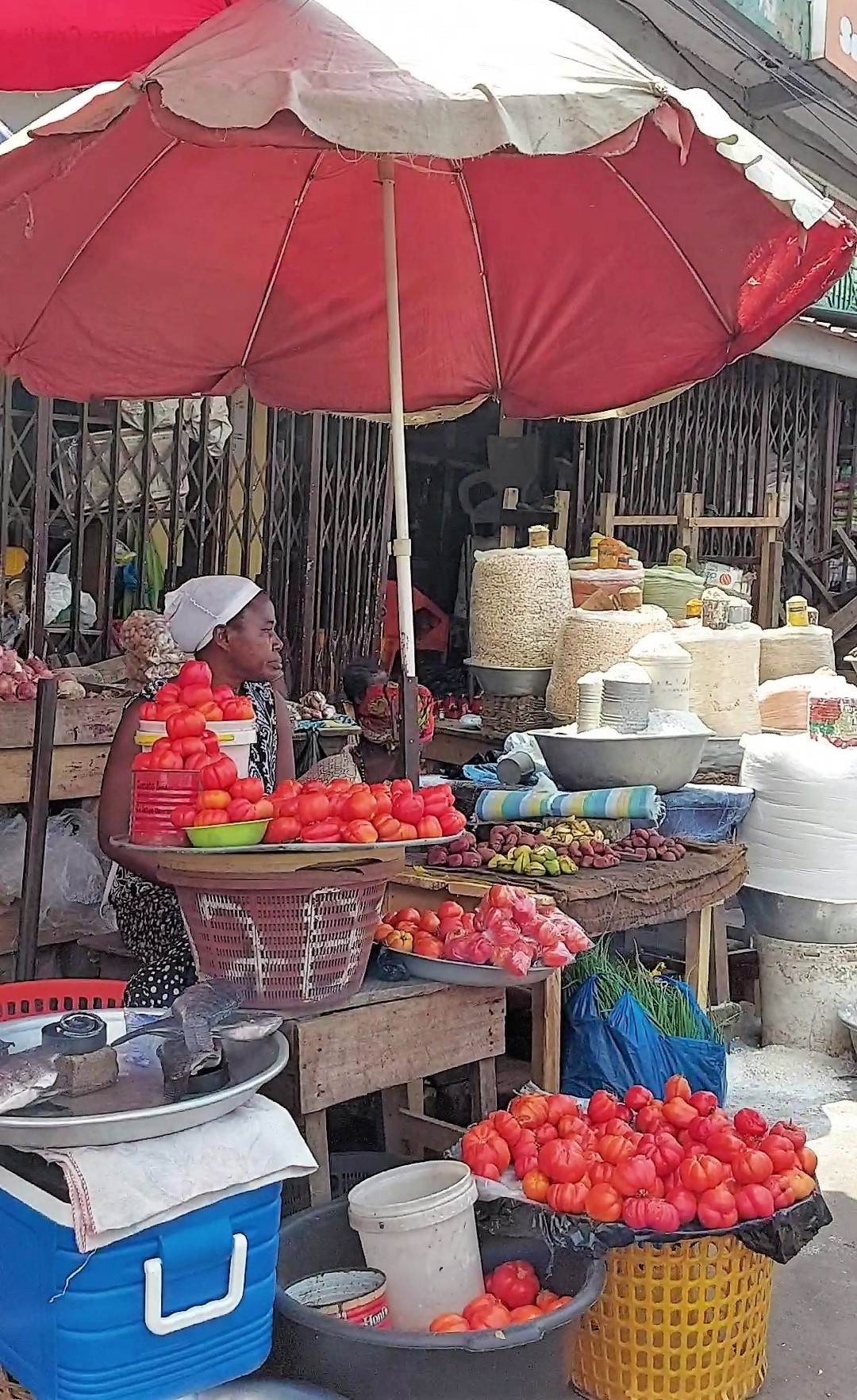
On my final day in Ghana I was escorted through the Nima slum of Accra, advertised for its colourful market and people co-existing from different backgrounds, cultures, and religion. My guide talked about the dominance of women in business, a testament to their strong presence in commerce. The write up encouraged participants “to interact with the local women”, so I asked Mohammed to speak with a select few about photographing their stalls. I was particularly interested in those with baskets of nuts or produce or legumes. I wanted to capture the bountiful scene. Mohammed made several attempts, rebuffed with each request. It was clear people were uncomfortable. Even taking a picture of stacked microwaves was met with anger by the locals, telling Mohammed he was not the owner and therefore had no right to encourage.

Still wanting some images, I turned my phone on the video and held it by my side, inconspicuously, facing outwards as we walked the streets. The footage itself provides a sense of the chaotic nature of the market, and with the marvel of computer technology, I managed to isolate several screen shots which portrayed some flavour of the people and the Nima neighbourhood.

A degree of guilt still gnaws at my conscience reviewing the images. In my first trips to the continent, I was concerned pictures could be interpreted as touristic voyeurism. Each experience since has shifted my views, refined my outlook. As I think about my best photographs at home, they are largely close-ups, capturing a smile, a smirk, a natural laugh, a thoughtful look, the wrinkles, the worries, the concern, the joy. I am attempting the same with those in the worlds into which I have the privilege to interact. My best efforts at writing or describing the places and the people falls short.

I hope, therefore, I am forgiven for these photographs. My intention is only to remember the people as they are.

You will never understand
How it feels to live your life
With no meaning or control
And with nowhere left to go
You are amazed that they exist
And they burn so bright
Whilst you can only wonder why

Money Talks

“Have you gotten over the culture shock?”

We are about an hour into our drive to the city of Cape Coast, having woven through conversations about Ghana, Canada, and Sweden. Kwame picked me up from the hotel at 7:00 am before a quick diversion to another for Anna who had already been in the country for two weeks. The conversation flowed easily, questions and answers and observations, comparisons between Europe and North America and Africa, all of it in English. Today is my second day of sightseeing after six days of presentations and meetings, traversing between two hotels in Accra, and scooting off to the airport at 4:30 am for early morning flights to Kumasi and Tamale on Wednesday and Thursday. Kwame knows this trip is my first time in Ghana.

“Oh yes. I have been to the continent of Africa before. Uganda, Tanzania, and South Africa.”

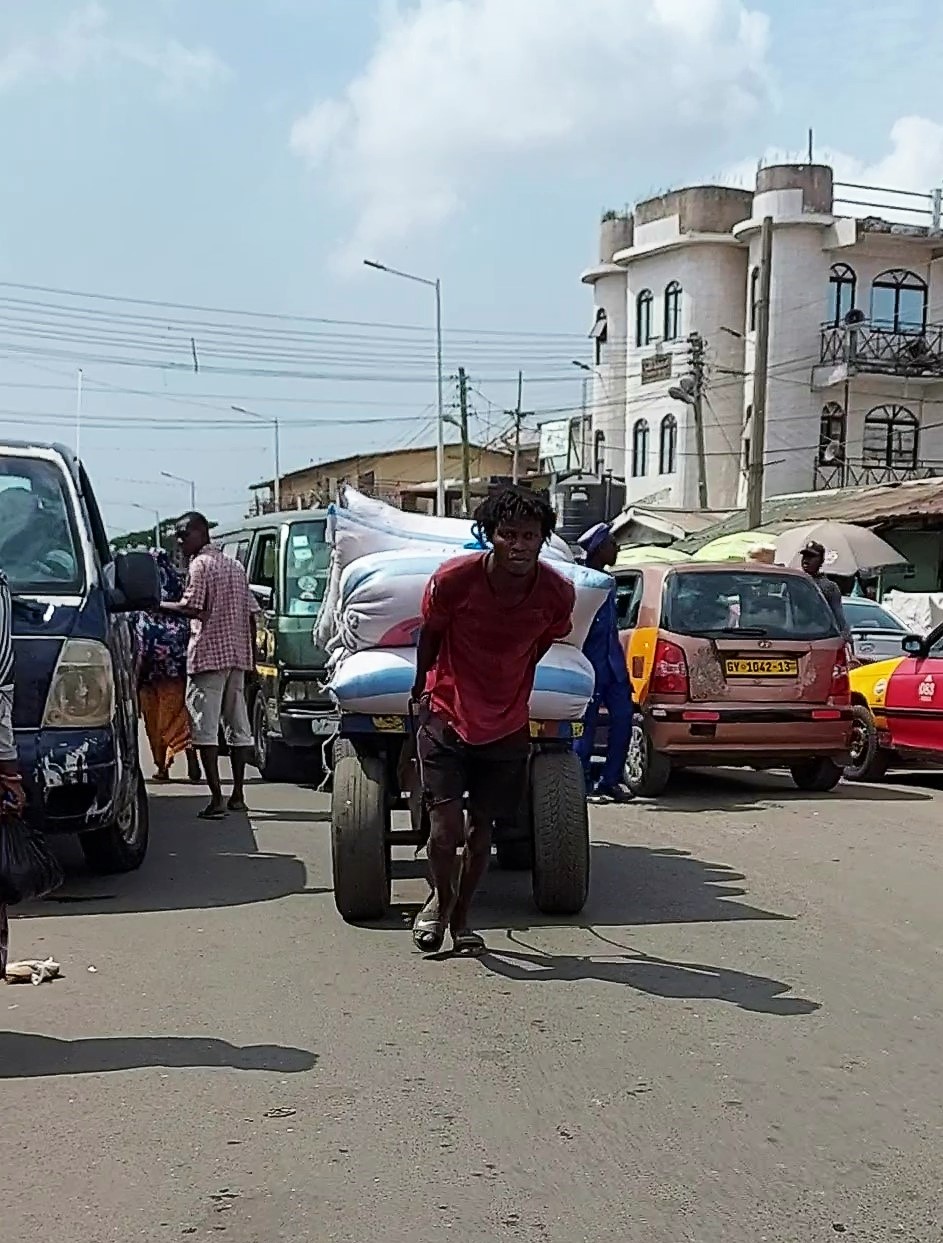
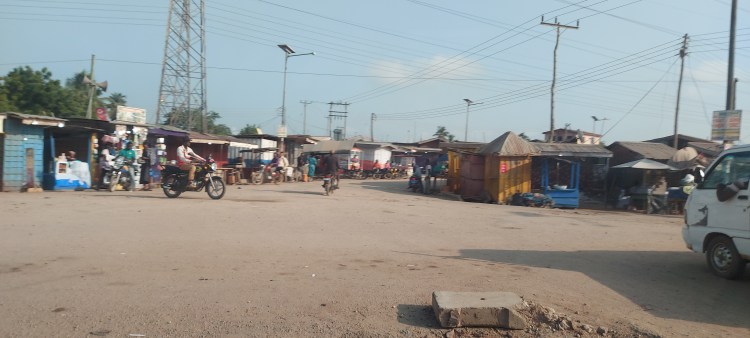
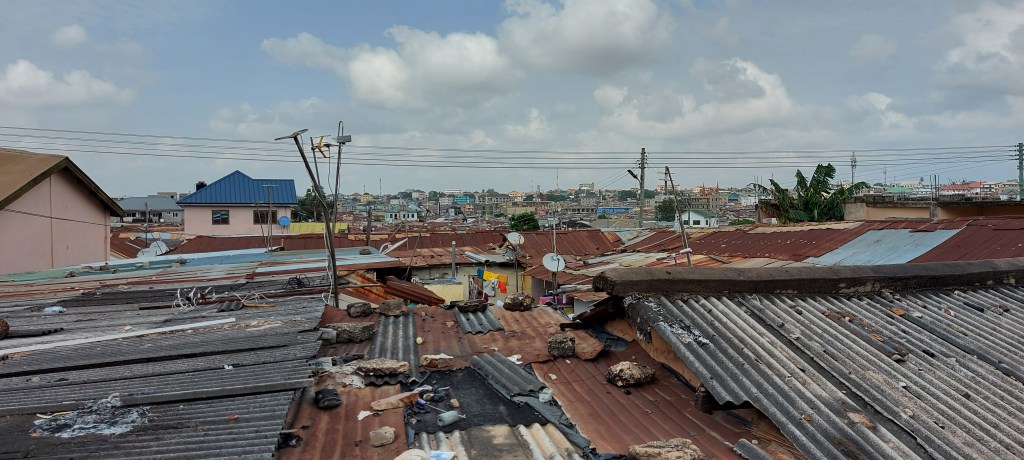
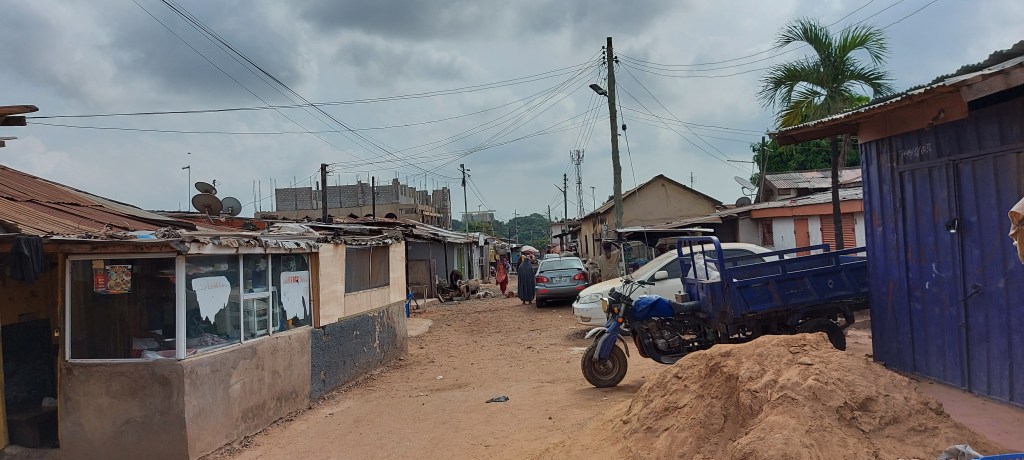
In asking his question, I expect Kwame is referring to the streets and living conditions for what appears to be the majority of the Ghanaian people. The roads lined with ramshackle shops or dilapidated shelters, small businesses offering common household necessities and the occasional luxury item amidst the dust and dirt of relentless traffic. People and goats and dogs meandering amongst cars littering the shoulders, weaving between the stalls and wares, children in tow, shopping and browsing amidst the honking and music and megaphone pronouncements of yet another one man church. A bedraggled man dressed only in a loin cloth, pulled up on an angle, stumbles across the road in front of us, his penis swaying with each step.

Entrance to the former refugee camp where Alphonso Davies was born.

Each stoplight is an opportunity to scout the merchandise for offer by men and women, boys and girls, walking in between the standing vehicles, hankering for your attention, hawking water and fruit, belts and bras, maps and flags, toilet paper and towels; a cornucopia of products available for purchase by simply rolling down the window to hand over the negotiated amount of Cedis. You are confronted by beggars clamouring for spare bills, legless young men rolling around on skateboards, an old blind woman led from car to car, children pressing their faces against the tinted glass yelling for some attention.

These scenes reflect that of parts of Kampala, and Dar es Salaam and Johannesburg; and India and rural China for that matter. What culture shock exists stems from the comparison to my hotel with its outdoor pool and indoor sauna and beautiful people, buffet meals and craft beer and original artwork.

Money talks. Money screams. Money buys you dream machines……

The day before, my eyes were opened to the history of Ghana, it’s independence and early years, the adoration of the first President of the country and leader of the Pan-African movement, Kwame Nkrumah, a socialist and revolutionary. The tour included a visit to the home of William Edward Bugat Dubois, an American sociologist, close friend of Nkrumah, and noted Pan-Africanist civil rights activist, who became a Ghanaian citizen. My guide endearingly described him as a communist who was not born in Africa, Africa was born in him. Pictures lined the walls of Dubois with Mao Tse Tung, of Macolm X visiting; the library shelves stocked with the works of Marx, children’s books of Aunt Rosa [Luxumburg] available for borrowing, all around the corner from the American Embassy.

It is clear that we must find an African Solution to our problems, and this can only be found in African Unity. Divided we are weak; United Africa could become one of the greatest forces for good in the world.”

Kwame Nkrumah (quote on display in W.E.B. Dubois Museum)

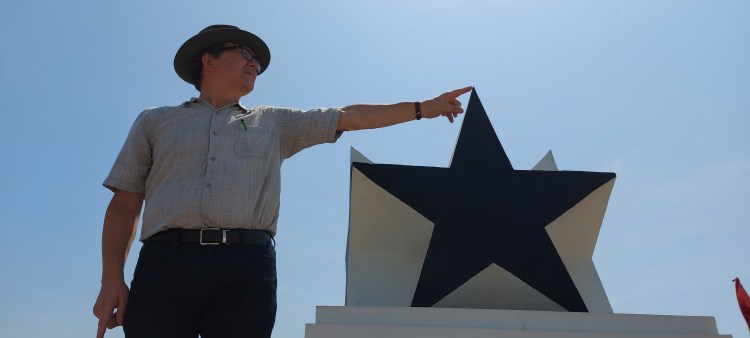
When he became President, Nkrumah discarded the colonial label, Gold Coast, to rename the country as Ghana, the “warrior king”, with a Black Star in the new flag to symbolize the Pan-African movement. Little wonder he was overthrown by a military coup four years later, supported by the Americans, according to Emmanuel my Accra city tour guide..

I posit this belief to Kwame in our expanding conversation about the economic and political realities of Ghana during hour two of our drive. He goes further to explain the coup was supported internally by members of the original six, pointing to them on the 50 Cedi note, claiming the current President is the son of one member, and was now finishing the job economically by selling out to private corporations and state capitalists. The sale of rights to the Chinese government for the redevelopment of Jamestown harbour in support of foreign fishing trawlers was the latest example.

Money’s what it takes to make it rock…..

Kwame hesitantly gambles a conclusion with us, unsure how we will react.

“I think the rest of the world is exploiting Africa.”

Anna and I respond immediately in vigorous agreement. As we venture into political structures, it becomes apparent Kwame is not wedded to democracy as the answer to his country’s ills. He can even live with corrupt leaders as long as their cause is for the benefit of the people. And when I see a state where the rich natural resources are foreign owned; where western aid agencies lend large sums of money to induce crippling debt in return for nominal value; and where national leaders are educated abroad, indoctrinated with market ideology, I can understand the skepticism and the appeal of an alternative narrative. We reach our first destination and the conversation ends.

Everyone is a little tired on the eventual ride back to Accra as darkness descends over the long day, so there is limited pickup on the themes discussed earlier. At one point I comment, somewhat ethnocentrically, on the seemingly oblivious attitude of people to the danger of walking the busy roads without lights.

“They have become accustomed to it. What choice do they have?”

Don’t want a house, colour TV
Just let me shake that money tree
Because everytime it shakes
Money Talks.

Strange Things

Let me tell you about the strange things happening to me
Strange things

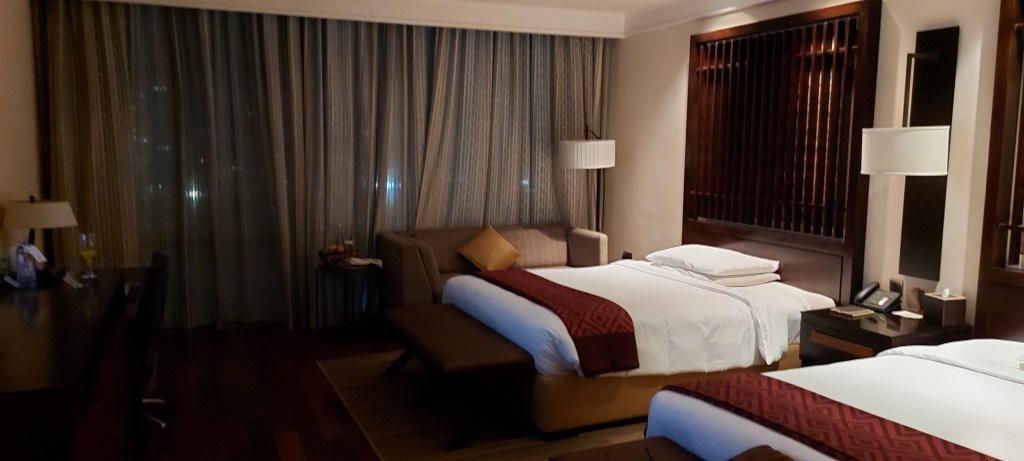
I wonder if the next guests of Room 716 will have a wash cloth.

There was one when I arrived. It was tightly rolled, resting in the aluminum cradle atop the bathroom counter, waiting for me to wash my face.

Which I did. In the morning.

It joined the bath towel on the floor, used after my shower, accompanied by the smaller hand version used to dry my face after a fresh shave and my washed hands following the most common use of the facilities.

When I returned later that day, the pile was gone, the bed was made, the towels replaced, water bottles and instant coffee replenished. Unsure if the sheets were new. The aluminum cradle atop the bathroom counter was empty.

The next two days I had to rely on my clothless hand to wipe away the sweat and film. It evoked memories of another adventure in Africa, east side. I am beginning to wonder if desiring a wash cloth was only me, that others don’t miss it, or don’t use it, and staffers aren’t in the habit of replacing it.

The door rings while watching the late “football” game; peep through the hole, someone from the hotel wants to turn down the bed, close the blinds, leave behind a pair of fresh slippers. Can I get a facecloth? He gives me two, tightly rolled, fitting perfectly into the aluminum cradle atop the bathroom counter.

Moist and soapy, I spread the cloth over my face, wiping down each side, across the nose, rubbing the back of my neck, feeling cleaner. I decide to leave it hanging in the sink, drying, saving it from an early departure, a one and gone.

When I returned later that day, new water bottles appeared, all was arranged neatly, orderly, with only one face cloth tightly rolled, abandoned, in the aluminum cradle atop the bathroom counter.

Still several more scheduled days, fearing its destined loss, I left it untouched, checking each day, hoping another would arrive, saving it from a familiar fate.

Until the last morning. A shower, a shave, a face wash. Twice.

I left the unfurled cloth to fend for itself, wondering if the now empty aluminum cradle atop the bathroom counter would remain that way for next guest of Room 716.

Strange things are happening to me
Ain’t no doubt about it.

Follow You Follow Me

In your arms
I feel so safe and so secure

At our wedding reception, October 1, 1983.

Plans are made, hopes are spoken, dreams are imagined. What no one really knows is what follows the wedding day, how the days and years will unfold, where your lives will be lived, when you will be thrown a curveball.

Instead, what we had was faith. Faith that as long as we are together, we will figure it out, whatever “it” happens.

The “it’ was pronounced in those very early years, when work was tenuous and life marched on. Me driving truck for 6.25 an hour while you finished your undergraduate, our miniscule savings evaporated to repair the Monte Carlo lemon just as we moved to Toronto. Purchasing a “hole-in-sky” condominium with you employed in child-care and me enrolled in the Masters program at York University, seemingly doable and then challenged with a pregnancy discovered a week after being laid off. Me coping with unemployment after Nicholas’ birth, after graduation, schlepping to the overnight shift at the warehouse, turned down repeatedly for jobs, finally landing contract teaching work. You pregnant with Olena, we purchased our first house, mortgaged to the max, permanent work still unattainable. Then when we were finally established, you choosing to cut back, changing direction, for the family, for their future,

And through “it” all, we grew, along with our children, relishing the simple pleasures, enjoying each other and the kids and managing the realities of family life, immediate and extended. Leading by example, learning from the experiences, loving unconditionally. The degrees, the houses, the careers, all accomplished because of our belief in ourselves and in each other.

And on this day, 39 years later, we can smile.

Happy Anniversary Olga.

Love always,

Everyday is such a perfect day to spend
Alone with you

I will follow you will you follow me
All the days and nights that we know will be
I will stay with you will you stay with me
Just one single tear in each passing year

Help!

I need somebody
(Help!) Not just anybody
(Help!) You know I need someone
(Help!)

“Is that close enough?”

Behind me, over my right shoulder, someone is being maneuvered into a spot for the table. I don’t look, continue drinking my late breakfast coffee, scrolling through the article about the Jay’s loss in Tampa on Thursday.

“Yes, thank you. Could you put the brakes on?”

“Of course. Will you be needing anything else?” asked the young woman.

“No. Thanks again.” His voice rising above the crackle of the unravelling sandwich wrap.

The hospital atrium is a hub of care workers, patients and relatives finding solace in some refreshments and a respite from mask wearing. An indulgent apple fritter and another medium dark roast has prolonged my stay. One more hour before Olga is out of the operating room and then another hour and a half for recovery before I can venture back to the day surgery reception on the third floor.

The bats were quieted again by a series of relievers.. THUD! I whip my head around to catch the plastic Coke bottle rolling away on the floor.

“Oh man. Ugh.”

Smartphone still in hand, I shove back my seat, move to the right of the wheelchair and bend down to return the drink to the table.

“I have some extra napkins to wipe up the floor.”

“Is there a big mess? My eyesight is poor and cannot see beyond what is close in front of me.”

“No, not a lot. The lid helped.”

“Thank you. Nice to meet you. My name is Gerald. And yours?”

“Henry. Nice to meet you as well.” I sit back in my seat, sneaking a glance at Gerald’s bandaged leg with a metal prosthetic shin and ceramic foot.

With the last of the highlight videos and the final gulp of tepid coffee, I stand up to begin a slow stroll and think to ask Gerald if all is okay.

“I need to find the bank machine. There is one just around the corner of the pharmacy, over there to the right. Would you be able to push me to it?”

“Not a problem. Brakes off?” and away we go. Around the staircase, dodging the parade of people traversing the floor, Gerald directs me to the ATM machines, asking for the one on the left because the other had accepted his card earlier but did not dispense any money. I inch him up until the foot petals touch the wall. “All good?”

Hunched over, Gerald coddles a tattered money purse, opens it and asks “Do you mind looking in there for my bank cards? There is a green one for the TD and a blue one for RBC. Yes, that one; and that one. Good. Thanks. Can you put in the TD card into the machine for me? I can’t see very well and I need to get some money for groceries. I only do this about once a month. I need six hundred dollars. I will tell you the pin.”

I hesitate. Am I hearing this correctly? He wants me to use his bank cards to withdraw cash? Is he trusting me to not abscond with any of the money? Can I trust him to not falsely report a crime? Is his eyesight that poor? Is this a ruse? Secret camera somewhere?

Gerald looks up; I cannot say no, so I insert the card and begin reading out the prompts.
Pin? He rattles off the four digit number.
Account? Chequing.
$600? Confirmed.
It only allows for a maximum of $400? You will need to cancel and do it twice – one for $400 and the next for $200.
What is your pin again? And we repeat the procedure.

Eventually the machine spits out a stack of twenties which I extract from the dispenser, unsuccessfully attempting to place the bills in Gerald’s hands before he suggests putting the money directly into the pouch along with the card.
Now you want $360 from the RBC account? Yes.
Pin? He repeats the exact same numbers.
Another transfer, before confirming there is a wad of bills adding up to $960, the amounts from each bank separated by the respective cards. He stuffs the closed money purse into his satchel without checking, without question.

I wheel Gerald to the volunteer desk as he thanks me for the time. Wandering back to Tim Horton’s, I am half expecting to be apprehended by security or police in the foyer for stealing money from a blind and lame victim. The opportunity was there. No one was paying attention.

Yet Gerald, in a position of vulnerability, put his faith in someone he did not know, could barely recognize, and only just befriended in a chance encounter.

And his faith was rewarded.