Keep your files thin

Alight at Freshfield and turn right onto Victoria Road.
DO NOT cross the railway line.
It is a 200m walk to Herbert House on the left.

These are the last words of instruction on this now four and a half hour convoluted 354 km train ride from Heathrow airport involving six transfers and three different rail lines, with the purchase only one ticket. I spied carefully all 26 stops on the Underground afraid I was on the wrong train or would miss Euston; for the two and a half hours on the National railway train to Lime Street, I was nodding on and off, scrolling through Facebook, Sportsnet and CBC news in between before I embarked to find Central station and board the Mersey rail for the last leg of the journey into the suburbs of Liverpool.

Fr. Stephen Giles is waiting at the entrance, anticipating my arrival based on the email message sent earlier. We had been in correspondence since last December talking about the content of the archives, how much it contains of documents relating specifically to my uncle, Fr. Kees de Cock, a Mill Hill missionary ordained in 1947 who died suddenly on January 2, 1981. He had spent 34 years in Uganda save for scheduled and ad hoc home leaves. I have been in search of material to uncover his work there, to produce a document to illuminate a life of service.

Stephen wasn’t aware of anything more than what his predecessor had sent me and suggested there may be value in sifting through the archives myself. The background material for Mission to the Upper Nile, a book on the history of Mill Hill in Uganda which mentions Fr. de Cock in a handful of places, was available along with 70 other boxes specific to the country. I was welcome to stay at the Freshfield facility for my research. I booked my flight in mid January.

Here I am. I made it.

Stephen walks me to my room where I will stay for the next week, invites me into his mini apartment for a welcome cup of coffee and an acquainting conversation. He then tours me through the retirement home for Mill Hill missionaries and brothers, before I am introduced to the archives themselves, the dozen boxes Stephen has pulled aside and the reading room where I can examine the contents. Time to unpack the suitcase into my spartan room before supper at 6:00 pm, sharp.

I arrive five minutes early. A number of people are in the lounge, outside the dining room, waiting. Stephen introduces me to the rector, some priests, some brothers, explaining how my uncle was a Mill Hiller and I was here on research in the archives. I can overhear new arrivals inquiring about the outside person in their midst. The doors open at exactly 6 and everyone crowds into the room, lining up immediately at the food stations before heading directly to their seats. Those residents requiring a wheel chair are already in their place, food delivered to their spot, pills in a cup with their name on the label.

Father James Daley, Jim, is one who needs assistance. He sits at the opposite end of the rectangular table from my location, a spot at Stephen’s table. Fr. Frank Smith is the fourth. Greetings all round, questions back and forth, and it all wraps up by 6:30. The room is near empty as I say good night and then crash into bed until my alarm the next day.

After breakfast it’s time to begin digging. Stephen has provided me with a key to gain access to the building and the reading room at any time. I can work as long and as late as I wish. He had shown me Uncle Cees’ personal file and pulled from it his grades from the equivalent of secondary school and the first two years at the seminary. The paper got me excited for the possibility of even more revealing information so I eagerly open it for a closer examination. There are a handful of new documents, material regarding the cost of his medical care, letters of gratitude from the family for the care surrounding his death, correspondence with the necessary authorities to approve a compassionate leave to attend to his father’s, my grandfather’s funeral (I don’t recall my parents returning to Netherlands at that time). The remainder includes copies of obituaries and a death certificate, the same as what I had discovered in Uncle Cees’ file in the tiny archives at the retirement home in Oosterbeek several years ago. Alas, there is very little to advance my knowledge.

The background material to the Fr. Robert O’Neil’s book commemorating 100 years in Uganda also bears little fruit. Fr. Kees de Cock is mentioned in several places, always in relation to another priest, Fr. Jan van de Laar, a friend and a classmate. They travelled together to Uganda immediately after their ordination, they learned the Luganda language in the first six months, they were used as “spare wheels” bouncing from one assignment to another, and they travelled again together for the first home leave. All this information is based on Jan van de Laar’s correspondence with the author. Given the nature of the relationship between my uncle and Jan, (I have numerous pictures of them together) I was convinced there would be more than what was included in the final edit. I was hoping something similar would be discovered with Fr. Herman Hofte who was also a classmate. He travelled with Uncle Kees to Uganda and mentions as such in his story to Robert O’Neil. I find the correspondence from Jan van de Laar. It is a lengthy description including the many years after Uncle Cees’ death. There is no additional reference to Fr. Cees de Cock. I cannot find any material specific to Fr. Herman Hofte.

I begin to wonder if the trip here was based more on wishful thinking than real possibilities.

The next days are a repetition of the first. Breakfast at 8, lunch at 12:30, supper at 6, with Stephen, Jim and Frank for each meal. In between, I am alone in the reading room, poring through papers, managing two boxes a day because I am working after dinner until 9:30 pm before I retire to my room. The weather is cool and wet and damp, an easy excuse to spend all my time indoors. Every day, Stephen brings me coffee at 10:30 and 2:30, asking if I have found anything, sometimes answering a few questions, staying to chat if he is not busy.

There is no pattern to the content. Material found consistently in early years are missing in the next batch of documents. The Regional Superior appears to conduct a visit to all the missions and issues a report to the Superior General describing the overall context and commenting on each priest. The individual assessments are pithy, sometimes only one word for Fr. Kees de Cock of Kamuli parish:

1959: an excellent and popular worker
1961: inclined to work too hard, put up several buildings for the Sisters
1962: happy
1963: a popular priest and worker
1965: a good humble priest
Nothing again until 1975 with a new Regional Superior: Cees de Cock has to take it calm on account of his heart. He is a very pleasant man who likes to tell his Tilburg jokes. He is very much liked by the people and he hopes to stay in Kamuli as long as possible.
No more reports are in the files as I work towards the 1981 box.

In 1966, a decision had been made to rearrange the boundaries for the existing dioceses to create the Jinja diocese. The move corresponds to Uganda’s independence in 1962 and the growing Africanization of the church. The question of whether an African priest should be appointed as the inaugural Bishop, in the same manner as the Kampala diocese is openly discussed. The priests of Jinja were asked their opinion by completing a ballot. Curiously, each returned ballot was signed, many times accompanied with a reasoning for their vote. Fr. Kees de Cock voted in favour of the appointment of an African bishop. His reasons were simple: the church had been moving in this direction and this change reflected the will of the people he served.

Fr. Kees de Cock was in the minority. I need time to consider the meaning, how his reasoning speaks to my Uncle’s mind, his beliefs, his thinking. I can find little else to help in the analysis.

I am into the late seventies files, nearing the end of my time at Herbert House. Like clockwork, Stephen walks into the room with two cups of coffee for the afternoon break. He asks about the work and sits opposite to me at the table. I explain how I have scanned quite a number of documents about the church in Uganda, the political and economic context, the extreme challenges of living through the Idi Amin period. There is a paucity of items specific to Fr. Kees de Cock.

Stephen listens and then tells a short anecdote. The Superior General from 1947 to 1962, the Very Reverend Father Tom McLaughlin, was known to send the newly ordained priests off to the missions around the world with the words, remember to keep your files thin.

I thought how brilliantly that statement spoke to what the files did not say.

In combing through all these boxes, I have read more files than was necessary, including accounts of where priests and brothers were behaving in manners unbecoming the clergy, a small number of whom crossed the line. In the early years of my research time frame, those handful of situations correlated with the amount of memos or letters from the priest, the bishop, the Regional Superior, the Superior General discussing the allegations, the responses, the actions and the conclusions. It very much reflected my career as an administrator at a large post-secondary institution, in that 80 percent of your time was entangled with only 2o percent of the faculty or staff. The vast majority conducted themselves and their work in a manner becoming of their profession. I was not going to uncover the essence of Fr. Cees de Cock, the priest, the man, from these files. I need to learn from the people he touched, the parishioners he served, the friends he supported, the family he knew.

In the last box, there is a letter dated two weeks after his death which speaks about his last couple days and the loss to the community. It reads, in part,

Kees was really loved by everyone and his death is a great loss to our group of men in Uganda, and especially also to his parish and to the diocese…….He was in good form while he was here and enjoyed his Christmas very much. Everyone took to his unassuming manner and good-hearted way…..He was last seen by the nurses at 11:00. He was sitting in a chair, reading, and seemed quite normal. When the nurse cam to se him again at 11:45 he was sitting dead in chair.

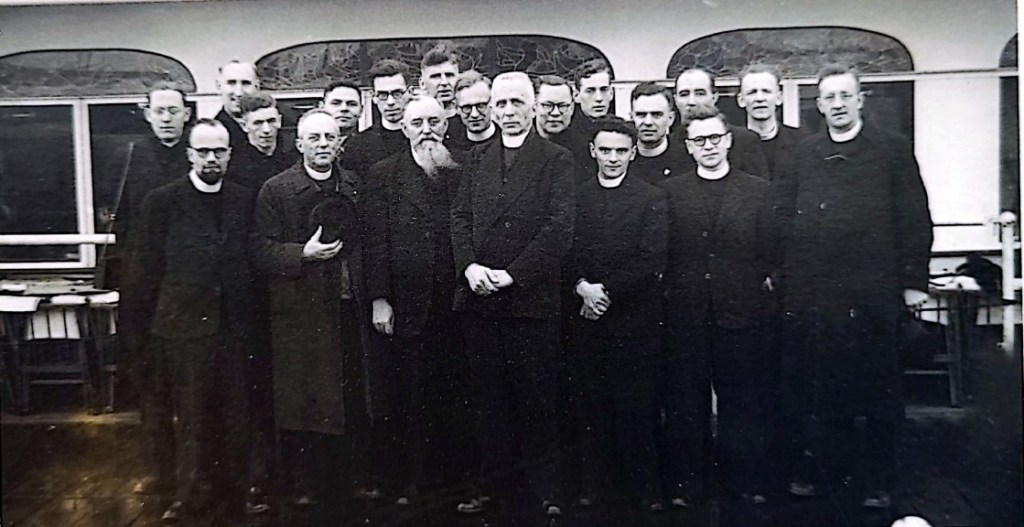
My final day is spent skimming through boxes of photographs, scouring for an image which include my Uncle, a virtual needle in a haystack. Fr. Herman Hofte’s album includes photographs from his journey in 1947 aboard the Boschfontein passenger freighter and a group shot of returning and new priests. Fr. Kees de Cock is among them.

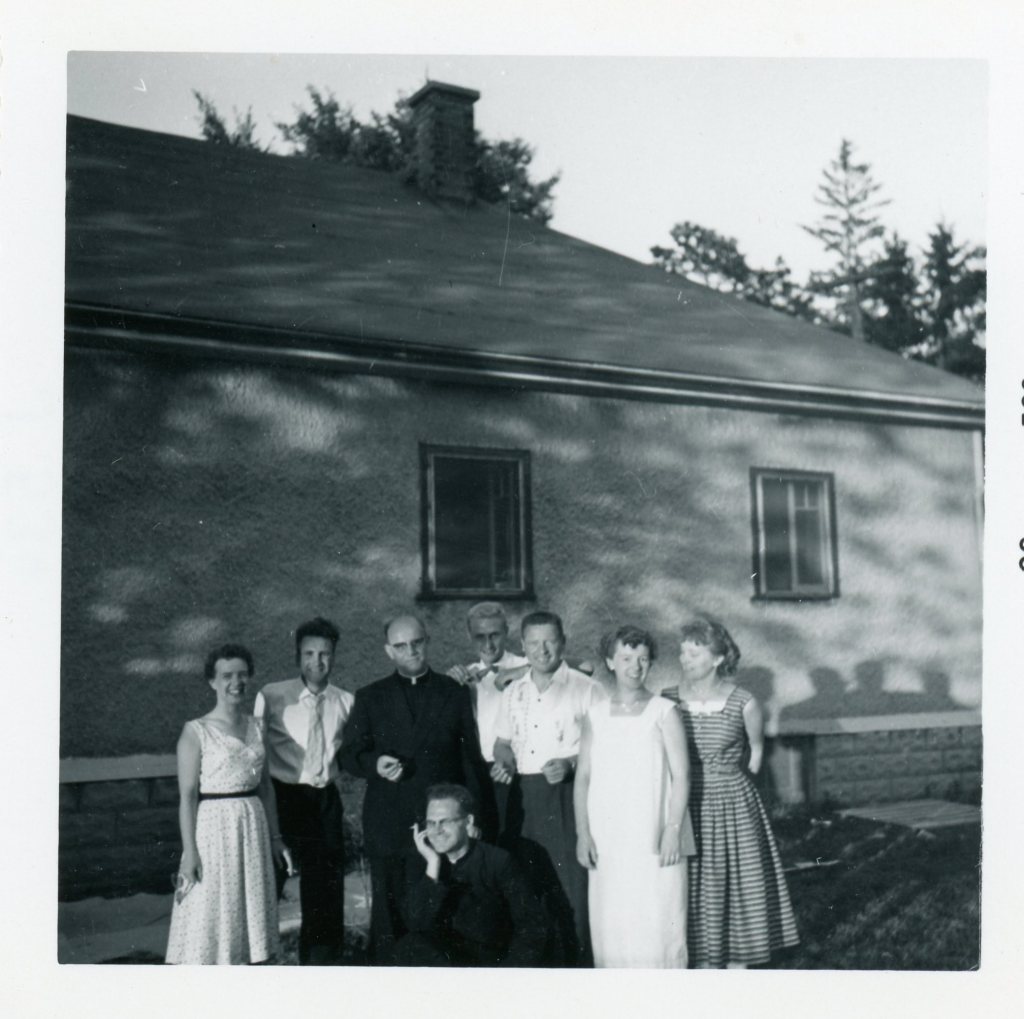
The priests and brothers aboard the Boschfontein, December 1947. Fr. Cees de Cock is standing far right, front row, with glasses.

Stephen, Jim and Frank ask questions about my next travels, will I return to Herbert House, was my visit a success. I do hope to come back, meet with them again, listen to their stories. I also think there may be more to discover from the archives related to Uncle Kees’ schooling. I leave with a much better understanding of Fr. Kees de Cock’s movements during his time in Uganda. There was not as much as I had expected, but I have learned more than when I began, from the items that were found and those that were not.

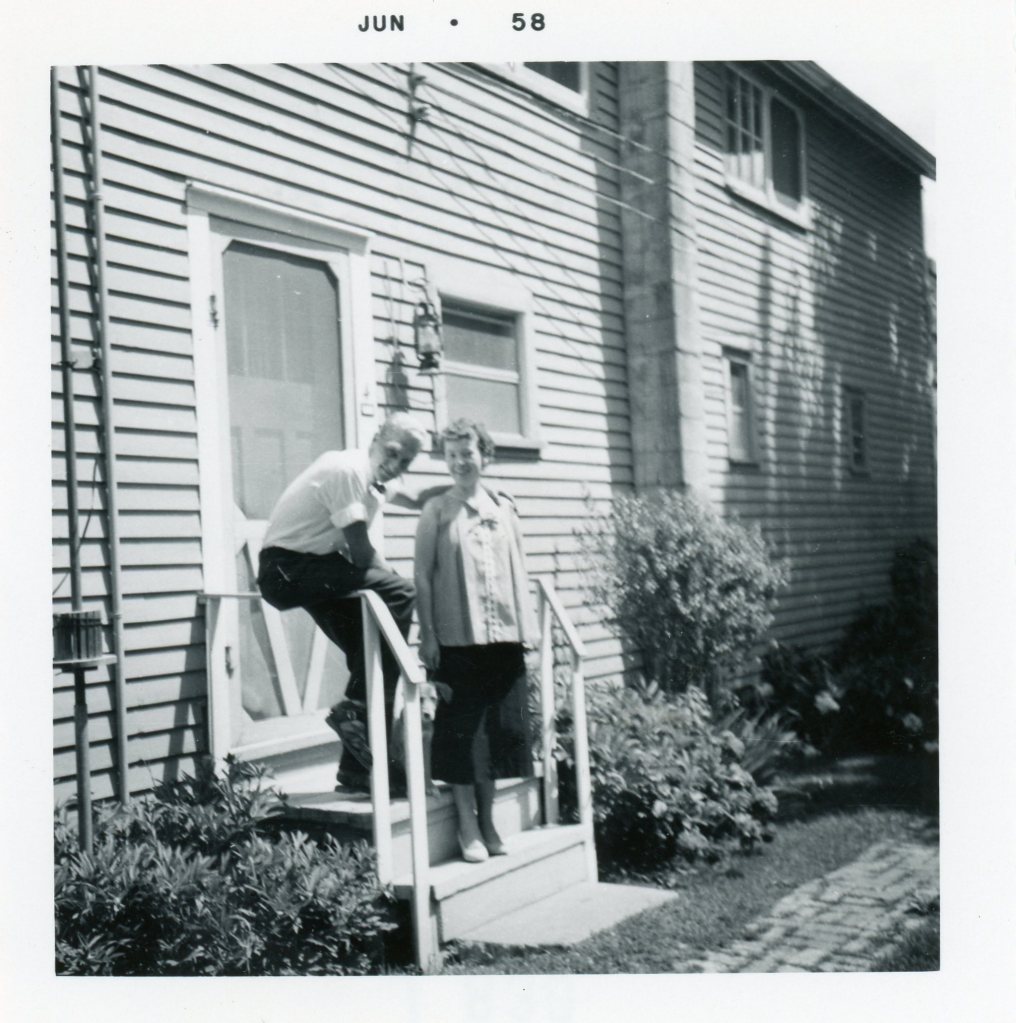
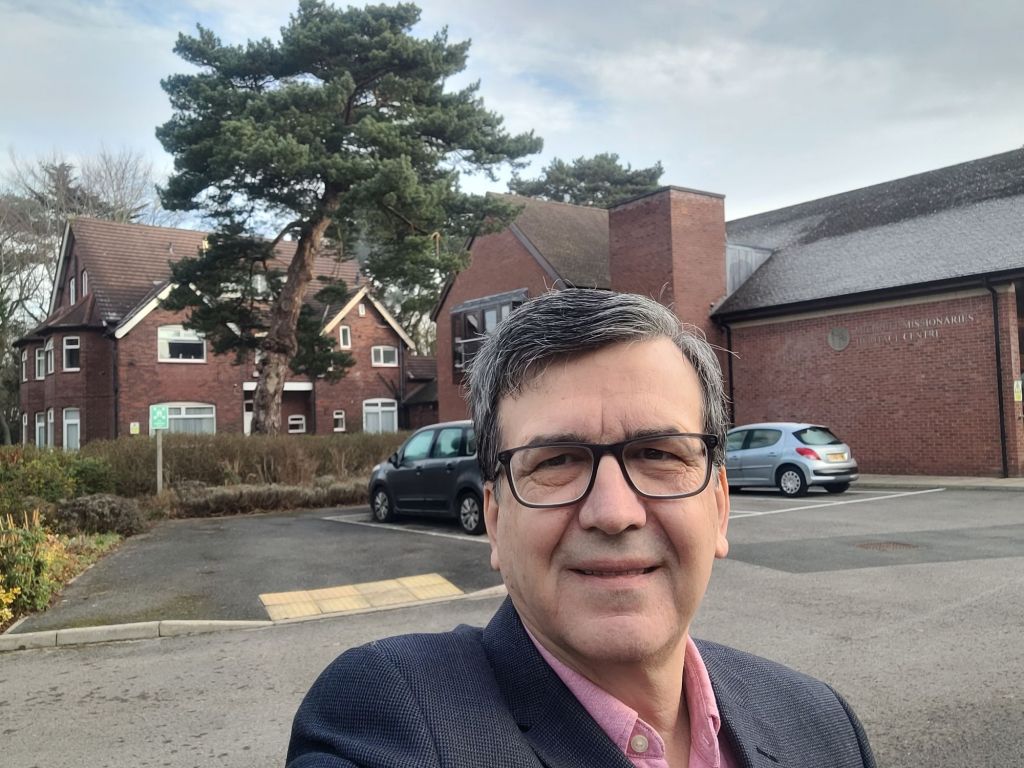
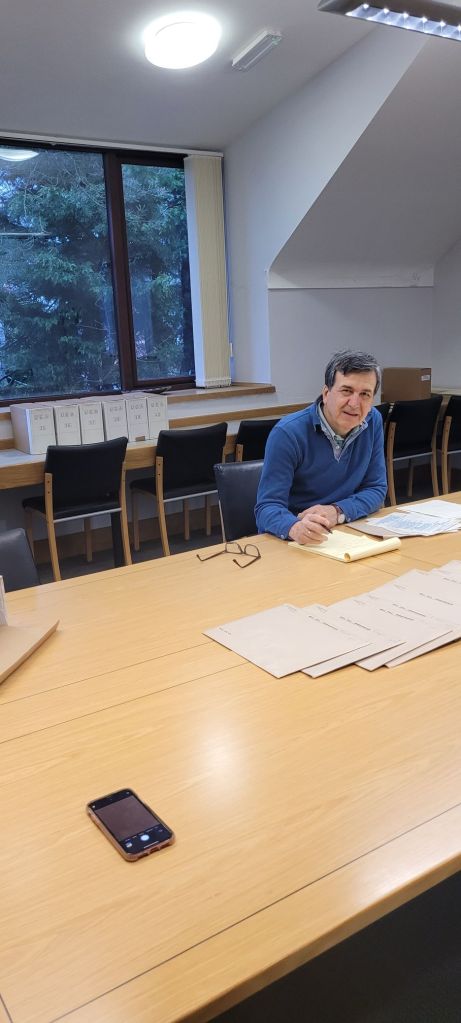
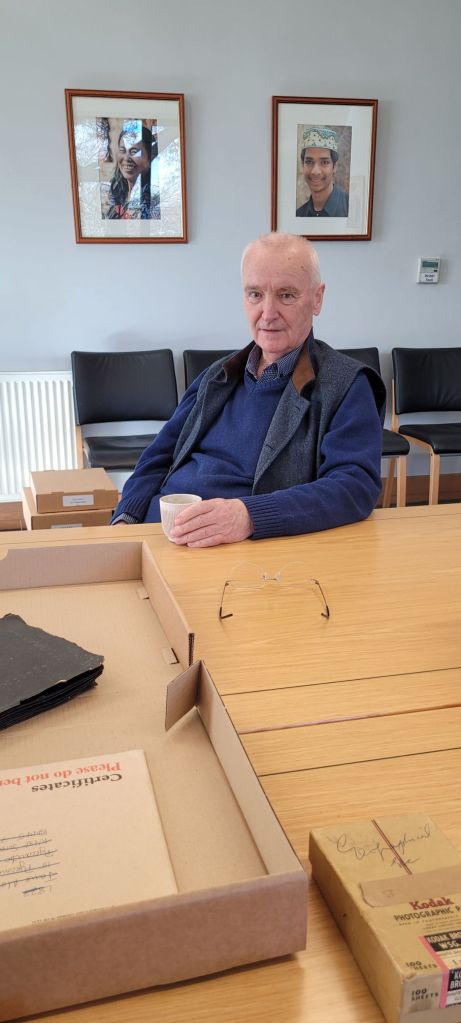
Herbert House retirement home, February 2024. In order from left to right, Frs. Stephen Giles, James Daley, and Frank Smith.

Human

A human is human through others.

The words are expressed in the aftermath of the trial where Zarko Dragic was found guilty by the International Criminal Tribunal for the former Yugoslavia for crimes against humanity in the systematic rape of women in the Bosnian War. The protagonist in Kim Echlin’s fifth novel, Speak, Silence, is a female travel reporter assigned to witness the testimony of 16 women, three generations, describing and reliving their nightmare to three judges in a courtroom in the Hague. The author is circumspect in avoiding the graphic details while masterfully conveying the raw emotions of the victims. The event is real, the characters fictitious. Kim Echlin’s novels are suffused with pithy observations, memorable in their succinct capture of emotion and insight.

A human is human through others.

The profundity of the sentence was dramatic this past week with the loss of one life and the beginning of another, the death of a young adult and the birth of a new born, the numbing reality of a sudden departure and the unbridled joy of a welcome arrival.

Our despair, our hopelessness, our questions, our unimaginable pain, felt through our others. A child, a parent, a spouse, a relative, a friend. We hurt, we feel, and hope for the strength to continue. Not to forget, always to remember, except with less tears.

A human is human through others.

A smile, a laugh, a moment of pride, a song of rejoice, experienced through our others. A birth, a wedding, an anniversary, an accomplishment, a reunion. We beam, we boast, and celebrate the moment for as long as we can. Revel in the now, when we are able, with all the exuberance our hearts can muster.

A human is human through others.

Be with your others, be there for your others. It is in our caring and our sharing when we will be human through others.

Cold as Ice

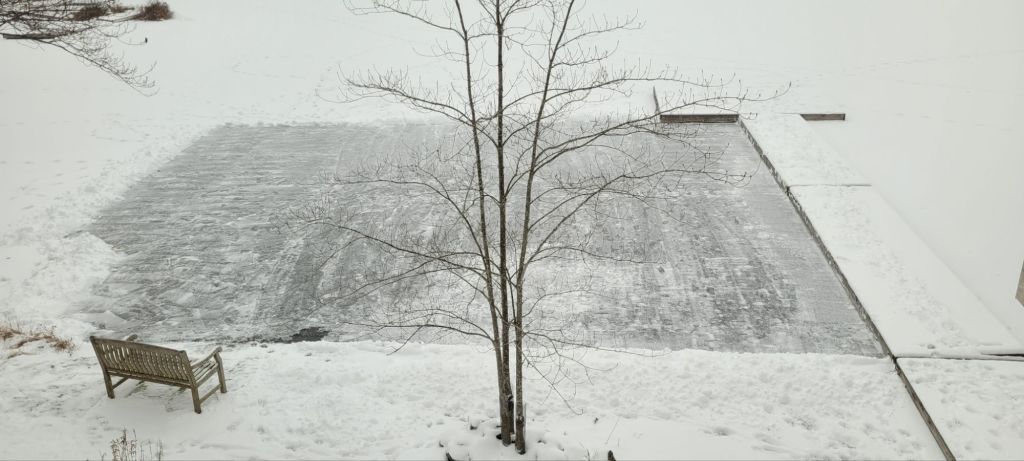
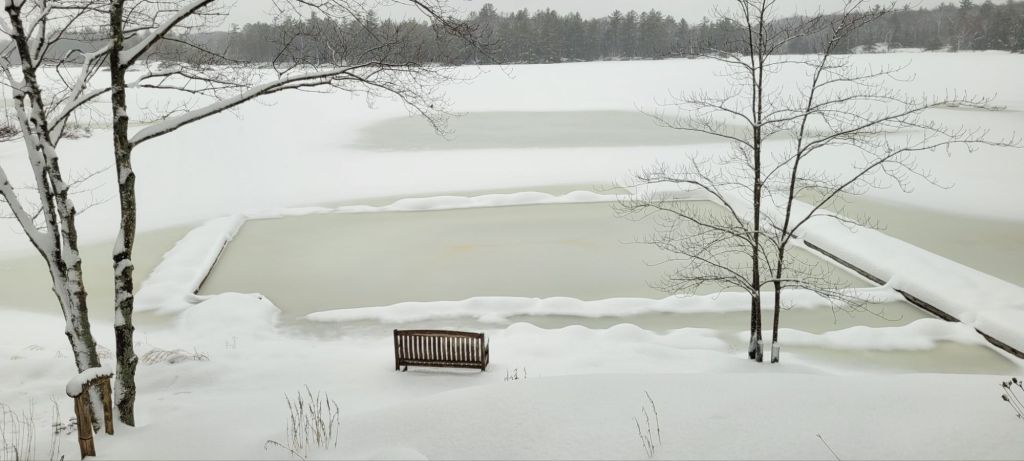
The minus 18 temperature is not going to deter me. I have spent the last week coddling the ice, keeping the snow from accumulating, shoveling everyday, defining the contour with scrap wood, flooding the rink at dusk to take advantage of overnight cold. Grab the skates, stick and puck, pull down the toque a little further, head to the bench with Odin in tow. Time for a skate.

My brothers and I spent hours outside seeking adventure. In the winter we became Guy Lafleur, Bobby Clarke, Tony Esposito, and Paul Henderson, searching for patches of frozen water for a hockey game. We weren’t interested in a leisurely skate of endless casual circles. Our goal was a robust, vigorous entanglement of thrashing swings and bodily inducements, flailing arms and legs chasing pucks and combatants to jubilantly yell out “SCORE” and gloat in victory.

A popular spot was the creek, a trek of less than a kilometer across a snow strewn farmers field, close enough for a quick game after school before darkness settled in and it was time for supper. No shelter, no bench, no lights, no Zamboni. You sat on the banks to pull the laces tight of a used pair of skates, discarded clothing was tossed aside, the taller boots employed as goal posts at each end of the narrow passageway. A kid could get lost in all the excitement, unawares of the temperature. I remember being so cold once, my toes were frozen, my hands were frozen, I could not take off my skates. I was crying. Roger, an older boy from across the highway came to my rescue.

On Saturdays we carried along shovels and pails to clear accumulated snow and smooth out the surface. We hacked a hole in the ice, close to the edge, at a distance from the activity. Each boy would inch close to the opening, dip in the pail, port it to the rough spot and pour out the contents. Back and forth. On one occasion the ice collapsed, my left leg falling in up to my hip, becoming entirely frozen as I limped home to thaw out. It was all part of the experience.

I had not skated inside an arena until I was 15, the year Dad began working for 3M and we attended the Christmas party. In later years, a dozen boys from the neighbourhood would rent the rink behind Clarke Road Secondary School at two o’clock in the morning because that was the only time the ice wasn’t being used. I never played organized hockey until I was 19 when I signed up for the no body contact league in Dorchester. My first pair of new skates were bought as a young adult when Gary and I began playing in a league here in Toronto. Most of my skating and hockey occurred outdoors in my youth. It was accessible. It was available. It cost nothing.

I was inspired by the open-air experiences to build a rink in my own backyard when Nicholas and Olena were little. The yard behind our house on Sigmont Road looked level enough until I laid out the plastic within the wooden frame, and filled with water, half an inch on one end, six on the other. On Mill Road, I built a temporary extension to the deck, incorporated higher boards and connected the plastic sheets with red duct tape precisely at centre ice. As long as the thermometer read below zero, you could run the hose at night for a perfectly smooth surface to shoot a few pucks around. We enjoyed the freshness of the air, the tumbling down which comes from learning how to skate, the laughter of our success. The kids have grown, the winters are warmer, the yard is more garden than grass, hockey days are over, my skating escapades had disappeared.

Our newly built, four seasons cottage opened a whole new world of opportunity when we visited it for the first winter, January 2008. The temperature is typically five degrees colder than Toronto to the south. The lake was frozen, thick enough to be safe. I was excited to attempt a rink again. The conditions leading to that eventful day were ideal. The snow tends to be deeper and lasts much longer, although not a lot in that first year. I cleared what could be reasonably accomplished by one person, approximately 25 by 40 feet, to uncover a wind designed surface, rough but passable. Those early skates were reminiscent of the creek only this time I unraveled the garden hose from the external water tap to gradually smooth out the terrain. With my stick and my puck, I laced up my skates on the wooden bench each afternoon and circled within the tiny confines, forward and backward, dipsy doodling around and around solo, no opposition, raising my arms in the silent celebration of another imaginary goal. The joy of outdoor skating had returned.

The irony of making a rink on the lake is that it can be more difficult than the ones in your backyard. The trick is to not allow the snow to build up on the surface while the ice is safe enough to walk. Otherwise the surface is slush making snow removal difficult and impossible without your boots leaving a crater filled mess. My subsequent winters at the cottage have been lessons in how to manage the conditions. If we arrive later, then the task becomes too difficult for our usually short stay. The trickle of a garden hose was no longer sufficient so I graduated to a submersible pump with two and a half inch plastic piping, a fifty foot extension cord, and a manual ice auger. Last year the timing of our arrival and length of our visit meant a rink was not even attempted.

Our timing was impeccable this season. The lake had frozen before a significant amount of snow had fallen so when we arrived, there was only a couple inches. When cleared, the ice was solid and surprisingly smooth. I could skate the first day.

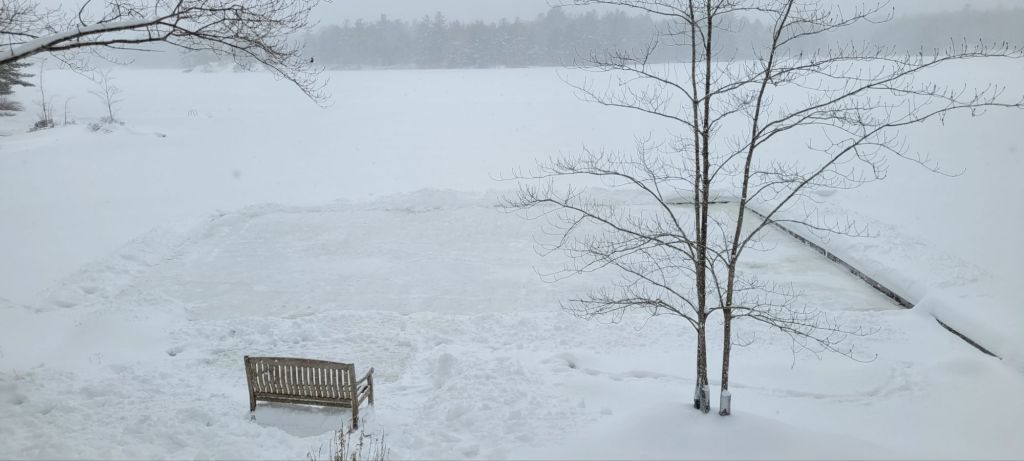
Then the first winter storm of the season arrived. The snow was deep and heavy, the temperature went above zero melting portions, reeking havoc on the ice. Lake water was exposed in spots although the shape of the rink remained. Freezing on the following day began to solidify the surface again while the snow kept falling. Each morning I woke to yet more of the white stuff, and another hour removing it to avoid slush building. Finally a break. The forecast was for minus 12 overnight with no precipitation. It was time to flood the rink.

A tour of the results showed a marked improvement. Water finds its level, and given sufficient quantity will eventually level out the entire area. The corners were smooth as glass while the centre exhibited rough patches. It would need at least one more flooding. The temperature was dipping down even further, yet another ideal opportunity for improvement, nine days after our arrival.

I am wearing snow pants to cushion the cold. I have replaced my cap with a woolen hat. There is a gentle dusting of snow drifting down, not a sound except for the breathing, Odin’s and mine. He is a little curious, sitting, waiting patiently while I tighten the laces. Then I am off.

The ice is magnificent. Swish, swish, swish. Lean and turn, leg over leg. Swish, swish, swish. Pick up the puck, lean and turn, head up and fire the puck into the end board. The thud catches Odin’s attention and he slips onto the ice in pursuit of the black circular biscuit. Sharper turn, quicker movements, wind brushing my face. Odin barking, sliding when I make a sudden move. He is determined to grab that disc. Clack, clack, clack. Back and forth and back and forth. Odin lunges and misses. I slide the puck through the five hole and drag it to other end, Odin giving chase. He reaches out his paw, I attempt to slip it between his legs again except he has caught on and stops the puck, picks it up and parades around the edge of the rink in celebration before plunking the puck at my skates. I reward him with a snack, laughing, encouraging him for another round.

Olga has braved the elements to make an enthusiastic audience of one. Odin and I circle and chase and slip and slide. What he lacks in hockey abilities, he makes up for in effort. Him and me, me and him, up and down and around our little rink.

The snow keeps falling. Olga has since retreated to the cottage, Odin’s attention is waning and I am getting cold. It is time call it a morning, time to pack it in.

Tomorrow will be cold again.

O’ Tannenbaum

It was my Dad’s job to purchase the tree every Christmas.

Accompanying him on the quest to acquire the best possible tree for the lowest conceivable price was a lesson in frugality and gamesmanship. Too early in the season would result in paying the posted price. Not enough snow would reduce demand, providing an opportunity to negotiate. And every day closer to the 24th increased the probability of a real deal. Dad tinkered with the alchemy of all these factors each year before venturing on his search with one or all of the boys in tow.

I remember one snowy December evening when Dad decided the time was right so we all climbed into the back of the car and headed off to the Woolco parking lot a few minutes up the road. The car would pass several other vendors along the way, smaller stands, typically pricier than Dad was willing to pay. He always negotiated, regardless of the posted amount, as we watched and cringed at his persistence and his threats to take his business elsewhere. He seemed to have more success at the larger places.

There were quite a number of trees available with nary a customer on the cold Tuesday evening. Dad was anticipating a good price as we scrounged through the racks, pulling out one tree at a time, assessing it’s shape, determining if the trunk was straight. We all weighed in with our opinion, deferring the final decision to Dad who settled on a lovely Scotch pine.

“This looks like a good one. How much?” he asked the hovering salesman.
“Twenty bucks.”
Dad scoffed. “You have got to be kidding. Does it come with real gold tinsel? I’ll give you ten.”
“Nope. The price for that tree, that size is twenty.” He stamped his feet from the cold.
“What? You mean to tell me there is no room for less? Look, I will give twelve. That is all it’s worth.”
“Sorry sir but these trees sell for twenty.”
“All right. I will give you fifteen. Otherwise I am going across the street.”
The man took another drag from his cigarette staring silently.
“C’mon boys.” Dad started walking away.
Normally this tactic would prompt the salesman to counter or surrender to the final suggestion and we would be stuffing the prize into the trunk, tying down the lid for the drive home.
We moved in the direction of the vehicle as I took a glance over my shoulder to watch the man exhale a cloud of smoke, toss his butt into the snow and saunter to his trailer.
No comeback. Nothing.
“Dam. That usually works. I really liked that one.”

Of course we eventually purchased the tree at one of those smaller lots. The original asking price was higher as Dad bargained it down to twenty, conceding to us a tinge of regret about his earlier attempt.

After I left home, my parents succumbed to the allure of an artificial tree, as do an increasing number of people, agreeing with the cromulent logic of less fuss, less mess, and less money, in the long run. I continued to insist on the need to buy a live Christmas tree, looking for deals, paying the advertised rate at one of the diminishing number of pop-up lots.

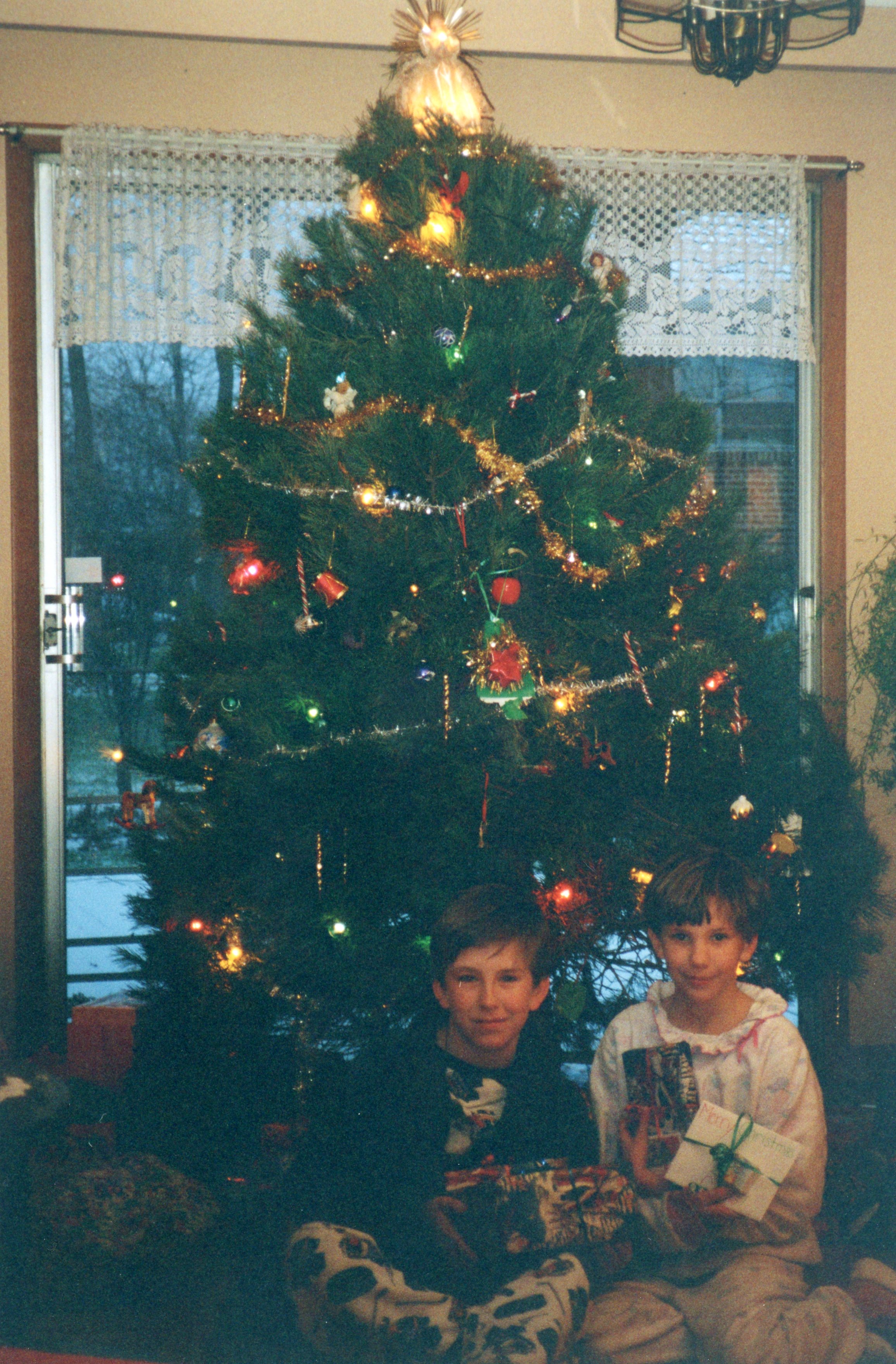
Our first apartment in London was small and money was tight. Olga and I went searching for a bargain only days before Christmas in 1983 and found a scrawny little conifer, suitably priced at only five dollars. We nailed it to a wooden box to add some height and to ensure our cat, Heidi, wasn’t able to easily knock the tree over. (All of our cats, Heidi, Milo and Otis, and our current dog, Odin, were never a threat to topple the tree unlike Midge, the mischievous kitty from Olena and Daniel). It was our special tree alighted with handmade decorations.

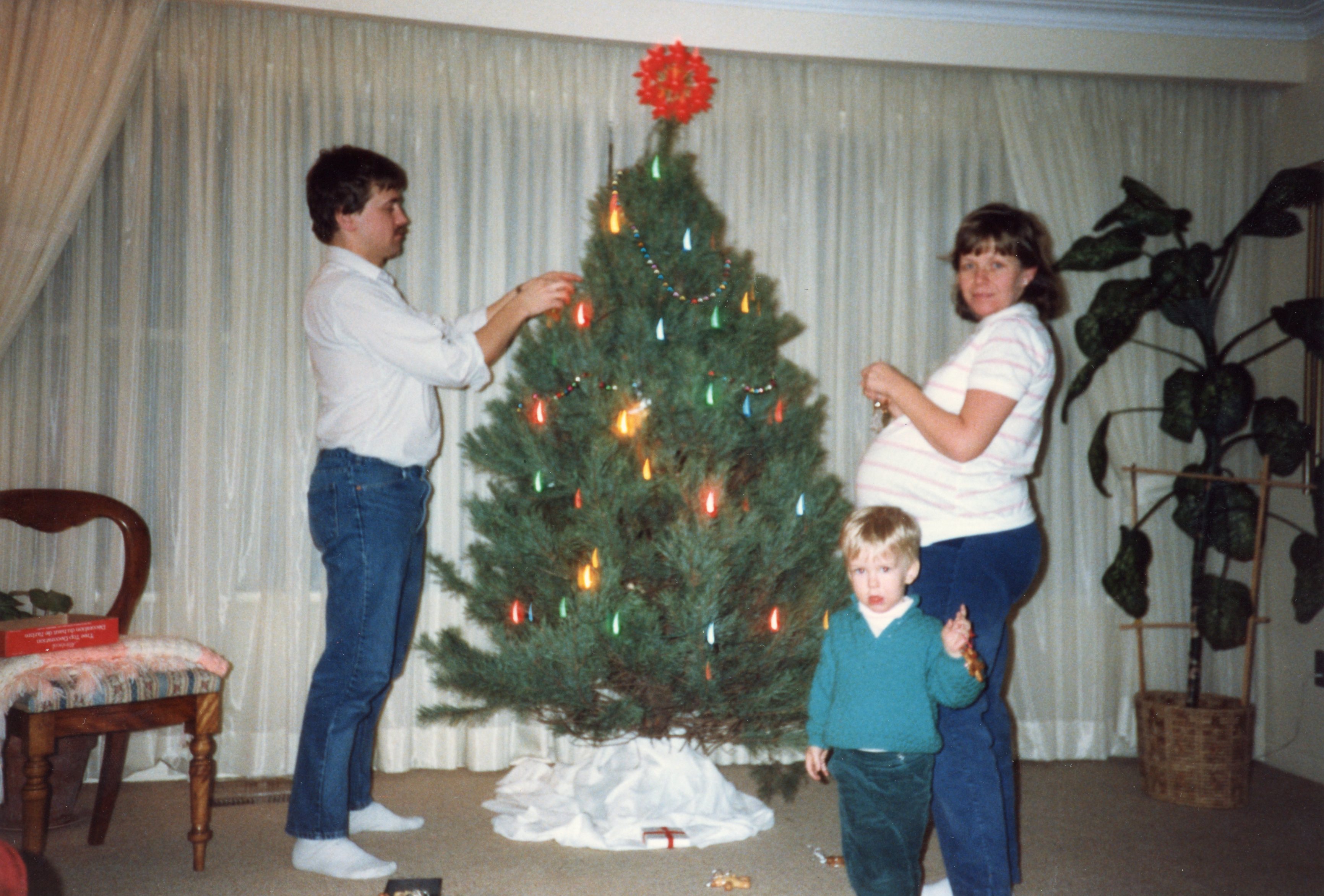
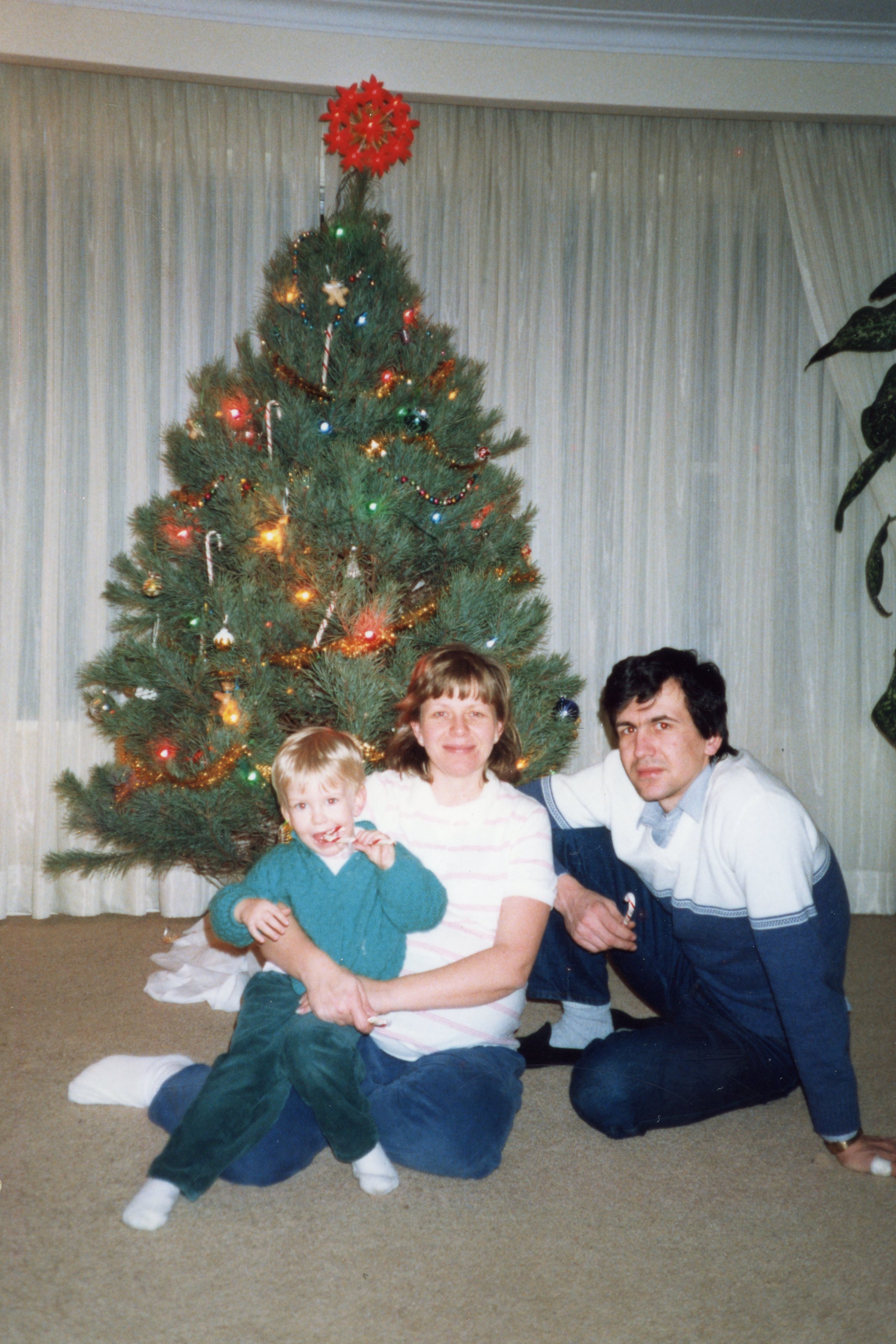
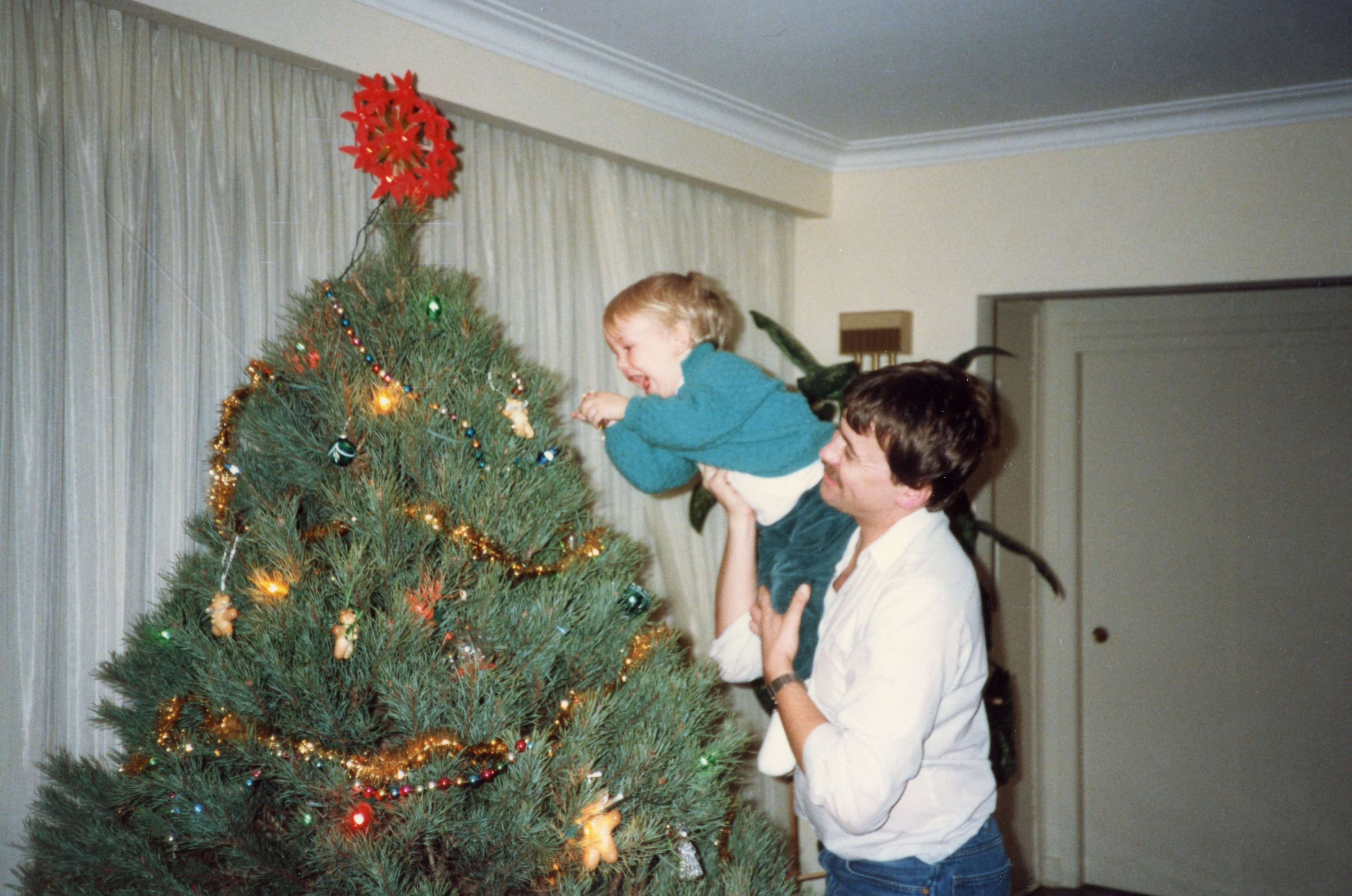
Condo rules prevented the acquisition of a real tree for our first three Christmases in Toronto, changing as soon as we moved into our new home, our first house, on Sigmont street in 1987. Olga was VERY pregnant with Olena and Nicholas was two and a half as we ventured out to the streets in search of the Christmas grail. The local Canadian Tire seemed to have the best selection and some of the best prices. We paid the asking price, delighted in our find. Gary joined us in decorating the voluminous pine standing perilously on the inadequate stand acquired at the last minute. I tied fishing lines to the front window curtain rod for added security. The number of pictures in our scrapbook speak to the joy of that evening.

A live tree has continued to adorn our homes ever since. In later years, Nicholas’s entrepreneurial boy scout leader decided on selling Christmas trees as a fundraiser. The scouts and their parents were each asked to sign up for at least one shift as their contribution to the lucrative endeavor. Naturally we purchased our tree at the same time. Although those days have been many years in passing, and one can find better deals at Ikea or Loblaws, we continue to patronize the 401st Scout Christmas tree drive rationalizing the additional cost as our contribution to the cause.

The $90 price tag for a 6-7 foot Fraser fir this year engendered the latest appeal for a reconsideration of this tradition only to reaffirm my stand that as long as I am able, we will acquire a real one.

It is the imperfection I most enjoy.

Boxed trees are unerringly symmetrical, ideally shaped, pre-lit on an appropriate stand and neatly packed away at the end of the season. Every live tree enters our home with a different challenge despite best efforts to select the most flawless.

There are those with deceptively crooked trunks requiring careful stand placement and the ongoing concern we might find it on the floor in the morning. There are the trees, when unraveled from the twine and the boughs settle, that display open areas, needed to be thoughtfully turned to the backside or filled with larger ornaments. There are careful calculations to determine which lower branches to trim in order to ensure enough room for the presents, but not so much as for the tree to appear bare or top heavy. There have been ongoing experiments to find the ideal stand, one to handle all the peculiarities we inevitably encounter. There is the decision about how to prepare the bottom of the trunk to absorb water so as to keep as many needles on the tree until the new year. Then there is the final, deftly maneuvered removal to prevent a path of dried needles leading from the bow window, out the front door and onto the street. And real trees provide a burst of pine smell when you enter the room. Every tree, every year has it’s own story.

Our tree is lovely this year, requiring little adjustments, standing erect in the front window, almost perfect, just a little boring. It went up on December 2nd, the earliest date ever given we no longer need to retain it until after Ukrainian Christmas which now follows the Gregorian calendar.

I just hope it doesn’t dry out and the needles will last.

However you celebrate, I wish everyone a very Merry Christmas and a Happy Holidays shared with the people you love.

Rapture

Ten bucks for most packages, five if it is small, twenty for the big ones. Shopping advice? Free.

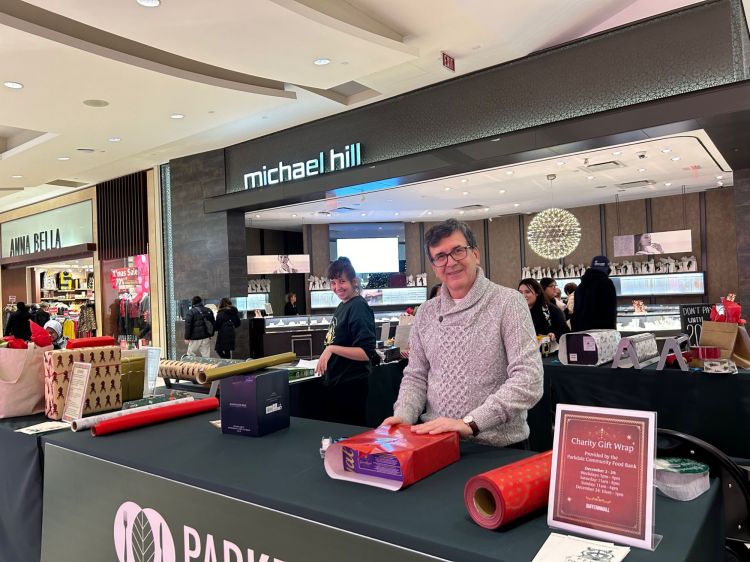
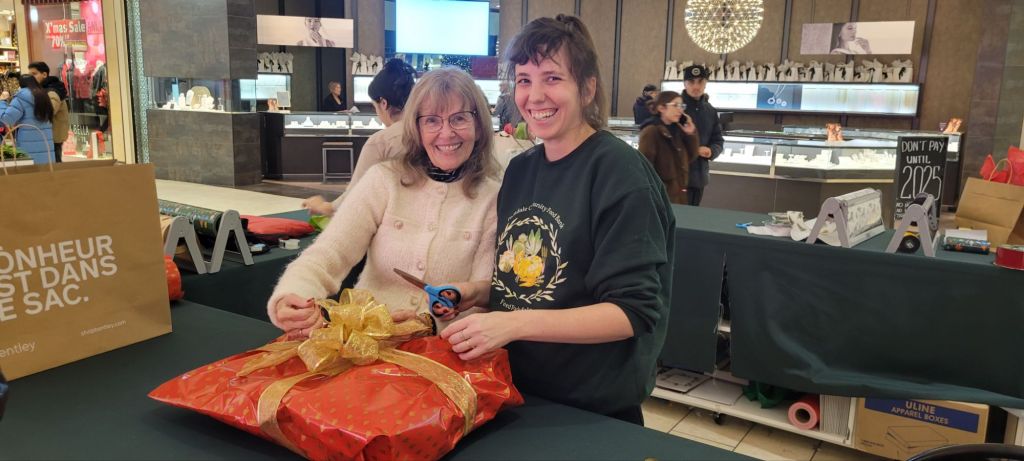
Olena, Olga and I were back again gift wrapping for the food bank. Last year was so nice, we decided to do it twice – Saturday and Monday evening, 4:00 to 9:00 pm. Still a week from Christmas, the traffic was slower providing more time for conversations.

“I am staying with our host family and I want to get them something for Christmas but I don’t know what.”
“Let me help. Come with me, I’ll show you some things you could buy.”
Olga escorted the man with a four year old boy in one hand while the other navigated a stroller holding an eighteen month girl to the adjacent Walmart. They returned twenty minutes later, two boxes of Ferraro chocolate ready for wrapping, the third package opened so the children could indulge.
“We are from Eritrea. We have been here three months. Thank you so much for help.”

Eritrea, Cuba, Ghana, Mexico. Those are the original countries of people who shared their background. Sarah, the Food Bank staff, immigrated from Syria with her family when she was eight years old; Ping, another volunteer, is a relatively recent arrival from China; Olga’s parents were refugees from Ukraine, mine moved to Canada from the Netherlands. The broken English, the conversations, the questions throughout both evenings indicated other parts of the world were passing by. If you want a taste of Toronto, shop at the Dufferin Mall. Everyone speaks English, but English is hardly spoken.

“I tell my kids, you don’t know how good you have it. I just came back and I was thinking, my God, what a beautiful place, how clean it is, how lucky we have it. I have been helped alot and I am always looking for ways to give back.”

People were also able to donate non-perishable goods at the booth. One man bought numerous packages of pasta and macaroni meals.
“When I first came, I was dishwashing and needed to use the local food bank. Now I am with a tech firm and doing well. It’s important to give back.”
He stopped again later asking how he could volunteer.

This year Olga purchased spools of special ribbon to create colourful bows for some of the larger gifts as an added treat. She taught Olena and Ping as well so they were able to provide that extra touch to the wrapping. “Wow, that bow is fantastic. I have more shopping later this week and I’m gonna come back.”
The man’s eyes were wide open as he watched the care put into the gift for his daughter.
“I have to warn you, the bows are my Mom’s special. Today is her last shift.”

A number of people donated cash, not wanting anything in return, or they topped up the payment for the wrapping.
“I am getting married in two weeks. Last year I bought her an engagement ring and had it wrapped here. My fiancé is Russian so I put the package in those dolls, you know, the ones that stack.”
His gift this year involved a ten dollar wrap; he bumped the payment up to 50.

“What can I get my husband? He is so picky.”
“What about a pair of warm pajamas?”
“No, he has lots and he’s not wearing them. I was thinking about those Italian cakes, how do you say, Pan…pane…ttone?”
“You have to emphasize the “e” at the end, like an Italian and raise your hand when you say it. PanetonnEH. They are delicious and last a long time. It can be expensive, but worth it.”
The woman returned later to show off her prized possession, an inexpensive pair of men’s pajamas. “Guess how much I paid for them.” She did not get it wrapped. She only wanted the conversation.

“I am so glad you guys are here. Last year you wrapped a sweater for my daughter who I hadn’t seen in three years. And it fit. You don’t know how special it feels to give someone a gift.”

“Fifty dollars for everything. Is that okay?”
“Sure, sure. It’s for charity. This is for charity?”
“Yes. Every dollar goes to support the Parkdale Food Bank.”

A Wink and a Smile

I always sit or stand in the back. From this position I have a bird’s eye view, a vantage point to scope out all of the people who have gathered. Olga, on the other hand, moves directly to the front, close to the action, to whatever the affair entails.

Olga occupied the first table at the front of our second year Political Theory class at King’s College in the fall of 1980, although I did not know her name in the beginning. All I can recall was a beautiful woman who attended dutifully each week, snappily dressed, with long blond hair past her shoulders. Seated in the last row, I remember my head turning quickly when she strode past the lectern one morning with it dramatically clipped. I was entranced.

I still did not know Olga’s name until she approached me one day, several weeks into the term, asking for my notes from last week’s Stratification course on the main campus. Would I mind? I had not realized we were in that class together, both of us lost in the 150 seat auditorium. Apparently I was the only other student from King’s enrolled and she needed to catch up on a missed lecture. Olga had noticed me; I began looking for her.

Let’s give them Something to Talk About

Follow You, Follow Me. There she was in the cafeteria where I preferred completing my school work. On occasion I caught a glimpse of this Pretty Woman sauntering across the campus, laughing with others. Every Tuesday we would be queuing at the bus stop, waiting to board the shuttle. The bus was crowded on a particularly busy day, so I stood near the rear doors. Olga sat several seats ahead with numerous people in between when our eyes met. Olga gave me A Wink and a Smile. I was hooked.

We began meeting over coffee between classes, comparing ideas, sharing thoughts. In good weather, we strolled back to King’s College exchanging observations about the lecture, talking about the material. I kept looking for opportunities to further our conversations in order to spend more time together. I was enchanted.

I finished the Stratification exam early, last one of the fall semester, and decided to hang outside the main entrance, hoping for one more encounter before the Christmas break when Olga would head back to Toronto. I waited, and waited, watching whenever the door opened, heart sinking when it was not her. Olga did not emerge. She must have left through a different exit.  Suddenly January never felt so distant, So Far Away.

At Christmas I received an unexpected gift from Ron: a pair of tickets to accompany him on a double date to the preview of  The Browning at London’s Grand Theatre. The note in the card had the usual season’s greetings, ending with “and you need to bring a girl”. I knew who to ask.

For the next month my mind was pre-occupied imagining the scenario in which I would approach Olga for that first date, planning for the most opportune time, rehearsing my words. In the cafeteria after class, over coffee? Two weeks before? One week? Would she Take a Chance on Me? What do I say if she says no?  The moment arrived as we were traversing between buildings in early February, on an unseasonably warm morning. Olga said yes. Thank you.   

The details of the evening remain a little foggy. I cannot recall the manner in which every one arrived, the story line of the play, the conversation afterwards at Sorrenti’s restaurant across the street. I do remember Olga was fashionably dressed in a classy outfit. By the time the four of us departed in my muscle car (1975 Duster with a 318 engine, four barrel carburetor, medium rise manifold, rear air shocks, dual thrush mufflers) a small winter storm had dumped a foot of snow making the roads difficult to navigate. The vehicle plowed into the snowbank in the driveway of the Huron College residence, Ron and his date got out, but the wheels could only spin in place, not going anywhere in my attempt to leave. I had no other choice except to ask Olga to slide over behind the steering while while I tromped to the rear and pushed. Give ‘er some gas. Stop. Try again. The car finally broke free. Out of breath, sweating and disheveled, I climbed back into the driver’s seat, feet soaked, slush splattered all over my pant legs. The remainder of the ride was quiet. I was afraid my opportunity for a second date had just disappeared.

We did have another, and then another and then some more. Olga and I went to movies, dinner, bars, concerts, and beaches, the standard fair of young couples. We took turns making dinner every week prior to our evening classes; we stayed up very late writing a letter to the editor about standardized testing; we participated in a Marxist study group with fellow students and professors; we sang in the church choir every Saturday evening. And we talked.

We engaged in all manners of conversation every time we were together. I remember one long walk from London’s downtown core to Olga’s apartment, arm in arm, on a cold, magical, winter night In the Wee Small Hours of the Morning. We shared our fears, our thoughts, our wants, our desires, our hopes, our dreams. Fully. Completely. I was in love. We were in love.

Four decades later, our fondest moments are those spent together, alone or with the kids, at home or travelling, on the couch or on the dock, in the theatre or on the dance floor, conversing about yesterday, today and tomorrow. We are still in love, ageless and ever Evergreen.

Every Little Thing She Does Is Magic

I cherish this day and every day because, Olga, you are The Best Thing That Ever Happened to Me. You Are the Sunshine of My Life.

Happy 40th anniversary.

Love always,

I hope you don’t mind,
I hope you don’t mind that I put down in words,
How wonderful life is while your in the world

Your Song

Black, White and Blood Red

“Daddy, why are they screaming?”

Olga and I were dumbfounded, one of those questions from the mouths of children which leave you grasping for an answer.

We were driving through the city, the four of us in the Nissan King Cab pickup truck, Olena and Nicholas snug in the back, Olga in the front passenger seat, me driving stick. The speakers were blasting out the tunes from the built-in cassette deck, the Bo Dean’s latest, Black and White, recommended by Don Berns at CFNY. It was the fourth album released by the band from Milwaukee in 1991, a change in direction from their earlier work. We loved it, played it repeatedly and played it loud which is probably what prompted four year old Olena to stick her head through the bucket seats, turn upwards and ask her now famous question. We laugh about the moment, recalling the story regularly.

With the advent of compact discs, we purchased a copy of Black and White and numerous other albums by the Bo Deans, all of which get airplay at home, in the car, and at the cottage. Just yesterday, I popped it into our CD player. The music, the lyrics and Olena’s question struck an all too familiar chord.

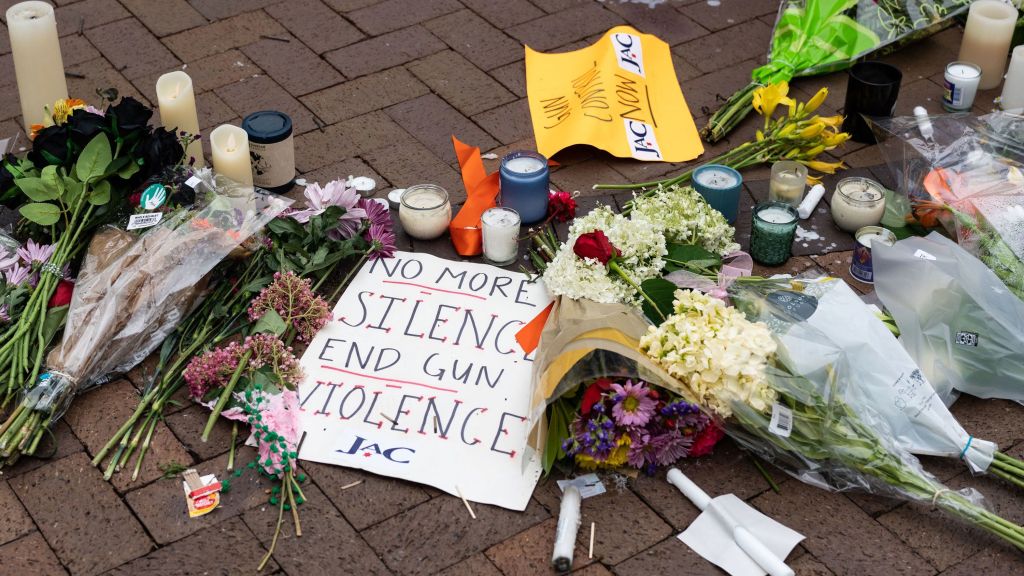
The US marked another July 4 long weekend with a rash of mass killings. Even the news agencies couldn’t agree on the number. “Fourth of July overshadowed by 16 mass shootings”; “At least 17 mass shootings mark Fourth of July holiday”; “22 mass shootings in 17 states over July 4 holiday weekend”. And this: “While there were 18 mass shootings over the weekend—from Friday to Tuesday—there were fewer shootings on July 4 than in the past few years” in part because the holiday landed on a Tuesday, midweek, which statistically is a day with the lowest numbers.

Bullets rang and he lost his life
It was a bloody day here in paradise.
Paradise
It ain’t hard to find
Lookin’ out your window at the world outside
Paradise
It ain’t far away
Here in my head it’s just another day
Here in paradise.

The United States shrugs its shoulders while the rest of the world shudders in disbelief. Tears will flow, justice will be demanded, voices will rise begging for the killing to stop. There will be another call for greater gun control. Stop the violence. Save our families. Save our children.

Don’t listen to the gun.
Tommy put away the knife
You’ve gotta give a damn ’bout another man’s life.
See it clear with your mind. Maybe make a change

Sing “People stand together”
‘Cause it’s a long hard day
And there’s strange weather laying up ahead.

A month later, after the funerals, after the headlines, after the politician speeches, it will all be forgotten and the cycle of insanity will continue.

So you ask, Olena, why are they screaming?
Because people continue to die;
Because owning a semi-automatic assault rifle capable of firing hundreds of rounds is every American citizen’s constitutional right;
Because no one can pry the guns from their cold, dead hands;
Because talking intelligently and rationale thinking is not working;
Because no one is listening.

Liberty, the right to die
When did we ever cross that line
That brought us here to this place
Delivered by the human race.

Black, White and Blood Red

Tom Sawyer

“Like it? Well, I don’t see why I oughtn’t to like it. Does a boy get a chance to whitewash a fence every day?”

The forecast is predicting a week of heat and sunshine, the first true taste of summer. Olga is at the cottage focusing on her yoga work. Books are calling to be read, the garden is beckoning for an audience, cold cans of beer are waiting to be emptied.

I notice, as well, the railings are showing signs of wear, dulled by the stark exposure to the sun, peeling from the onslaught of rain and snow. If the flaking is not addressed, the wood will fall into further disrepair, making the job more difficult.

Choices. Choices.

Damn. I need to paint the rails.

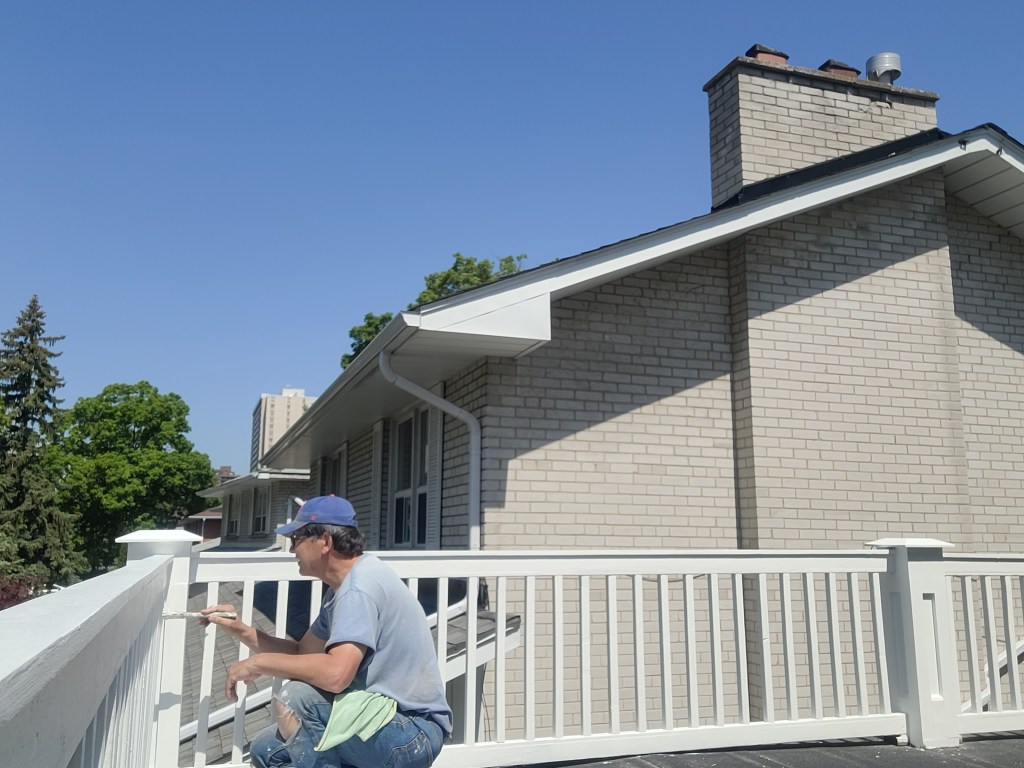
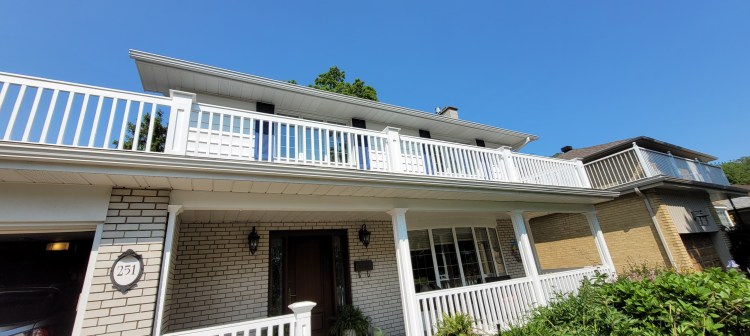
They are not the original when we bought the house more than 30 years ago. Those were replaced in the early nineties with a design Olga found in a housing magazine, the picture saved for the right opportunity when the flat roof needed repair. The new fixture became a signature feature of our home, creatively garnishing a typical suburban design to become a point of interest. “We are several houses south of the corner, the one with the white railings.”

They were rebuilt once, and over the span of its life, painted several times, each occasion looked on with equal foreboding. Two days of scraping, sanding and repairing; two days to apply primer and two coats, three in the most vulnerable areas.

Better get started before I lose this window of favorable weather.

126 feet in length, across the entire front and three quarters the perimeter of the garage. Eight posts with an indented exterior, topped with a cap. Spaced in between are 182 square spindles in total, 2 X 2 pieces held in place with 2 X 4s and a 1 X 3 ledge.

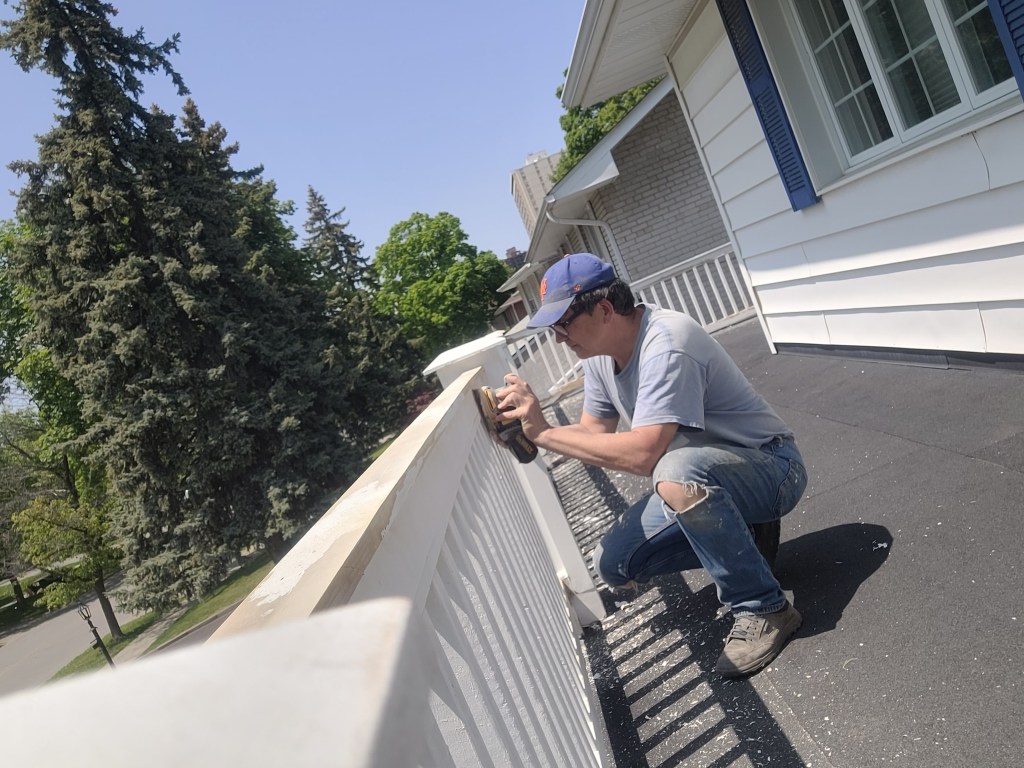
Where do I begin. Start at one end, scour for loose paint. Scrape and gouge and scrape. Bend over rail for the other side. Power up the cordless sander and methodically smooth the lines, rough up the remainder. One hour, one section. Move on to the next.

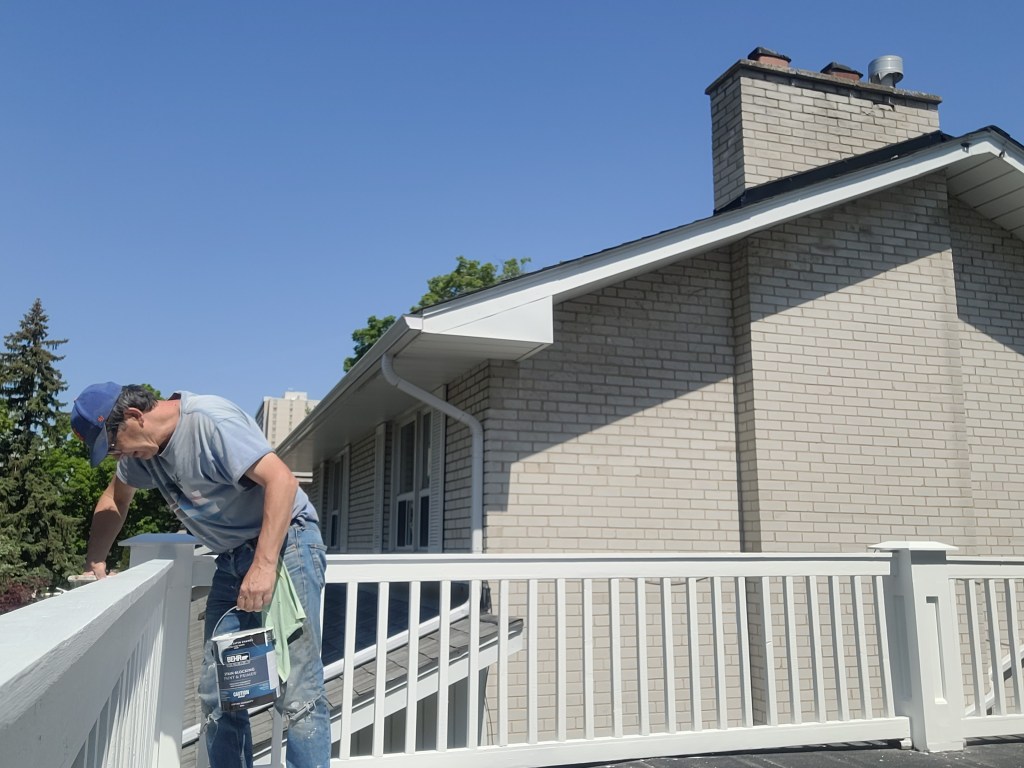
A handful of spots have started to rot and need repair so I am off to the hardware store for supplies, wood fill and paint. I expect two gallons will do the trick, or at least I would hope at this price. Day one complete. Dirty from the dust, worn out from the sun, I need a shower and that beer.

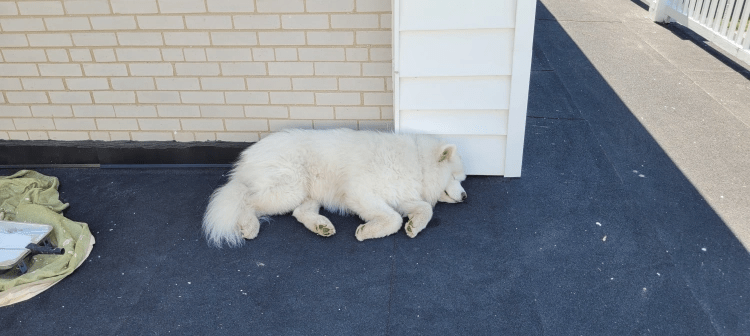
Odin joins me the next day, after his morning walk, deciding to hang around where there is shade until it becomes unbearable and moves indoors, still within earshot. I don’t have a choice. Patch up those damaged areas, layer the deeper crevices, paint over the bare spots. There are more than I had anticipated, making the decision to tackle the job even more prudent.

The job is mindless, lending itself to plenty of time for meandering thoughts. I remember a year when Olga and I hosted a Tom Sawyer rail painting party. Work friends were invited with the promise of unlimited supplies of beer and pizza, just bring along your own brush. I had completed the prep work in the evenings prior to the Saturday. T and P completed the ground level portion; D and J brought along their daughter and son-in-law who did a masterful job on the garage door; M and B climbed up and down the ladders and worked faster, not necessarily better, with every bottle and slice consumed. We had a lot of fun and laughs that day.

Day Three and the temperature has risen again, the sun relentless. The back of my neck burned, exposed from all the bending over yesterday. The paint needs constant stirring to avoid coagulation. Tedious repetition, up and down one side, inside and out, upside and underneath. Catch a drip, then onto to the next in the exact same pattern to ensure each side and corner and edge receives the necessary coverage.

The high school kids are walking back from McDonalds, in packs, loud and boisterous. None of them appear to take notice, at least when I stop to watch them momentarily. A couple with their dog stopped earlier to engage in some small talk, commenting on the beautiful work and the lovely garden and what a fine day. Our neighbour simply said hello after pulling into his driveway, before putting his head down and darting directly to his door. I was thinking about inviting him to help. Need to open another can. I am increasingly tired, the pauses are more frequent, longer with each stop. The job is almost complete.

Just the morning to finish up the project on Day Four. Paint cleanup, equipment back in storage. Stand back and admire the work. From the street, the rails glimmer again, putting a smile back on the house.

Beauty restored.

Like cutting the grass, or weeding the garden, or staining the chairs, I feel a sense of accomplishment, a source of pride in saying, “Yup, I did that. Doesn’t she look great”. I recall many an evening coming home from work, thinking, what the hell did I do today, what was achieved by writing those emails, answering those phone calls, reading those documents, chairing those meetings. I know exactly what occupied my time this past week although I must admit feeling more my age each time.

Tomorrow the lawn needs attention and then it is up to the cottage where the driveway needs weeding, the deck needs power washing and the dock needs fixing.

Three years into retirement and I am still figuring out this work-life balance.


Catch the mist, catch the myth
Catch the mystery, catch the drift

The world is the world is
Love and life are deep
Maybe as his skies are wide

The Morning After

The news arrived quietly, through the email, a brief note, a link for more details.

I was stunned, immediately reading the announcement out loud. “Generous in spirit; gave of himself tirelessly; believed that art had the power to change lives.” The obituary was dated two months earlier, not even an opportunity to attend a virtual gathering, too late again. It seemed sudden and yet I had no basis to know otherwise. There had been no contact for years, which happened instantly after another disclosure, even more shocking, spread stealthily, whispered.

I did not connect in the immediate aftermath, the toxicity too radioactive to touch, the image impossible to comprehend. We shared laughs and food, art and baseball. We dined at his house, spouses and friends, shared beers, shared stories. The two worlds did not align. The picture masked the underpainting. Many responded with recrimination. Mine was a state of disbelief discussed with those who would speak about it, purposeful avoidance with those who would not. And then he left.

His life here ruined, enough to escape without notice. Our connection was severed, no reason to let me know. Eventually I acquired his address with the intention to write. It didn’t happen. I didn’t know how. I was paralyzed. He was a victim and I couldn’t find the courage to find a way back.

Now he is gone.

And I am left with regret.

And sadness.

We have a chance to find the sunshine
Let’s keep on looking for the light

Rise Up

I have always looked forward to the celebration of Ukrainian Easter.

It is the most important date in the liturgical calendar, marked with symbolic traditions, set apart in timing and practices from the Roman Catholic church. And with the scythe of war looming over every conversation and each gathering a poignant reminder, these moments of community buttress the struggles of the Ukrainian people.

On Holy Saturday, families flock to the church with decorated baskets, filled with the bounty to be shared Sunday morning, blessed by the priest in a short, simple ceremony. Each year, we would don our handmade vyshyvanka, and fill our basket with eggs, kolbasa, ham, butter, cheese, beet horse radish, surrounding a freshly baked paska bread, garnished with forsythia branches and pussy willows, watched over by a candle. We battled Toronto west end traffic to gather in the basement of the Ukrainian Church on Leeds when Baba was alive. Every half hour throughout the afternoon, a new ceremony begins.

We staked out our spot as the previous pilgrims are leaving, laying the special cover on the table, methodically unwrapping the plastic from each item before lighting the candle. The priest begins with prayers while a cantor sings the responses, sometimes joined by the people. He then proceeds to bless each basket with the families gathered behind. The priest seems to relish this aspect as he vigorously sprays everyone with the holy water, people wiping the excess from their faces, smiling, laughing.

A brief sermon follows before concluding with a hymn. Pictures ensue, greetings are exchanged and everyone vacates for the next gathering. Some complete the afternoon by moving upstairs to the church for quiet prayer and the veneration of Jesus lying supine in front of an empty cross.

This year, we attended the services at St. Nicholas parish where the rituals followed in the exact same order. People standing in a horseshoe shape with their baskets on the floor, typical of what would happen in Ukraine as the only difference. It is a lovely ceremony, eagerly anticipated each Easter.

Our family for the blessing of the Easter basket, St. Nicholas Church, 2023

For the first time, Olga and I attended the Easter Vigil on Saturday night marking the resurrection of Christ. I had attended the English service only once, in London, and cannot explain each element. The Ukrainian version was even more opaque to me; nevertheless, the atmosphere and the emotion spoke its own language.

The ceremony began with the Archbishop leading the congregation outside, encircling the church three times, stopping to sing hymns at the front door before reentering. The body of Christ is gone, the empty cross has disappeared. The Archbishop leads the people in prayer, the choir leads the people in hymnal song. Then suddenly, the normally solemn face and voice of a priest turns to the parishioners with a broad smile declaring, “Khrystos Voskres” to which the people respond, “Voistynu Voskres”. Three times, in succession. The last refrain the loudest with children shouting from the balcony so their voices are heard above the angelic song of the choir. I understood little else, yet it did not matter. The emotions transcended all.

Throughout the mass, as if walking the streets of a village, the priest paraded in and out of the sanctuary, skillfully swinging the thurible, spreading the incense, stopping at key moments to share the news: Khrystos Voskres! Voistynu Voskres! Khrystos Voskres! Voistynu Voskres! Khrystos Voskres! Voistynu Voskres! The outburst and refrain was repeated ten times by my count. All the while the Archbishop continued with the vigil prayers and the choir filled the church with hymnal song.

The final proclamation came from the Archbishop himself to end the service. This time the church erupted in thunderous unison as he walked up the aisle to the back and out onto the street. The congregation followed, breaking into hugs and handshakes and smiles, with family, friends and relatives. Christ is Risen, He is truly Risen.

The service was pure joy, a celebration which I have seldom witnessed in my years of attending church, an emotionally charged response in a difficult time. Its expression was honest and heartfelt, heralding the beginning of spring, a new birth and rejuvenation, a sign of hope and triumph, the promise of a new and better world.

Oh rise and show your power
(Rise up rise up) We’re dancing into the sun
(Rise up rise up) It’s time for celebration
(Rise up rise up) Spirits time has come

We want lovin’ we want laughter again
We want heartbeat
We want madness to end, we want dancin’
We want to run in the streets
We want freedom to live in this peace