Common People

“Can I take your picture?”

The three young women responded with blank looks at me before glancing to each other, shrugging their shoulders, either for lack of understanding or for signs of agreement amongst themselves. They were sprawled alongside the curb, amongst empty pails and sacks of red onions, tired, exhausted, scarves wrapped tight atop their head, faces fallen, arms and legs hanging. I thought it to be a perfect picture of working in the market.

I pointed to my camera, then back at them, “a picture?”. They turned to a woman nursing her child, who smiled and explained, to which they demurely shook their heads whilst waving their hands at me, “no, no”. I moved on.

Earlier, weaving through the people jamming the market, I encountered an older woman, sitting amongst her wares, bags of various nuts, singing, banging her tambourine, grabbing my attention and curiosity. A quick stop and a photo garnered an angry admonishment, beckoning me, but I kept walking, pretending not to understand, an easy answer from the lone white guy in the crowd. I had not expected the resistance.

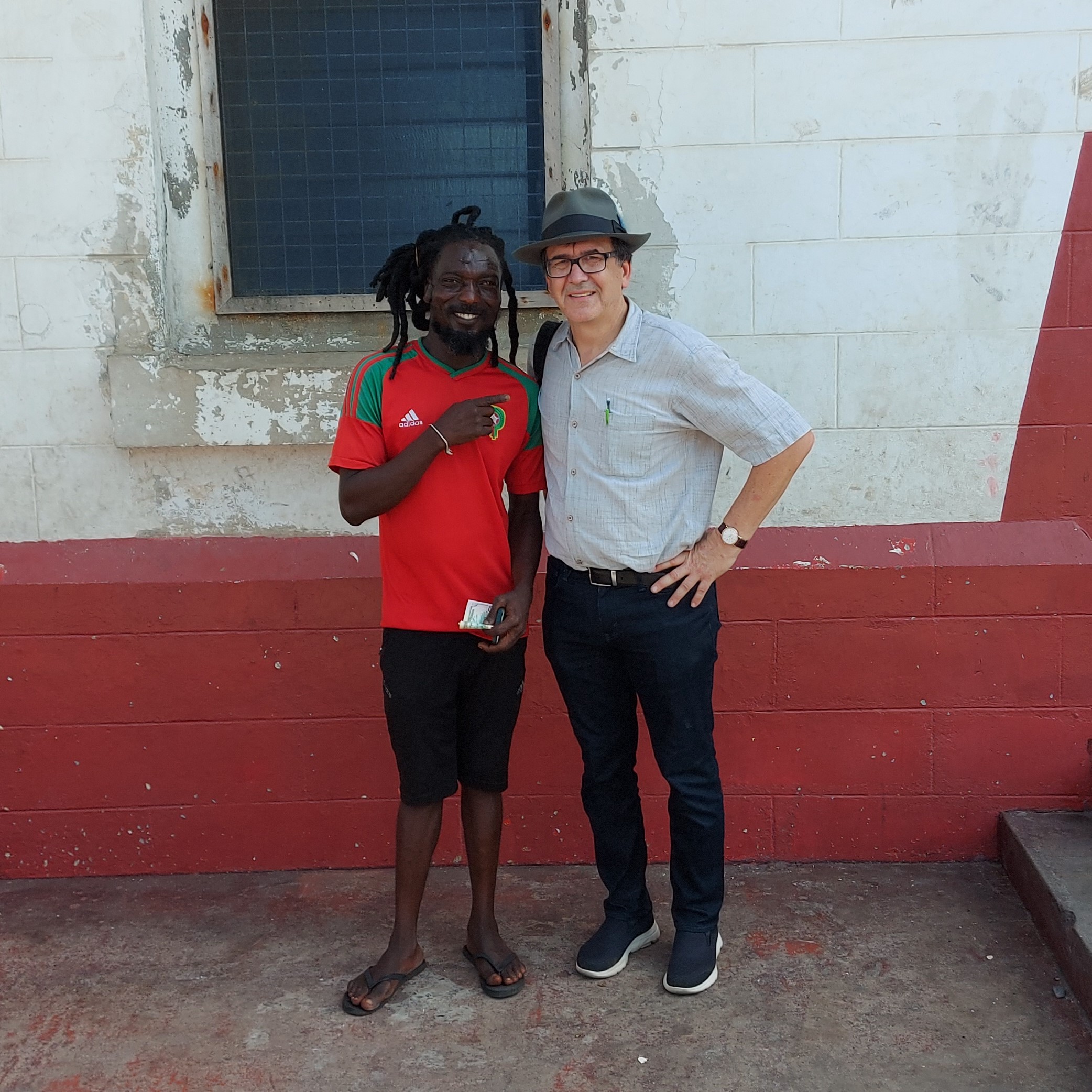
My intention on all my excursions is to capture the faces and situations of the people, not just the architecture and scenery. Most of those in India, for example, were obliging and co-operative, posing proudly alone or along with me. In Tanzania, the Maasai were oblivious to my camera, although they were a stop on the pre-arranged tour, and were anticipating a purchase of their crafts after the display of dance and song. My Ghana guides accommodated my requests for a photo, Asante asking one for himself.

They were being paid, perhaps viewing the request as their job, which I interpreted as friendliness. The market experience had me being more cautious, taking pains to ask, sometimes directly, other times through my guide. I wasn’t very successful.

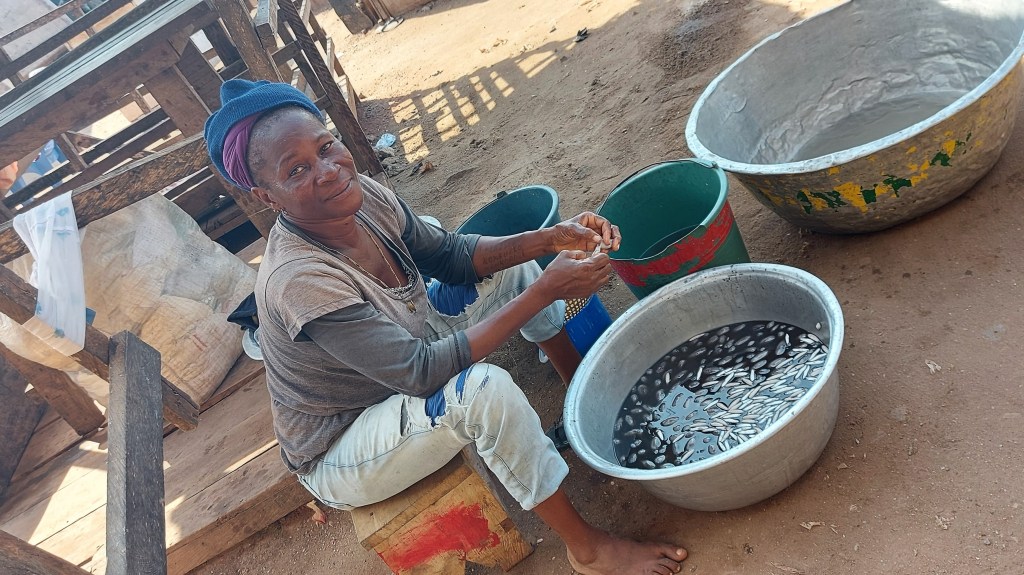
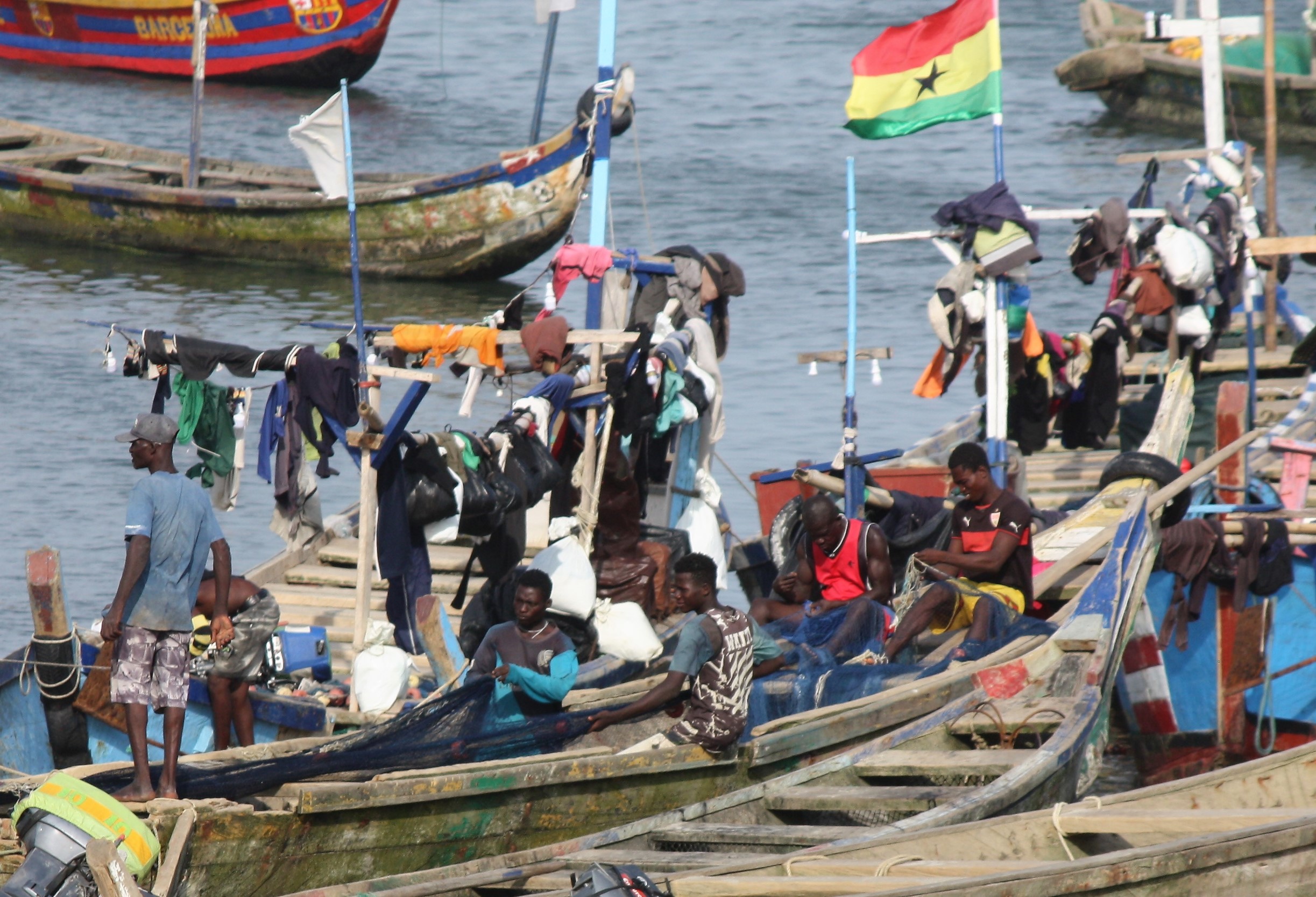
During a walk through a fishing port, we encountered an old woman, alone, peeling squid, meticulously, deliberately, one after another, tossing the remains in one bucket, dropping the cleaned fish into another. I hoped to the capture the image, asking Kwame, our guide, who then translated to the woman. She reluctantly agreed.

After I showed her the result, I turned away, catching Kwame, out of the corner of my eye, handing the woman a bill of undetermined denomination.

“Did you just give her some money? I have money and would have done the same had I known. Let me repay you.”

“Not to worry, not to worry.”

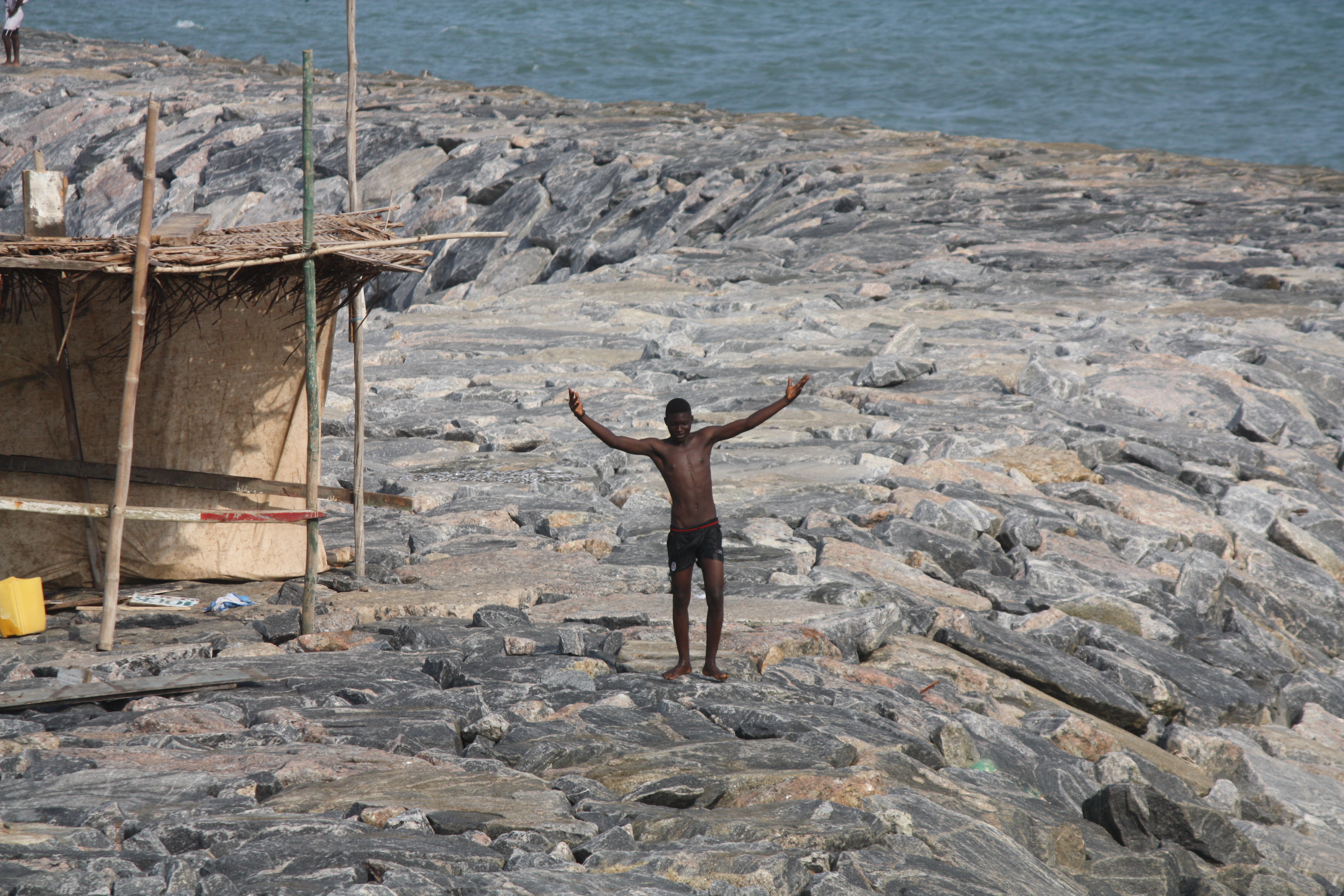
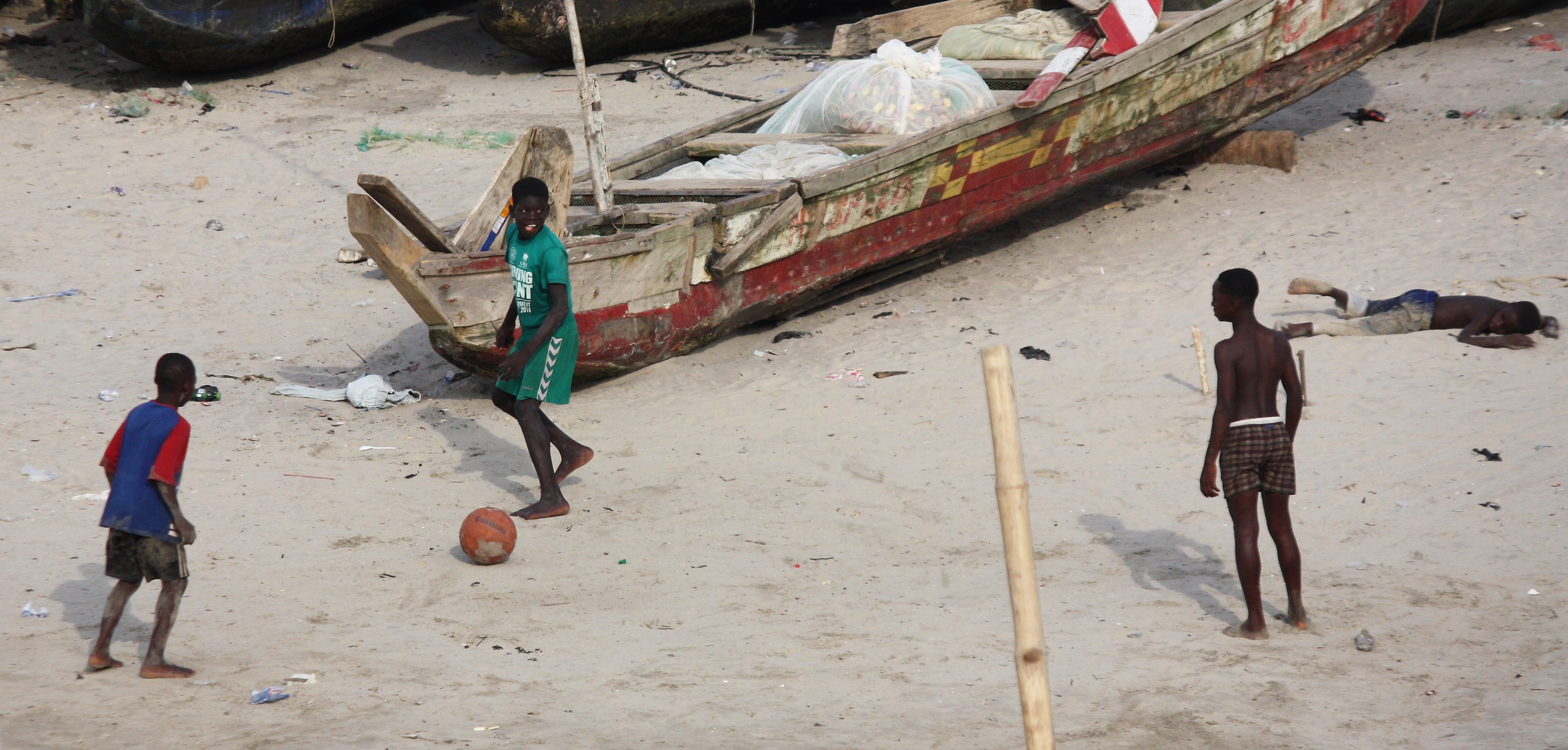
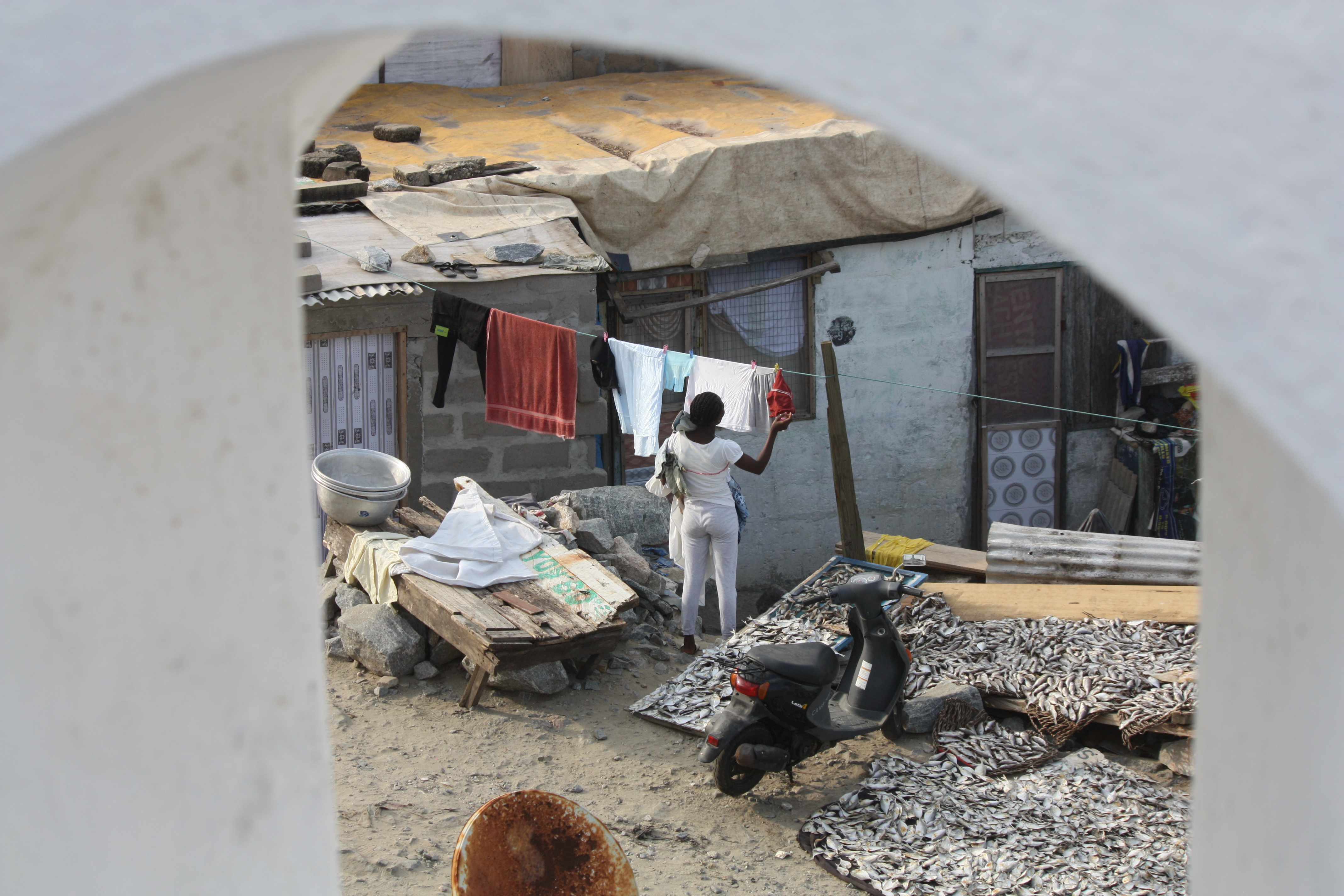
I was considerably more circumspect the rest of the day, utilizing the zoom lens of my DSLR to capture people from a distance, themselves unaware a photograph had been taken. From the heights of the castle walls overlooking the busy grounds below, I captured whole scenes, surreptitiously including Ghanaians attending to their business or their play. Then, with the miracle of computers and photo software, I managed to conjure some personal close up shots.

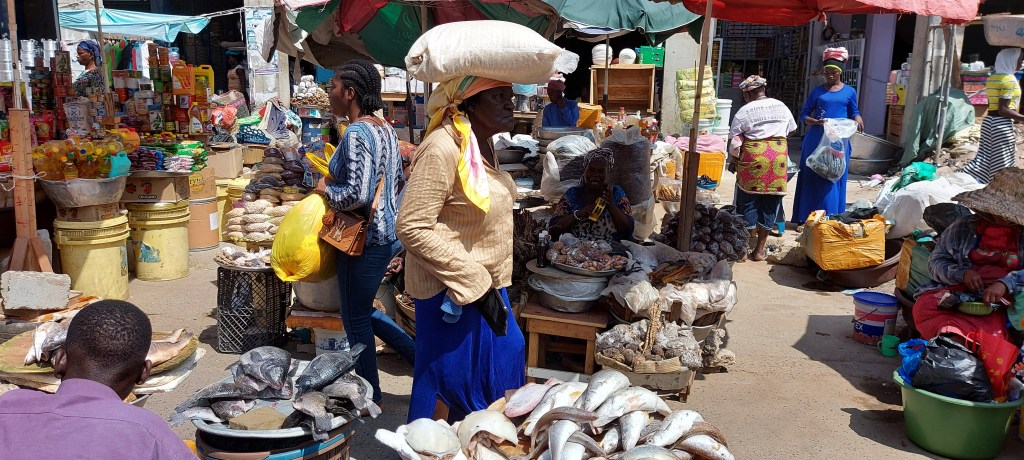
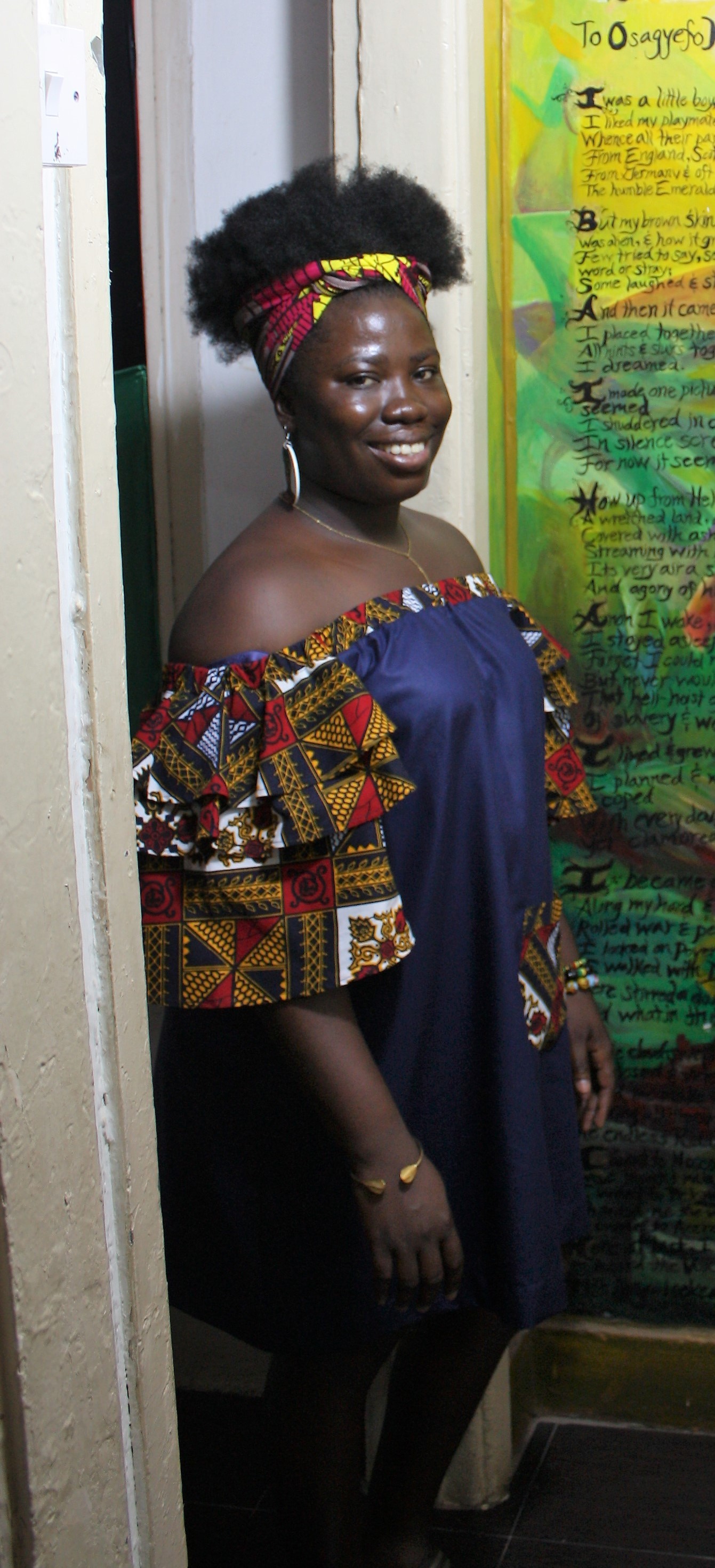
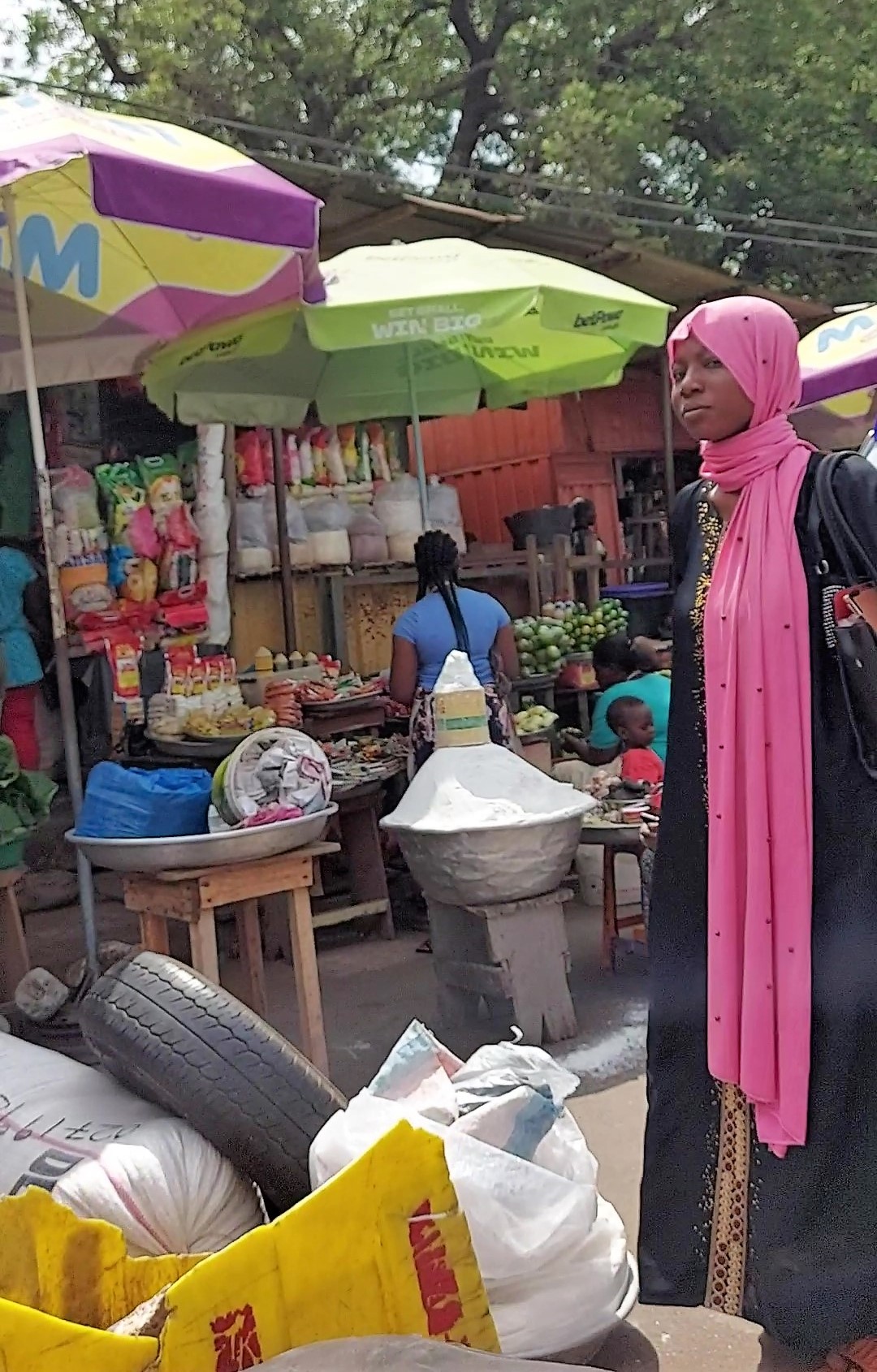
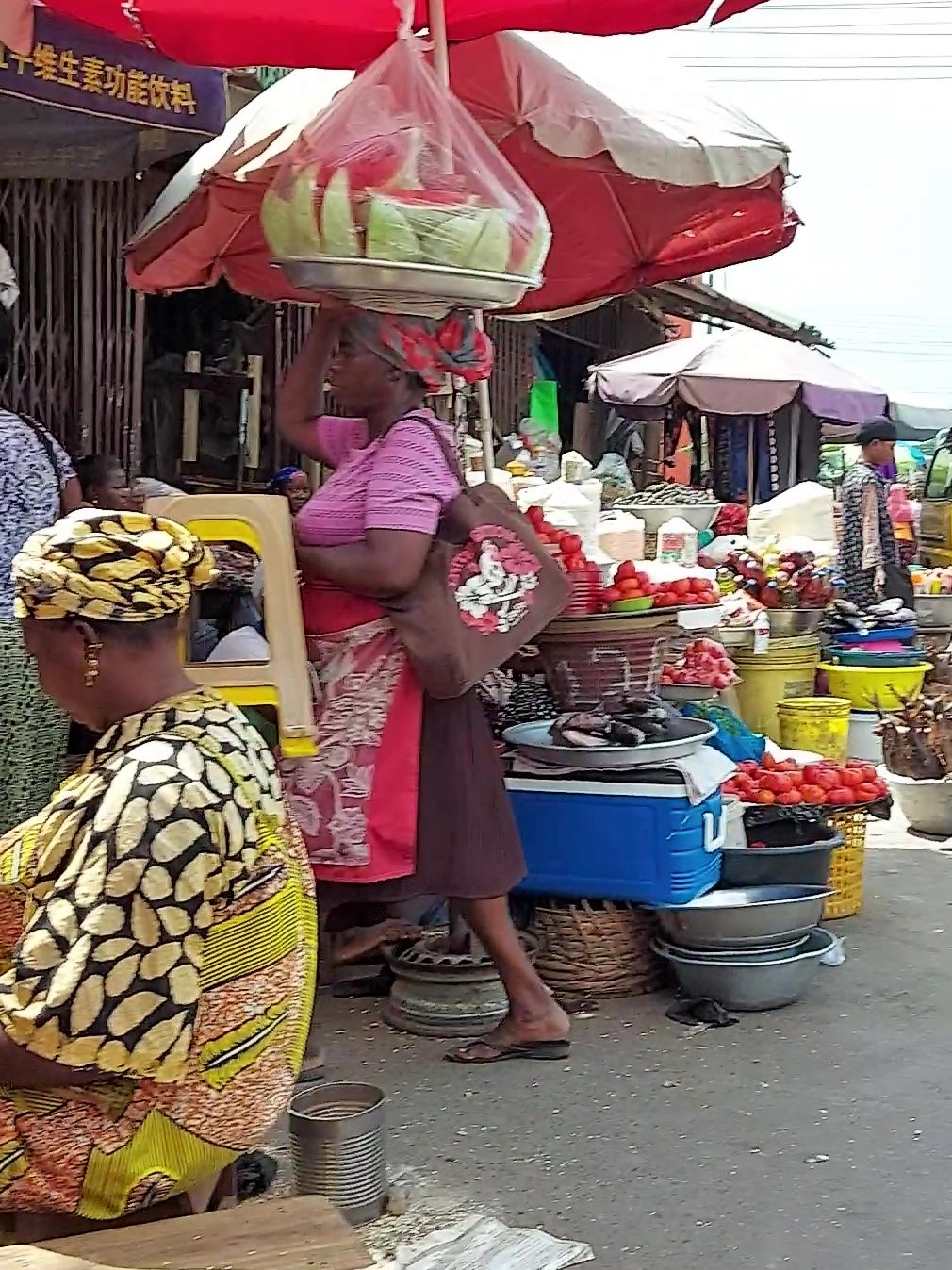
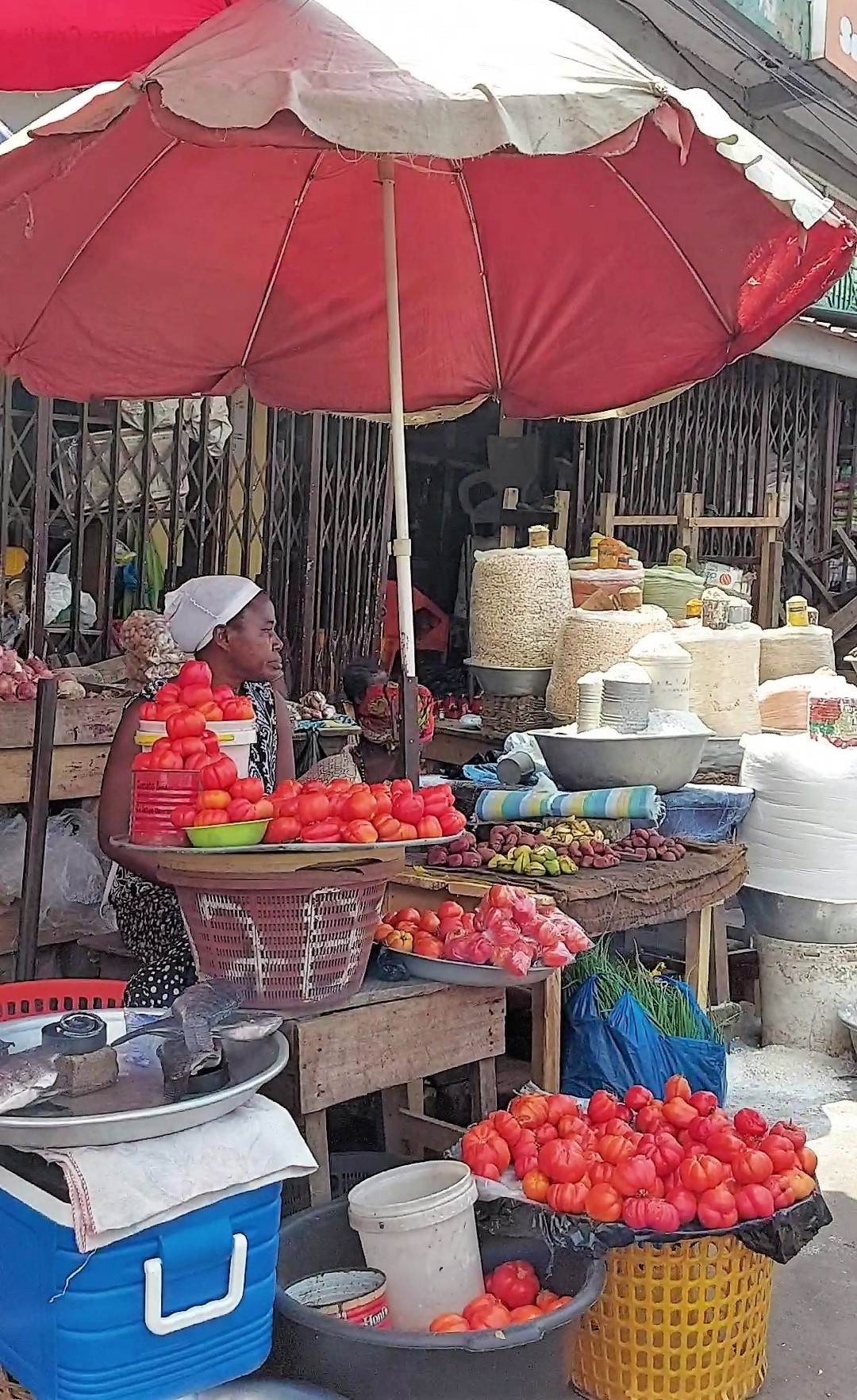
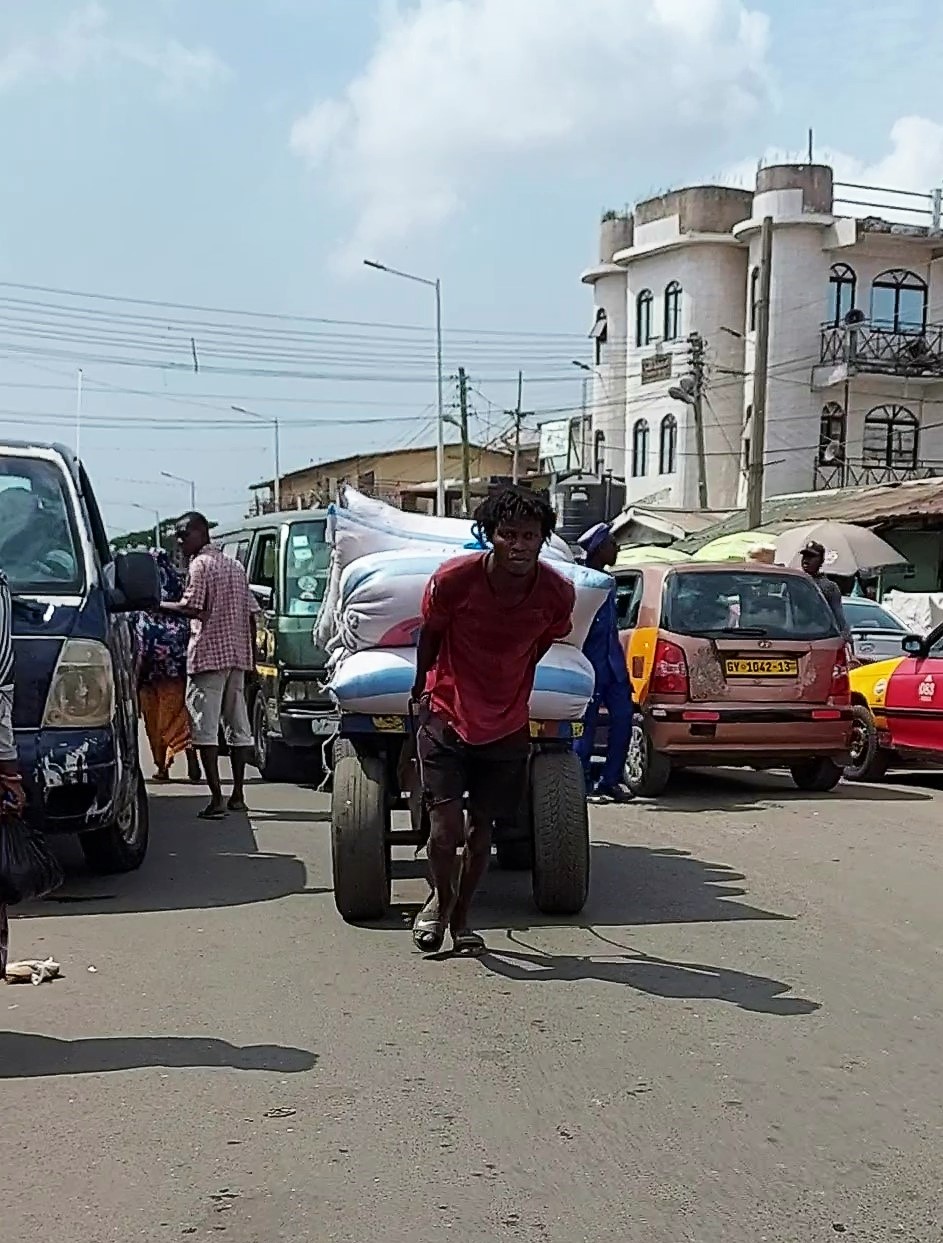
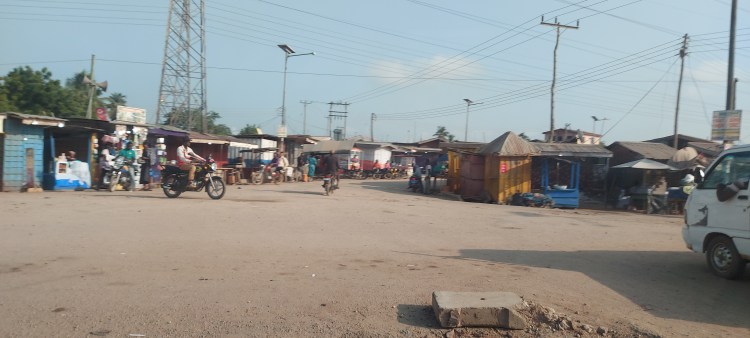
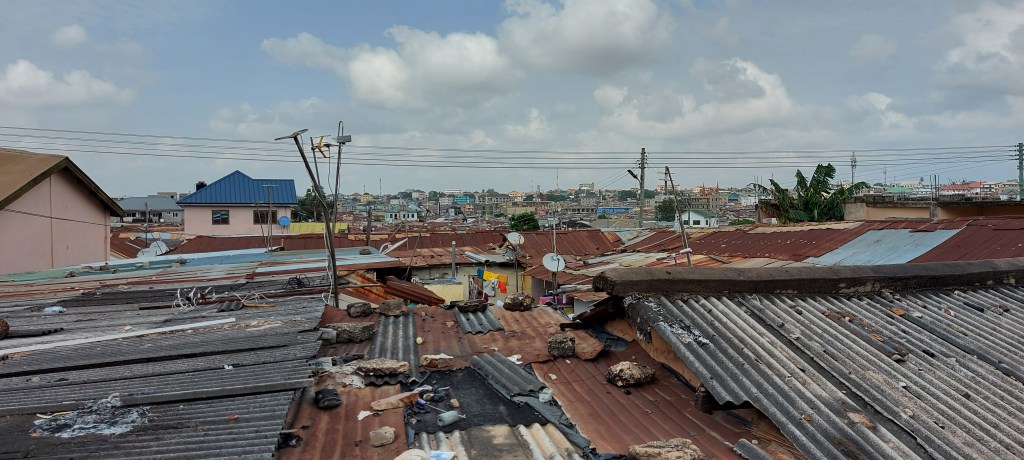
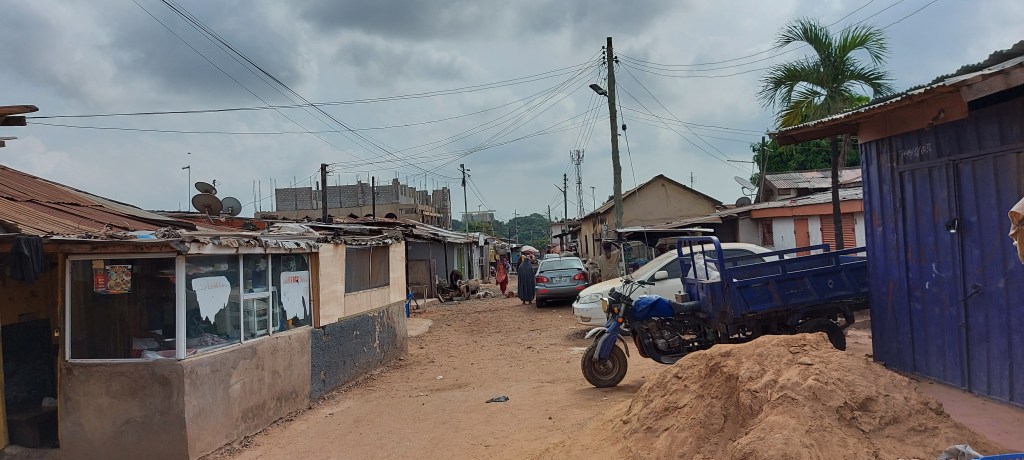
On my final day in Ghana I was escorted through the Nima slum of Accra, advertised for its colourful market and people co-existing from different backgrounds, cultures, and religion. My guide talked about the dominance of women in business, a testament to their strong presence in commerce. The write up encouraged participants “to interact with the local women”, so I asked Mohammed to speak with a select few about photographing their stalls. I was particularly interested in those with baskets of nuts or produce or legumes. I wanted to capture the bountiful scene. Mohammed made several attempts, rebuffed with each request. It was clear people were uncomfortable. Even taking a picture of stacked microwaves was met with anger by the locals, telling Mohammed he was not the owner and therefore had no right to encourage.

Still wanting some images, I turned my phone on the video and held it by my side, inconspicuously, facing outwards as we walked the streets. The footage itself provides a sense of the chaotic nature of the market, and with the marvel of computer technology, I managed to isolate several screen shots which portrayed some flavour of the people and the Nima neighbourhood.

A degree of guilt still gnaws at my conscience reviewing the images. In my first trips to the continent, I was concerned pictures could be interpreted as touristic voyeurism. Each experience since has shifted my views, refined my outlook. As I think about my best photographs at home, they are largely close-ups, capturing a smile, a smirk, a natural laugh, a thoughtful look, the wrinkles, the worries, the concern, the joy. I am attempting the same with those in the worlds into which I have the privilege to interact. My best efforts at writing or describing the places and the people falls short.

I hope, therefore, I am forgiven for these photographs. My intention is only to remember the people as they are.

You will never understand
How it feels to live your life
With no meaning or control
And with nowhere left to go
You are amazed that they exist
And they burn so bright
Whilst you can only wonder why

Money Talks

“Have you gotten over the culture shock?”

We are about an hour into our drive to the city of Cape Coast, having woven through conversations about Ghana, Canada, and Sweden. Kwame picked me up from the hotel at 7:00 am before a quick diversion to another for Anna who had already been in the country for two weeks. The conversation flowed easily, questions and answers and observations, comparisons between Europe and North America and Africa, all of it in English. Today is my second day of sightseeing after six days of presentations and meetings, traversing between two hotels in Accra, and scooting off to the airport at 4:30 am for early morning flights to Kumasi and Tamale on Wednesday and Thursday. Kwame knows this trip is my first time in Ghana.

“Oh yes. I have been to the continent of Africa before. Uganda, Tanzania, and South Africa.”

In asking his question, I expect Kwame is referring to the streets and living conditions for what appears to be the majority of the Ghanaian people. The roads lined with ramshackle shops or dilapidated shelters, small businesses offering common household necessities and the occasional luxury item amidst the dust and dirt of relentless traffic. People and goats and dogs meandering amongst cars littering the shoulders, weaving between the stalls and wares, children in tow, shopping and browsing amidst the honking and music and megaphone pronouncements of yet another one man church. A bedraggled man dressed only in a loin cloth, pulled up on an angle, stumbles across the road in front of us, his penis swaying with each step.

Entrance to the former refugee camp where Alphonso Davies was born.

Each stoplight is an opportunity to scout the merchandise for offer by men and women, boys and girls, walking in between the standing vehicles, hankering for your attention, hawking water and fruit, belts and bras, maps and flags, toilet paper and towels; a cornucopia of products available for purchase by simply rolling down the window to hand over the negotiated amount of Cedis. You are confronted by beggars clamouring for spare bills, legless young men rolling around on skateboards, an old blind woman led from car to car, children pressing their faces against the tinted glass yelling for some attention.

These scenes reflect that of parts of Kampala, and Dar es Salaam and Johannesburg; and India and rural China for that matter. What culture shock exists stems from the comparison to my hotel with its outdoor pool and indoor sauna and beautiful people, buffet meals and craft beer and original artwork.

Money talks. Money screams. Money buys you dream machines……

The day before, my eyes were opened to the history of Ghana, it’s independence and early years, the adoration of the first President of the country and leader of the Pan-African movement, Kwame Nkrumah, a socialist and revolutionary. The tour included a visit to the home of William Edward Bugat Dubois, an American sociologist, close friend of Nkrumah, and noted Pan-Africanist civil rights activist, who became a Ghanaian citizen. My guide endearingly described him as a communist who was not born in Africa, Africa was born in him. Pictures lined the walls of Dubois with Mao Tse Tung, of Macolm X visiting; the library shelves stocked with the works of Marx, children’s books of Aunt Rosa [Luxumburg] available for borrowing, all around the corner from the American Embassy.

It is clear that we must find an African Solution to our problems, and this can only be found in African Unity. Divided we are weak; United Africa could become one of the greatest forces for good in the world.”

Kwame Nkrumah (quote on display in W.E.B. Dubois Museum)

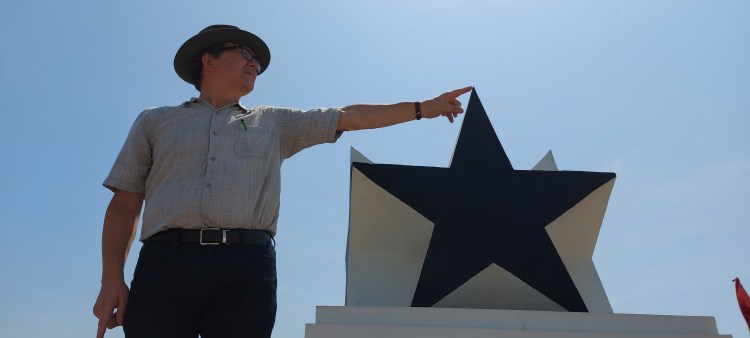
When he became President, Nkrumah discarded the colonial label, Gold Coast, to rename the country as Ghana, the “warrior king”, with a Black Star in the new flag to symbolize the Pan-African movement. Little wonder he was overthrown by a military coup four years later, supported by the Americans, according to Emmanuel my Accra city tour guide..

I posit this belief to Kwame in our expanding conversation about the economic and political realities of Ghana during hour two of our drive. He goes further to explain the coup was supported internally by members of the original six, pointing to them on the 50 Cedi note, claiming the current President is the son of one member, and was now finishing the job economically by selling out to private corporations and state capitalists. The sale of rights to the Chinese government for the redevelopment of Jamestown harbour in support of foreign fishing trawlers was the latest example.

Money’s what it takes to make it rock…..

Kwame hesitantly gambles a conclusion with us, unsure how we will react.

“I think the rest of the world is exploiting Africa.”

Anna and I respond immediately in vigorous agreement. As we venture into political structures, it becomes apparent Kwame is not wedded to democracy as the answer to his country’s ills. He can even live with corrupt leaders as long as their cause is for the benefit of the people. And when I see a state where the rich natural resources are foreign owned; where western aid agencies lend large sums of money to induce crippling debt in return for nominal value; and where national leaders are educated abroad, indoctrinated with market ideology, I can understand the skepticism and the appeal of an alternative narrative. We reach our first destination and the conversation ends.

Everyone is a little tired on the eventual ride back to Accra as darkness descends over the long day, so there is limited pickup on the themes discussed earlier. At one point I comment, somewhat ethnocentrically, on the seemingly oblivious attitude of people to the danger of walking the busy roads without lights.

“They have become accustomed to it. What choice do they have?”

Don’t want a house, colour TV
Just let me shake that money tree
Because everytime it shakes
Money Talks.

Strange Things

Let me tell you about the strange things happening to me
Strange things

I wonder if the next guests of Room 716 will have a wash cloth.

There was one when I arrived. It was tightly rolled, resting in the aluminum cradle atop the bathroom counter, waiting for me to wash my face.

Which I did. In the morning.

It joined the bath towel on the floor, used after my shower, accompanied by the smaller hand version used to dry my face after a fresh shave and my washed hands following the most common use of the facilities.

When I returned later that day, the pile was gone, the bed was made, the towels replaced, water bottles and instant coffee replenished. Unsure if the sheets were new. The aluminum cradle atop the bathroom counter was empty.

The next two days I had to rely on my clothless hand to wipe away the sweat and film. It evoked memories of another adventure in Africa, east side. I am beginning to wonder if desiring a wash cloth was only me, that others don’t miss it, or don’t use it, and staffers aren’t in the habit of replacing it.

The door rings while watching the late “football” game; peep through the hole, someone from the hotel wants to turn down the bed, close the blinds, leave behind a pair of fresh slippers. Can I get a facecloth? He gives me two, tightly rolled, fitting perfectly into the aluminum cradle atop the bathroom counter.

Moist and soapy, I spread the cloth over my face, wiping down each side, across the nose, rubbing the back of my neck, feeling cleaner. I decide to leave it hanging in the sink, drying, saving it from an early departure, a one and gone.

When I returned later that day, new water bottles appeared, all was arranged neatly, orderly, with only one face cloth tightly rolled, abandoned, in the aluminum cradle atop the bathroom counter.

Still several more scheduled days, fearing its destined loss, I left it untouched, checking each day, hoping another would arrive, saving it from a familiar fate.

Until the last morning. A shower, a shave, a face wash. Twice.

I left the unfurled cloth to fend for itself, wondering if the now empty aluminum cradle atop the bathroom counter would remain that way for next guest of Room 716.

Strange things are happening to me
Ain’t no doubt about it.

Follow You Follow Me

In your arms
I feel so safe and so secure

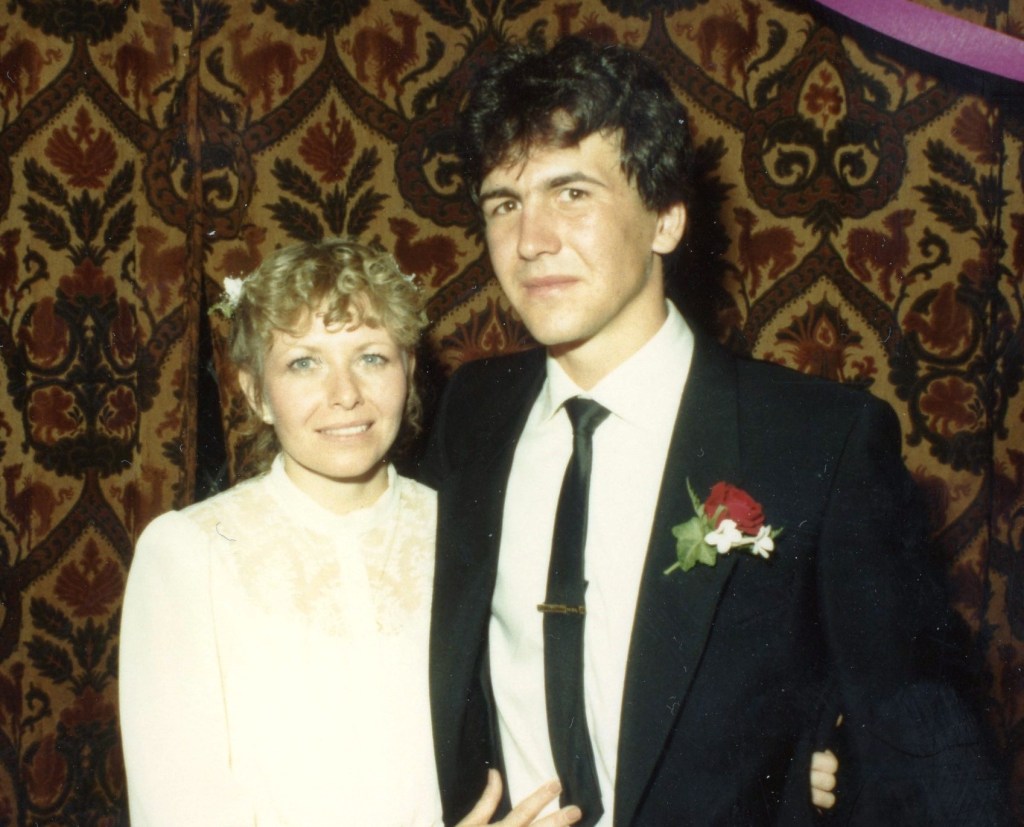
At our wedding reception, October 1, 1983.

Plans are made, hopes are spoken, dreams are imagined. What no one really knows is what follows the wedding day, how the days and years will unfold, where your lives will be lived, when you will be thrown a curveball.

Instead, what we had was faith. Faith that as long as we are together, we will figure it out, whatever “it” happens.

The “it’ was pronounced in those very early years, when work was tenuous and life marched on. Me driving truck for 6.25 an hour while you finished your undergraduate, our miniscule savings evaporated to repair the Monte Carlo lemon just as we moved to Toronto. Purchasing a “hole-in-sky” condominium with you employed in child-care and me enrolled in the Masters program at York University, seemingly doable and then challenged with a pregnancy discovered a week after being laid off. Me coping with unemployment after Nicholas’ birth, after graduation, schlepping to the overnight shift at the warehouse, turned down repeatedly for jobs, finally landing contract teaching work. You pregnant with Olena, we purchased our first house, mortgaged to the max, permanent work still unattainable. Then when we were finally established, you choosing to cut back, changing direction, for the family, for their future,

And through “it” all, we grew, along with our children, relishing the simple pleasures, enjoying each other and the kids and managing the realities of family life, immediate and extended. Leading by example, learning from the experiences, loving unconditionally. The degrees, the houses, the careers, all accomplished because of our belief in ourselves and in each other.

And on this day, 39 years later, we can smile.

Happy Anniversary Olga.

Love always,

Everyday is such a perfect day to spend
Alone with you

I will follow you will you follow me
All the days and nights that we know will be
I will stay with you will you stay with me
Just one single tear in each passing year

Help!

I need somebody
(Help!) Not just anybody
(Help!) You know I need someone
(Help!)

“Is that close enough?”

Behind me, over my right shoulder, someone is being maneuvered into a spot for the table. I don’t look, continue drinking my late breakfast coffee, scrolling through the article about the Jay’s loss in Tampa on Thursday.

“Yes, thank you. Could you put the brakes on?”

“Of course. Will you be needing anything else?” asked the young woman.

“No. Thanks again.” His voice rising above the crackle of the unravelling sandwich wrap.

The hospital atrium is a hub of care workers, patients and relatives finding solace in some refreshments and a respite from mask wearing. An indulgent apple fritter and another medium dark roast has prolonged my stay. One more hour before Olga is out of the operating room and then another hour and a half for recovery before I can venture back to the day surgery reception on the third floor.

The bats were quieted again by a series of relievers.. THUD! I whip my head around to catch the plastic Coke bottle rolling away on the floor.

“Oh man. Ugh.”

Smartphone still in hand, I shove back my seat, move to the right of the wheelchair and bend down to return the drink to the table.

“I have some extra napkins to wipe up the floor.”

“Is there a big mess? My eyesight is poor and cannot see beyond what is close in front of me.”

“No, not a lot. The lid helped.”

“Thank you. Nice to meet you. My name is Gerald. And yours?”

“Henry. Nice to meet you as well.” I sit back in my seat, sneaking a glance at Gerald’s bandaged leg with a metal prosthetic shin and ceramic foot.

With the last of the highlight videos and the final gulp of tepid coffee, I stand up to begin a slow stroll and think to ask Gerald if all is okay.

“I need to find the bank machine. There is one just around the corner of the pharmacy, over there to the right. Would you be able to push me to it?”

“Not a problem. Brakes off?” and away we go. Around the staircase, dodging the parade of people traversing the floor, Gerald directs me to the ATM machines, asking for the one on the left because the other had accepted his card earlier but did not dispense any money. I inch him up until the foot petals touch the wall. “All good?”

Hunched over, Gerald coddles a tattered money purse, opens it and asks “Do you mind looking in there for my bank cards? There is a green one for the TD and a blue one for RBC. Yes, that one; and that one. Good. Thanks. Can you put in the TD card into the machine for me? I can’t see very well and I need to get some money for groceries. I only do this about once a month. I need six hundred dollars. I will tell you the pin.”

I hesitate. Am I hearing this correctly? He wants me to use his bank cards to withdraw cash? Is he trusting me to not abscond with any of the money? Can I trust him to not falsely report a crime? Is his eyesight that poor? Is this a ruse? Secret camera somewhere?

Gerald looks up; I cannot say no, so I insert the card and begin reading out the prompts.
Pin? He rattles off the four digit number.
Account? Chequing.
$600? Confirmed.
It only allows for a maximum of $400? You will need to cancel and do it twice – one for $400 and the next for $200.
What is your pin again? And we repeat the procedure.

Eventually the machine spits out a stack of twenties which I extract from the dispenser, unsuccessfully attempting to place the bills in Gerald’s hands before he suggests putting the money directly into the pouch along with the card.
Now you want $360 from the RBC account? Yes.
Pin? He repeats the exact same numbers.
Another transfer, before confirming there is a wad of bills adding up to $960, the amounts from each bank separated by the respective cards. He stuffs the closed money purse into his satchel without checking, without question.

I wheel Gerald to the volunteer desk as he thanks me for the time. Wandering back to Tim Horton’s, I am half expecting to be apprehended by security or police in the foyer for stealing money from a blind and lame victim. The opportunity was there. No one was paying attention.

Yet Gerald, in a position of vulnerability, put his faith in someone he did not know, could barely recognize, and only just befriended in a chance encounter.

And his faith was rewarded.

Scatterlings of Africa

We are on the road to Phelamanga*
Beneath a copper sky

It was an inauspicious start to the day, my last in South Africa. The 8:00 am pickup was delayed until 8:30; not a problem, more relaxing for breakfast. Out in front of the hotel promptly, I began pacing in the sun as each minute ticked past the allotted time, inching ever closer to 9:00. I was in the midst of composing a text when the vehicle arrived to park in front of the gate. The driver popped out of the Corolla; tall, sporting a fedora, he waved me over, offering a seat, front or back, whatever my preference because I would be the lone tourist, unexpectedly, for the Apartheid Museum and Soweto tour.

We exchanged greetings and engaged in some small talk. Audrey then began talking about the day, confessing he was not certain the Apartheid Museum would be open. I was puzzled, thinking, as the guide, he would have that information at his finger tips. No worries. Yet.

Audrey started explaining about buildings within our sights, providing some history to Johannesburg, pointing out attractions as we motored through the city in the direction of the museum. The parking lot was empty, a lone security guard lingering outside the entrance doors. Maybe we were early.

Nope. Audrey was informed the museum was closed Mondays and Tuesdays at this time of the year.

Now what?

“I guess we can substitute another venue. I had seen a number of sights suggested by Trip Advisor. Perhaps we could explore some of those instead.”

“Okay. Was there anything you wanted to see?” Audrey asked, not offering up any suggestions.

I dug out my smart phone and began a Google search of sights in Johannesburg. The only one of interest not already included (presumably) was a place called Constitution Hill.

“What do you think?”

“Okay. We can do that. I will drive to Soweto. After we will stop at Constitution Hill.”

Back onto the road, heading for the highway, we continued, the remainder of this half-day tour now in question, at least in my mind. The descriptions started up again, pointing to a modern, enclosed stadium built to support the World Cup several years ago, allowing 3,000 fans. When questioned, he changed to 30,000 which on the ride back ratcheted up to 90,000.

In the distance, we caught a glimpse of Constitution Hill. Audrey’s tone changed. His statements emphatic. “The courts were built on the site of a prison where the people were treated like animals. No, they were treated worse than animals.”

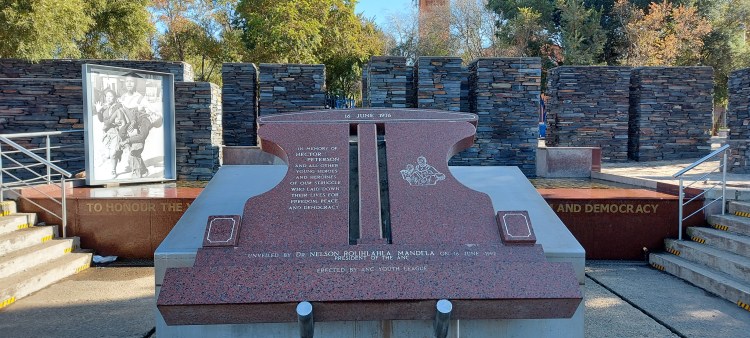
The Hector Pieterson Memorial would be our first stop in Soweto. The accompanying museum was closed. Audrey began describing the 1976 events which led to its construction.

Without hesitation, he spoke with reverence of the protest for equality in education, how the site was named after the young boy in the picture, one of several hundred who died that day when troops opened fire on the crowd. The running water represented the tears, flowing over the stones which were the only weapons of the people, the pillars depicting the lives lost, the spaces in between for the unidentified victims.

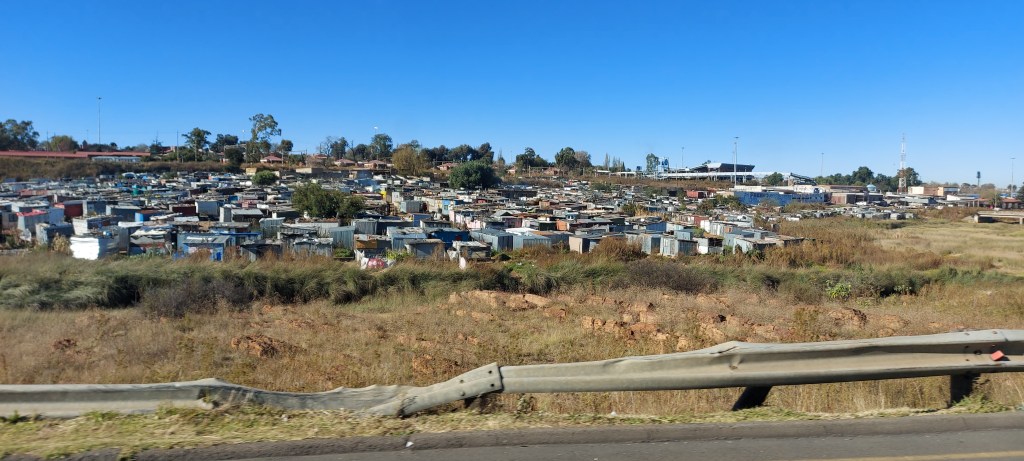
Back into the car we headed for the stacks, now an iconic symbol of the township. Built by the people of Soweto, within its confines, providing electricity for other parts. Soweto itself would remain dark, a hint of disgust in Audrey’s voice.

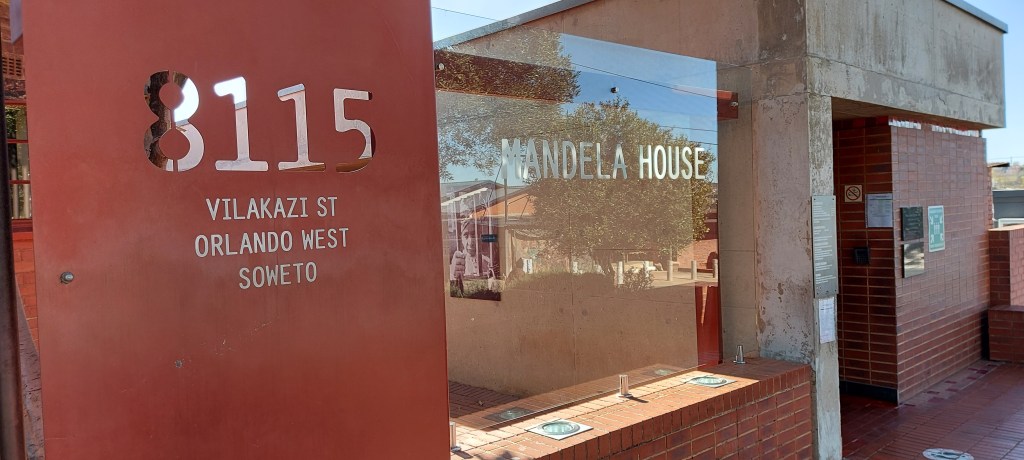
On to Vilakazi Street, home of two Nobel Peace Prize winners, Desmond Tutu and Nelson Mandela. With equal pride, I recalled watching the release of Mandela from prison. Audrey was too young to remember the day but emphasized its importance.

Leaving Soweto Township, we engaged in conversation about class and wealth; Audrey began identifying areas according to their income status, placing himself as middle. The towers of Constitution Hill were in our view again, so Audrey repeated some of his earlier history lessons, ending with an indignant, “Prisoners were treated worse than animals.”

The list of sites to visit understates the significance and impact of Constitution Hill. A trifle unassuming when we arrived, the horror of South Africa’s past and the hope for it’s future are encompassed in a recreation of the old and the construction of the new.

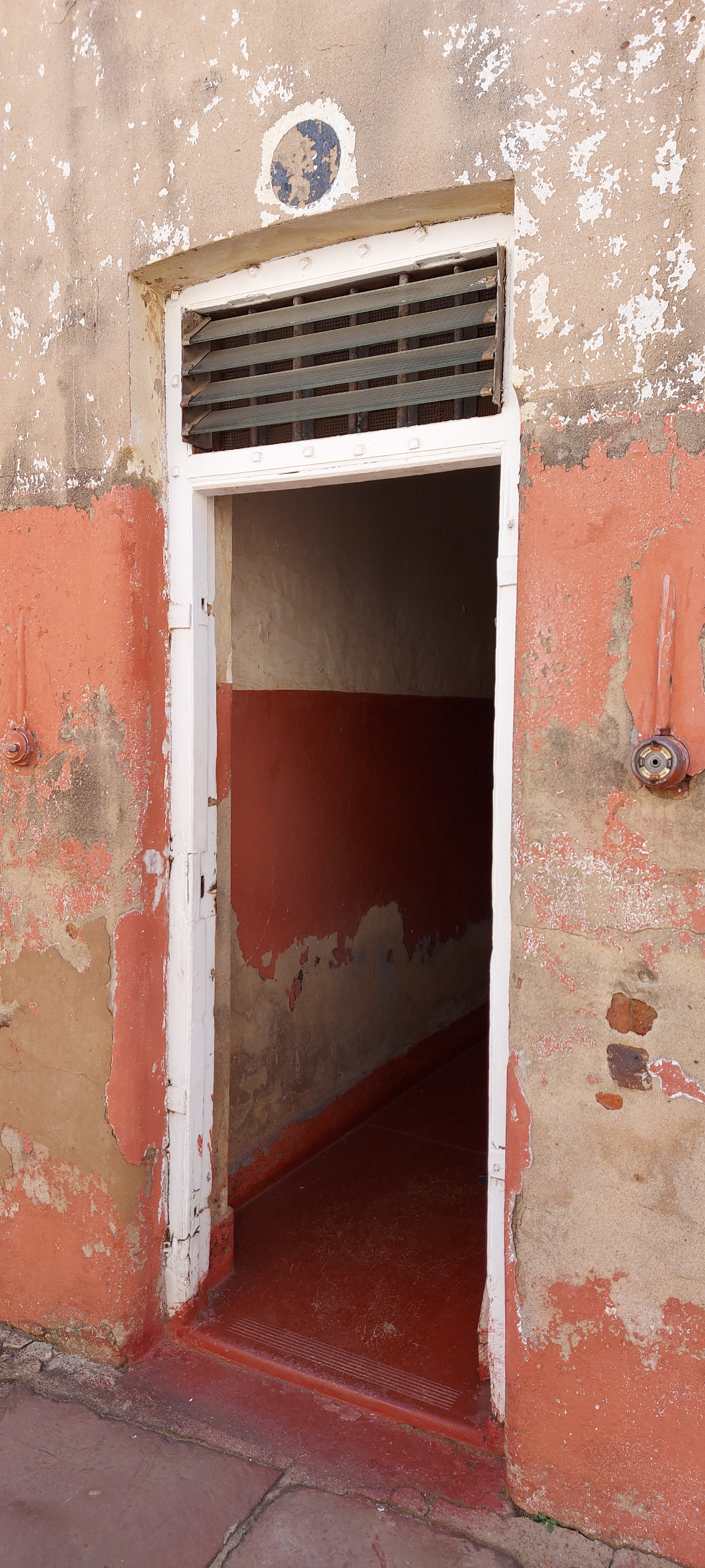
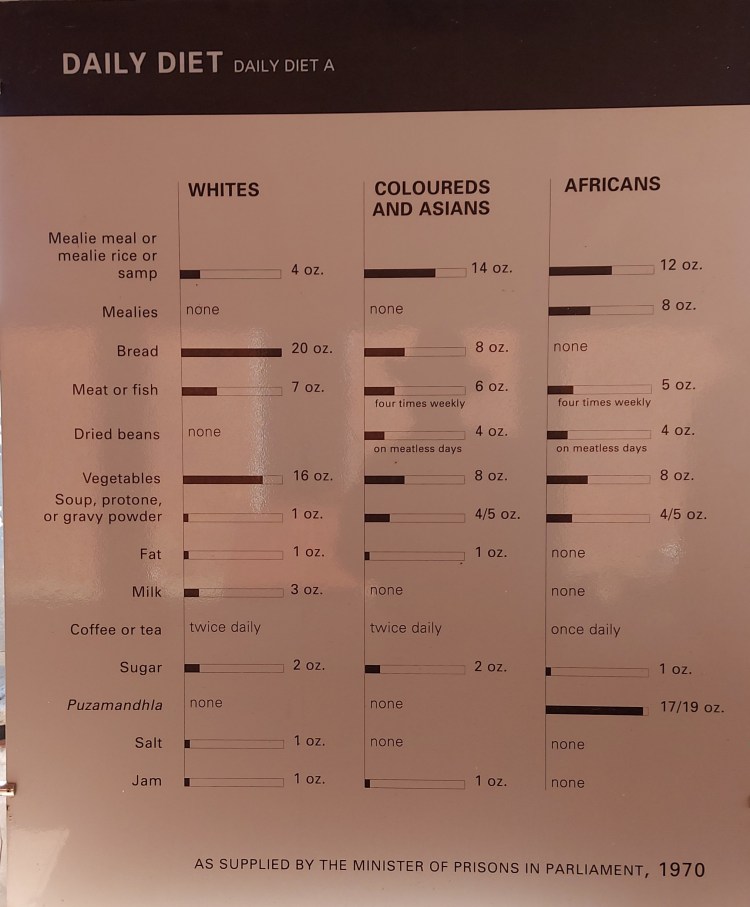
The notorious prison stripped the dignity of its captives with open lavatories adjacent to the eating quarters, frequent use of isolation cells without light and blankets, food rationed according to your race – white, coloured or black. Audrey examined the exhibit with the interest of a tourist, absorbing the material, listening intently to video explanations, ensuring I did not overlook the salient pieces.

“It is said that no one truly knows a nation until one has been inside its jails. A nation should not be judged by how it treats its highest citizens, but its lowest ones – and South Africa treated it imprisoned African citizens like animals.” Nelson Mandela.

The judicial chambers of the Constitutional Court were built with the bricks of the holding towers to constantly remind the judges of the grounds surrounding them, of the ghosts which haunt South Africa’s history. The atrium outside displayed the art of apartheid and the vision of reconciliation.

Walking to Mandela’s cell, in the old fort portion of the complex, Audrey repeated for the third time, “people were treated worse than animals” with a conviction emboldened by the displays. If his description of most aspects of Johannesburg sounded learned and static, Audrey’s portrayal of black lives under Apartheid emanated from emotions deep within.

Time was up, the tour was over, Audrey had more customers for the afternoon. He drove me back to the hotel, hoping it met my expectations and apologized for the museum mix up.

The accidental stop, Constitution Hill, arose as the most important visit on my very brief stay in South Africa.

Scatterlings and fugitives
Hooded eyes and weary brows
Seek refuge in the night

They are the scatterlings of Africa

*the end of lies, where truth begins

Downtown

Things will be great when you’re
Downtown
No finer place for sure

The Playground, a market only open on Saturdays, is listed among a number of sights to visit in Johannesburg. My South African colleagues were not aware of the place, asking me to be more precise about the location. When I showed the map, they classified the immediate area as orange: safe to visit, just remember to be careful, typical precautions of a big city. You might also consider visiting an area call Maboneng, a fledgling new hotspot. I am sure they assumed Uber would be my form of transportation because there was no mention of the space in between.

The Uber driver let me off at the requested address, a twenty minute ride from the hotel. I recognized the building from the website and eventually found the entrance. Greeted there by a jovial black man and a young white woman providing guidance, I inquired about food, asking for their recommendation. Both immediately pointed to the Argentinian stall serving the most delicious steak sandwiches. I sat with my order at a nearby table and engaged in a conversation with a couple originating from China who have lived in Johannesburg for 17 years. The crowd at the Playground consisted of white tourists and South Africans, checking out the wares, marveling at the variety of food, enjoying a drink, bouncing to the beat of the DJ, absorbing the warmth of the sun on the wrap around balcony. It is a hub of diversity and activity.

Rather than hang around, however, I decided to venture to Maboneng as suggested. I entered the address of a district store into Google Maps, which estimated a 45 minute walk. The sun was shining, the temperature was a pleasant 20 degrees Celsius so I eschewed another car ride for a self directed sightseeing city stroll.

As I marshalled along the prescribed route, smartphone in hand, the conditions began to worsen. Garbage was heaped in every corner, brown water pooling in all the crevices, bodies hidden under mounds of material. The streets were in upheaval, blistering walls, boarded windows, hangers on at each corner, evidence of poverty abound. The tourist guide book didn’t mention these parts, except as a place to avoid, especially at night.

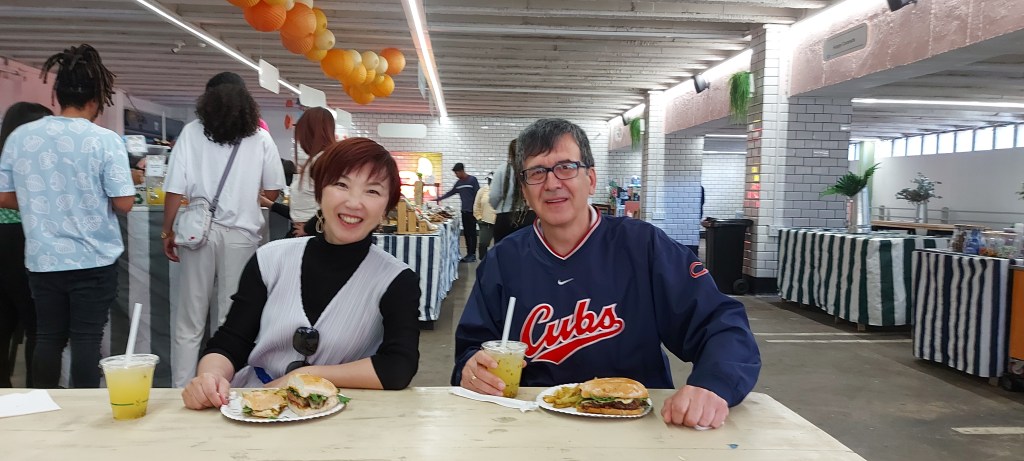
I was the oddity, the interloper, the only white person in the maze from The Playground to the Maboneng Precinct, wearing a Cubs pullover jacket, a brown felt Indiana Jones style hat atop my head. Stalls of fruits, and vegetables, open cooking fires, cheap wares and material for the inner city residents lined the streets. I garnered some curious looks, eyes observing as I walked, assessing the surroundings, stopping only to check the GPS on my phone. The occasional vendor sought my attention, the rest sat slumped on the ground awaiting any semblance of interest. I was not accosted at any time, although a couple of idle taxi drivers offered a ride, one who explained I was not safe and he could drive me out of the area. I would rather put faith in the street than in his vehicle.

Sporadic cell coverage silenced the familiar computer generated voice, constantly recalculating my position, consistently lagging my progress. I walked through intersections where I was supposed to turn, headed west instead of east, turned circles around searching for unmarked streets. Forty minutes in and I was still forty minutes away. There were moments when I was becoming apprehensive. Where am I? Which way do I turn?

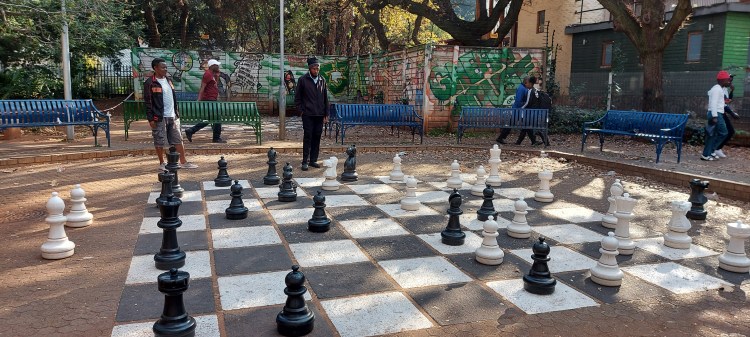
Finally, I found Joubert Park which immediately became my respite from the streets, an opportunity to settle and regroup in the sun. Worn from usage and neglect, the oldest park in Johannesburg appears to be a refuge for the locals, with people lounging on the grass, mothers and children strolling the grounds, pairs of men playing chess.

Somewhat rested, determined, I continued, exiting onto the street, moving parallel to the park, the stench of urine soaking the outside walls. I became a one man gauntlet through several blocks of people amassing in a Saturday market, a turn into the half empty street of shuttered buildings, down to the underpass, dodging traffic crossing to the other side when the scenery noticeably changed. Metal sculptures spelled out the name of the Maboneng district, buildings were refurbished, the people better dressed. Two blocks later I am at it’s heart. The main intersection flooded with young, hip people, music pumping out of vehicles, exuding the vibrancy of this gentrifying section of the city’s core. I had arrived.

Tired, thirsty, I settled into Mama Mexicana restaurant for a Marguerita before ordering a plate of Nachos. It was now approaching five o’clock. In a half hour, darkness would descend upon Johannesburg; time to beckon an Uber back to the hotel. The owner and the staff recognized me as a foreigner and helped confirm the location for me on the app. One waitress suggested waiting inside because phone snatchers will take advantage. Compared from whence I just came, this section of downtown was a safe zone. I had no concern although I was touched by hers. With the car nearing I stepped outside; she accompanied me, watching the progress on my app, escorting me to the corner where the car awaited, ensuring it was the correct vehicle. The ride back to the hotel was quick. Today’s adventure was over.

I have found myself in similar situations during my travels in the past. I recall a walk, totally unbeknownst, from the hotel in Atlanta, Georgia to the Martin Luther King Memorial through one of the poorest and most dubious sections of the city. I have witnessed places and people normally left off the map. Downtown Johannesburg reflects that of most every major city. Although unplanned, I am richer for the experience.

And you may find somebody kind to help and understand you
Someone who is just like you and needs a gentle hand

Wild Thing

You make my heart sing

There was an understated anticipation on the mini bus. We exchanged the obligatory polite hellos, names and where are you from questions. Gerald travelled 30 hours from his home in Seattle to arrive in Cape Town before making a last second decision to join this tour. Sean is originally from South Africa, currently living in England, while his companion, Mary, lives in Wales. This journey was billed as the Ultimate Pilanesberg National Park Safari Tour – A guided safari of Pilanesberg National Park to spot the ‘Big 5’ and other species. The price and the timing fit my schedule. And like my travelling companions, the decision was last minute, for the same reason: How could one travel to South Africa without exploring the wild life.

Sean and Mary sat a couple rows to the back for the two hour ride; I was behind the driver, Dennis, and Gerald was ensconced in the passenger seat. Gerald and I relayed stories of our other travels, spoke of sports, and bandied thoughts on colleges, as Dennis navigated through some very early morning fog, the three of us sharing my massive take away continental breakfast courtesy of the hotel. Occasionally we included Sean and Mary with intermittent questions, however, they were content with their own company.

Our van met five more vacationers at the park and were introduced to our guide at 9:00 am, before piling into the open air jeep. Desmond introduced himself and the basic rules: don’t leave the vehicle at any point in time, lest a waiting lion leaps from the grass and haul you away; don’t hang your arms out the side because that same lion may rip it off for a snack; and think of the bumpy ride as a bonus massage of your bottom. His humour established, Desmond popped into the driver seat and we were off.

In 2017, Olga and I embarked on a grand safari to the NgoroNgoro Crater and Serengeti National Park in Tanzania, collecting pictures and memories of numerous birds and animals. So I was not as excited when the rest on the jeep jumped at the sight of some grazing small antelope. I didn’t even take a picture. “We will move on”, says Desmond, “there will be many more throughout the park. We guides refer to them as McDonalds because the lions can find them everywhere. “

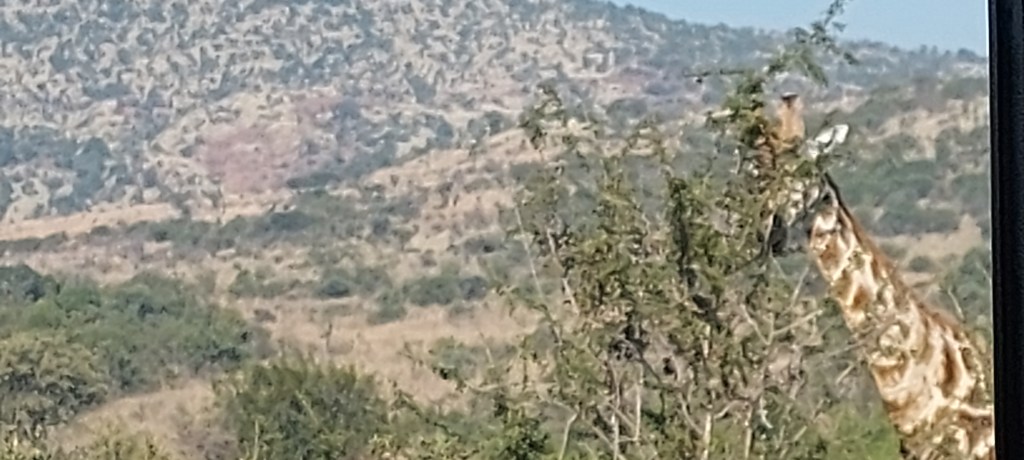
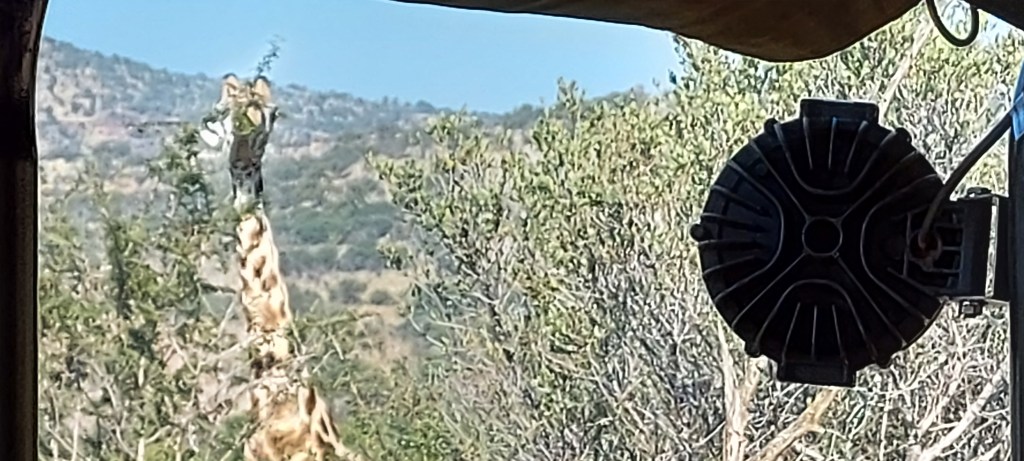
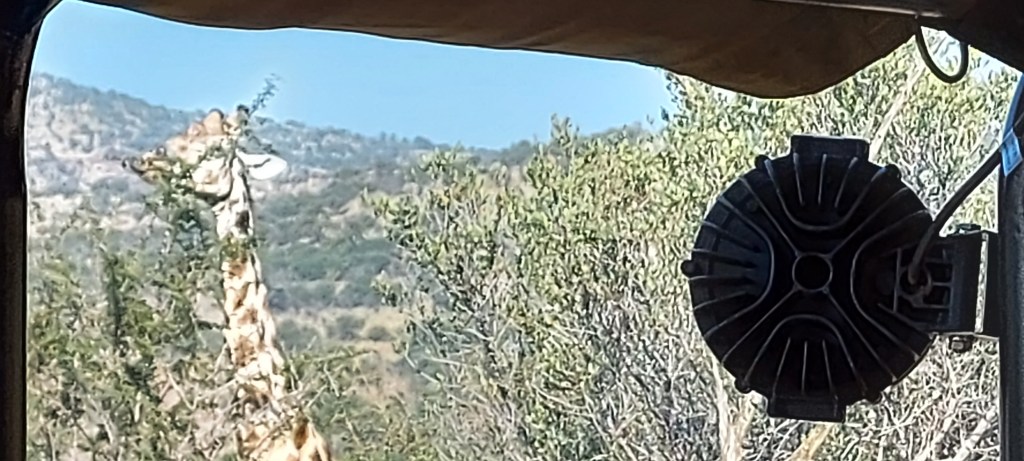
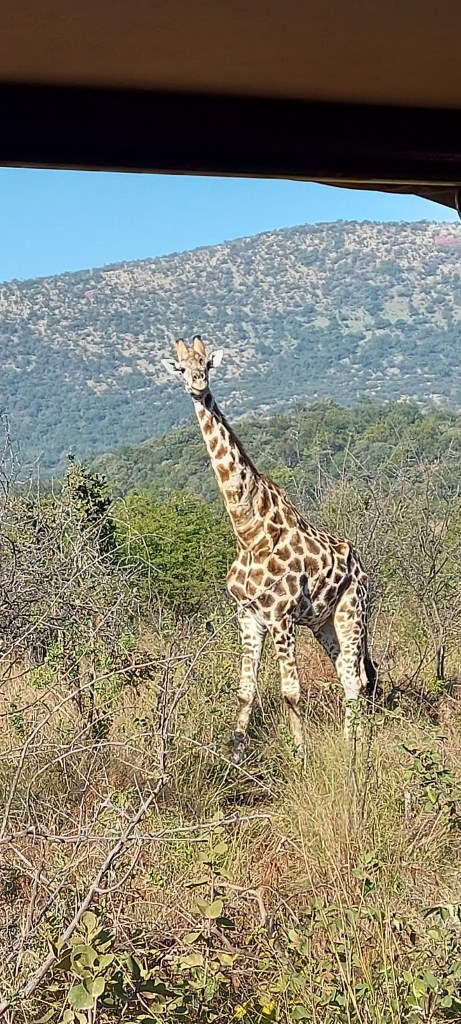
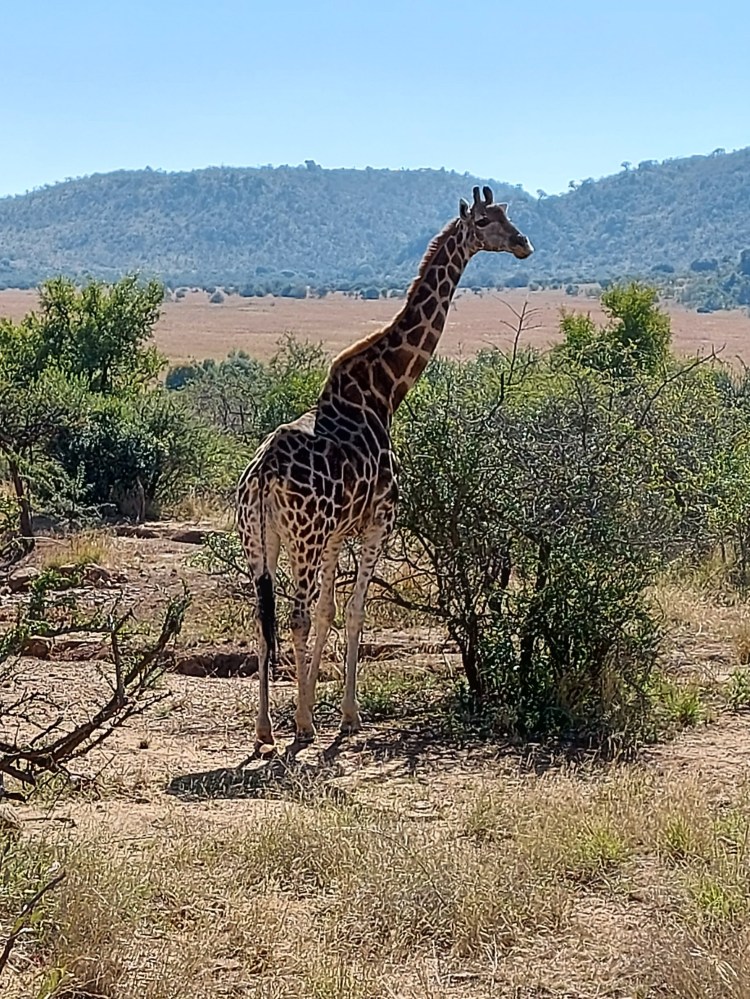
Five minutes later, just around a bend, a male giraffe was chomping on some leaves, twenty feet in front of us. I rose to my feet, snapped out my phone, twisted my body for the best angle and clicked away until I achieved the perfect shot.

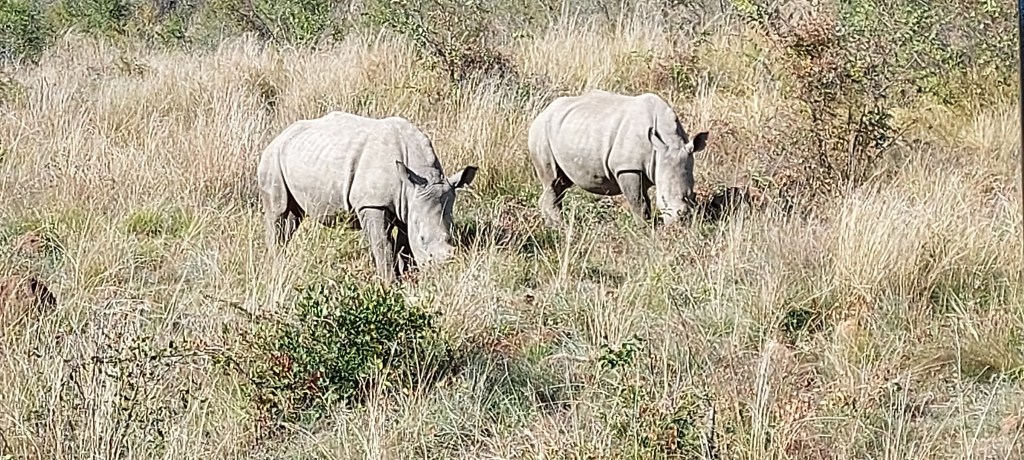
I was surprised at my own excitement. Thirteen pictures in total. Half a kilometre down the road, after a detailed explanation of the significance of rhino dung, we spotted two white rhinoceros. I snapped away again. Zoom in, raise the camera, wait and click, and click, wait some more as they move around, another dozen photos and we are done.

This pair was my first close look at a rhinoceros. I was hooked. Again.

Wild thing. You thrill me.

The remainder of the day was in pursuit of all the other inhabitants of nature’s zoo. The most challenging proved to be the lions. Radio exchanges between guides about a possible pair on the next road turned out to be a false alarm. Skepticism on the sighting of a herd was vanquished when a game ranger informed Desmond of sime on the other side of the range, far end of the park. “Let’s go hunt the hunter.”

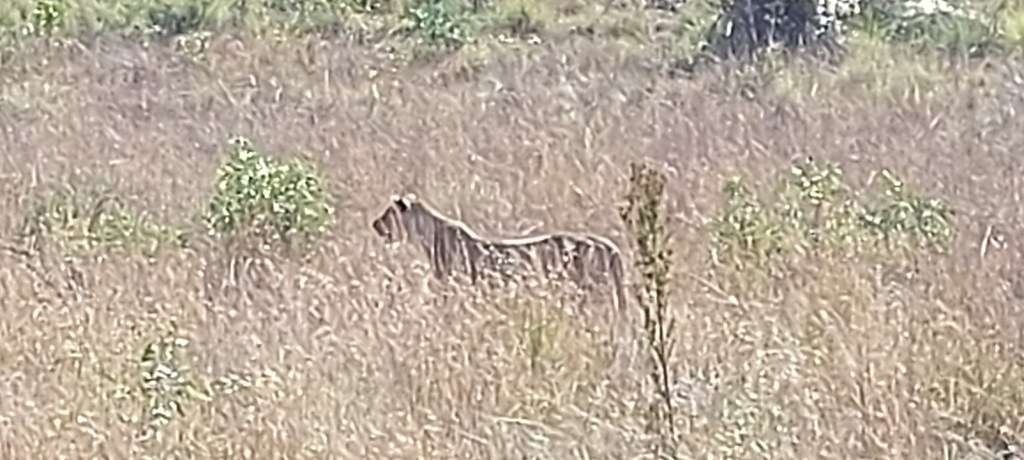
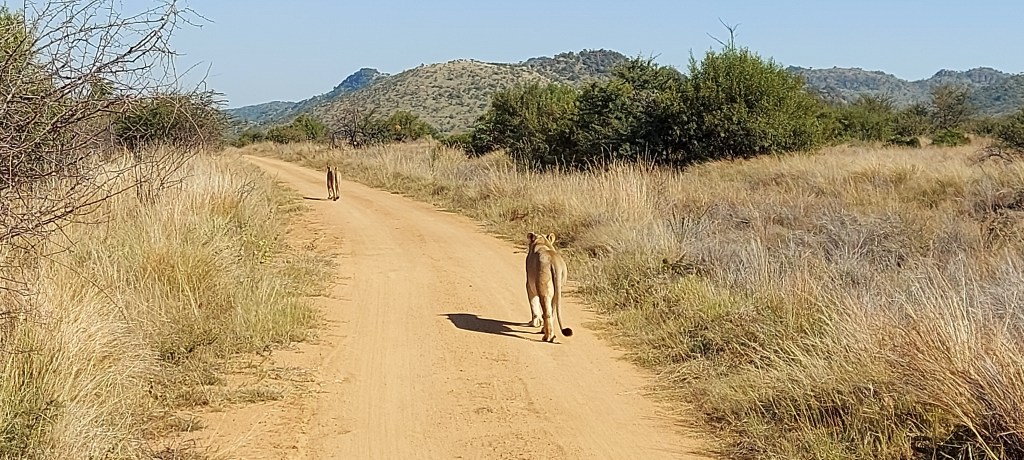
And there they were. Two. Snaking through the grass in a stealth crawl, a herd of small antelope ahead. The beginning of a low trot raised everyone’s expectation, silent, watching. Perhaps it was the sight of two vehicles which twigged a careful assessment by the antelopes; the herd appeared to have caught wind of the lions’ presence and began bounding away. The lions abandoned the pursuit and slowly walked past the paparazzi, up the dirt path, and onto another private road with a sign forbidding any human to enter.

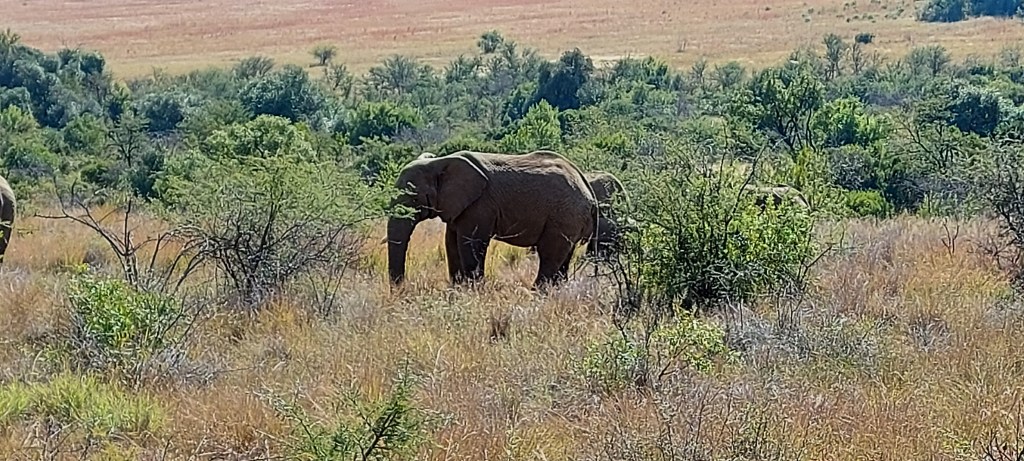
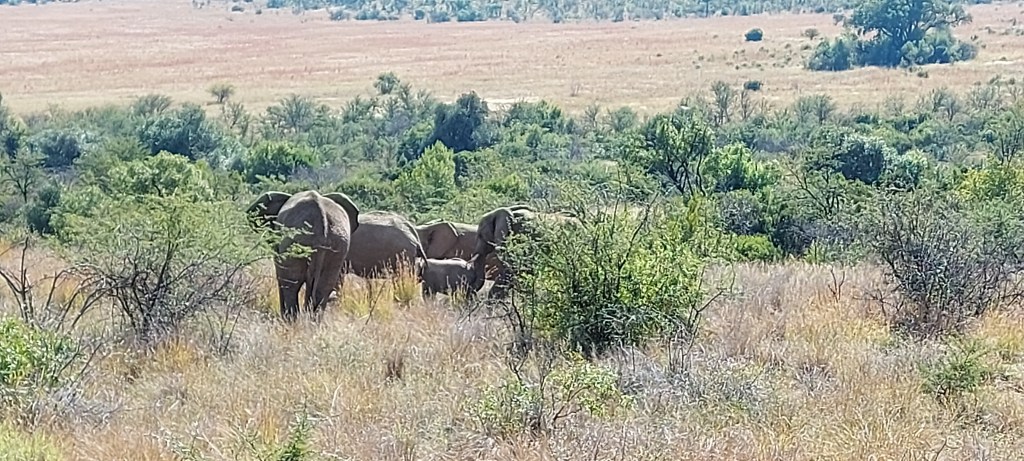
By lunch we had managed to have found two and a half of the big five – lion, elephant, white rhino (as opposed to the black rhino) – spotted a leopard hanging in a tree, too difficult to see with the naked eye and too far for a smartphone camera. The prospects of encountering an African water buffalo appeared slim.

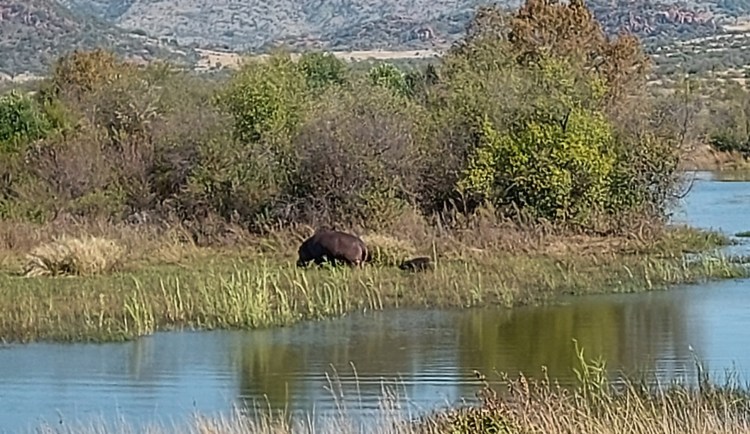
The most adorable sight was a mother hippopotamus and her baby lounging in the water, meandering to the shore. Raising her heft onto land, massive body supported by short stubby legs, the mother began her stroll inward. Baby hippo lingered behind, chomping on fresh foliage before realizing it was being left behind, scampered it’s cannon body in a rush to catch up.

Wild thing, you move me.

Another giraffe, zebras, a brown hyena, king fisher birds diving for fish, two more white rhinos. The tour ended by 3:00 and we headed back to Johannesburg.

The ride home was quiet, tired from the 5:30 am start, each of us sharing our good day on social media. I continue to marvel at the wonder of nature.

I realized after this visit the importance of taking advantage of opportunities. They are a connection to ourselves, to the wider world. They help me appreciate how fortunate I really am.

Wild thing, I think I love you.

5 Days in May

My accent gives me away.

People then leap to the assumption I am American, which I quickly correct before they ask if this trip is my first time in the country. My response immediately induces a smile and the understandable question: “So how do you like South Africa so far”?

With a sheepish grin I confess to having seen very little beyond the boundaries of my hotel, a handful of government buildings, their internal workings and whatever sights observed through the window of the vehicle transporting us between locations in Pretoria. For these past five days in May, my experience has been limited to meetings and conversations within the confines of business rooms, hotel restaurants and the adjacent bar. The sun drops below the horizon by 5:30 in these winter months, when the working day is over, further reducing the opportunities for sight seeing. Save for the people themselves, I could have been in any small city in Europe.
There are some differences, systemic and quirky. Driving on the left hand side of the road, for example, confounds me every time I step into the vehicle. As a passenger, I find the ride disconcerting. Of course the driver navigates the streets with ease while I cringe thinking he is proceeding into the wrong lane and we are going to crash. Right turns appear too wide; left turns feel as if taking a short cut. When it is the only car on the street, I assume it is a one way; and I startle whenever another zips past in the other direction, on our right. Perhaps I would acclimatize more quickly if I were driving myself. Or not!

Had I been at the wheel when the blackout started, my response may have been questionable. On two occasions, retuning to our hotel after dark, the power kicked out across the city without forewarning or apparent cause. The South Africans did not blink an eye. Another day, another power outage. Moments later a scattering of buildings and business flickered into full illumination because they had invested into a generator for these regular occurrences. The street lights and the traffic lights (‘robots’ as per one colleague) remained unlit as drivers proceeded, traversing each intersection as a four way stop. No fuss, no horns, just carrying on. Slower movement and some longer waits, all in keeping with the expected norms. Eventually power is restored. The next day, at almost the exact time, power went out again on our trip. Yawn.

Some of the quirkiness was noticed at the hotel, my home for these five days. It operates as a small conference center with numerous public bathrooms. The set up is familiar, the bathroom signs were not.

I smiled when my search for the facilities uncovered them. Perhaps the designers were remembering their experience in meetings and conferences where coffee is consumed one after another after another out of habit and availability. All that liquid needs to be released at some point.

The predominance of instant coffee in Africa is amusing. During my time in Tanzania and again here in South Africa, instant coffee is common. And not just your regular freeze dried version, but powdered as well, all flavoured with chicory specifically for the continent.

The coffee “machine” in the room is a kettle.

My African colleagues recalled how the testing by large purveyors of coffee products had shown African’s preferred the additional taste and consumed it in larger numbers.

The days had been melding together and then Friday happened. At four o’clock I was officially “off the clock”. One colleague had family in Pretoria and we were invited for dinner consisting of oxtail, stump pot, roasted vegetables and salad. We left immediately to the home situated above the city to catch the sunset for the first time.

We had a very enjoyable evening of drink and conversation, exchanging stories and laughter from each of our respective countries and perspectives. Indeed, everyone with whom I have encountered has been welcoming and warm, genuinely interested in my well being and comfort. Sure there is an element of novelty, someone from Canada tends to prompt a number of questions about geography and weather, economics and politics. The interest is also in you, as a person, ensuring your time in their city, their country is enjoyable.

My remaining time will include sightseeing in Johannesburg and a one day safari, the standard itinerary of international travelers here. In these 5 Days in May I have enjoyed my interactions with the people of South Africa and with them have come to learn a great deal more of the country, one where I would excitedly return.


How will you ever know
The way that circumstances go
Always gonna hit you by surprise