Training 101

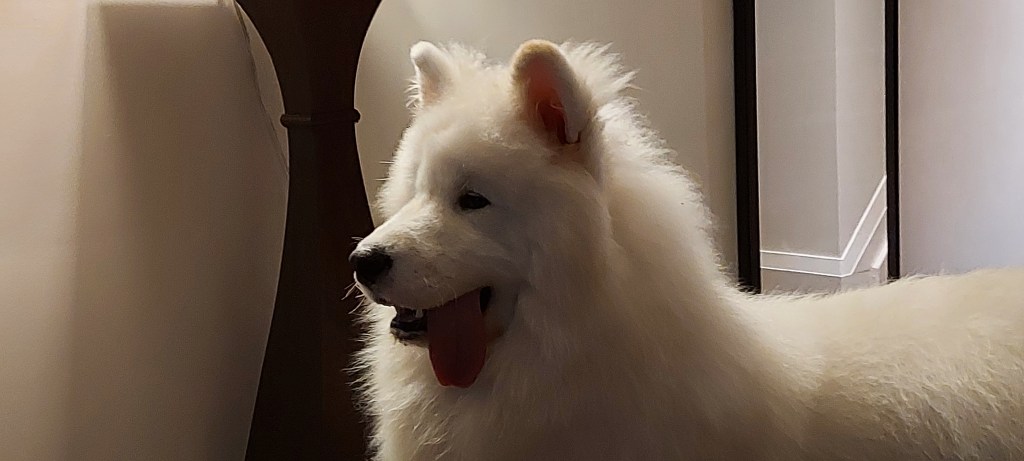
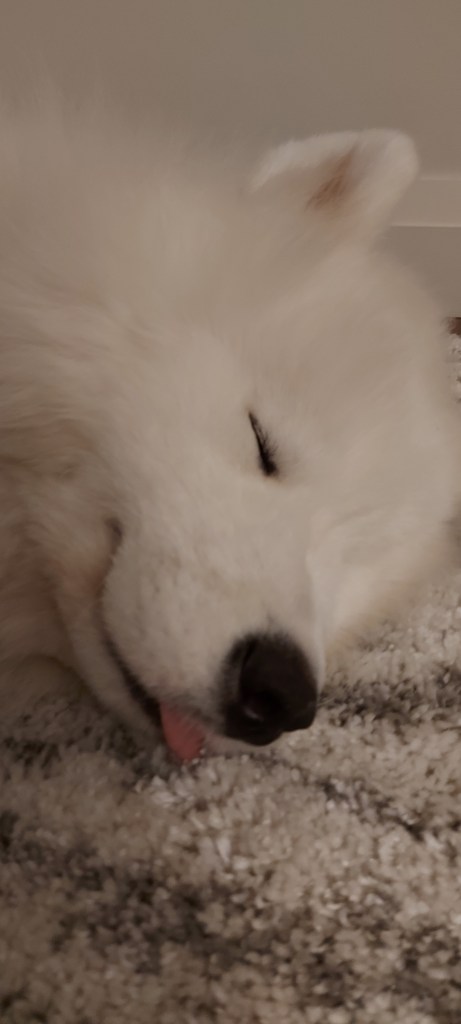
On October 8, Olga and I purchased a Samoyed from a breeder near Peterborough, Ont. He came with the name, Smirnoff, which we were quick to replace with Odin. This 9 month old puppy was certainly bigger than we anticipated (61 pounds according to our vet) and younger; we had our name on a list for a two year old. The breeder offered a younger one and we accepted, not wanting to miss out.

Cats had always been the pet of choice in our household. Olga had been harboring felines as a child and she had adopted Heidi prior to our marriage. When we eventually had to put down Heidi, Nicholas and Olena were very young; it was our intention to acquire another animal. Olga and I believed a pet would help in their emotional development, particularly their sense of empathy. We had considered a dog but realistically believed a cat (or two) would be easier to manage specifically because we both worked fulltime. A dog would require more daytime attention, something we could not provide given the circumstances; so, we adopted two kittens, brothers, Milo and Otis. Skip forward to 2016, Milo had reached his end and our household has been without a pet since.

Our home was missing a presence especially now that our excursions were few given the limitations of COVID-19. We thought about the long-term benefits of the company a pet would bring along with routines and expectations to provide some structure to the days ahead. Adopting a cat proved problematic (stories for another day) and Olga’s research suggested the temperament of a Samoyed would suit our sensibilities. A chance meeting on the street with a couple walking a female version of the breed cemented the decision to pursue one.

The first few days were bliss. Odin was crate trained and house trained; he was quiet and docile on our first walks, oblivious to other dogs and squirrels; he slept through the night and was completely compliant on our ride to the cottage. We had scored. Issues began to arise during the five days at the lake as walks became increasingly difficult and Odin played rough, nipping and grabbing as if we were his toys. The overstimulation of the environment appeared to have obliterated whatever lessons were learned; bad habits were emerging. Odin needed to be trained systematically in order to get back to square one.

Samoyeds are reported to be smart and willful, with a reputation of being difficult to train. YouTube displays numerous training procedures, all professing the technique to teach even the most irascible canine. The best ones focus on a form of operant conditioning, rewarding the desired behaviour with an endless supply of treats, the most tasty saved for the unusually difficult tasks. The dogs in the videos all respond immediately; success is achieved in a manner never matched by our own efforts. Patience in these matters has never been my strong suit. On one evening Odin had been barking incessantly, something new, eventually defecating on the floor, in two spots, one pile squishing beneath my slippered feet. I lost it. The clean up was a scene of huffing and yelling and fury, a display of temper akin to a pipe bursting under pressure; an embarrassment, really.

The next day, at approximately the same time, just as Olga was preparing supper, Odin’s barking began again; surely a sign of needing to relieve himself so I put on the leash and led him to the backyard. Nothing happened. Odin was only interested in playing, chasing birds and squirrels, finding sticks to carry, frolicking. The events of the previous day girded my resolve to wait him out, my will versus his stubbornness, my insistence of showing who is boss. As I waited Odin kept finding different ways to annoy me. Darkness was setting in, supper was waiting yet all he wanted was to dig up the grass here, there, there and back here. I grew angrier and yanked harder with each new annoyance until the last one when my eyes widened, my teeth gritted, my heart raced and suddenly I saw my Dad, a visceral recollection of him attempting to “train” Duke.

I scared myself.

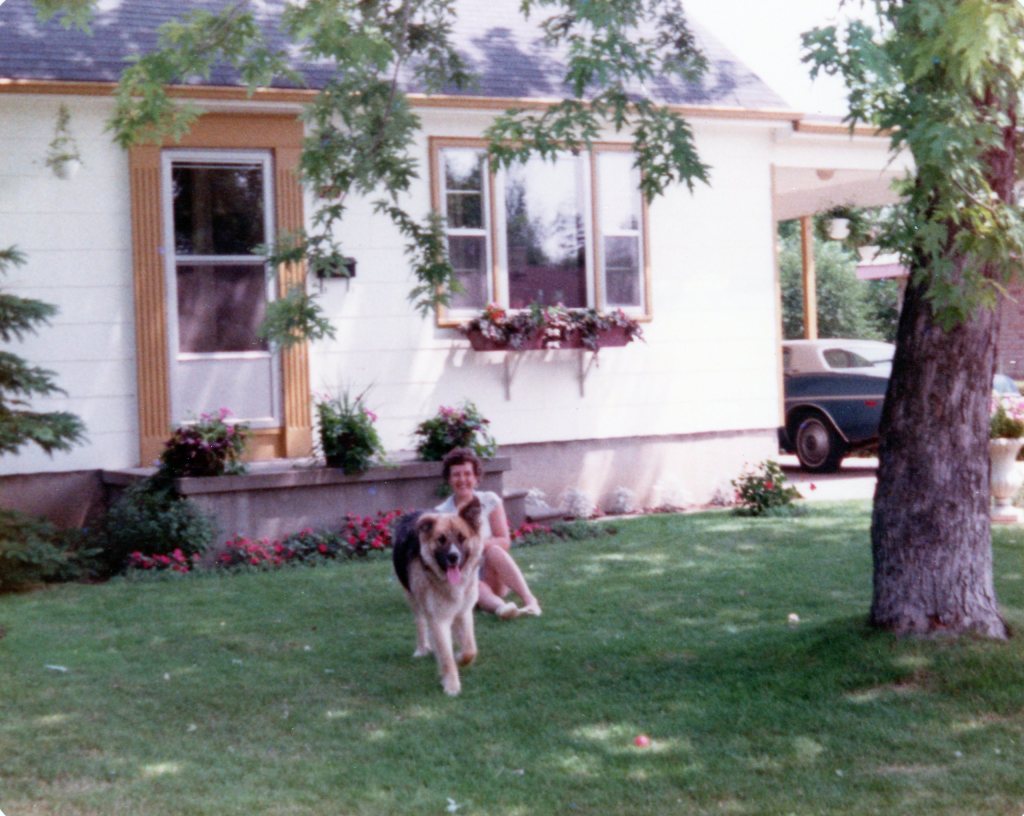
We had two dogs when I was growing up as a teenager, both named Duke. The first didn’t last, a stray which ran went for a romp in the neighbouring field and never returned. I don’t recall the number of years, five or six, when we had Duke, the second one. And as much as Duke was a fixture, pictures of him are rare. This one was from the summer of 1980 on the front lawn of our Kostis Avenue home, my mother in the background.

Duke was picked up at the Aylmer Sales Arena by Mr. Gooyers who bought and sold pigs there weekly where someone was giving away a litter of pups. Duke’s features suggested he was a cross between a German Sheppard and a St. Bernard. He was a big dog who could easily put his front paws on my shoulders.

I don’t recall precisely all the details of his upbringing except that I was not directly involved; my parents assumed those responsibilities. I have visions of my Dad being the disciplinarian, the one to direct Duke into the correct behaviour utilizing corporal punishment when required. His was also a form of operant conditioning, inflicting some form of physical inducement to modify Duke’s actions. Dad was not cruel; he was administering the lessons as learned through his upbringing, influenced by the acceptable understanding of the time. Pets are not people; they belong outside and your job was to demonstrate yourself as the master. Both my parents would have laughed at the current practice of a treat to reward a positive act; when you wanted the dog to leave something, you tamped on the snout, you spoke angrily, you did not provide a delicious snack to recognize the dog’s restraint. And if the dog did not move, you did not coax him with food; rather, you yanked on the collar and pulled him with the chain until the dog finally got the message. Those are the images which spooked me on that pivotal evening two weeks ago.

Duke was a very good dog for the family. Us four boys rough-housed with him, mimicking our own style of play with each other. Duke enjoyed our company and we his. I remember vigorously ruffling his fur, putting my whole fist in his mouth, feeding him coffee beans to laugh at his attempt to eat them. My Mother grew increasingly attached to Duke, especially for company when she was home alone, letting him stay indoors when Dad worked the night shift.

Duke was also very protective of everyone in the family, a trait which eventually led to his downfall. I remember a close friend stepping into our home, coming to pick me up for a night out. Charlie put his hand on my shoulder to say hello whereby Duke reared up to grab his arm and pull it down, sitting to guard me until we left. Duke flashed a mean streak on occasion, growling if you came too close while he was eating, or snapping from his house where he ensconced himself to ward off discipline for some transgression. The final straw was breaking his chain to lunge at the delivery man for handing mail to my mother. Duke could no longer be trusted with other people so he had to be put down.

Duke’s reaction was the consequence of his “training”; he responded in kind during moments of perceived stress. My difficult evening with Odin conjured up those memories. I wanted my actions with him to be the foundation for a mutual, respectful understanding of each other’s needs. I needed to train myself as much as Odin needed to be trained, properly, with consistency and gentle firmness and love.

Olga is a much more patient person and has spent hours sifting through training videos, seeking advice from on-line Samoyed owner Facebook pages, attempting the different methods to arrive at the most effective approach. She brings the wisdom and affection of a mother along with the knowledge of toddler development. I am endeavouring to train in the same manner and keep myself in check. Odin has responded daily, modifying his behaviour with each repeated lesson as we learn about the most advantageous approach for him and ourselves. Odin’s endearing character shines more frequently as he plays tug with the chew toys, gazes up at you with those puppy eyes, rolls onto his back with feet splayed so we can rub his belly, falls asleep on the ground beside you with his head in our lap, walks proudly alongside you, instep, around the neighbourhood, and greets new people with nose prodding, tail wagging enthusiasm. Odin is our huggable, little polar bear. There are still moments of frustration to which we attempt to address with ideas on what we need to do differently; training 101.

Not a single one

The month of October passed into the next without the completion of a single book. I did start with a new memoir by Donna Morrissey, Pluck and attempted to read each night just before my head went to the bottom of the page to stay. I managed only a few before the lights would be turned off.

So, instead of a review of books from this month, this post will talk about novels from the past, focusing on quotes which I recorded in my notebook, words which compelled me to write them down. As an illustration, let me begin with a couple from an unknown source. This passage is found on page 354 in a book for which I had neglected to include the title:

“Institutions are amoral” he said. “We should never lose touch with our individuality. Once you lose that you lose touch with the basics. The right and the wrong of things. I have to think we are conditioned to do the right thing as people. But not as institutions. There’s no morality in an institution. It’s just a thing.”

It is a message which resonates among those who have encountered a bureaucracy, subjected to the rules in apparent odds to the humanity of the circumstance. I think of our federal government yet again appealing a court decision on the neglect of providing indigenous child services even though compassion would be the most logical response especially given the apparent acceptance of the Truth and Reconciliation recommendations. It seems as if they have entirely missed the message to help heal the wrongs of the past: The true act of contrition has to be a deed, an action that somehow leads to change (page 205).

Macmillan, 1959. 373 pages.

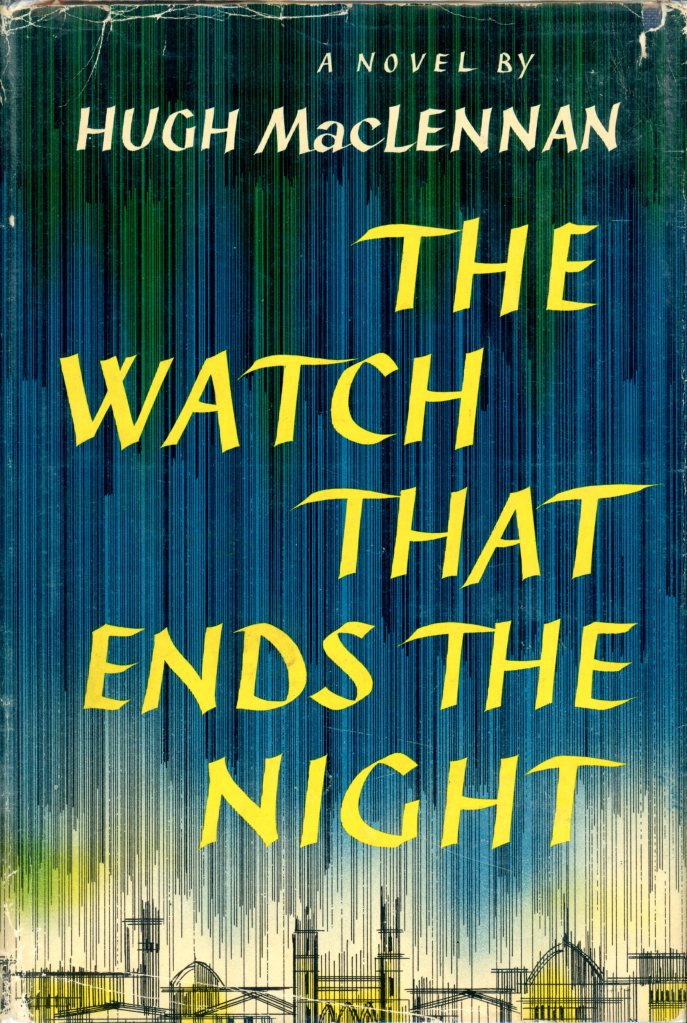
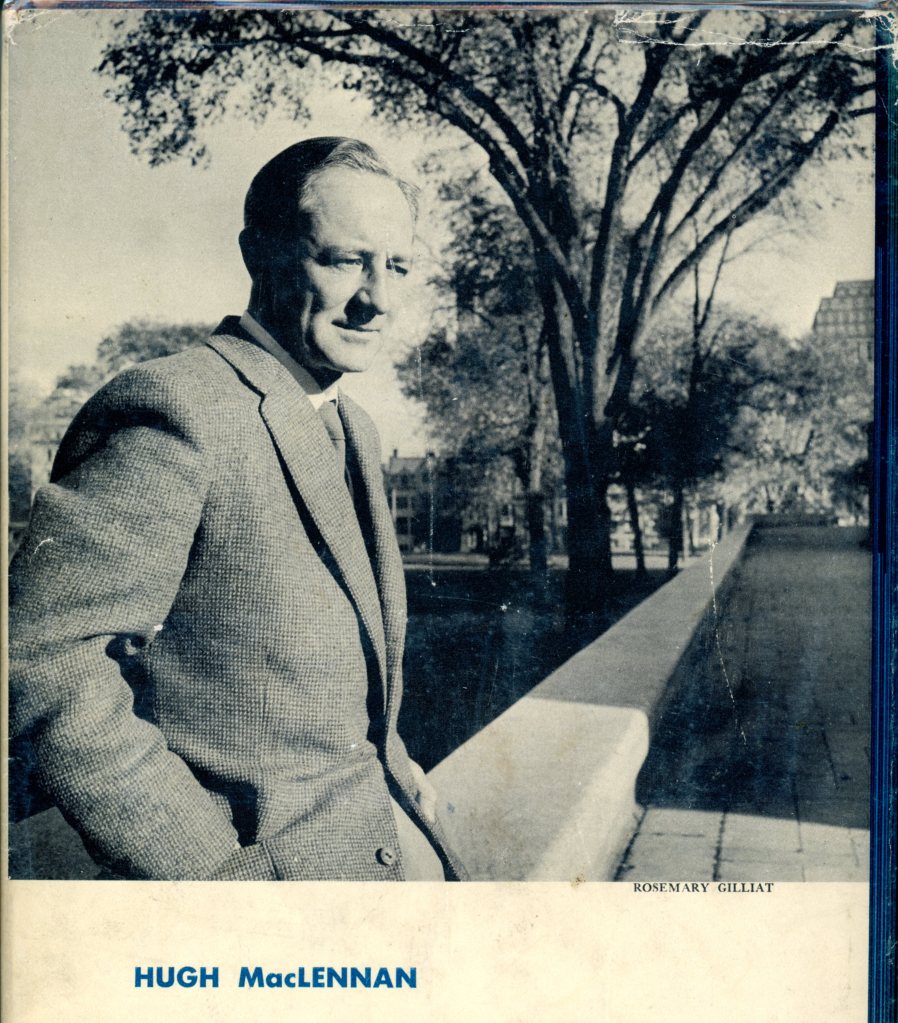
My first foray into book collecting began with Hugh MacLennan. His book, The Watch That Ends the Night was a standard in Ontario secondary school curriculum. Many years later, I discovered the novel at a used book sale and reread it a second time. The indulgence sparked efforts to purchase the remainder of his works, all focused on Canada, all well written, several winning the Governor General award for fiction, some finding their way into the political lexicon, such as Two Solitudes, or into popular music, such as the Tragically Hip’s Courage (for Hugh McLennan) :

There’s no simple explanation
For anything important any of us do
And yeah, the human tragedy
Consists in the necessity
Of living with the consequences
Under pressure, under pressure

When I realized the source of these lyrics, I read The Watch That Ends the Night for a third time. In hindsight, it is the political story, the polar feelings about participation in the Spanish Civil War, the prevailing dynamic of the merits of socialism which captured my interest. In so doing, I copied another profound quote into my notebook:

Passion has a way of spilling over into all aspects of the human mind and feelings. It is the most dangerous thing in the world whether it focuses itself on love, religion, reform, politics or art. Without it, the world would die of dry rot. But though it creates it also destroys.

Hugh MacLennan passed away in 1990. I believe some of his books can still be found in print and you could most certainly find copies of his works in a Canadian library. I enjoyed them all.

ECW Press, 2018. 388 pages.

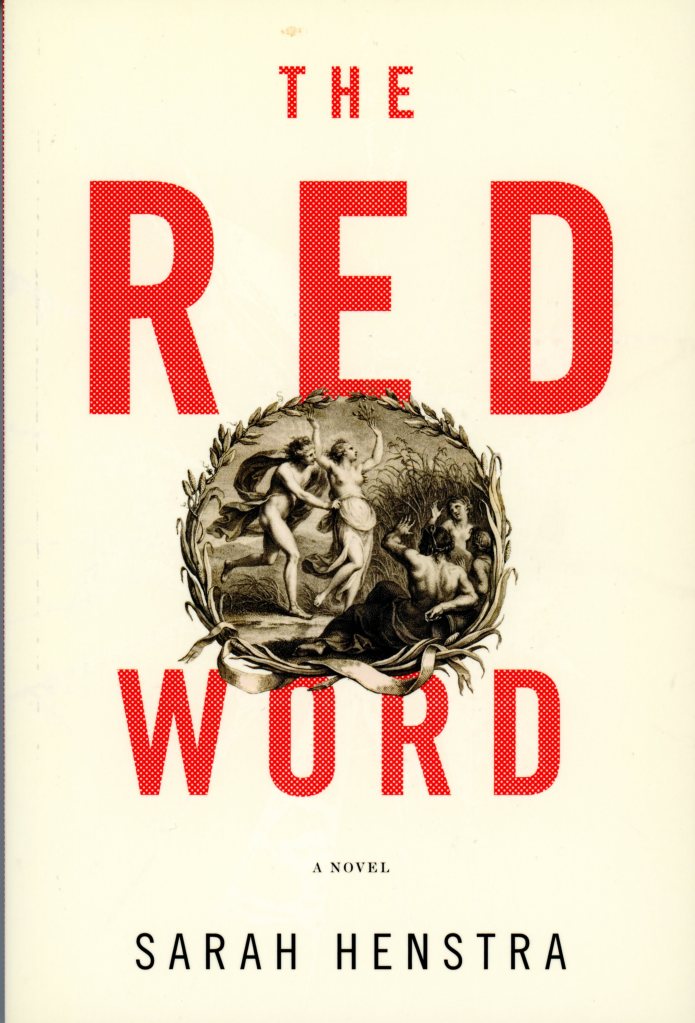
One of the benefits of travel, particularly international flights, is the opportunity to read. The long hauls provide lengths of undisturbed time to really dig into a book, ploughing through significant portions in one sitting. In 2018, on a work trip to China, I brought along the newly named winner of the Governor General Award for fiction, The Red Word, by Sarah Henstra. It is the story of a young woman attending university where she is caught up in gender politics and becomes a victim of the rape culture on campus. The writing had an impact on me as I found several lines which resonated:

The purity of vision itself becomes a kind of violence.

and

Pleasure is political… Enjoying something is a political act.

The latter has found its way onto my home page where I employ several quotes for consideration. I am not always clear what is intended by this statement. The words pop into my head as I reflect on how we live and its impact on others.

Time and age has also changed my perspective on my youth, on my education, and my ideals, particularly looking back at the early years of work. A quote from The Red Word probably captures it best:

We all thought we were different, but we weren’t. We all thought were resisting something, but we weren’t. We all thought life would be like this forever but it wouldn’t. …. From here on in, it would be nostalgia.

Sarah Heard is a professor of English literature and creative writing at Ryerson University here in Toronto, so I can imagine her book reflects stories from campus and her own lived experience through the system. Recent headlines emanating from the start of this past semester suggest the messages of The Red Word remain timely and relevant. It is a very worthwhile read.

Knopf Canada, 2018. 246 pages.

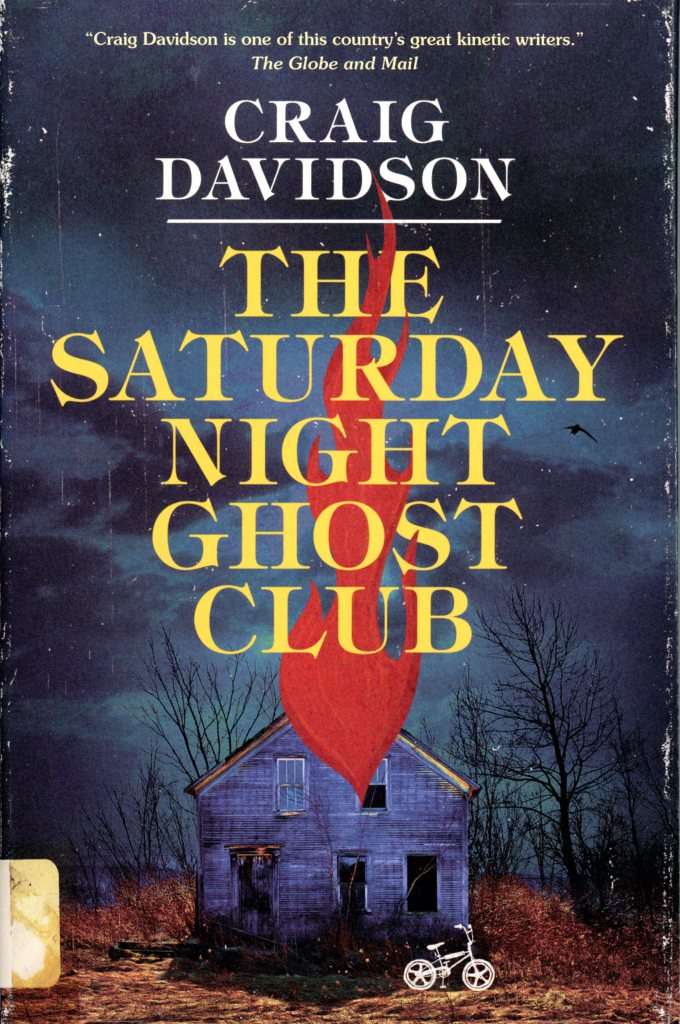
Another quote you will see on the home page of my blog comes from Craig Davidson’s book, The Saturday Night Ghost Club:

Reality never changes. Only our recollections of it do. Whenever a moment passes, we pass along with it into the realm of memory. And in that realm, geometries change. Contours shift, shades lighten, objectivities dissolve. Memory becomes what we need it to be.

The quote is a constant reminder to myself as I uncover old photographs, conjuring particular memories which vary with those of others who were part of the same experience. They recall elements which I have forgotten, or somehow subconsciously have chosen not to remember. I think as much about the events where I can no longer recite the details as those I write about with vivid scenarios spurred by a picture or artifact or experience. The idea of memory being what we need it to be haunts me as I proceed with the memoir writing course, attempting to complete the exercises, reflecting on the time, the circumstances, the emotions.

Craig Davidson has written several novels, largely centered around the illicit, seedy world of dog fighting, dog racing, and bare knuckle boxing in the Niagara region here in Ontario. In his book, The Fighter, he writes of parental relationships, particularly father and son: Bonds of family are the fiercest and can only be broken by the most extreme strokes. I am increasingly reminded of the truism of that statement.

I have enjoyed all of Craig Davidson’s work, including a memoir, Precious Cargo, and his horror books under the pseudonym, Nick Cutter.

From my perspective, the best novels have well written prose and insight into the human condition, images to mirror our world, words to induce reflection, situations which give us pause.

Let me finish with several statements which found their way into my notebook:

When it comes to understanding others…. we rarely tax our imaginations – Lawrence Hill, The Book of Negroes.

“You cannot know the true nature of another’s suffering.” “No. But you can try your damnedest not to worsen it.” – Esi Edugyan, Washington Black.

You get what you want, but never in the way you want it. – Steven Heighton, Every Lost Country.

Do not pursue the past. Do not lose yourself in the future. – author unrecorded.

Until next time, happy reading.

By definition

A section in the memoir writing course discusses structure; more specifically, whether or not adhering to a predetermined one assists or inhibits creativity and achieving the goals. Sticking to a plan can be beneficial for some while restrictive and static to others. At the same time abiding by a particular practice, like the writing of letters or the creation of lists, can organically develop into a fulsome story. One chapter exercise was to generate a list and elaborate on the items, perhaps following the letters of the alphabet as a prompt. Nothing immediately popped into my imagination so I decided on another route: I would employ the word of a day, in order, from the first of the month to today (the 24th). What follows is that exercise utilizing the Merriam-Webster word of the day for October (https://www.merriam-webster.com/word-of-the-day/mirage-2021-10-24). I hope it doesn’t sound inauthentic or forced.

>>>>>>>>>>>>>>>>>>>>>>>>>>>>>>>>>>>>>>>>>>>>>>>>>>>>>>>>>>>>>>>>>>>>>>>>>>>>>>>>>>

I created my blog as a vehicle to reach a larger audience for my daily writing about a three week trip to India. The subject matter expanded when I began to digitize my deceased parents’ photograph collection, the last vestiges of their life. They became the prompts for a post, generally centered around a theme or a memory sparked by the images. The nostalgia of the early writing might be mistaken as an attempt to cozen readers into believing life was a rose garden. Rather, it reflects my own need for development, as I am not particularly adroit at conveying the difficult times and have lacked the mettle to persist, to work through a seemingly intransigent approach to discussing family matters. I don’t believe the avoidance to be lolling or to reflect a cavalier attitude about their realities.

Part of the hesitancy may be an unconscious minimization of my work and a disbelief in anyone’s interest to read the material. After all, who am I? Certainly not some scion of a famous family whose members would fret about any revelations. Instead my father is remembered as an amicable working man, the salt of the earth who could strike up a conversation with everyone: the staff in the front office, the president of 3M at the annual picnic, or the restauranteur of his favourite dining establishment.

My father was a machinist. This picture was taken at Kelco, a small shop in London, circa mid 1960’s.

Dad was not one to face difficulties directly; he would rather extricate himself from the situation or leave it to my mother to handle. Despite his fervent vocal support for unions and the causes they represent, my father avoided the odious strike at his place of work, the first in the plant’s history. He rationalized that the local leadership reflected a mini cabal which made the decision to walk out, without due regard for the membership. The leadership’s call to action was precipitated by angry words embellishing the divide with management, solidifying the previous gossamer support among the rank and file. Dad could not abide the rancor and vitriol, so chose instead to find other temporary employment until it ended. The income was needed, and picket line duty was avoided.

But I digress.

The discipline of writing, to place my bum in a seat every day putting pen to paper, purported to be the secret to success, hopefully means my inhibitions will not continue in perpetuity (with the added risk of my body devolving into a zaftig figure). I hope persistence, practice, and vulnerability will support my ambitions to be a writer, to be deserving of that nomenclature. My enrolling in the memoir writing course was intended to provide ongoing access to the tools necessary to batten my resolve, to tackle the realities of our lives, the beauty and the untoward.

I believe an integral element of this goal is my devotion to documenting the unrecorded and the unspoken, the myths and the truths; to discern between the actual and the bogus. This motivation certainly reflects my determination to uncover the mid-20th century world of a Catholic missionary Uncle, discovering how much of my father’s admiration was built on the mirage of priesthood or was the genuine love of an older brother possessed of fatherly characteristics.

Father Kees de Cock performing mass in Uganda, I am guessing in the 1970’s.

In a similar vein, the recording of stories generated by family pictures will engender the full gamut of emotions and inspire their expression. And in time, I hope to exhibit the bravery necessary to capture them in my blog and in my writing.

It and me are a work in progress.

Good things come in threes

One of the exercises in my memoir writing course challenges participants to write a story using only three word sentences. There is no expectation to be grammatically correct; rather it is in an exercise in parsimony, being able to communicate your message without elaborate sentences. The exercise is part of a chapter on what to leave out, lessons on selectiveness.

I combined my story with an exercise from an earlier chapter suggesting writing about a blurry picture from our photograph collection, the ones from the pre-digital days which we hung onto because they were the only evidence of the event.  I relished the three word challenge and wrote this story. Hope you enjoy it.

Our First Place

Married first October. Purposely small gathering. Wrote own vows. For non-denominational wedding. Catholic ruled out. Not everyone agreed. Not everyone sure. But we were.

Honeymooned in Quebec. City more specific. Drove the distance. Stopped in Renfrew. Enjoyed each other. Stopped in Ottawa. Marriage was blessed. Priest a friend. Provided welcome acceptance. Union was complete.

Only one week. Back to school. Back to work. Back home together.

Olga finishing undergrad. My graduate ambitions. Put on hold. I need employment. For the money. Not my career.

Work pays rent. Cute little apartment. East of Adelaide. Three storey building. Overlooking parking lot. Price was right. Groceries are close. Ice cream nearby. University walking distance.

Our first place. Our first memories.

Sun engulfs rooms. For morning coffees. Reading the paper. And some books. For her homework. For my pleasure. Embraced small things. Walk the neighbourhood. Saturday church choir. Evenings at home. With some wine. Maybe some TV. An occasional guest. But mostly us. Alone in bliss. In all ways.

Inherited a cat. Not my choice. Part of deal. Had dogs before.  Stepped on feline. Middle of night. Middle of hallway. The next day. Paw got caught. Closing the drawer. Another painful meow! Two strikes down. Only one day. Cats have ways. Some new adjustments. Need to learn.

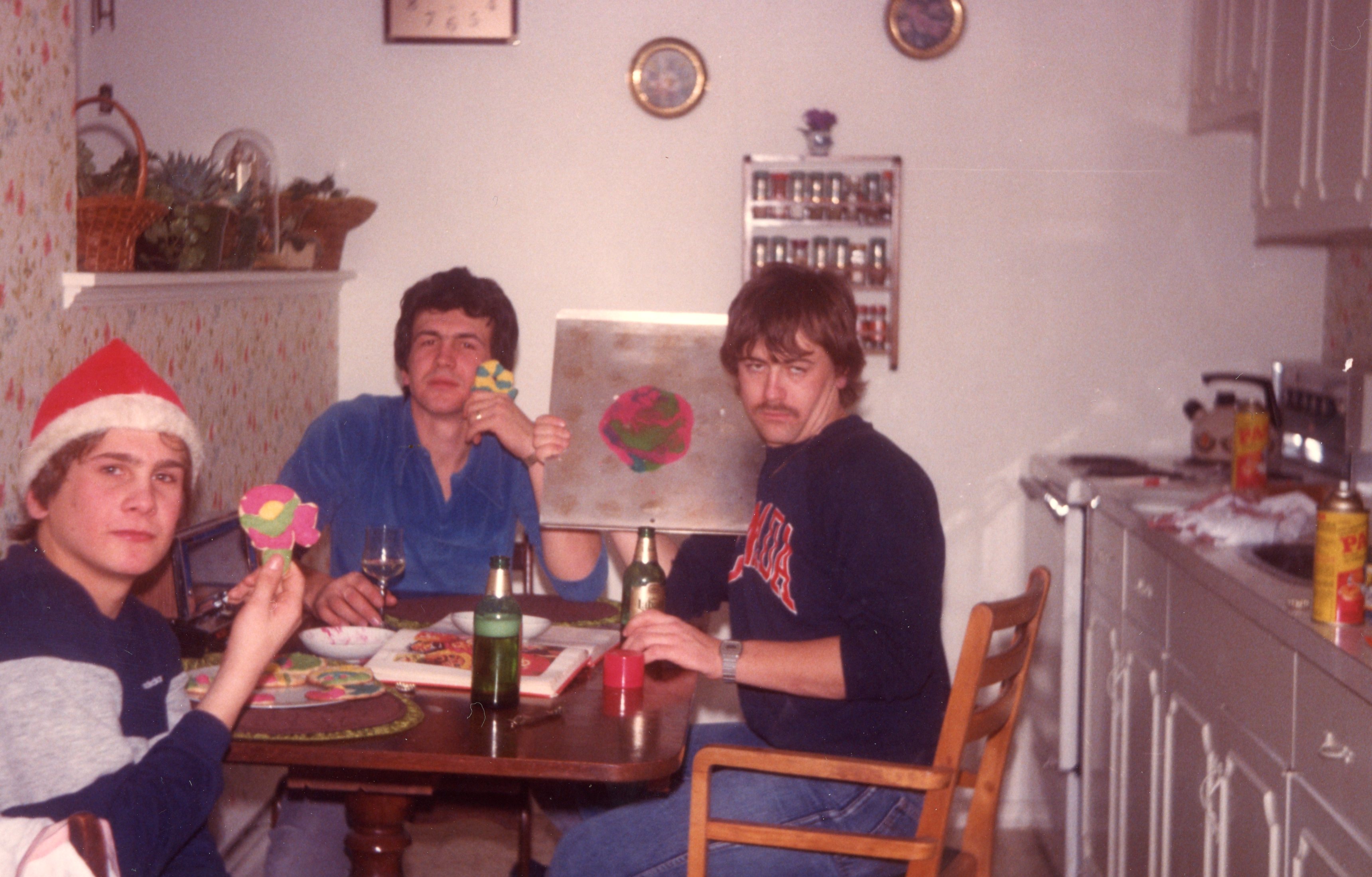
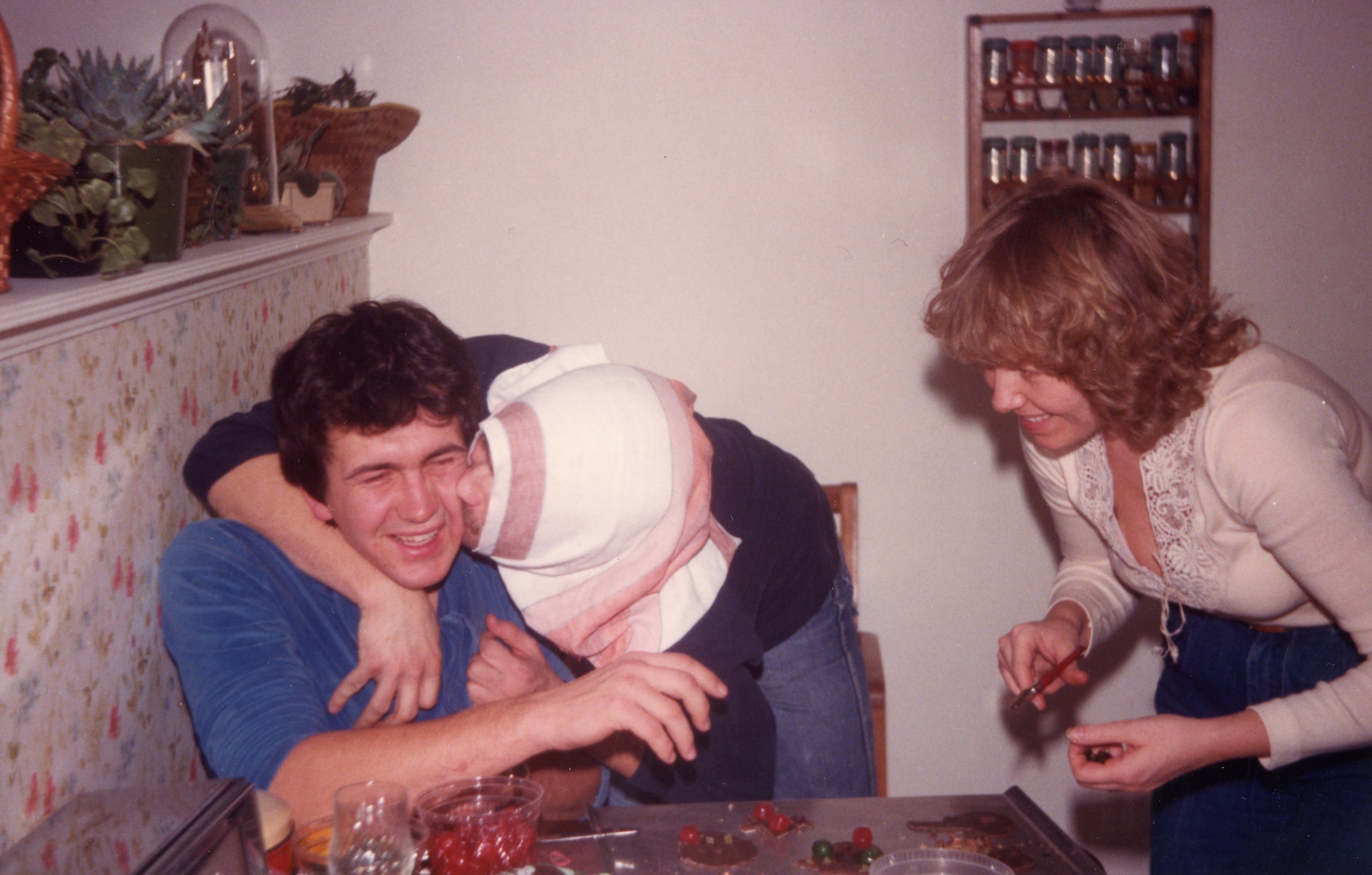
For first Christmas. Tree was small. Stand was crude. Home made decorations. Except the lights. Teddy bear cookies. Shellac, hooks, string. Bright red ribbons. Strings of popcorn. Hung with care. Didn’t need much. Hosted cookie night. Brothers came over. Parents came over. Everyone took part. Making the dough. Gingerbread boys abound. Drink was aplenty. Merriment all around.

Enrolled one course. Introductory French class. On Tuesday night. Could go together. Continue to learn. Not lose touch. Spring was busy. Sixty hour weeks. Could not study. For one month. Assignments were late. Tests were poor. Last one disaster. Thought I failed. For first time. Professor showed mercy. The only explanation. For the C.

Olga’s last exam. How to recognize? Brought the wineskin. Brought the glasses. Poured in courtyard. Outside examination hall. Imagined ourselves rebellious. Toasted an accomplishment. Meant to surprise. And it did. A simple celebration. Still fondly remembered. In our minds. One blurry photo. Only us aware. Of the content. Of the scene. Of the story.

Picture maybe blurry. Memory still clear.

Graduate school offers. Decided on Toronto. Packing up belongings. Friends helped us. With pullout couch. Unfolded in stairwell. Damn @#&%in’ thing. Boxes, beds, chairs. Three flights down. Three flights up. Repeat after me. Into rented truck. Never drove standard. But no choice. Gotta learn somehow.

Said our goodbyes. Will always remember. Our first place. Our first days.

Something New

Fall is the season for new releases and book awards. The Scotiabank Giller Prize announced it’s long list at the beginning of October (including two which had yet to be published) and just this morning, unveiled the shortlist of five finalists. A week ago, the newly named Atwood Gibson Writer’s Trust Fiction Prize (now there is a mouthful) revealed their five nominees. The Governor General’s Literary Awards is next up with their list on October 14; all will make their selection in the first two weeks of November. Keeping up with the new releases is almost a full time job; attaining them becomes increasingly difficult with each passing year and the concomitant reduction in space at home. My future collecting will need to be more focused, purchasing only award nominees or reducing the writers to only my favourite authors.

Knopf Canada, 2021. 251 pages.

That list would need to include Mariam Toews. She first drew my attention with the release of her third novel, A Complicated Kindness. It was a phenomenal success winning numerous awards, including the 2004 Governor Generals’ and was the winner of 2006 Canada Reads competition. I have purchased and read every book since, including a memoir written in her father’s voice and inspired by his suicide, Swing Low: A Life. I have acquired her first two novels through ABE.com and have found American first editions of The Flying Troutmans and All My Puny Sorrows in my US travels. (The latter was turned into a movie which had its debut at the 2021 Toronto International Film Festival.) I remember when Mariam Toews was one of three writers at a local edition of Read for the Cure. The quirkiness of her writing was evident in her presentation that evening, stories seemingly random all coalescing by the end in a satisfyingly cohesive manner. I brought my books along and she graciously signed them all.

Her latest book, Fight Night, has been receiving considerable press and has been nominated for the Giller and the Atwood/Gibson so far. Fight Night like every one of her previous novels are semi-autobiographical, all containing elements which reflect her life from growing up as a Mennonite in Manitoba, to her father’s and sister’s suicide, to her current situation living in Toronto with her mother and daughter. You will know Miriam Toews life by reading her works of fiction.

This story is told through the voice of Swiv, a ten year old girl just suspended from school whose actor Mother is pregnant with Gord, identified as such even though the sex of the fetus is unknown. The name is that of her father who has left. They live in Toronto with the grandmother who assists in “home schooling” Swiv until she is able to return. Swiv in turn supports Grandma with her daily medicine dosages and by putting on her compression socks. Grandma is a devout follower of basketball, the subject of much conversation, and is a fan of the Toronto Blue Jays, with the doorbell chiming “Take me out to the ballgame”. Swiv and Grandma have given each other writing projects, one of which is a letter to the future newborn, Gord. In the meantime, the mother is managing the hormones of pregnancy and the stress of her work and her boss.

Grandma is the real star of the story with her feisty personality and idiosyncrasies, making her one of the more endearing characters in Canadian fiction. In one of Grandma’s many attempts to explain to Swiv the circumstances of their family, she encapsulates the essence of the book and it’s title:

It was protection. What she was doing was forming a team with that guy. We need teams. That was a good instinct. Survival. She was fighting, fighting, fighting . . . to stay alive. To get back to you. And here we are . . . where’s that nitro, honey? Well, that’s the truth . . . you know, fighting can make peace . . . fighting can be going small . . .

And then a few paragraphs later, in talking about their relationship to the church:

They stole it from us. It was . . . our tragedy! Which is our humanity. We need those things. We need tragedy, which is the need to love and the need . . . not just the need, the imperative, the human imperative . . . to experience joy. To find joy and to create joy. All through the night. The fight night.

I loved this book.

Knopf Canada, 2021. 288 pages.

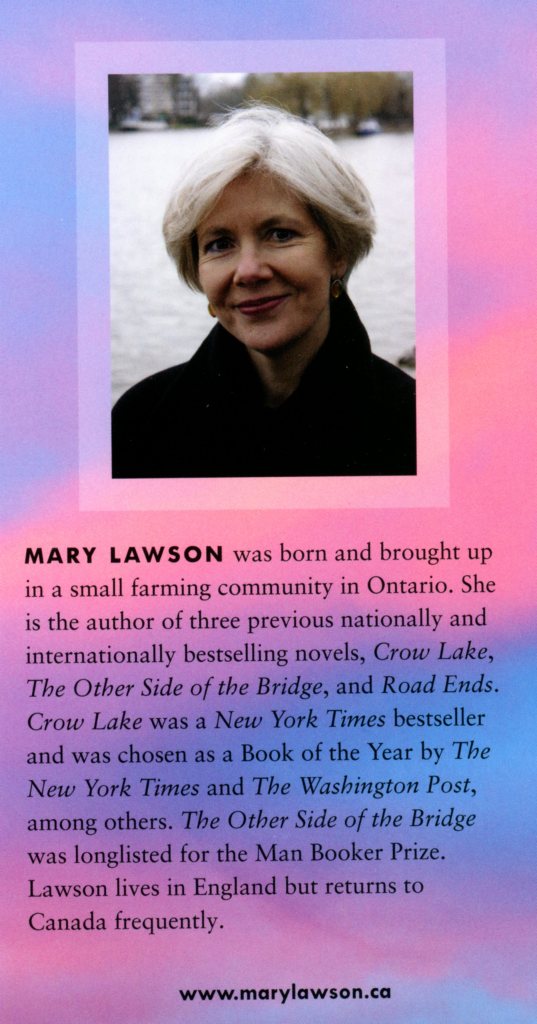
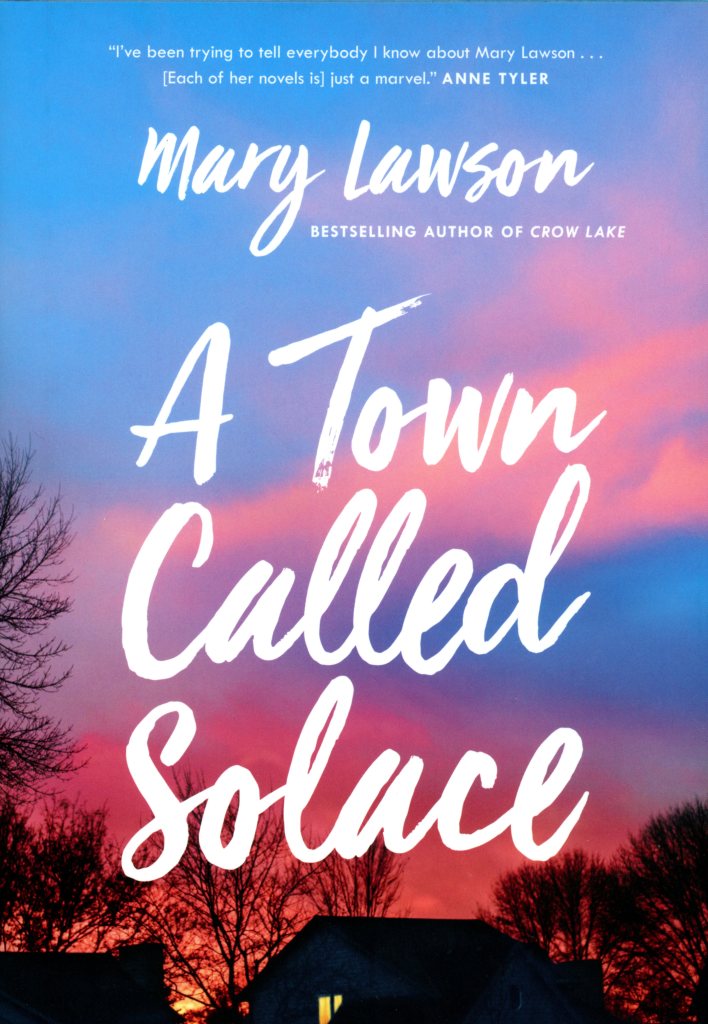
Mary Lawson burst onto the Canadian literary scene in 2002 with her very first novel, Crow Lake, at the age of 56. I remember reading the articles and thought of her as a role model, someone who came to writing later in life and persisted until she was able to land that first publication. Crow Lake was an instant success winning the Books in Canada First Novel Award and published in 22 countries. Her follow-up novel, The Other Side of the Bridge, was long-listed for the Booker Prize. Mary Lawson moved to Great Britain to pursue a career in industrial psychology. A Town Called Solace, like all her books, takes place in a fictional northern Ontario community, reflective of her rural roots. This latest novel was also long listed for the Booker Prize and reads in the same manner of the other work.

The story is told by three characters in alternating chapters. Clara is the young girl whose older sister, Rose, has run away from home. Clara cannot understand and is standing vigil in the front window of their home in Solace, waiting for Rose to return. Clara is also responsible for feeding Mrs. Orchard’s cat, her neighbour who has been taken to the hospital. Elizabeth’s recollections resurrect much of the history behind the novel, which includes Liam who has just arrived in town after quitting his accounting job in Toronto and separating from his wife of eight years. Between the three narratives, the story unwinds as the reader is introduced to life in a small town and its accompanying characters. To that end, the book reminded me of an old adage: The best thing about a small town is that everybody knows everybody; the worst thing about a small town is that everybody knows everybody.

Unlike many of my other reviews, I have not highlighted a particular quote or a passage to emphasize a point or a perspective. Instead, I found the book to be similar to a home cooked meal. The material is familiar and comforting without the exotic presentation on fancy dishware. Instead the reader finishes satiated from a warm experience, a high degree of satisfaction. Every time I read the title, the 80’s song, Town called Malice kept playing in my head. “‘Cause time is short and life is cruel but it’s up to us to change, This town called malice.” As a result, I thought the book title to be unfortunate until I thought of the meaning of solace: comfort or consolation in a time of distress or sadness. The book is hopeful and as such provides a dose of solace for the characters and the readers.

Knopf Canada, 2021. 243 pages.

For something completely different, I ventured into Kill the Mall. The author, Pash Malla is not a household name even among prodigious readers of Canadian literature. His first book was a collection of short stories with the curious title, The Withdrawal Method, published in 2008. It was longlisted for the Giller prize which would explain it’s presence on my shelves, and was the winner of the Trillium award. There is more biography on those inside flaps, stating he was born in St. John’s Newfoundland, but grew up for his formative years in London, Ontario, my hometown. A search on Google finds Pash Malla to be the 2021-22 Mabel Pugh Taylor Writer-in-Residence at McMaster University. Convenient since he lives in Hamilton now. I picked up Kill the Mall his the latest book since I already own two others, and I must admit, was intrigued by the title.

The premise of the book is the most unlikeliest of scenarios. The narrator, a writer, has been selected as the artist-in-residence at the local mall, where he must spend the next eight weeks practicing his craft, engaging with the public and writing weekly reports. His name is unclear, never being used in the dialogue, the only hint being an indecipherable signature at the end of his application which opens the book. The remainder is a weekly account of his imaginative misadventures and fantastical encounters. He is watched by K. Sohail, the security with the squeaky running shoes and jingling pants who locks him in every night; he befriends Dennis, who sells him a pair of jeans making him Dennis’s one and only customer. He is haunted by Pony tail, and pony tails; the former as another more popular artist-in-residence; the latter, the multiple apparitions of Dennis’s own, who may have been murdered, which conspire with the cars in the parking garage in an attempt to capture him. Trust me, if these images sound strange, they are….and there are many more in the book.

The book is hilarious, with a very wry sense of humour throughout. You could open the book at almost any page to find a funny passage, sometimes with clever insight, or describing some bizarre scenario. From the first progress report: “Work is the lifeblood of humanity. But love is the lifebones (equally essential). For blood without form is just a red mess on the floor“. In the second report, he talks about his getting a haircut: “You head for the salon confident that you’ll return a ‘satisfied customer,’ for cutting, by its very nature, assures a reduction in length. Little else in life offers such an inbuilt guarantee. Even a lunch, should it flee your system via propulsive evacuation, might leave you hungrier than you were before you ate.” One more example which typified a relentless paranoia: “Wasn’t instinctual behaviour precisely what the mall wanted? For me to be seduced by what felt like intuition and to believe that said intuition was my own, when in fact the mall had infiltrated my thoughts? Six weeks here had no doubt reporgrammed my brain to the mall’s diabolical caprices.‘” However, as much as I laughed and smiled for three quarters of the book, I was getting a little bored by the end.

Followers of my posts will know I am enrolled in an online memoir writing course; my next books, therefore, will be…..memoirs.

Happy reading.

Take a chance on me

“Are you the couple getting married here later this afternoon.”

The woman had wandered over to us sitting in the fifth row, left side, hand in hand, quietly watching the preparations. A number of people were scurrying about St. Peter’s Cathedral Basilica in London, ensuring the flowers were arranged just right, the candles were displaying enough wick length, the readings were at the ready available at the podium and the microphones were all functioning. Olga and I had just raised ourselves off the kneeling board after several minutes of reverent prayer.

“No, I am afraid not” I began.

“We were merely stopping by before our wedding at another venue”, said Olga, completing the thought.

“Oh, you look like such a beautiful couple. Congratulations. I hope you have a wonderful ceremony.”

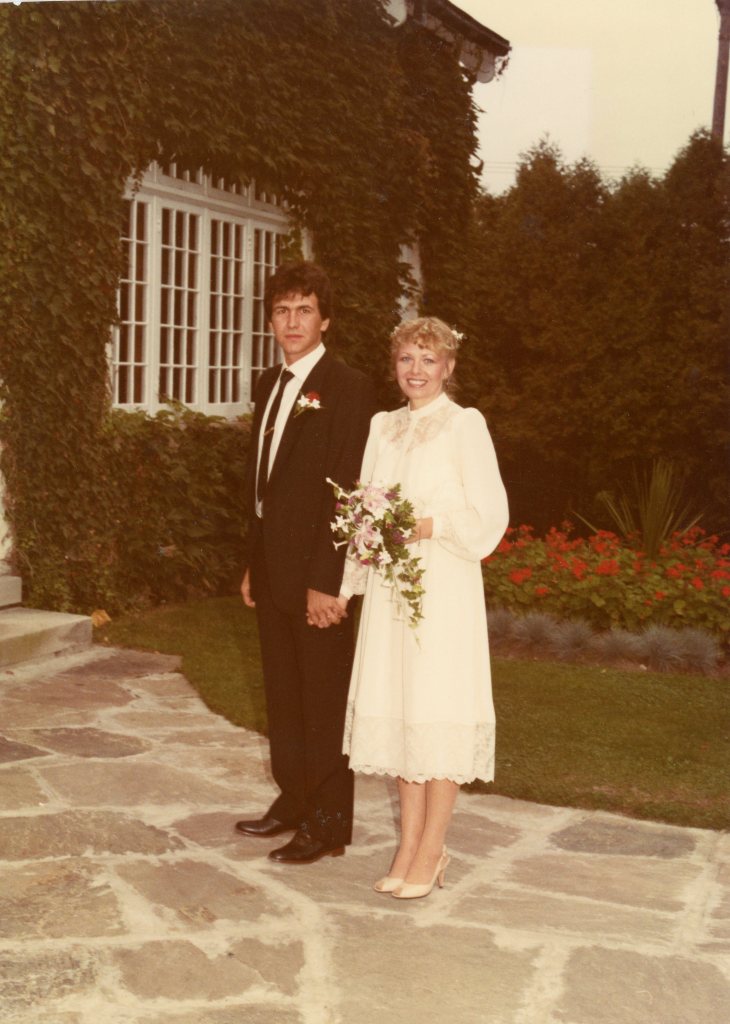
We wanted to visit the church before heading to Windermere House where 42 guests were gathering in the library of the old estate, awaiting our arrival. This small homage to St. Peters was as close as we could venture to a Catholic service. The parish priest had ruled out any opportunity of a traditional church wedding when he pronounced the notion to be scandalous.

Our ceremony was going to be very simple, sanctified with our own vows, presided over by a non-denominational minister, with musical accompaniment from the choir from Mary Immaculate Parish of which Olga and I were both members, singing songs of a wedding mass. The day was not going to be the one my parents envisioned, the first son to be married. They were overtly opposed when we announced our intentions three months earlier; eventually they grew into acceptance. Olga’s parents weren’t enamored; her Mom would be the only person attending, her father ill, her brother living out west. Others were subtly skeptical of our age difference, although had it been reversed, few would have noticed.

No wonder I woke in the morning with an unsettled stomach. The beverage consumption last night with my brothers and best man played a part; nervousness would be the main ingredient. A morning of hall preparation before I donned my best and only suit, black, purchased a mere three weeks ago. I drove by the flower shop to pick up my corsage and the bridal bouquet, before alighting upon Olga’s Victoria Street apartment, our future home.

Olga was quiet, also nervous, alone, waiting in her dress. Not the full bridal white gown of puffs and frills. Hers would be a simple, elegant dress, understated in a light beige, befitting the solemnity of the moment. Olga’s hair was pulled up, braided; her face adorned with makeup to enhance a natural beauty. Together, alone, unbeknownst to anyone, we made a detour to arrive here at the Basilica for some final reflection.

“Olga, are you ready?”

We both genuflected to the altar, Olga making the sign of the cross, three times as per Ukrainian practice, bowing our heads one last time. The hours of conversation in the two years preceding, discussing our values, our beliefs, our dreams, filled the silent ride driving past the university, the conduit of our beginning. Our family backgrounds made for shared experiences; our political interests combined for a common front; our personalities were complementary: we loved being with each other. The lingering questions of our individual particulars no longer mattered when we pulled into the parking space at the bottom of the hill. Uncertainty would be overcome together.

At the precise instant I put my hand in Olga’s to begin our walk up the tree lined drive, I knew.

We were blessed. Our marriage was meant to be.

Entering Windermere House in London, Ontario. October 1, 1983

Happy Anniversary, Olga.

With all my love,

The Last Breath

I remember Mom’s last breath. It was more of a heave, a bursting of air, a quick exhalation preceded by days of shallow, open mouthed panting.

We had sent Dad to our house, imploring him to get some decent rest. He had held vigil for the last five days, never leaving the hospital since he instructed all life supports to be removed. Mom’s second massive stroke had ravaged large sections of her brain. Here and here and here, said the doctor, pointing to the x-ray on the screen. Tubes and wires were protruding from her mouth and arms, attached to monitors of flashing numbers and lines. Two days in ICU broke Dad. He lost all hope. Mom would not not want to live in this manner he rationalized. Dad pulled the plugs without consulting with any of us. I was in disbelief, angry at a perceived weakness. It would be years before I arrived at a more compassionate understanding.

Mom’s body was to be left to fend for itself, propped up only by the morphine. A rotation of nurses would stop in on their round, ensure the drip was steady, vacuum out the accumulation of saliva in her throat, raw from the constant cleaning. Mom’s eyes were shut tightly, body motionless, no signs of life beyond the steady gasping. A few days earlier it had quickened, as if in a panic. Dad burst in tears, demanding, near screaming for all of us to stand round the bed, touch Mom’s arms and hold hands because the end was nigh. For an excruciating ten minutes we waited and watched and begged for finality.

Then the breathing regulated, falling back into the now familiar pattern. Dad collapsed into the chair, head in hands, sobbing. He vowed never to leave and would remain ensconced in the room until the bitter end. Exhaustion ceded to our insistence: Mom’s condition has not changed. Here is our key. Sleep in a bed for a few hours. Mom will still be here when you return.

The rhythm of Mom’s breath was steady, relentless, a white noise to which we had become attuned. Then a long silence, and the sudden gasp. We stopped our conversation, looked at each other then simultaneously turned our heads to watch for some sign, a resumption of life.

Nothing. No movement.

I jumped up to find the nurse who sauntered in to confirm the long inevitable. Mercifully, it was over.

No crying, just relief. We recited out loud the Lord’s Prayer and Hail Mary.

Dad walked into the room minutes later. Mom’s pain was over but his would morph into a new, prolonged phase.

Mary (Reit) Decock (nee van Rooij).
October 7, 1928 – September 28, 2005.

They look like big, good, strong hands

A focused memoir in 200 words.

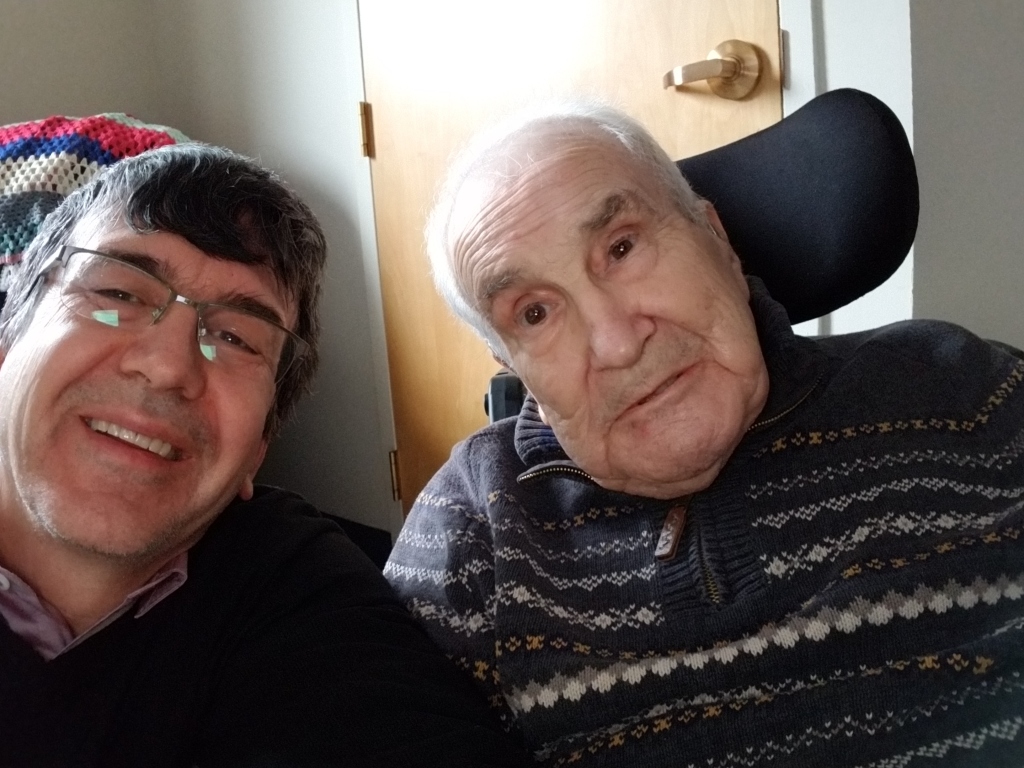
I wipe the dribble of gravy running down his chin through the three-day stubble, his head leaning to the left. Dad’s eyes pop a little wider to acknowledge the attention, probably feeling embarrassed. He does not want to blemish the new orange soccer sweatshirt emblazoned with the Dutch flag.  The hands which deftly shuffled a deck of cards and splayed a full hand for selection can no longer grasp the cup of juice to bring the straw closer for a drink.

When Mom was alive, they waited anxiously for vacation breaks in anticipation of our two children spending a week at their home, playing catch in the yard, working the garden, picking the vegetables. The evenings would be capped around the table, counting the wins and losses in the penny stakes card game. On other days, the kids would accompany Dad to the Canadian Institute for the blind to deliver the canes he repaired in his retirement as a machinist. Those same hands are incapable of holding a fork and knife. The tools must be managed by the long-term care staff.

I lift another bite sized morsel to Dad’s mouth. He keeps it closed, drops his head. He is done.

I want to go to Miami

Last week I began an on-line writing course with Memoir Writing Ink, thinking it would provide me tips and tools to improve my work. One of my intentions with retirement was to write more, and as you can see from the posts, the material is largely in the form of a memoir. Even though I read considerable literature, I find myself composing non-fiction pieces, much of them about the past and my associated memories.

As the course emphasizes, writers write and the only way to improve is to write continuously. The instructor suggests a number of prompts to help think in different ways, from various angles, at different lengths. There are several exercises each week, some of which will find there way to my blog. The course has a Facebook page for participants to share their pieces with each other and to comment. It is limited to one submission per week so I am planning to post many more on this site as an additional outlet for my efforts. I hope you will find the pieces enjoyable.

One exercise asked us to write about something we overheard. I have entitled this effort, I want to go to Miami. It is a true story. Here goes:

Too late to venture far, too dark to walk along the beach, I decided the sidewalk would be my yellow brick road. The flashing lights of the rainbow were bright enough to read the menus, entertaining enough to turn your head, gaudy enough to invoke a smirk.

Welcome to Miami where English is the second language, music is the first. Pulsating throbs were emanating from every door and patio on my right; booming beats vibrating from each passing car on my left. People were sauntering, seemingly to look and looking to be seen. I was derailed by the “Cigars? Cigarettes?” woman hawking her wares; questioned by a bridal party on a scavenger hunt; stopped by the lights which everyone else ignored.

I had seen enough culture for one evening. Time to head back to the conference hotel.

A nightcap was in order, so I chanced upon a watering hole, just off the tourist strip, exuding local with a name no franchise would ever adopt. The windows were splattered with advertisements for happy hour, two for one wings, and weekly dart competitions. A basketball game was on the monitor just above my seat at the bar, showing the intermission of talking heads, their conversation scrolling underneath.

My pint of the local beer was half finished when a voice from the table behind me of twenty something males planning their next excursion pierced the din:

“As long as it is not France. France is so fucking boring. There is nothing to do in France.”

I smiled.

One more swallow from my glass, I slide ten bucks across the counter.

Keep the change.

Pick me! Pick me!

I have never voted for any Prime Minister of Canada or Premier of Ontario in any national or provincial election; yet I have never missed an election since I turned eighteen and became eligible to vote.

In the last election, in fact, only 24,727 people voted for Justin Trudeau, representing 51.2% of the votes in the riding of Papineau, Quebec which has a population of 110,750 according to the 2016 census. Such is the reality of a Parliamentary democracy, perhaps the most confusing electoral system in the world. I did not vote for Justin Trudeau or Rob Ford or any of their predecessors because their names were not on my ballot.

Partial list of results from the riding of Papineau, taken from the CBC news website.

Nor did I vote for their rivals because none of the candidates in my riding have ever been the leader of their respective parties. There have been a couple cabinet members: Michael Wilson was the Progressive Conservative finance minister(prior to the hijacking by the Reform/Alliance) and Allan Rock was the Justice Minister for the prevailing Liberal party. I did not vote for either of them, sort of, which is precisely the problem.

Allan Rock, the Liberal party incumbent, arrived on our doorstep during the federal campaign, oh so many years ago, seeking our vote. The Reform/Alliance/Conservative appeared to be a legitimate threat and given the conservative tendencies in Etobicoke Central in our first-past-the-post system, I decided to vote Liberal knowing the NDP were a virtual non-entity in our neighbourhood. I responded to Allan Rock by saying, “I am voting Liberal to ensure the Conservatives don’t get to power.” To which he replied, “I hope that is not the only reason.”

“Nope, that is the only reason.”

My selection was not for the leader at the time, Jean Chretian; I did not choose the candidate; technically I voted Liberal which itself is a dubious interpretation. So when the analysts come on TV and begin to proffer their version of the results, they realistically have no clue as to whether the votes are for the party, the candidate, or the leader of the party. All three are possible, which makes the reality of who forms the government maddening.

Seats acquired and popular vote results from the 2019 Canadian federal election. Source: CBC news website.

The Liberal party with Justin Trudeau as its leader formed the government after acquiring 33.1% of the popular vote, 1.3 percentage points less than the Conservative party; yet, the seats won were 157 and 121 respectively. Indeed, in only five elections since 1867 did the winning party garner more than 50% of the electorate. In other words, the majority of eligible voters in Canada did not cast their ballot for the ruling government, regardless of party colour, for 38 of the 43 elections held in Canada. By all accounts the 44th parliament will be the same; approximately two thirds of the voters will not have voted for the party forming the next government. Never mind that only 67% of those eligible actually cast a ballot in the last election which means the ruling government was selected by 22% of registered voters and by only 17% of the entire population.

That’s Democracy.

The numbers work out approximately the same regardless of who forms the government. These same issues arise when we examine other electoral systems, but I digress. On Monday, I will walk to our local polling station, bring my own pencil, don the mask and place an X beside one name because my parents taught us early: you cannot complain if you don’t vote.

My parents were exceedingly proud of becoming Canadian Citizens and able to exercise their right to vote. They could not understand why people did not bother and even advocated for a law which would fine those who did not cast a ballot. Mom and Dad had close friends who refrained from voting or could not because they had not applied for citizenship. My parents would bluntly tell them to stop bitching about this or that decision – you didn’t vote!

Dad was open about his choices. He voted for the New Democratic Party (NDP) because it is the workers party. Dad became disenchanted with them after the NDP government in Ontario under Bob Rae taxed auto insurance, something they promised not to do during the election campaign. Breaking that promise was the bone my Dad could not let go. Mom was more coy about her choices, never really trusting the NDP, probably voted Liberal most of the time but I would not be surprised if the occasional ballot was for a Conservative party.

Picture of Mom and Dad from a 1983 visit to Storybook Gardens: statement on their election choices?

Neither of them voted on the basis of the candidate in their riding. I expect they did not even know the name, nor cared. Their focus was on the leader and therefore, checked the box beside the associated party, much along the line of proportional representation to which they were accustomed back in the Netherlands. Politics was common fodder for conversations at home over the dinner table, spilling into the evenings and heating up during an election campaign all the way up to voting day. Not voting was a non-starter.

Beyond casting a ballot, however, they did not get involved with parties, campaigns, or issues. On one occasion, Dad and the neighbour, Fred Hoornick, called in sick as part of an organized, one day labour protest of Pierre Trudeau’s national wage and price freeze legislation. It would be the only day Dad would miss work. He and Fred went to the local forest and transplanted several trees on their respective properties to mark the day. One still survives at the back edge of our Kostis Avenue home. I cannot recall any other manner in which Mom or Dad participated in any form of political activity.

My experience has not been much different in terms of participation. Yes, I have voted in every election; I have signed petitions, written the occasional form letter to my local representative; and I have protested in a handful of rallies, one large one marching along University Avenue to Queens Park in Toronto. I have never contributed money to a political party much to the surprise of at least one relative. I keep close tabs on political news, reading opinion pieces, and am aware of the party philosophies and platforms so I can engage in intelligent conversation and make an informed choice.

I am not proud of my own inactivity and am grateful for the passionate few who bring awareness to issues with their efforts and work. Their work is important. Voting is the minimum requirement and represents the most passive form of democracy. The least I can do is cast a ballot in a manner which will help support and reflect my values.