Welcome to my world. Whether it be the documentation of some family history, a stop on the train of thought or a travel to parts of the globe, this blog is a reflection of the sights and sounds and thoughts of my interaction with it.
This post is not really about Zen and it is only a little about motorcycle maintenance. In my attempt to get the bike back on the road, I had to conduct a little repair and in the process surrendered to a Zen-like understanding in all things mechanical.
Spring arrives later at the cottage, two hours north of Toronto, and as such, my motorcycle riding adventures would begin weeks after the first opportunity in the city. A foster cat delay in April meant the season opening ride would be attempted on the long weekend in May. I lumbered through a 16 point turn in the basement to direct the front wheel toward the door, huffing and puffing the bike outside to park underneath the protection of the porch. Unearth the helmet and gloves, line up the boots, select the best jacket.
Ready for tomorrow.
Standing beside the machine, I survey the instruments and buttons and levers, stating out loud each function, reminding myself of those lessons from another long weekend way back in September. Foot brake on the right, below the handle with the pull brake; clutch on the other handle, shifting gears with the left foot. I found the choke, beside the auxiliary tank knob, just above the key ignition. Light switch, power switch, kill switch – I think we are good to go.
Turn the key, neutral light illuminates; straddle the seat, straighten the wheel, bounce a bit, press the starter button. The cold engine turns and turns and turns, then click click click click.
Hmmm. Did I miss something? Right. Pull out the choke.
Press the button and it turns and turns, then click click click click.
What the? Okay try again.
Press the button and it turns, then click click click click.
I know that sound.
Press the button and click click click click.
The battery is dead.
Where is the battery on a motorcycle?
It is a Honda Shadow 750 from 2004 so I figured an owner’s manual would have disappeared long ago. Besides, we live in a paperless world. I’m a modern guy so I consulted that virtual manual in the ether, the font of all knowledge – You Tube.
There are no judgements with You Tube videos. The search engine does not smirk or laugh when you type in the question. The people demonstrating are grateful for the audience, delighted you have selected their instructions. The hosts cheerfully walk you step by step with careful explanations, extoling all their other helpful hints, inviting you to return. You feel empowered. You can do this.
Here goes. I am told to pull off this apparent cap ….oh wow!
Not a battery yet, but a compartment labelled, “Tool box” where I put in the key to open and discover a package of tools with the owner’s manual. Who knew? Flip to the section on batteries, complete with pictures instructing me to take off the seat except none of the devices in the kit match the screws and bolts holding it in place. Rummaging through my own set and a few minutes later the battery is exposed. All 3 X 4 X 6 inches of it, buried in the heart of the machine.
Before storing the bike for the winter, according to the manual, I should have taken the battery out and hooked it up to a trickle charger.
A trickle charger. Right.
Google tells me Home Hardware carries them but the local store in Apsley would have to order and it will arrive next week. When we are back in Toronto. Of course. A purchase through Amazon (haven’t I become the high tech guy!) because it had the best explanation for my search and I returned at the cottage a few weeks later armed with the device.
I attach it to the battery, as per instructions, and watch the slowly pulsing red light, ebbing between a dull and duller glow.
Come back in nine hours, as per instructions, and it is still not flashing the go ahead green signal.
Maybe tomorrow.
The next day the same hypnotic red. Switch the trickle charger to a different 12 volt setting (there are three different ones, and a six volt as well) and wait for another day only to find the same result.
I think the pulse is even slower, taunting me now.
The battery is warm to the touch; something is happening. So, with patience waning I take the plunge. My aging brain needs a reminder to reverse the steps for extraction, rediscover the wires and account for all the parts.
Before the seat is bolted, I turn the ignition, suppress the start button; the engine turns and turns, then growl and purrrrrrr…. eureka! Two loud revs to let the neighbours know before I shut it down to reinstall the seat.
Back in the saddle, ignition on, press the button and she jumps into action. Let ‘er warm, a twist of the throttle….sputter, cough, cough,….silence. Not warm enough I guess.
Press on. Cough, sputter, spit…..Silence.
The bike is out of gas.
Did you know motorcycles do not have fuel gauges? Your only clue is the mileage travelled after filling up, based on experience and cruising habits….all in very short supply after my truncated riding season. No portable gas can, my goal to ride on Father’s day is thwarted.
Hands together, eyes closed. Breathe slowly.
Maybe tomorrow.
Just a little Zen to learn this art of motorcycle maintenance.
I have been writing about my visit to Kamuli, Uganda for a submission to a memoir writing competition and in that process a re-examination of my time has led me into a deeper understanding of the events. In previous posts about my uncle, Father Kees de Cock, I had described my quest to affirm some statements about him, espoused by my Dad. A more detailed representation of the May 2017 visit yields a richer recognition and understanding of the man known by the locals as Dikoko.
My chance opportunity to visit Uganda arose as a result of a work-related project in Tanzania. Once confirmed, I began corresponding with the Mill Hill Mission House in Kampala hoping there would be someone there to receive me. Bishop Phelan responded immediately connecting me with Father Wijnand Huis, the priest who had taken over after my uncle had died. Father Wijnand replied exuberantly and after several email exchanges, the timing for my visit was established. I had no idea what to expect.
The one stop, 16-hour flight, landed me at the Entebbe airport in the early evening. It was 8:00 pm local time when John, my arranged driver, began the hour-and-a-half, 35 km crawl into Kampala in the dark. There was little to see beyond the confines of the street as we drove through the poor infrastructure of narrow, cratered roads absent of lights or anything resembling a sign. People were milling about by foot and motorbike, mixing dangerously amid knee deep gutters and cow path walkways. The jeep teetered over the moguls leading into the guest house compound with its massive metal gate entrance. After an overnight stay in a simple room, equipped with open, screened windows and mosquito netting, John drove me to a sketchy rendezvous with a money changer ( I needed some Ugandan money ) before we embarked on a two-hour ride to meet Fr. Wijnand and his close friend, Justin Ojambo. The three of us then proceeded for an equally long journey north, through several towns and villages, to Kamuli.
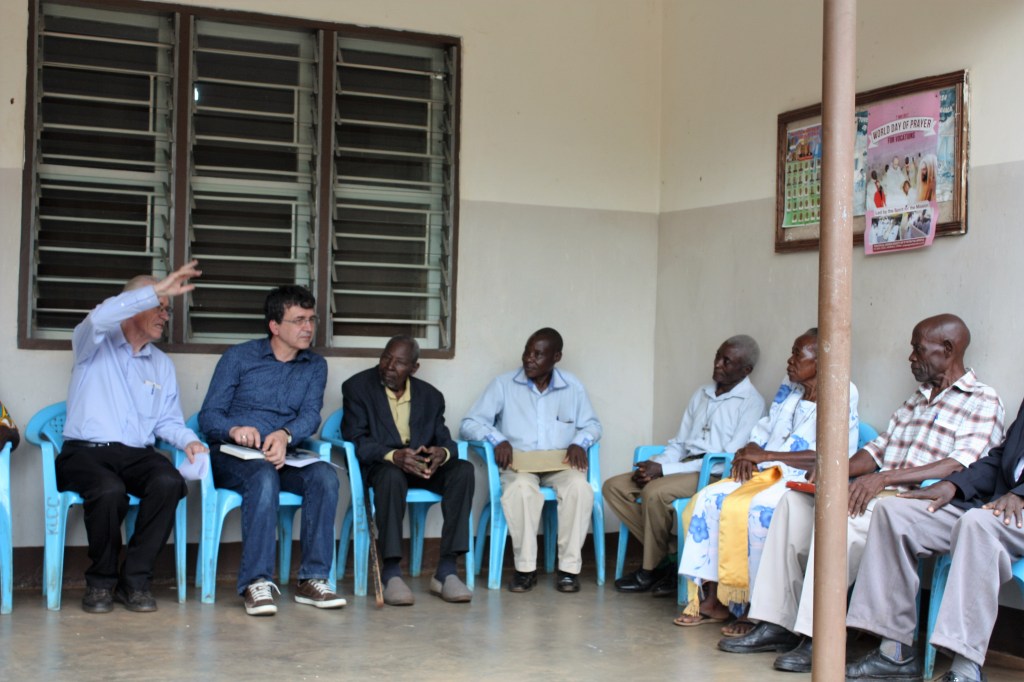
The initial welcome from Fr. Bikina, the parish priest, was cool, our conversation slow, a series of adjustments with unsure footing. I was ill prepared for the reception that followed. We spilled onto the outside porch, new arrivals meandering in slowly, scrounging for chairs to gather around, patiently awaiting their turn to speak about their relationship with Fr. Kees de Cock.
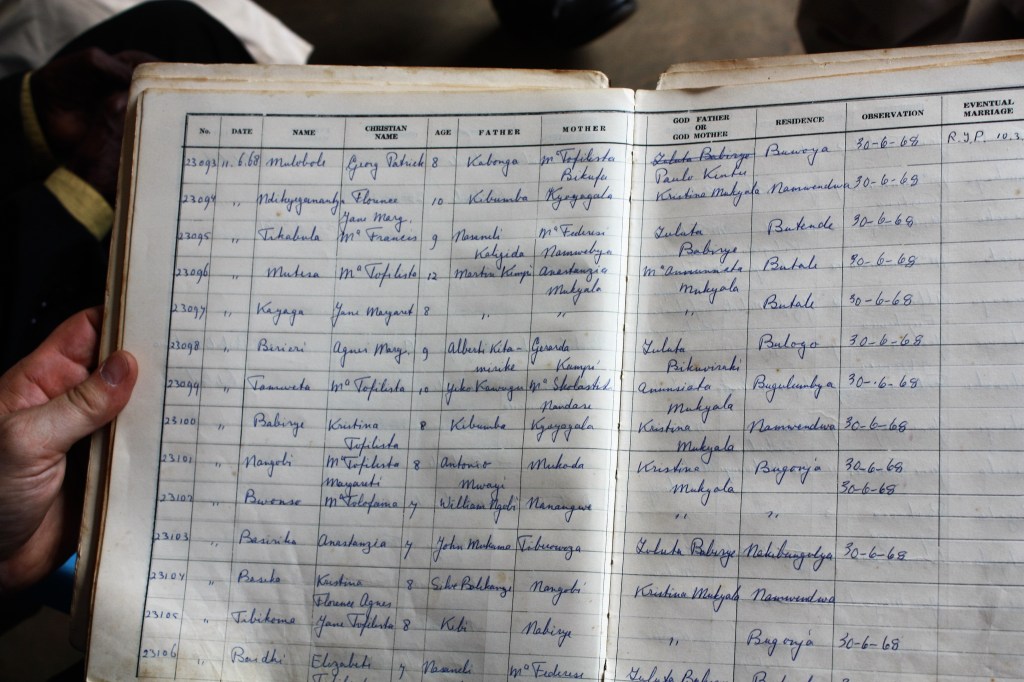
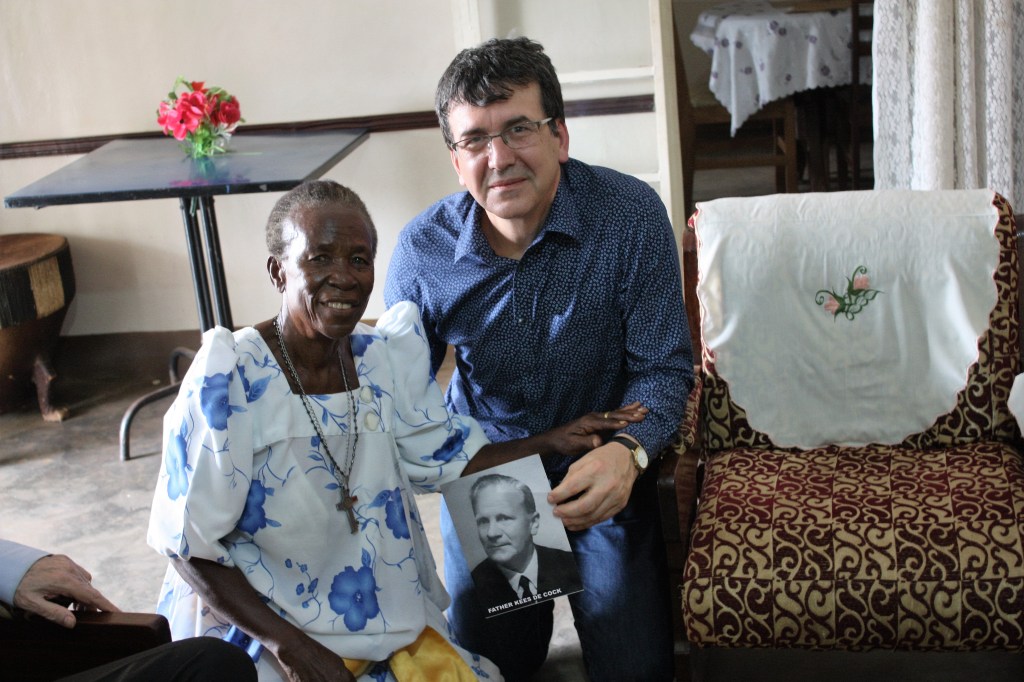
The praise began with Andrew Mugaya’s recounting of Fr. Kees installing the generator at the hospital next door. His mechanical prowess in repairing cars was mentioned often. Semenda Sylvester who was baptized by Fr. Kees in 1968, reminded how he had constructed the hall to help train new catechists. Moses Waiswa spoke of my uncle’s love of education, reconstructing schools so that children could continue. Gertrude Wakaalumba who cooked for the parish, kneeled before me to present an 8 X 10 portrait of Fr. De Cock. She retold the story where he demonstrated his adoption of the culture by crying like an African at her own father’s funeral. Sebastion Kutegana the ongoing secretary brought a registry of the baptisms to show Fr. Kees’ writing and signature. Fr. Kees had found ways to help pay the hospital bills of his wife. Peter Nzlambi became a catechist under Fr. de Cock, spoke of his love of their work and of his encouragement. Funny stories of his dog, of playing soccer, of cooking the books to satisfy the bishop, of driving away rats, of installing microphones to hear his soft voice; thankful stories of caring and compassion, counselling and support.
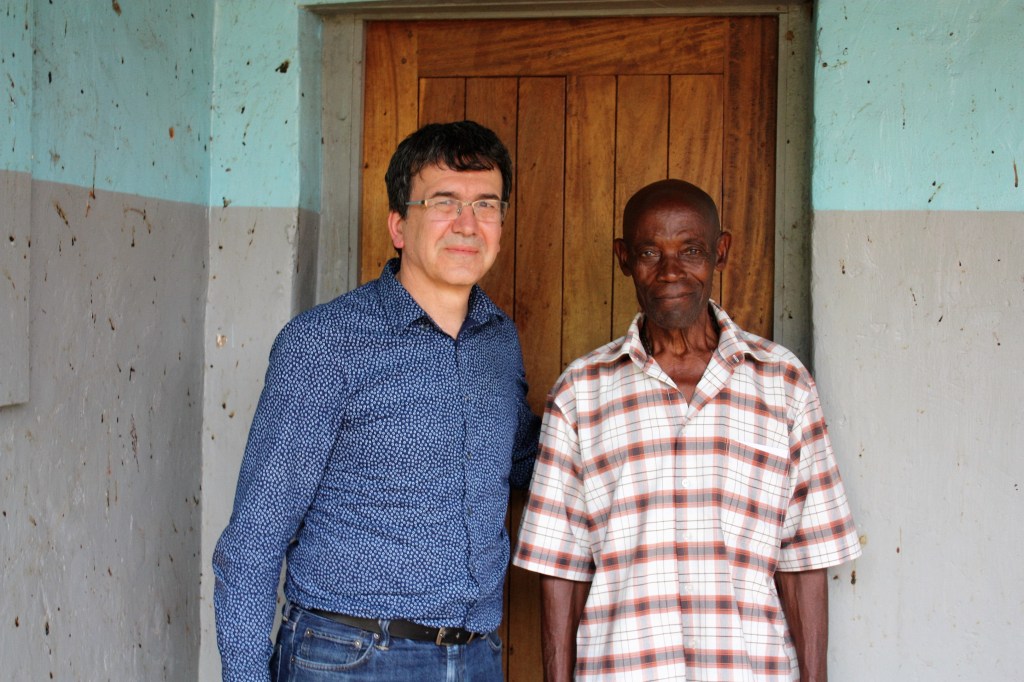
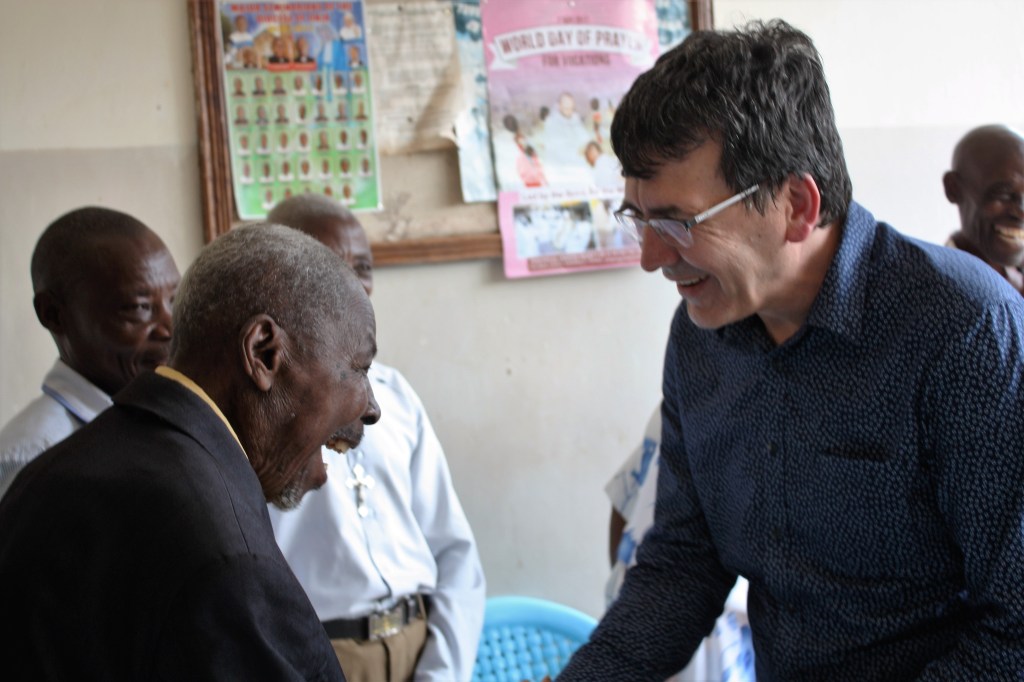
Selected scenes with people from the community who came to tell their stories.
Ponsiano Kayanga spoke of his appointment to take care of the room, following the announcement of my Uncle’s death, but couldn’t enter because the spirit of Fr. de Cock remained. Many mourners flocked to sleep outside on dried leaves, like a pilgrimage to his home. They considered themselves orphans and were present to honour his memory.
Fr. Kees had some medical issues, sometimes leaving to have them addressed in Europe, but he always returned. The news of his death shocked everyone and reverberated beyond the parish. People never had an opportunity to say goodbye, to mourn at a funeral. The congregation lobbied unsuccessfully to have his body returned for burial in Kamuli. I was the first person from the family to visit the parish since his death. In a country where nephews and nieces are considered sons and daughters, I represented his direct descendent. The reception, the gathering, the wake was an opportunity, as one person stated, to bring back the good memories which had left when Fr. Kees de Cock died. I embodied my uncle’s return and finally brought closure to the people of Kamuli.
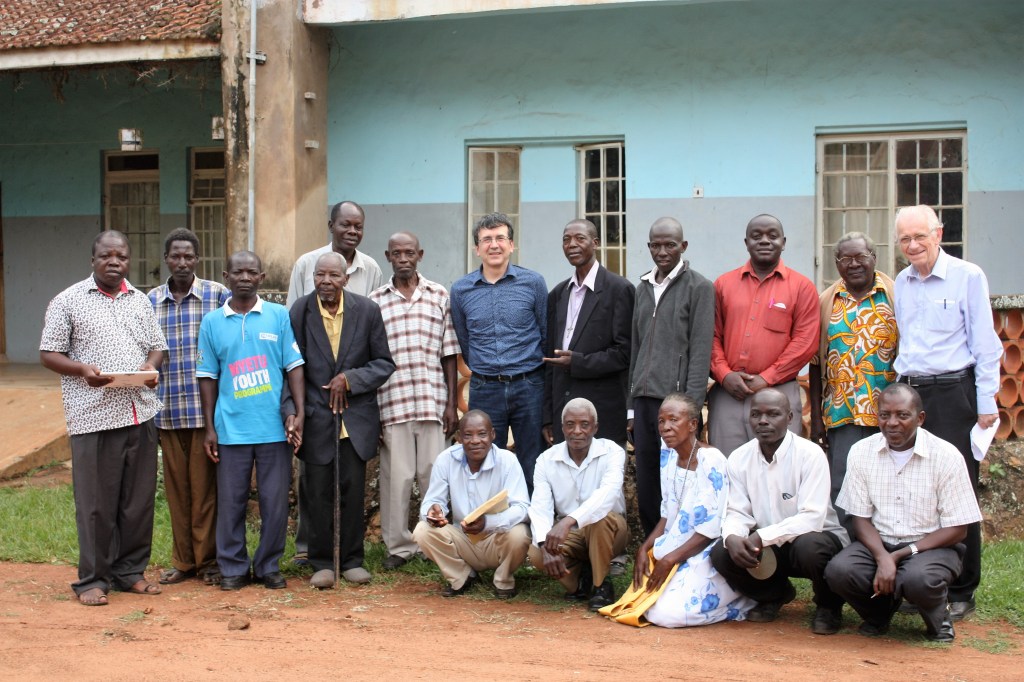
Group photo outside the rectory with everyone who paid homage to Fr. Kees de Cock.
After everyone had an opportunity to speak, we began sauntering around the grounds, when I was able to witness the FATHER DE COCK MEMORIAL HALL, situated behind the church, a stone’s throw from the rectory, the hospital and the schoolhouse (see henrydecock.org/2020/11/05/building-pillars/) The facade had faded from the photograph of its first designation and needed a refresh generally; nevertheless, the building remains an important feature of the parish community.
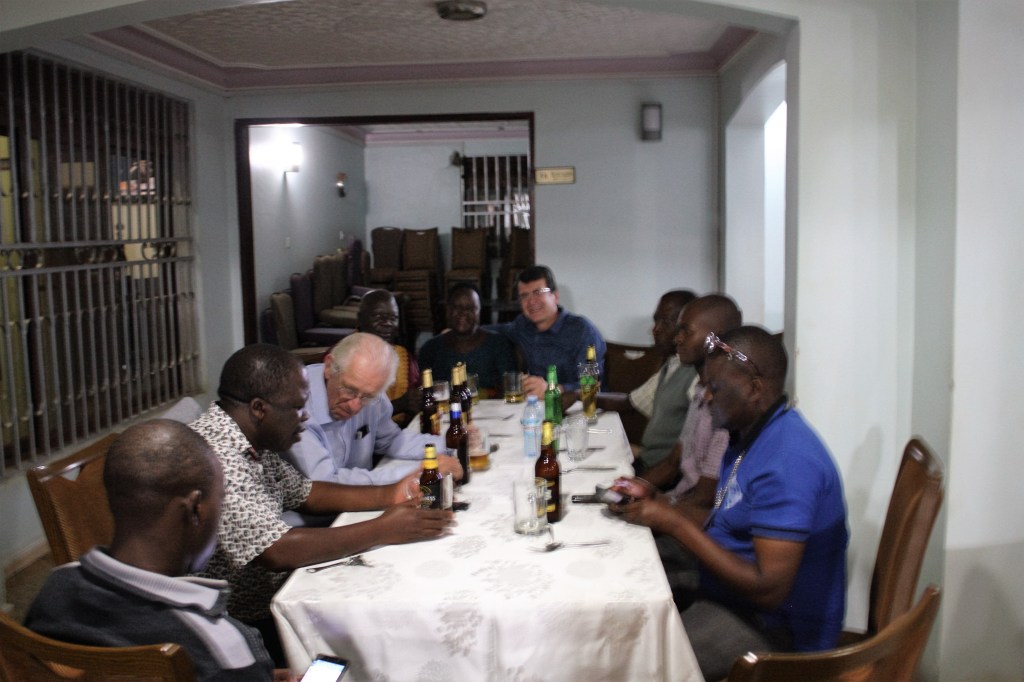
A small group gathered for a dinner in town where we were joined by Stephen Dhizaala and his wife Josephine. The former school headmaster and now chair of the local education council, Stephen had made all the arrangements of my visit. Stephen had been absent earlier because he buried his sister that day. Despite his own tragic loss, Stephen did not want to miss my presence.
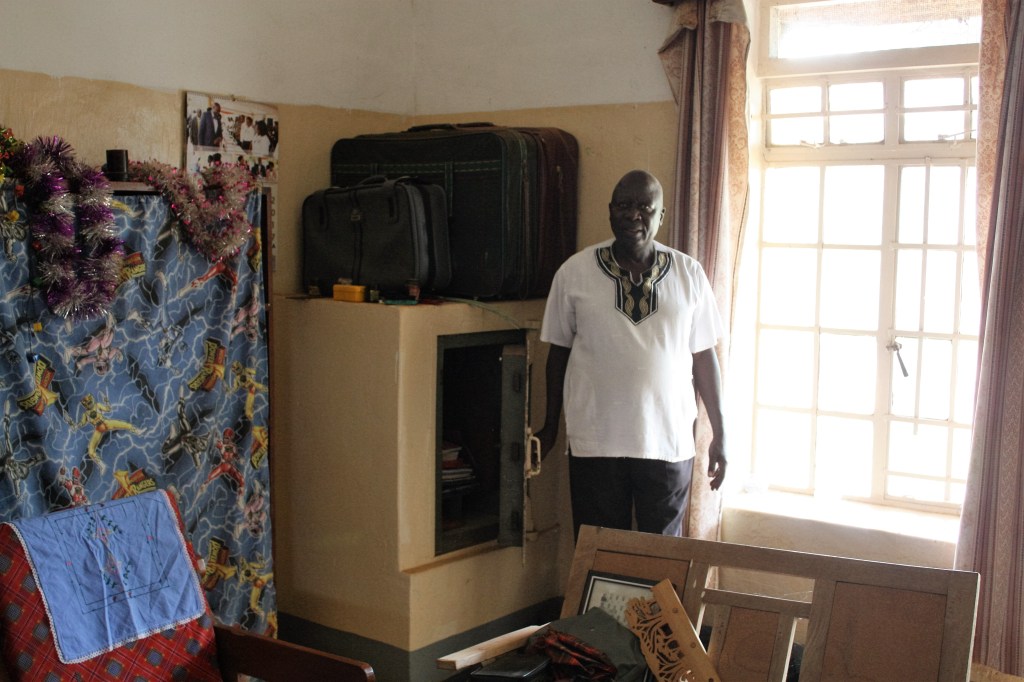
Stephen and Josephine joined us for dinner at a hotel restaurant; on the right, he is showing the safe where all the money and books were kept for the parish.
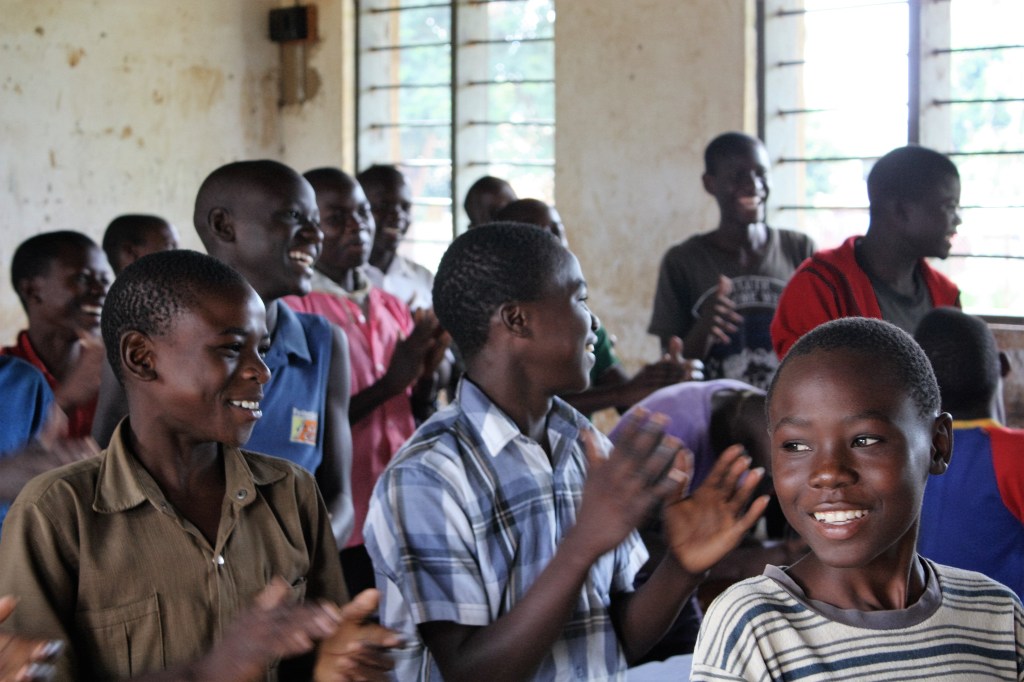
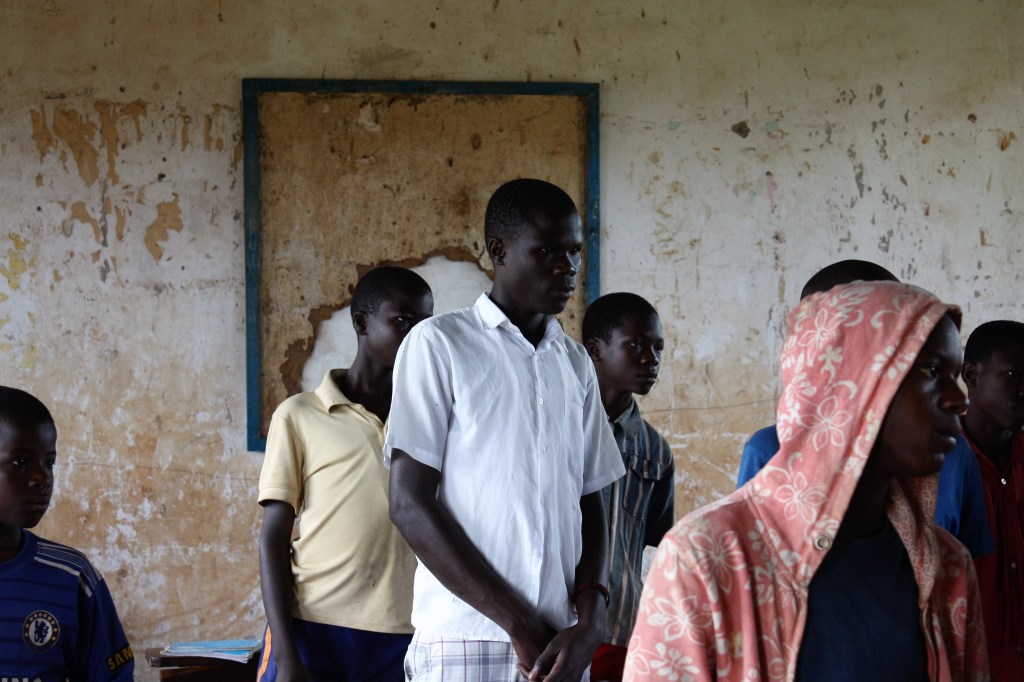
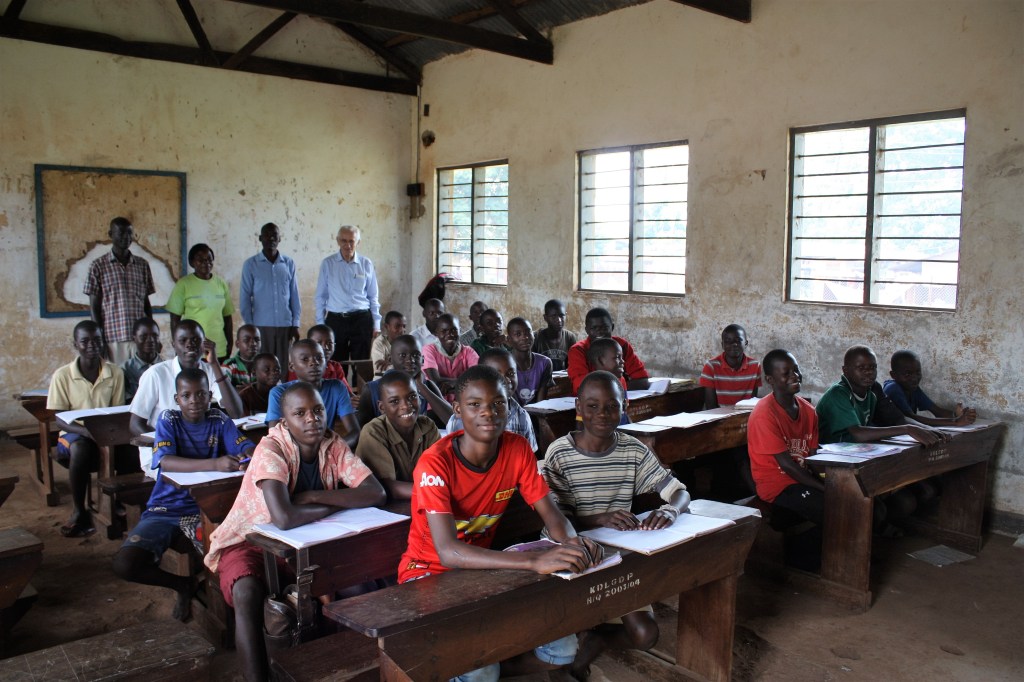
The following morning, after a tour of the expanding facilities and a photo in front of another surprise, the Father de Cock Children’s Ward, I was escorted back to the hall. Inside we encountered a group of children who feted me with a rousing song, celebrating the visit of the “son” of Fr. de Cock. Overwhelmed, embarrassed, I did not know how to react as I stood awkwardly, watching, smiling, uncomfortable with the attention, unsure how to respond, what to say. The headmaster walked me across the dusty yard to a classroom of young boys, most barefoot on the dirty, pocked concrete floor. When Fr. Wijnand asked the class how they felt that day, the boys responded in unison, “humbling and obedient”. I was stunned. They were dutiful and quiet; only one brave soul answered my question about their lesson. The focus of everyone’s gaze, the son of Fr. Kees de Cock, I was the one feeling very humbling.
Images from the school for young boys.
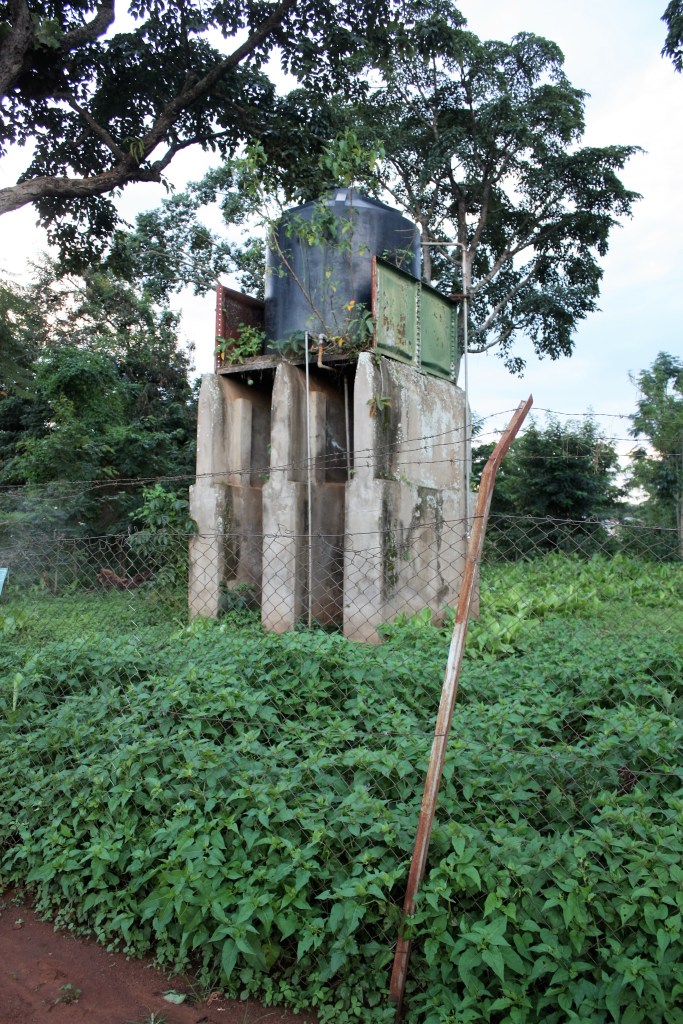
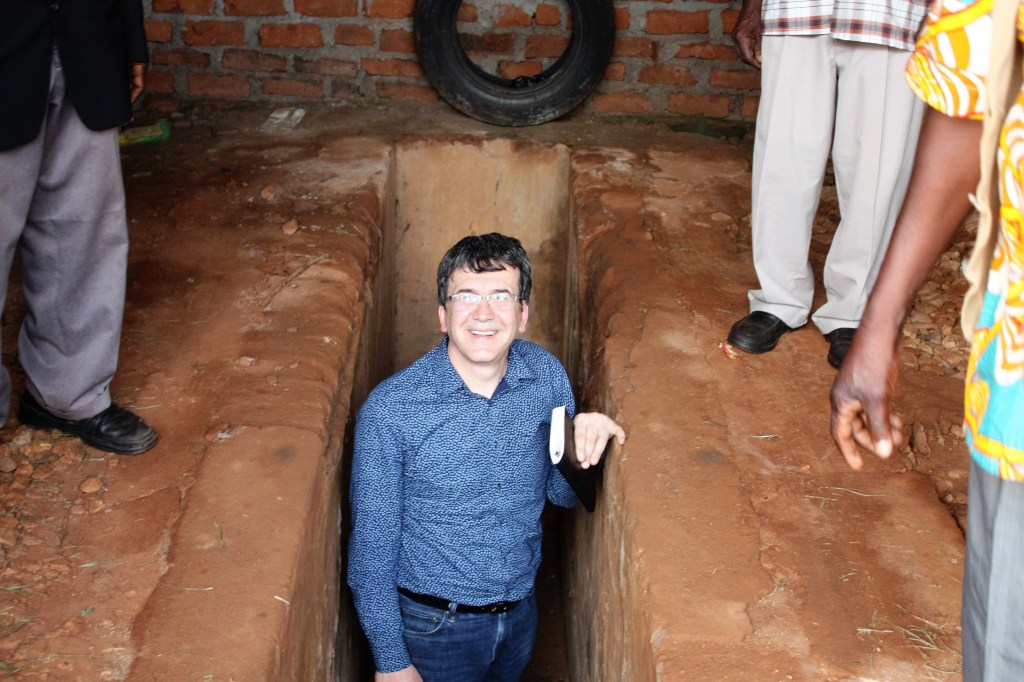
Stephen accompanied us as we began a tour of several structures for which Fr. de Cock was personally responsible: schools, churches, hospital buildings as well as seemingly mundane needs such as the water pipes and tanks for the hospital, installing the bell atop the parish church, replacing windows with open walls of circular tiles. Indeed, he was renowned for his practical skills; in particular a seemingly profound form of construction by beginning with concrete pillars, but also the constant repair of automobiles or the assembly of new hospital equipment.
On the left, the water tower; on the right, the bell atop the church; in the middle, a picture of me standing in the pit to work on the underside of an automobile.
Another goodbye, a heartfelt thankyou and we were on the road again. Forty-eight hours after landing at Entebbe, I was back in Jinja, head still spinning. The visit was over. I left with the regret of hindsight – why had I not given myself a few more days, arrived earlier, brought gifts of gratitude, expressed more thanks, asked more questions. A longing to return gnaws at my conscience.
The very brief incursion into Uganda helped verify my father’s claim there was a building named after his older brother, Fr. Kees de Cock. The nature of the building itself did not seem to matter. The naming and recognition by the Queen represented his status and therefore, considerable pride for my Dad. Although I had not imbued his assertions with any real importance or significance initially, my road to uncovering the life of Fr. Kees de Cock and to visit his parish in Kamuli 36 years after his death has brought me to an understanding beyond the discovery of facts.
The words of Fr. Willigers’ obituary (https://henrydecock.org/2020/10/17/server-to-everyone/) reverberate loudly: “[Fr. Kees de Cock] was true, and truly an ordinary man, … But in there lies the reason for his “legendary” status. He very seldom thought of himself, and hence reached his highest point that we all fully knew as: ‘The Servant for All’.” Dikoko, as he was known throughout the district paid attention to everyone and made no distinction between people. “You do not fool ordinary people in such things.” Fr. Kees de Cock lived his life with the values cherished by the people of Kamuli, Uganda who still honour his memory; beheld by my father, a younger brother separated by years, desiring a role model; and admired by a distant nephew laden with the compulsion to remain ordinary, hoping to accomplish as much.
The choice of Asian Canadian writers is considerable, a number of whom are ranked among the best the country has to offer. This month’s selection from my literature collection takes the reader to Cambodia, Vietnam, China, Singapore, Korea and Japan with protagonists rooted in Montreal, Vancouver and Toronto. The choices were deliberate, covering as much geography as possible, albeit missing significant writers and countries from the continent.
McClelland & Stewart. 2011. 253 pages
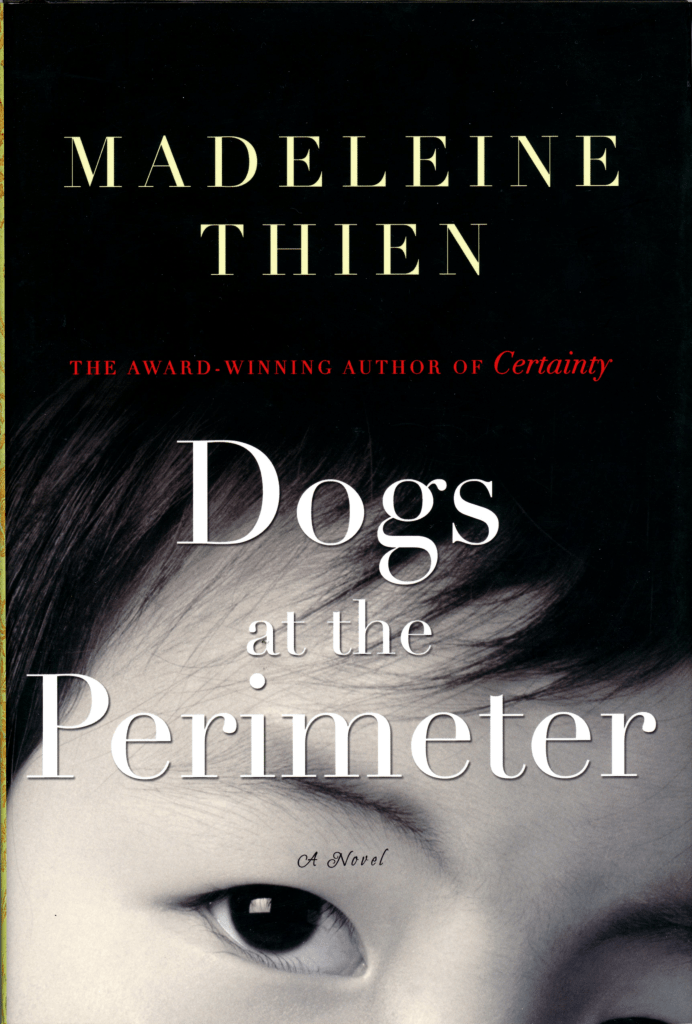
In my opinion, Madeleine Thien is the best writer in Canada today. Her first publication was the 2001 short story collection, Simple Recipes, which won the City of Vancouver Book Award and the Ethel Wilson Fiction Prize. Olga and I read this one out loud to each other, cherishing each story. Madeleine Thien’s first novel, Certainty, released in 2006, was the recipient of the Amazon.ca/Books in Canada First Novel Award. Her most recent book, Do Not Say We Have Nothing won the Governor General’s Award, The Scotiabank Giller Prize and was shortlisted for the 2016 Booker Prize. I recall it being one of the odds on favourites among the British bookies so I fully expected the novel to win. It is a masterpiece of fiction. Dogs at the Perimeter is her second novel, published in 2011. It was shortlisted for a number of European book awards, winning one at the Frankfurt Book Fair.
The book centres around the life of Janie, as she is called in Canada, who is haunted by a past and whose friend and mentor, Hiroji, is possessed by a lifelong search for a missing brother. Janie escaped the Cambodian Genocide between 1975 and 1979, while the rest of her family perished under the Khmer Rouge. The novel tracks her memories and that of Hiroji’s brother, James, eventually found in Vietnam. The prose is elegant and poetic yet still capturing the atrocities of this bloody period. The beauty of her language (We were like two coins left in the bottom of the jar: here by circumstance and luck, here together) is also interspersed with profanities when the circumstances warrant: This is the city of before. Five-year-olds fending for themselves, and the Khmer Rouge, arrogant, shit-faced, still prideful in their stronghold in the north, still holding their seat at the United Nations and hobnobbing with the Western elite, conspiring to take it back. Phnom Penh is no longer the agitated city he remembers, no, the dial has ticked back and stripped the place of people and goods, it is a city now where the kids run naked, where people walk around with photographs of missing family, where, by accident, you step into a pile of bones, rinse your foot off, and then move on, where men and women dress in hothouse colours, clashing motifs to push back the memory of black clothes and black hearts.
Identity is a strong theme throughout. “A different name and a new soul”. Janie becomes Mei, James is now Kwan. The changing of names, different lives, separate but intertwined is part of the question Janie grapples with at the end: Inside us, from the beginning, we were entrusted with many lives. From the first morning to the last, we try to carry them until the end. I highly recommend this book and every composition by Madeleine Thien.
Simon & Shuster. 2016. 275 pages.
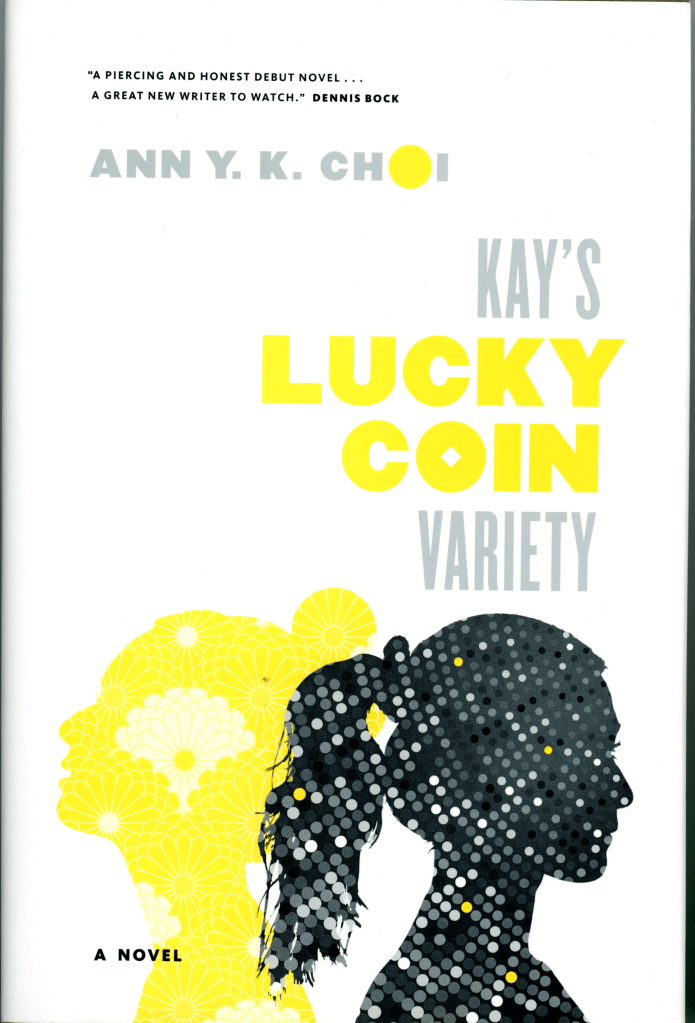
Kay’s Lucky Coin Variety, shortlisted for the Toronto Book Awards, is the first and thus far, only book by Ann Y.K. Choi. The story is set in Toronto, and according to her Wikipedia page, was inspired by her life growing up above her parent’s store. Certainly when you read the Ann Choi’s bio on the back flap of the cover and reflect upon the story you can very easily imagine much of the content is autobiographical and the instances were either part of her life or were the combinations of actual incidents she witnessed. As the title suggests, the story centres around Mary, the anglo alternative to Yu-Rhee, whose family owns a variety store on Queen Street West in the 1980’s. Although specific to Korean life in Canada, the story resonates with many an immigrant child attempting to navigate the western world outside the home with the vestiges of old world culture and practices within the family domain. Mary/Yu-Rhee is in constant conflict with her mother over work, education, clothing, friends and the ethnicity of her future husband. The latter is of particular consternation when arrangements have been made with another Korean family who is attempting to find a suitable match for their son.
The writing is straight forward, more compelling for the story than the vivid descriptions. The scenes and dialogue are real, the emotions are authentic. The insights exhibit those of a young woman maturing, viewing the lives of her parents differently with the growing knowledge of their past and the internal reflection of Yu-Rhee’s own experiences: My mother had taught me that dreams didn’t come true just by thinking about them. She’d chased after them, and in so doing had cleared a path for me to do the same.
The story also provides perhaps the most important rationale for the establishment of Asian Heritage month, or any other inclusive recognition of the diversity of the Canadian people. Yu-Rhee’s mother finally concedes to her daughter’s desire to become an English teacher, acknowledging it provided a steady job, summers off and therefore, time for children. Most importantly, however, she says, “Yes, become an English teacher. Make sure your students realize there are writers out there who aren’t just black and white. Make sure they don’t miss the point like you did.” I enjoyed the book.
Turnstone Press. 2000. 212 pages
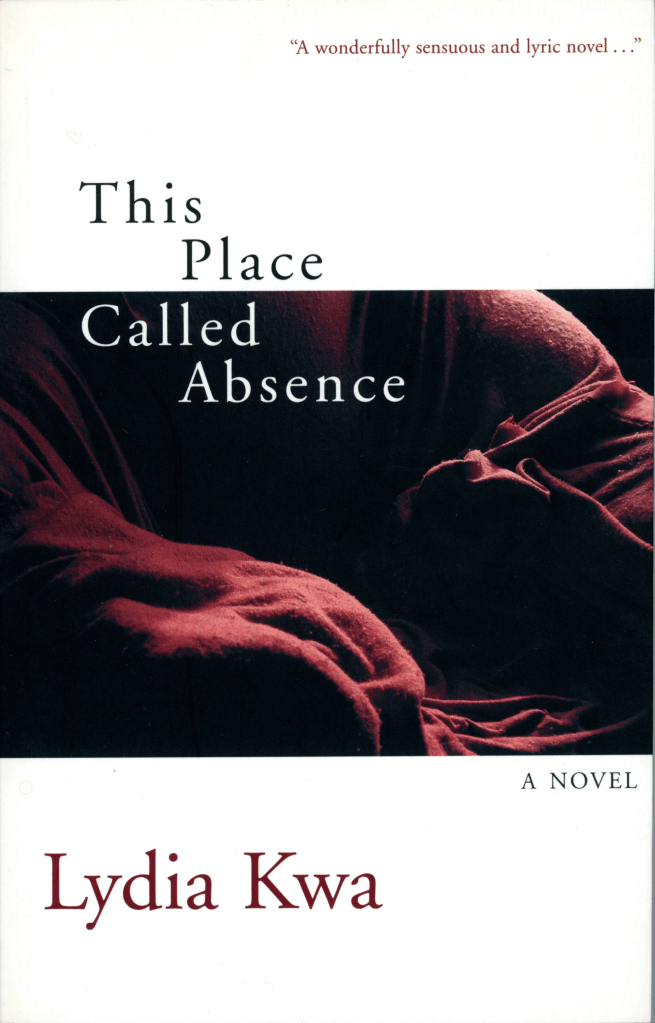
I selected Lydia Kwa’s first novel, This Place Called Absence, because the reader is transported to the city state of Singapore in Southeast Asia, and some of the characters originate from China, two different countries from my previous readings. The narrative alternates between four people: Wu Lan residing in Vancouver; her mother, Mahmee, living in Singapore in 1995; and two prostitutes (ah ku) Lee Ah Choi and Chow Chat Mui, working in the brothels in Singapore at the turn of the twentieth century. Wu Lan is on a leave of absence from her work as a therapist, attempting to cope with the suicide of her father. Her struggles and responses run somewhat parallel to the forbidden love relationship between Lee Ah Choi and Chow Chat Mui. At the same time we delve into the mind of Mahmee attempting to understand the motives of her husband and the lifestyle decisions of her daughter.
Lydia Kwa’s own work and sexual preferences are reflected in the text. The sensual descriptions of relationships and sexual encounters amongst the women of the novel would appear to be borne from her own intimate experiences. Once upon a time the wind was a willow. It loved a woman who rested underneath its supple limbs. The woman liked placing her head in the fork between roots, because that way she was close to the earth’s smells, wafting up to her nostrils in the heat of day. She would look up to catch the colours of light filtering through the slender leaves. The willow wanted to tell the woman how much it loved her.
The language and process of Wu Lan’s actions and strategies resemble the knowledge of people grappling with the tragic death attained from the practice of a psycho analyst. Father’s vitality was trapped inside him. He could feel a loss, but didn’t know what to do about it. The more he didn’t change, to allow his vitality to be expressed creatively, the more he felt powerless. Loss bred more loss. Eventually, this was why he did what he did. Quickly, anonymously. The wheels of the car. The squirrel. He was perpetrator and victim. Without witnesses. The insights and the well crafted prose produce a novel of raw emotions, beautiful and powerful, sad and redemptive. Slow to begin, by the end of the book I was enraptured.
Arsenal Pulp Press. 2007. 262 pages.
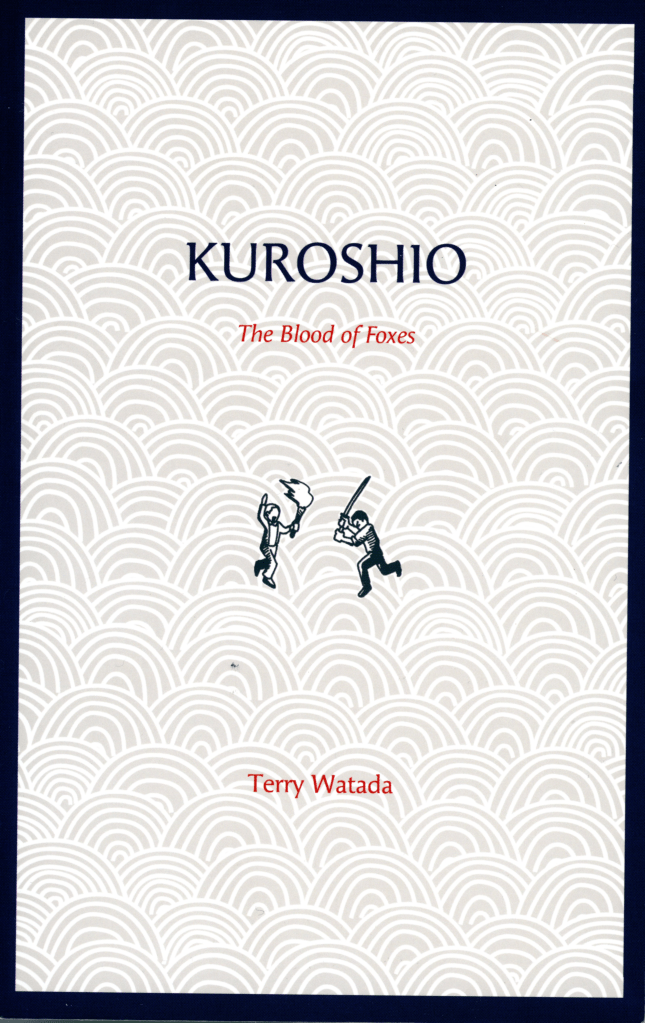
Terry Watada is a former colleague of mine, an English professor at Seneca College in Toronto. Olga and I were attending the annual Word on the Street being held in the park at Queen’s Park Circle. The event was always a tremendous opportunity to purchase new Canadian literature and as importantly, get the authors to sign them. On this occasion, in 2008, we stumbled into the open tent where Terry was reading from his first novel, Kuroshio: The Blood of Foxes. I knew he was a writer of poetry but I was unaware of a novel let alone that Terry was participating in Word on the Street. He was just as surprised to see us. I was pleased to purchase a signed copy. Terry retired about five or six years ago and continues to publish poetry, children’s books, comic books, novels and historical non-fiction. He has been quite busy during COVID finishing off a new book, Mysterious Dreams of the Dead, released last December.
The Blood of Foxes is set in 1920’s Japan and 1940’s Vancouver. The story alternates between both periods, describing the lives of a young, naive Yoshiko Miyamoto craving adventure in a new land, marrying unseen, a purported entrepreneur in Canada; and Etsuji Morii, the Japanese equivalent of the Godfather, lording over his fellow immigrants in Vancouver to retain the glory of his emperor and the honour of his people. Yoshiko and Etsuji collide in Vancouver, neither achieving their ultimate dreams by the end of the novel.
The work is not as well crafted as the other reads, utilizing too many adjectives and adverbs, clumsily moving between time periods and locations. Nevertheless, the story illuminates the lives of Japanese Canadians, subjected to acts of violence and racist actions by the people, the police and the government. Terry conducted considerable research to accurately portray the conditions and the times, providing the reader an understanding of one of our numerous dark chapters in history. For this reason alone you will find the book worthwhile.
June is National Indigenous History month. Mark, if you are reading, I would welcome some suggestions. Otherwise, I have a few unopened on my shelves which will find their way into my next Books 2021 post.
Hello. My name is Henry and I am a gardenaholic. It has been 12 days since I last planted something new into the garden. Although, I must confess, I transformed an existing clump of shrubbery into a quasi-garden yesterday. Just a little one. Really.
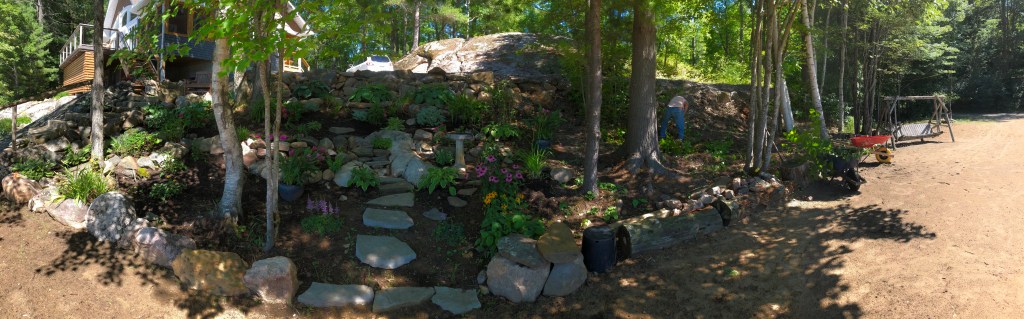
The day started innocently with the intention of weeding the earth immediately surrounding some berry bearing plants which I put into the ground last year. Amongst them, I dug in some silver dogwood, one of the objects of my earlier relapse almost two weeks ago. It’s spring, the place needs to be tidied; one pulled errant crab grass opens up space and I say to myself, this next intruder should be extricated as well. A couple more would be even better and before too long, a new garden emerges, complete with rocks to define its borders, scrounged from other parts of the property.
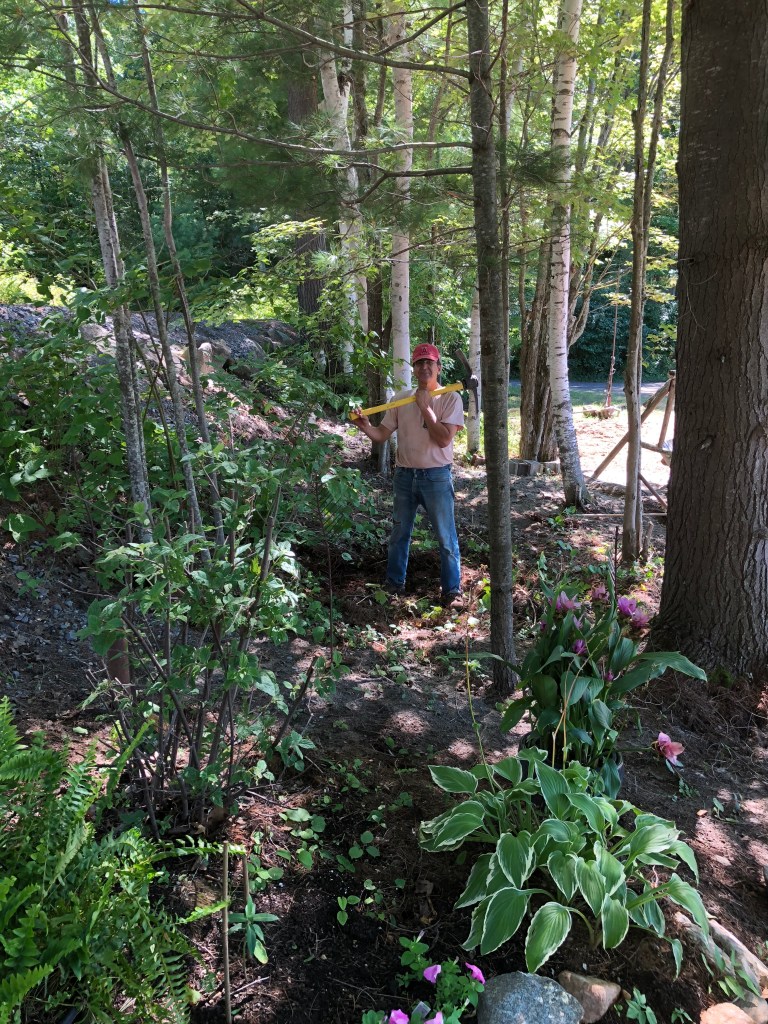
Have shovel, will dig.
I really fell off the wagon on that planting stint almost two weeks ago. The silver dogwood? Well there were twenty five of those bare root plants which I purchased along with twenty five white cedars. Every one of them found homes in newish areas created last year – down close to the lake beside the uprooted small trees rescued from the side of the road; at the edge of the horseshoe pit along with a birch and a pine relocated from our back forty; and behind the cottage nestled on the slope with other repositioned long needled trees. And if those weren’t enough, I found a home for eight flowers and bushes to attract butterflies. Oh, I almost forgot – a packet of wildflower seeds was spread in that new garden along a path I am building.
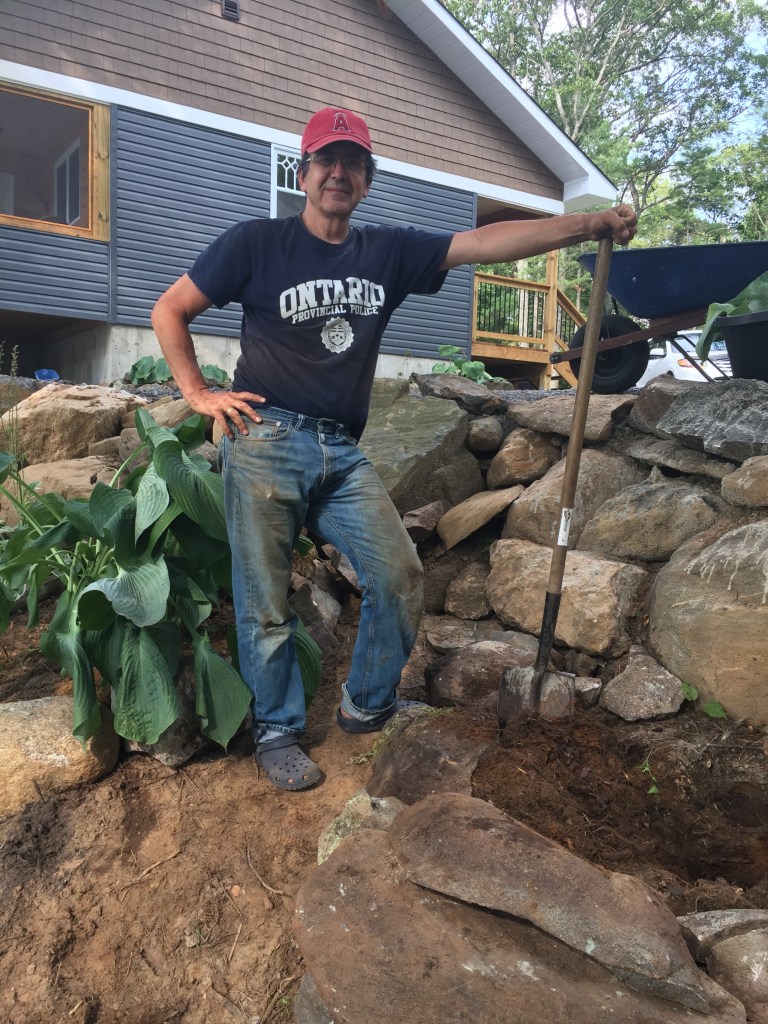
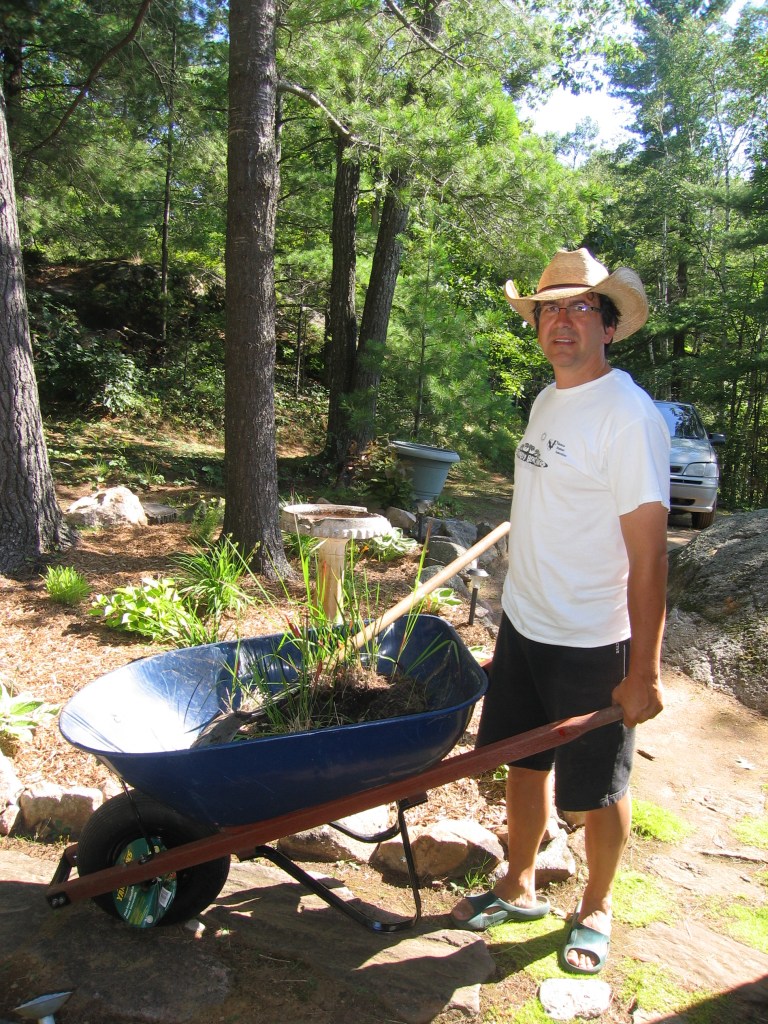
The wheelbarrow and the pick axe are your friends.
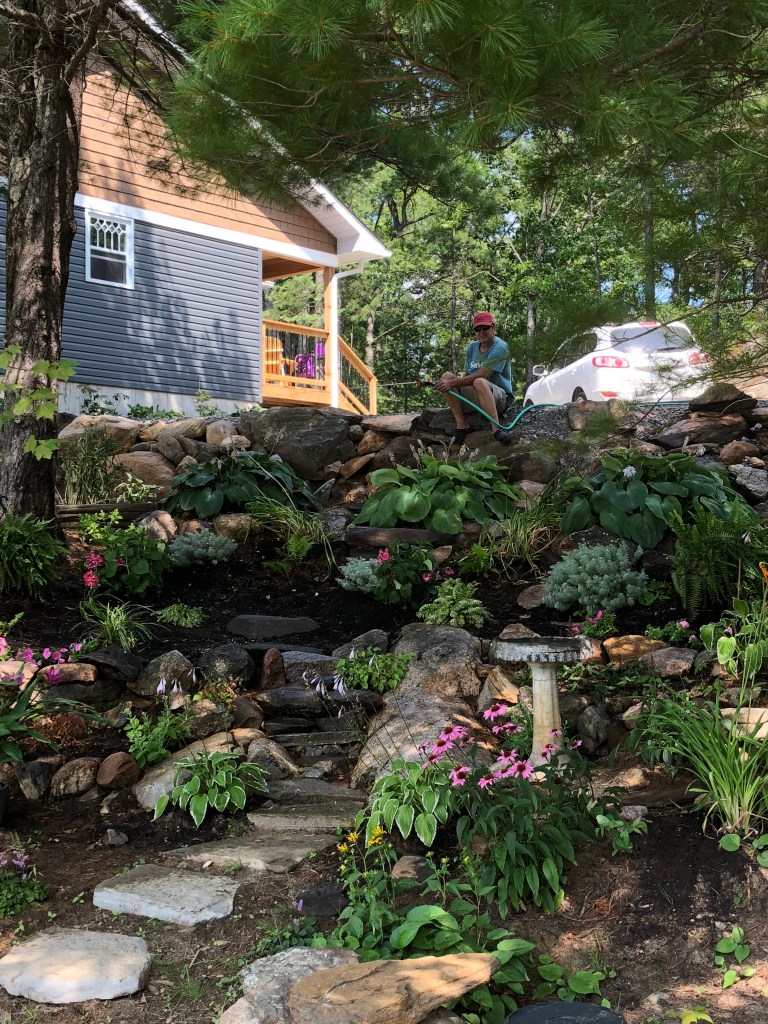
Another confession – I love to hunt for rocks. The obsession is a variant on the gardening disease since they serve primarily as the perimeter for the newly cultivated beds and function as stepping stones to enable a guided stroll through the growing expanse. We are talking about boulders really, not a stone that fits in the palm of your hand; rather, massive hunks which require two hands and lifting with your feet so to not wrench a back. The bigger the better, limited only by my inability to physically will the granite into the wheelbarrow or roll it to the final destination.
As a last resort, roll the rock to its ultimate destination.
The spring and fall are the most opportune times to spot prospective boulders when the lack of vegetation reveals their existence. I walk the cottage access road assessing the viability of transporting that beautifully round, pink piece of quartz because it would fit perfectly into that new corner just built. At the end of our driveway is a motherlode of possibilities. If I can dig underneath and pry it out of the ground with the shovel, then it is mine. When I realize the protruding piece is really just the tip of the iceberg, then I find myself wishing for a little Bobcat.
At home, the size of the gardens have reached capacity, leaving just enough grass to merit a mower. The cottage is the last frontier. As Olga and I tour the estate, my mind’s eye sees unkempt corners full of sporadic brush, shoots of straggly trees sprouting into a tangled mess, waiting for the swing of a pick and the scoop of a shovel to clear the earth for another garden. I imagine a grove of tamarac trees beautifying the driveway, especially in the fall; or envision flocks of birds and clouds of butterflies descending on our 1.5 acre piece of heaven because I had filled it with fruit and nectar bearing plants.
My next fix will occur at our lake’s Planting Palooza in June when participating cottages will get three plants to enhance their shoreline. If not everyone avails themselves to the offer, then I will be lucky to get a few more. Plus, another cottager has already pledged five cranberry plants…. I already know where they will be placed.
Henricus, you better dig that garden over there.
Your going to work for next 30 years.
At 60 I feel kind of old, I’ve already tilled most of the land.
So I’ll hum a little tune called
This work, brings joy.
Makes me, a happy boy.
Malcolm McLaren’s song, The Boys Chorus plays in my head. Can you see that? Ain’t that lovely?
A garden is all about the future. The plants put in today are the glory of tomorrow. Gardens are not about the past, except for what we have learned so we can enjoy it today. And I can’t seem to get enough of them.
The measure of a life is a measure of love and respect
So hard to earn, so easily burned
In the fullness of time
A garden to nurture and protect
I love gardens in the spring for the promise they evoke, the perennial peek into the future, the hope for a beautiful and healthy bloom. This year’s garden maintenance aroused memories of growing up on Kostis Avenue with its gardens, vegetable and flower, the work to make them flourish, and the satisfaction in the accomplishments.
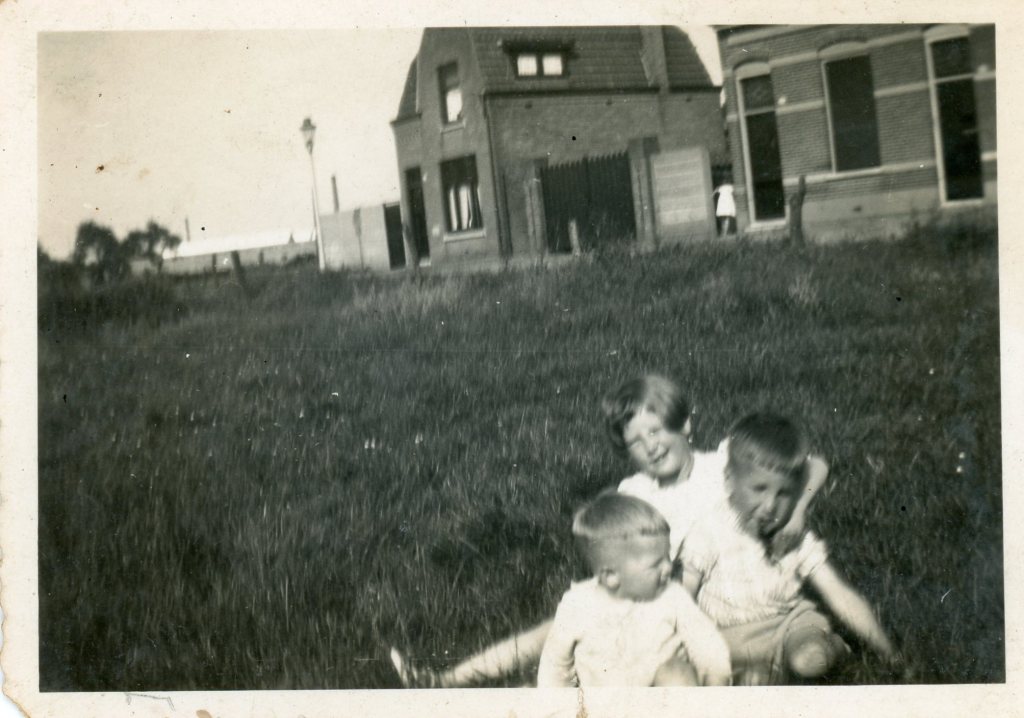
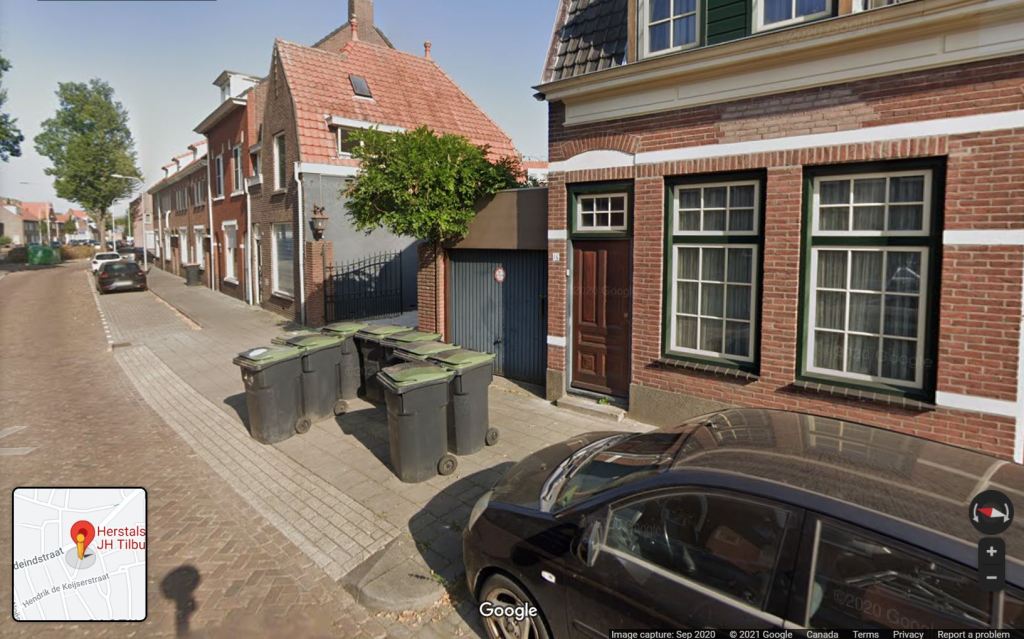
Dad’s affinity to vegetable gardens is a direct by-product of his upbringing. He constantly spoke of the farmer’s fields in many a recall of his youth. The family home which was once on the edge of town is now situated in just another crowded section of Tilburg. You could not imagine Dad’s stories while standing in front of 16 Herstalsestraat today. I was able to find only one photograph of Dad’s childhood home. It shows three young children, Tante Jo, Dad, and Uncle Gert (the youngest) sitting on the ground, in a field, with the row houses in the background; the end unit was theirs. The front door opened onto the field – not a sidewalk or a road or a path.
Dad’s home in the background, 1937
16 Herstalsestraat, 2020.
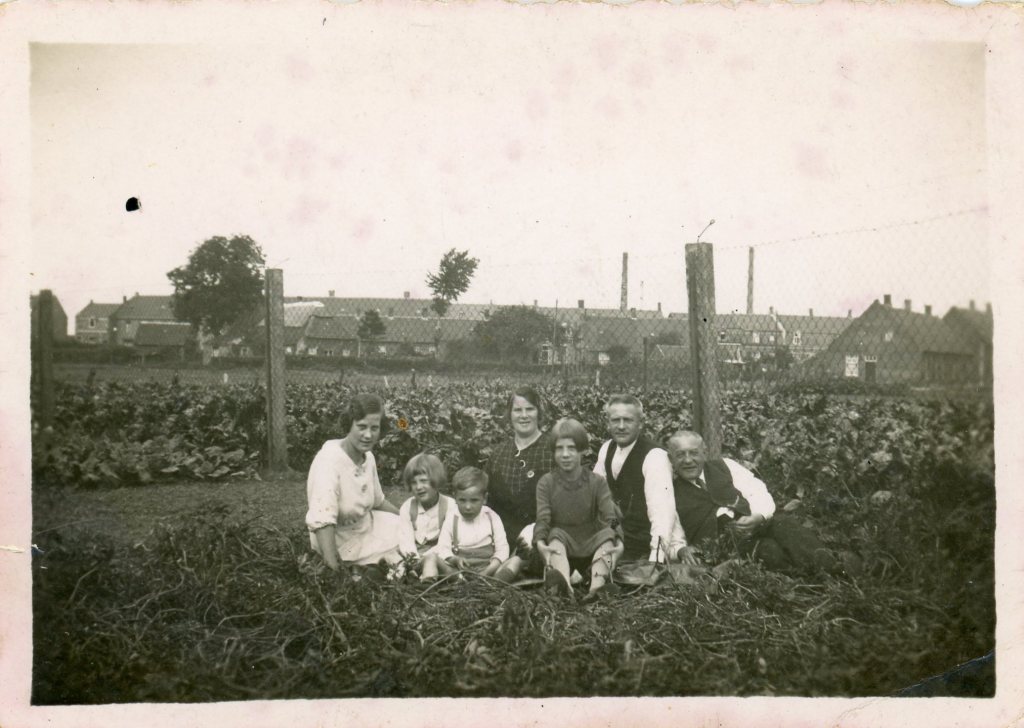
Decock family posing in front of gardens, in the fields outside their Tilburg home. Stacks of the textile factories in the background.
A second picture shows the Decock family posing amongst the vegetables in what appears to be the fields outside their house. When you look carefully at both photos, you can see the smoke stacks from the textile factories in the background where my Opa worked. The appeal of Kostis Avenue, for my Dad at least, seems more obvious (https://wordpress.com/post/henrydecock.org/931); a natural inclination to vegetables and gardens was nurtured in this semi-rural experience.
My mother’s upbringing was decidedly small-town. An understanding of her experience is drawn from Uncle Nico’s book, Pa vertel eens. In it he describes the community and their family home amidst the shoe factories which dominated Kaatsheuvel. The one where his father worked, “bordered behind the neighbour’s house, almost to our garden. The machines of the factory, as in all shoe factories, were powered by a steam engine. The exhaust pipes of that device hung almost above our garden. In the morning at half past seven the puffing started and that lasted until six in the evening and on Saturday until one o’clock.”
Photographs of gardens with van Rooij family from Pa vertel eens….
In spite of the surrounding conditions, the cultivating of a garden was paramount for survival. “We had a very deep garden in Hoofdstraat, perhaps forty meters deep. At the front of the place some flowers were sown and, as in several Catholic gardens, at the beginning of the garden there was a Maria cave, a replica of the Lourdes cave…..In the early spring, starting in the nine beautiful days of February, when the sun was shining nicely, the garden was dug, the seedbeds prepared for carrots, [turnip greens], endive, kale, lettuce and whatever else could be sown.” Summer months involved canning and preserving the vegetables, and for harvesting the fruit from the pear tree. A successful garden meant you were self sufficient for longer periods of time. Food gaps were filled in by the farmers parading through the village streets with their crops. For Mom, therefore, the small production of food and the concomitant planting of flowers were part and parcel of a family homestead.
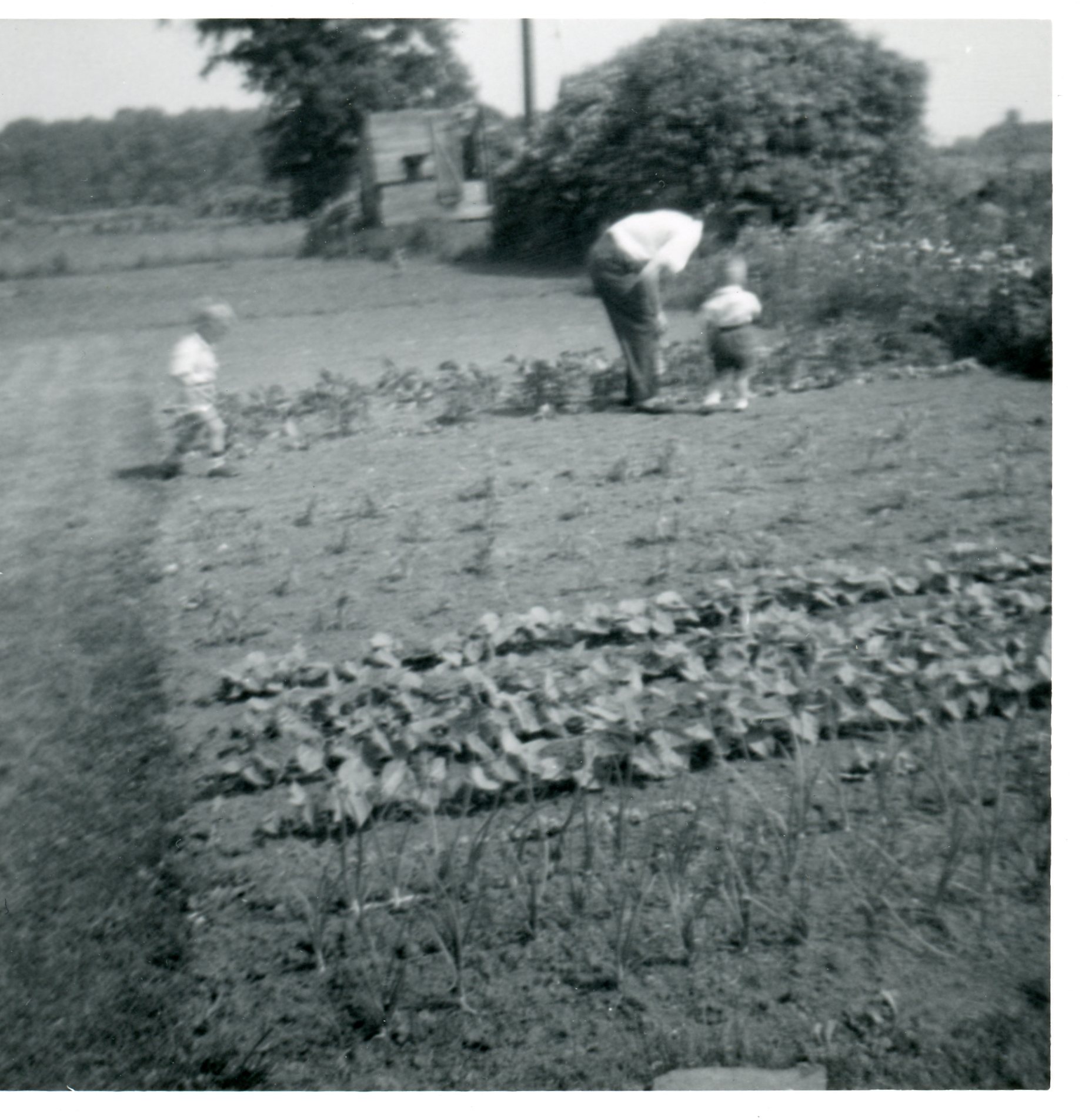
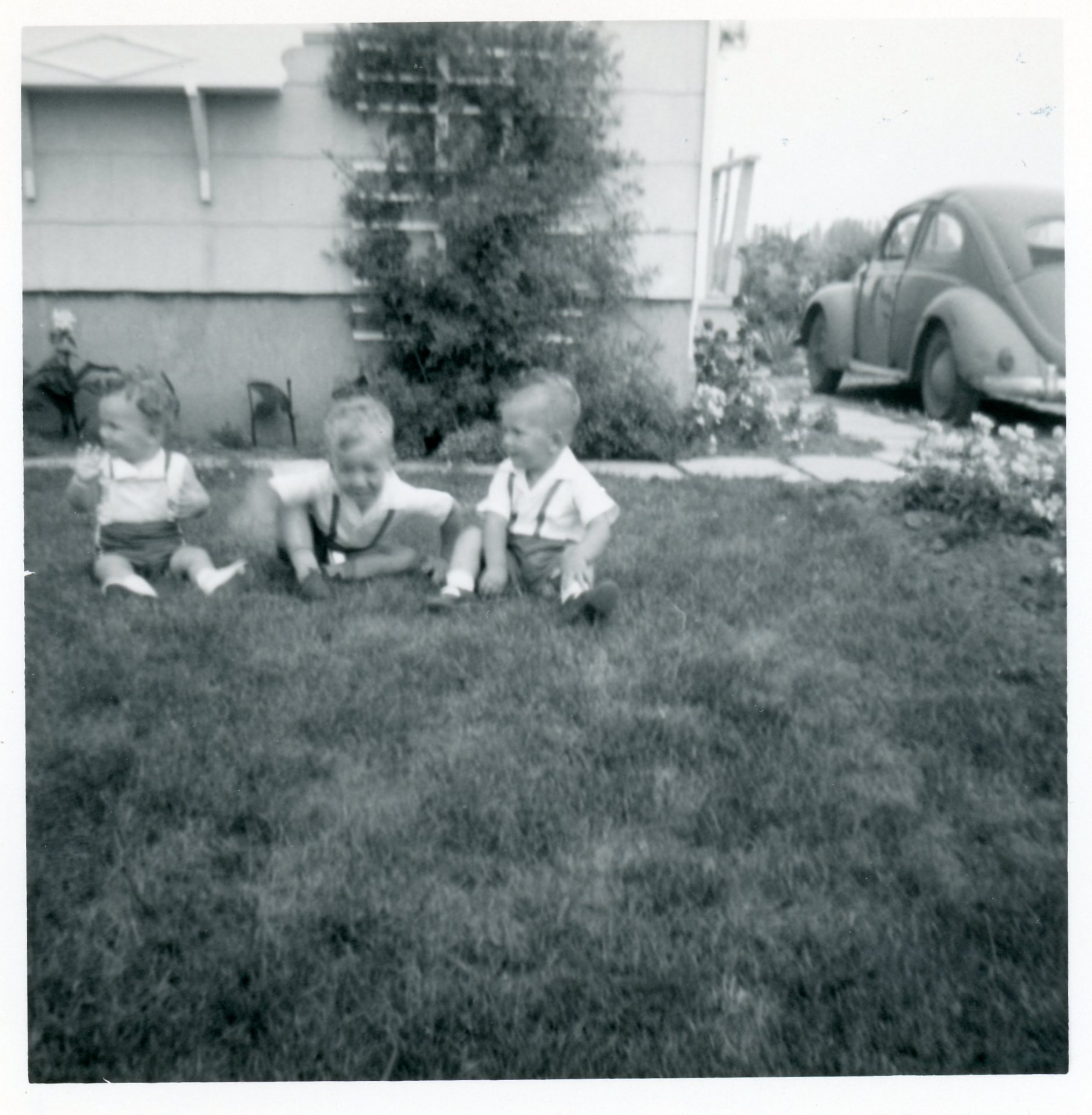
When Mom and Dad purchased that first home on Kostis Avenue on the outskirts of London, Ontario in 1963, they immediately installed a vegetable garden at the back of the lot, next to the farmer’s field. Like many an immigrant family, the garden was intended to provide a less expensive food option.
The beginnings of the vegetable garden, 1963.
The vegetable garden was a yearly outcome of routine but necessary, laborious tasks, starting with tilling the soil. Joe Klassens, who worked the field at the end of our yard, would dump a load of manure which my Dad would spade into the soil, one row at a time – dig out a line, shovel in the manure, then turn the dirt on top to create a new row, tediously repeating until he reached the other end. Eventually Dad received a roto-tiller as a retirement gift from his 3M colleagues to relieve him of the arduous shoveling each spring.
As a kid we would eat vegetables directly from the garden – pull a carrot out of the ground, wipe it on the grass to remove the dirt, eat to the stem which was tossed into the farmer’s field; pick beans from the plants and pop them raw into our mouths; find a small cucumber, rub off the small prickles and chomp on the vegetable without peeling. The garden included onions, tomatoes, corn on occasion, cauliflower, kale, beets, and lettuce.
My parents purchased a very large chest freezer specifically to store the labours of the summer in preparation for the meals of the winter. The freezer was so deep a person would teeter perilously over the edge, risking a fall just to grab the last bag of peas stationed at the bottom. Alternatively, you would tempt frost bite stirring around all the parts from the half-cow searching for those elusive carrots.
I don’t recall how the choice for vegetables was determined; it was probably a joint effort. The flower garden, or at least the selection, was largely my mother’s domain. Surprisingly – maybe not because she always preferred something new – Mom’s choices were predominantly annuals. In some years there would be bulbs, but seldom tulips, ironically. My parents claimed the shorter springs in Canada meant their quick departure, not sustaining the bloom as long as in the Netherlands. They did not see the value in a very brief appearance.
Front yard circa 1973 or 1974
View towards the back, with Tante Toos and Uncle Cees visiting.
The garden changed and flourished throughout the years, growing in abundance, trees added to fill in the backyard. There was an expectation, even at a very young age, for everyone to be involved in the grounds keeping of the property. I recall, in particular, weeding the original driveway, scrapping my knuckles against the stones and blocks of concrete, respite for only a couple weeks until a return engagement with the irritants. When beans were needed for dinner, someone would fetch a batch; we provided extra hands for harvesting; we rotated turns cutting the grass or clipping the hedges; and we contributed to overturning the soil in the vegetable garden. The gardens were communal both in terms of the necessary labour to maintain and in the preparation for the freezer. On numerous evenings we would sit around the kitchen table, methodically cutting up the beans or pealing the blanched tomatoes, while laughing over the events of the day, a collective effort where everyone contributed. The work was a lesson in retaining pride of ownership. My parents’ example served us well throughout our careers and in the maintenance of our own homes.
1997 with deck and addition.
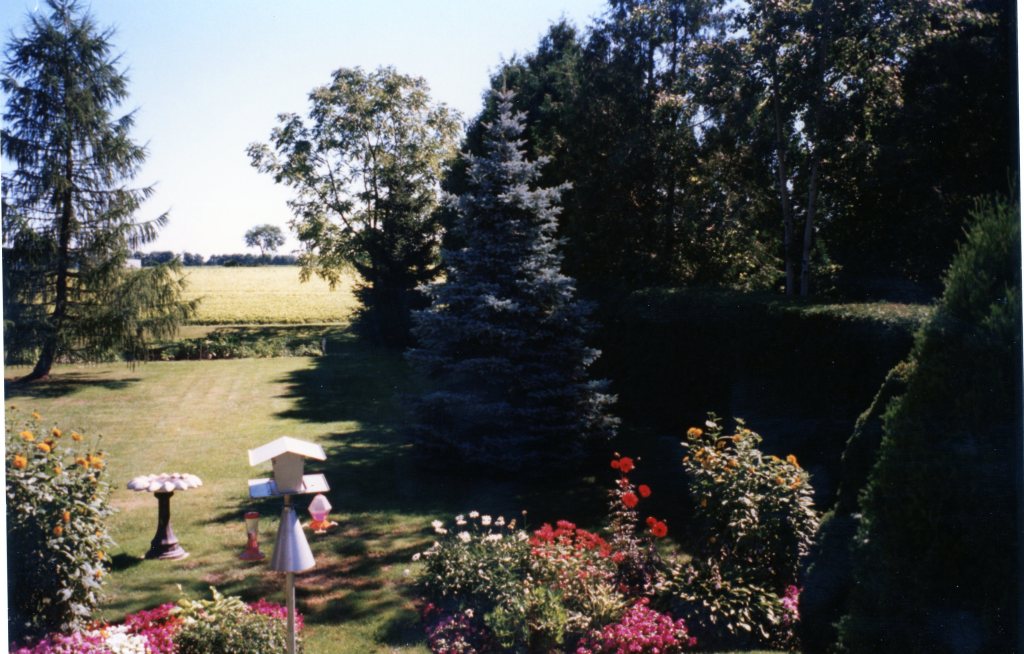
Looking towards field. Several trees added including a blue spruce dubbed the “Nicholas” tree
In later years, with everyone gone and the living at least an hour-and-a-half away, all with their own families and properties, the challenge to care for the yard increased. The vegetable garden also became too big for the needs of just two people so my parents started bundling “care” packages for someone to take back home. With age and diminishing interest, many of the flower gardens were turned to grass, something they could hire the neighbour’s young boy to mow. The glory of those early gardens are now admired only in the realm of a handful of pictures.
Olga and I have continued in our families’ traditions, at least with regards to flower gardening. Her parents valued both the beauty and practicality of cultivating vegetables and flowers, borne from a peasant background in Ukraine, fueled by pride and a desire for normalcy (https://wordpress.com/post/henrydecock.org/687). Olga’s mother worked her gardens until the age of 98 before leaving her home a year later. Unlike our parents, however, we did not engage in the growing of vegetables at our various homes; rather, we focused on enhancing our life with the creation of beauty.
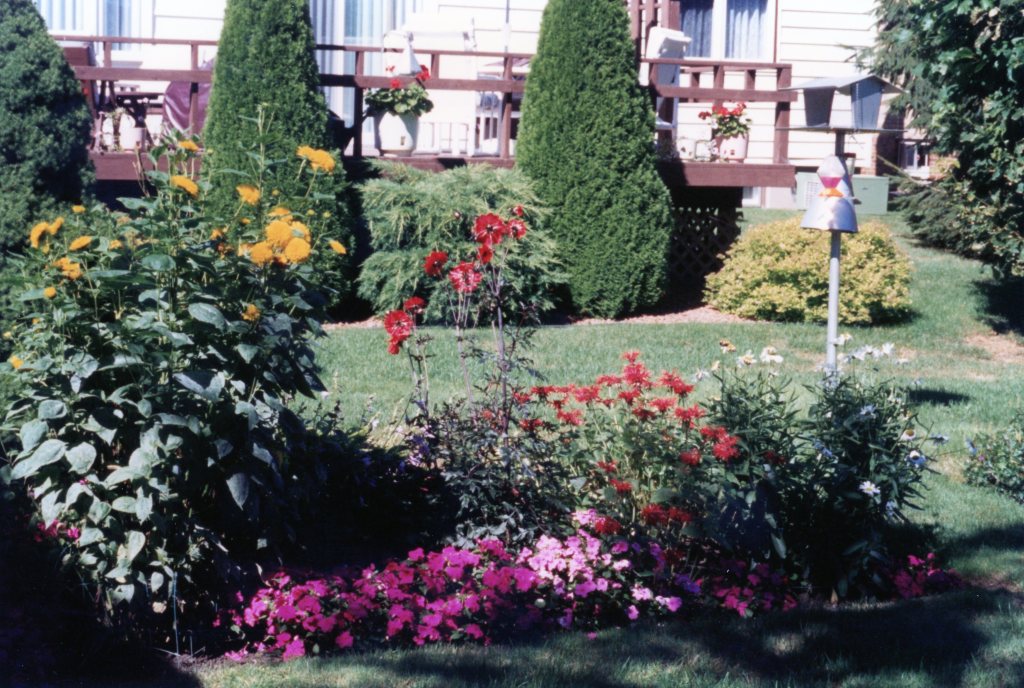
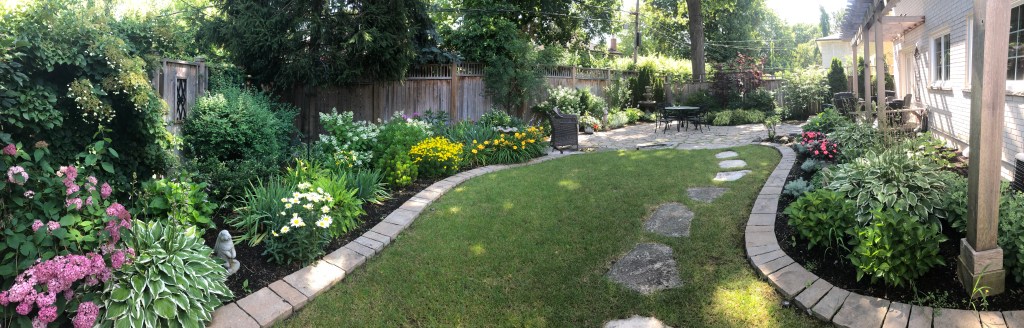
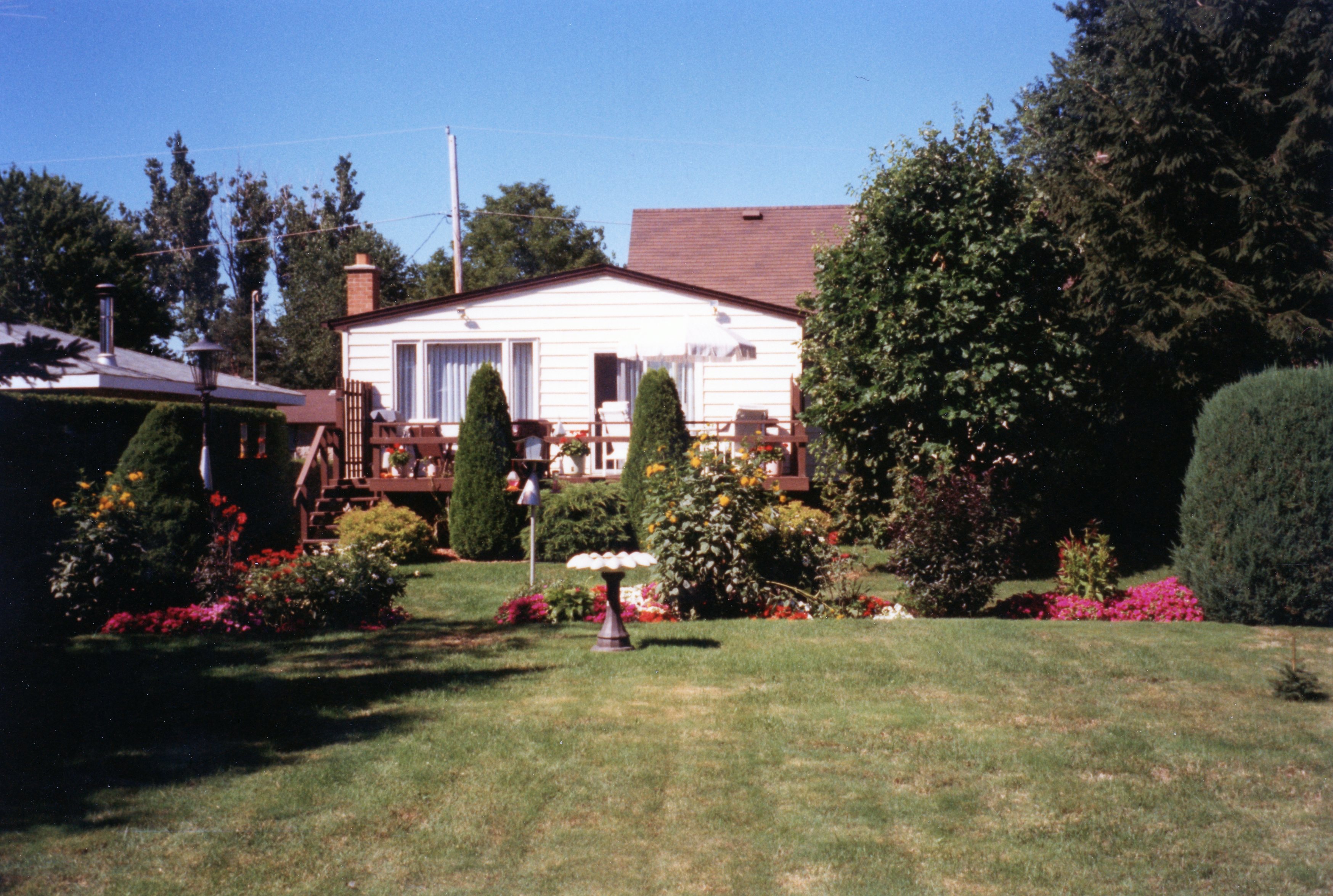
Backyard at home in full bloom.
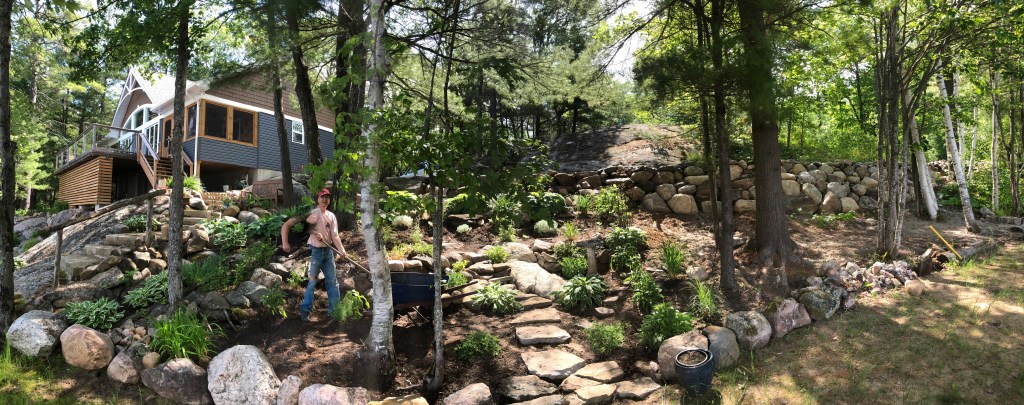
Building the cottage garden
The building of a garden is a form of art, the ground a canvas for colour and texture, attaining the right mixture, selecting plants to ensure a constant display throughout the season. I prefer perennials because they illustrate the full circle of life – birth, growth, blossom, death – and all the aspects it entails – nurturing, trimming, dividing, fertilizing. Annuals have a place, filling in temporary gaps and completing the strategically placed pot. However, I consider them as fulfilling an instant gratification and being disposable – buy in the spring, plop them in the soil, allow to grow in the summer, die with first frost, dispose before winter, and purchase again next year. Art should be more long-lasting.
We are not getting any younger and yet our gardens at the cottage continue to expand. I worry sometimes we are transplanting the urban into the rural (our cottage neighbour refers to it as High Park after one of the same name in West Toronto) and creating additional work. I view our efforts as an expression of ourselves, an illustration of our pride of ownership, a reflection of our efforts, an exercise in longevity.
Gardens are inherently honest. There is no shorthand method for success; you get down on your knees, in the dirt, pull the weeds one by one, gather the leaves and pine needles, wipe away the old growth of last year, dig the hole for the next. Olga and I learned that lesson from our parents, from their lives and their work. We have faith it will endure with our own children.
The treasure of a life is a measure of love and respect
The way you live, the gifts that you give
In the fullness of time
It’s the only return that you expect
The future disappears into memory
With only a moment between
Forever dwells in that moment
Hope is what remains to be seen.
The Garden – Rush. Lyrics: Neil Peart. Music: Geddy Lee and Alex Lifeson
The title of this post is from the liner notes for the album, Clockwork Angels. June 2012. It can be found at rush.com
My first introduction to mystery novels began by attending a book launch for John Worsley Simpson’s fourth instalment in the Harry Stark series, A Debt of Death. I knew John from an annual curling event, a close friend of a friend. The reading night was fun and naturally I purchased a personally signed copy. I had not been including mystery novels into my collection. A delightful read, however, had me seeking the earlier publications to complete the series to that point. I enjoyed the books particularly because they are set in Toronto, a familiarity which made me feel part of the story.
I have selectively acquired additional authors, Robert Rotenberg and Shari Lapena, lured by signed copies and the need to attain the entire body of work for every author in my collection. That desire is probably the reason Louise Penny is not yet on my shelves. After this month’s foray in mystery novels, I am considering foregoing first printings to obtain the mass paperback versions and include them in my summer reads at the cottage.
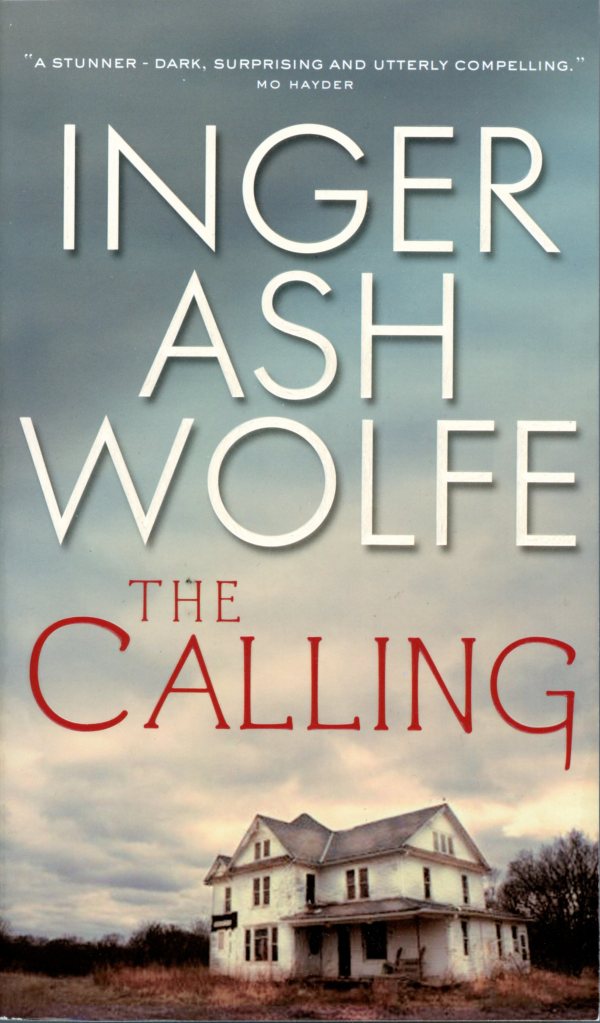
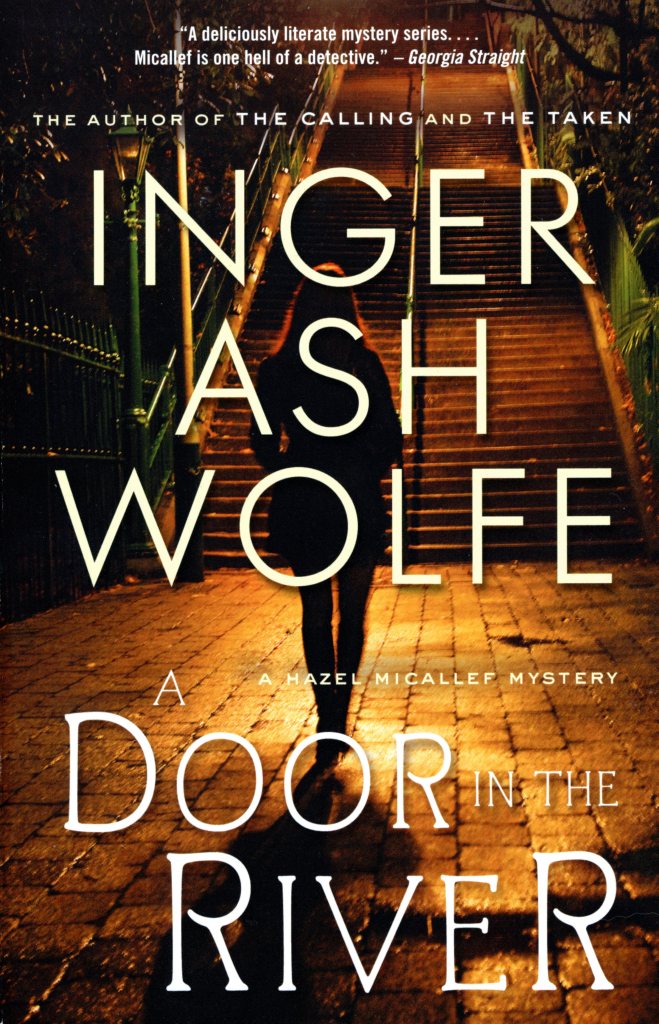
My introduction to this month’s book readings began with a newspaper article in 2015 announcing the release of Inger Ash Wolfe’s latest instalment, The Night Bell. The interest, however, was the explanation that this series was written by Michael Redhill who authored all the books under the pseudonym. He is one of my favourite authors, especially his City of Toronto Book Award winning novel, Consolation. I packed The Night Bell into my luggage for a one week sun vacation and voraciously devoured the story in a couple days. Several years later, Olga and I picked up The Taken from the local library in Apsley, ON and read it aloud to each other during our get away at the cottage.
The Calling: 2008 – 419 pages; The Taken: 2009 – 446 pages; A Door in the River: 2012 – 389 pages; The Night Bell: 2015 – 390 pages. McLelland Stewart.
My goal for April was to read a number of mystery novels and the first thought was to return to the Hazel Micallef series. The delivery from Indigo arrived just in time and I started with The Calling. Once begun, I could not stop.
A good mystery series is analogous to watching a Netflix show when you become so involved with the storyline and the characters, you cannot turn off the TV or in this case, put the book down. The need to continue results in binge watching, or binge reading. So, even though I had completed The Taken before, I proceeded to revisit it. Every scene was familiar, but I could not remember what happened next, as if enjoying it for the first time. The book was as fulfilling as before. After A Door in the River, therefore, I was compelled to finish with The Night Bell, reveling in each development anew. An individual book in this series can stand on its own and could be read without knowledge of the other. The author provides sufficient information to ensure the narrative flows. The richness and the trajectory of character development is more fulfilling with an understanding of the history.
The Calling is less of a whodunit than a frightening insight into the depravity of the murderer. The unravelling is about the motive and the method to keep the reader hooked. We are also introduced to the character backgrounds and life secrets of the various protagonists, setting up for future novels. In The Taken small details get filled in at the beginning both to advance the insight of the serial reader and to support the new one jumping into series midway. It unfolds more in keeping with a typical mystery and delves more deeply in the vulnerability of Hazel Micaleff. A Door in the River digs further into the character of James Wingate and builds on a growing bond between the two Ontario Provincial police detectives while portraying a widening schism with a longtime partner, Ray Greene. All of this material helped make greater sense of The Night Bell, a complicated intertwining of separate agendas with surprising twists in each chapter. The book also provides a new personal development at the end as fodder for the next instalment of a Hazel Micaleff Mystery.
I am consciously vague in my descriptions because the books need to be discovered. Suffice to say the writing is excellent with examples of insight into policing and into living in our contemporary world:
“What kind of relationship do you have with your mother? they asked the men. Because good sons made fine cops.” The Calling
“There is no role for the law in prevention, she thought, no role in giving solace. They said the law was an ass, but those who enforced it knew it was blind, deaf, and mute as well.” The Taken
“All of it spoke of a marriage where conversation was more important than sitcoms or sports: these were people who found each other interesting, for whom being distracted together was not nearly as desirable as simply being together.” A Door in the River
“By the time Emily was welcomed into the doctor’s office, all the fight had gone out of her. Sooner or later in your life, you have to put yourself in someone else’s hands. Just surrender.” The Night Bell
I highly recommend the series regardless of whether you dive into one book or digest the entire collection. A person who works with police or is a member of a force could relate to the life both inside and outside the job. I hope Inger Ash Wolfe will return with number five. And don’t forget to check out Michael Redhill (Martin Sloane, Fidelity, Consolation, and Bellevue Square); you will not be disappointed.
May is Asian Heritage Month. I have several books lined up, while as always, remaining open to any suggestions.
My parents paid $9,500 in 1963 for their one and only house just outside the London city limits. They needed two mortgages in order to finance the home on Kostis Avenue and I seem to recall the first mortgage was for 25 years (not amortized but actual length) at 2% interest. The last figure may not appear very remarkable except to those of us who remember mortgages hitting a peak of 20% (Olga and I paid 12.5%, which we thought was a bargain, on our first property). Indeed the price was miniscule and the stories quaint in the shadow of today’s soaring prices and news headlines of a housing crisis but the hard work, the risk and the sacrifice were equivalent.
My parents started in rental units, moving yearly, adding a child at each new residence. First was a 1959 relocation from Belmont to a rented unit on Talbot Street in London where Gary was born. In the following year, they changed homes again, this time to Piccadilly street where I arrived as the second child, five days short of the first’s birthday. In 1961 they relocated to the farm, which is now the corner of Commissioners Road and Highbury, where Peter came into the world 13 months after my emergence. Then in 1963 they bought a house on Kostis Avenue; Michael was born two years later. I suspect Dad may have just started working at Kelco, a small machine shop in London, offering a better wage than employment with Toon Verboom, a Dutch landscaper who serviced large estate homes in and around the university. The new job helped facilitate their ability to purchase a house.
Kostis Avenue was a dead-end gravel road with 17 houses, situated outside the city limits, surrounded by fields, blasted through out the night with the warning horns of the freight trains riding the CNR tracks, so close to the airport you could see the planes at the end of the runway from the backyards. The house itself was second last from the end, a Strawberry Box structure (see https://en.wikipedia.org/wiki/Strawberry_box_houses ) encased in grey asbestos-cement siding shingles. It was one and a half storeys with two bedrooms upstairs where us boys slept without air conditioning: Gary and I in one room, Peter and Michael in the other.
The lower floor consisted of small, segmented rooms designated for their specific purpose: eat-in kitchen, front room with the TV, parent’s bedroom, tiny playroom and the bathroom. It only ever had one washroom: toilet, sink and bathtub; everyone simply had to wait their turn. The front entrance opened into the living room and was rarely used. From a door in the narrow hallway, you descended an open staircase into a solid concrete walled, unfinished basement to access the oil furnace, the sump pump and the wringer washer. Clothes were hung on the clothesline out back in the summer or on the indoor line in the winter. Cement blocks lined the dirt driveway so the car could park beside the back door where we would enter by way of the rickety wooden steps into the windowless kitchen.
The septic tank was buried immediately behind the house; the water was drawn from the neighbour’s well. In the far back of the 1/3 acre property, divided by a fledgling pear tree and accompanying flower garden, a large vegetable garden was cultivated. The yard was not contained with a fence but rather was wide open on both sides resembling a large recreation park.
I cannot imagine how the MLS would have listed the place as it lacked the basic amenities so many people expect in their homes today. My parents viewed it quite differently and anticipated the benefits of their real opportunity to enter the housing market. My father was reminded of his Tilburg home, the location similar to where he grew up on the edge of town looking out over agricultural fields; my mother envisioned potential, ways to improve, to make the most of the situation, to make the house a home. It was what they could afford at the time and it represented their continuing integration into Canadian life.
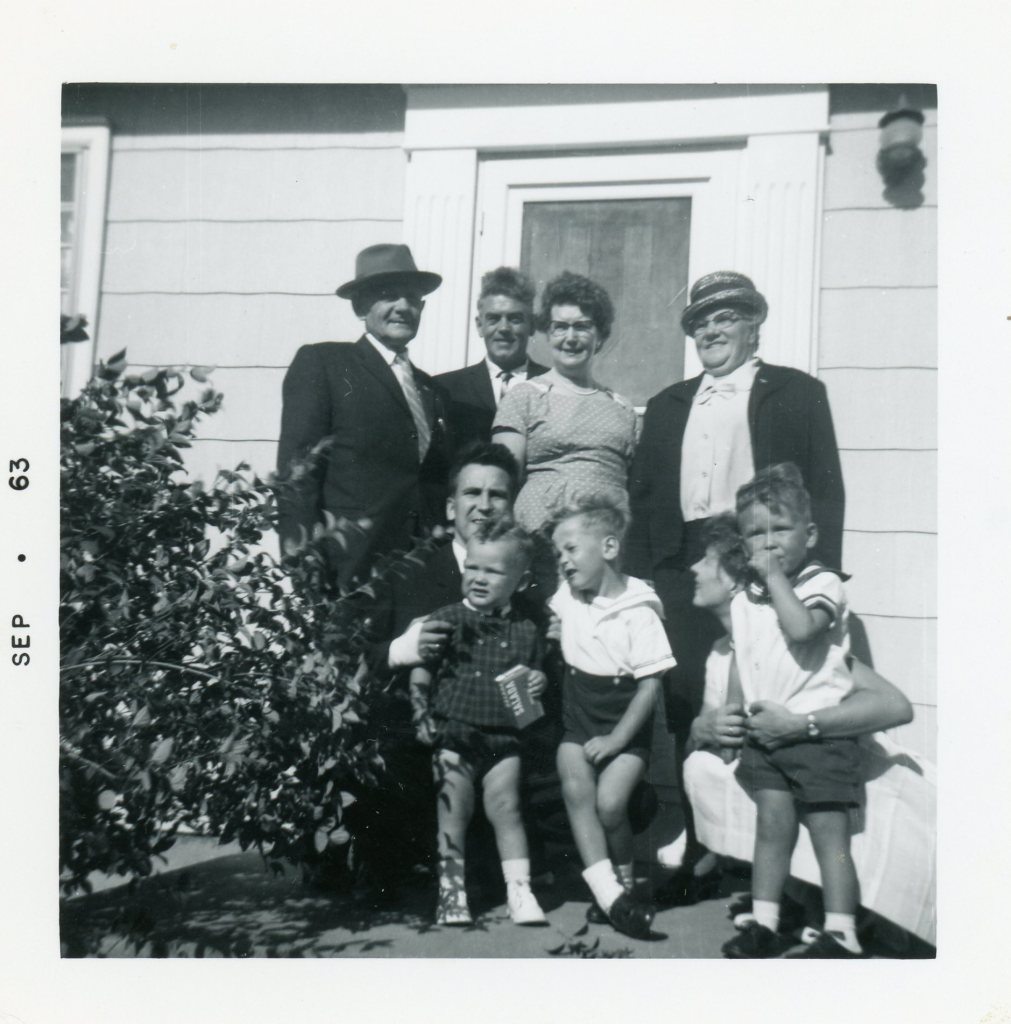
Kostis Avenue, 1963. Mr and Mrs. Willems in between Oma and Opa on Dad’s side, standing over the existing Decock family.
Part of the attraction, as well, was the proximity to other Dutch immigrants. This picture is one of the earliest dated with the house on Kostis Avenue. In the middle are Harry and Leina Willems, standing in between Dad’s parents who were visiting for their one and only time in Canada. It was Harry Willems who alerted my parents to the availability of the house, right beside their own, at the end of Kostis Avenue. A small enclave of Dutch families lived there already: the Willems, the Hoornicks, and the van Geels. Harry Willems was a bricklayer working various jobs; Fred Hoornick was a pipe fitter at the GM train engine plant ten minutes away by car; the van Geels were chicken farmers whose barns were on a concession road further east.
The Kostis Avenue residents were all working class. The Makis lived directly across the street, a very young couple, the husband a truck driver who died in a drunk driving car accident. Gord Appleby was an electrician at Firestone and a functioning alcoholic; Mr. Puckett was a driver at an Oxygen company who was booted from the small brick bungalow when his wife dumped him for someone she met online; Reid was a postal driver who parked his dilapidated vehicles all over the property. Next door lived the McIntyres who owned a local auto garage and treated their property like one. Beside them was Shirley Guite whose husband worked at the GM plant, died suddenly leaving her, a stay-at-home widow in serious financial debt. The street had many of the trappings of an East of Adelaide existence ( https://lfpress.com/2014/04/04/song-articulates-the-divide-known-as-eoa ).
As kids we were oblivious, relishing the seemingly boundless alfresco playground our home on Kostis had to offer. The neighbourhood had numerous families and a bountiful of children for fun and games. The minimal traffic allowed for few interruptions when playing hockey on the road. We had access to a large vacant field where a makeshift baseball diamond was built and became the site of summer Saturday evening pickup games involving the male contingent from the street running the bases in front of spouses and girlfriends and sisters. In later years, the field was transformed into a figure eight dirt track for the young Willems boys to race their home made go-cart. They had also built a tree-fort in a large oak on the edge of the farmer’s field where we spent numerous hours hiding away. Across the open field stood the “woods” where the four of us would be engrossed for entire days marauding about, building forts, reenacting war games. Across the train tracks, surrounded by a fence, was the Somerville dump where we would scrounge for scrap games, attempting to stay out of sight of the security guards. Each day our mother would send out her four rambunctious boys in the morning, allowing for endless exploration, never looking for us except to return home for lunch or dinner.
The limitations of Kostis Avenue did not manifest themselves until we became teenagers and adults. Living outside the city, absent of public transportation, meant you could not get anywhere without a car. This dead-end street adjacent to a highway offered no place to embark for a leisurely stroll. Not until I left London did I look back and see Kostis in its true colours, a street jammed with automobiles, ill-kept houses and derelict yards which detracted from those attempting to improve their lot. The condition of my parent’s immediate neighbouring properties grew increasingly worse, needing ever larger evergreens to hide the mess.
Mom understood how their improved economic situation could allow my parents to enhance their situation by moving to a different community. The children had all moved out and Dad was earning a peak union wage at 3M. The time was right to move up, to demonstrate their lifelong accomplishments and leverage the home for which they stretched and sacrificed into that dream location with the large kitchen counters, modern luxuries and appointed gardens. Dad, however, was not a risk taker.
He was comfortable in his large yard and could not understand why they would willingly undertake another mortgage. Over the years they made numerous changes by constructing a small addition with a fireplace, adding a car port to shelter the side entrance, building a large wooden deck in the back, installing new windows throughout, fashioning a finished basement and decorating an ever changing interior. It was a very clean and extremely well kept home so Dad could not fathom living anywhere else. In spite of these hard earned improvements, Olga and I encouraged a move as well, believing the right location would bring the benefits of a walkable community near shopping, parks and people and help transition to a life easier on aging people.
They did not sell and stayed. When Dad retired a sense of stagnation became evident.
The home began feeling more like a house with the vegetable garden reduced to a mere patch, and the flower beds mostly eliminated. Mom stopped all of her craft activities and Dad sat more often watching the grass grow. Dreams of increased travel were hampered by Mom’s health and Dad’s growing reluctance to spend lest the financial well run dry. When Mom suddenly died, Dad remained ensconced until he finally relented and determined that living near one of the boys would be better. The house was sold for $220,000 ten years after Mom’s passing, 52 years after it was purchased. Dad moved into a retirement home in Wallaceburg, five minutes away from Michael and Michelle. He eventually succumbed to his illness in 2019 after a final, forced relocation to a long-term disability facility.
My parent’s life of working hard to acquire that first house, to make the most of the situation, to build a home regardless of the circumstances was a guidance for the possible. Lessons are learned from observing inaction as well. Their default decision to remain at Kostis when there was an opportunity for moving forward causes me to reflect on my own situation, to consider ongoing possibilities as our circumstances evolve, to reflect on how we proceed, to carefully consider our actions and what we need to change, to stay vibrant, to continue living. It is a reminder for constant re-assessment on what would benefit both myself and Olga, and for an honest reflection on what example we are establishing for our own children.
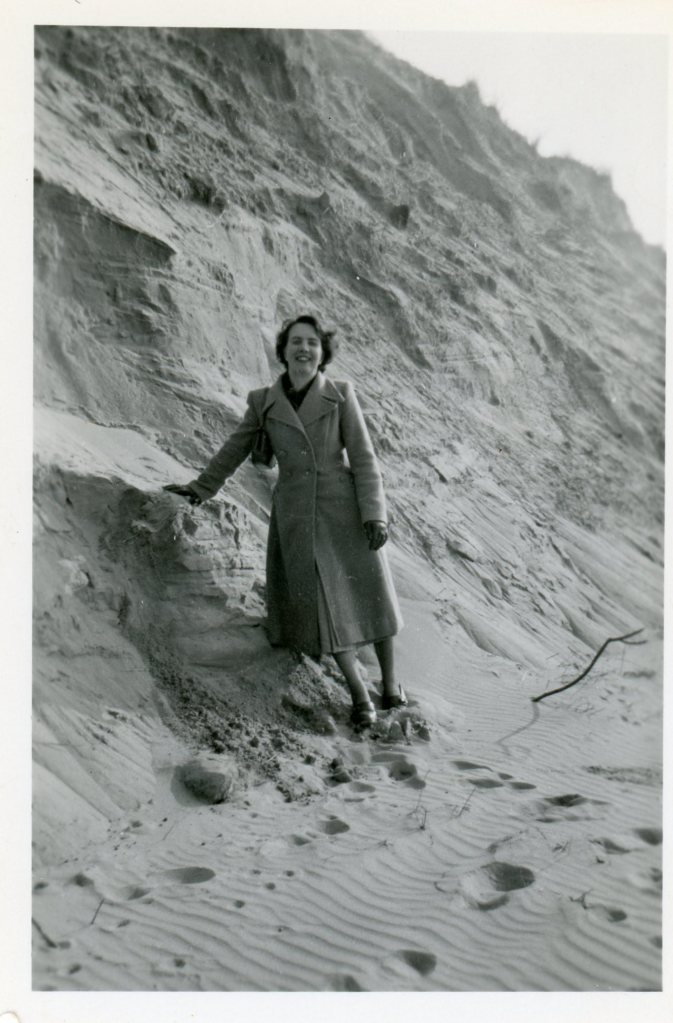
The photographs were hidden in clear sight. You never talked about them and I never asked.
Beverwijk, 1953
You pose in a floral printed dress of red and green, lipstick and earrings to match. The picture was taken from inside the room looking out, photographer bending slightly to capture an upward look through the patio door of a Juliette balcony. A memento of a special time away. You frolic with an abandonment of caution on the edge of the rail, a look of contentment on a sunny afternoon.
The memories were amongst those from your nursing training, so naturally I assumed they were related, a day out with fellow students, a break from the expectations of school. On the back you marked it with a date, 1953, and a place, Beverwijk, a town half an hour northwest of Amsterdam, ten minutes from the coast.
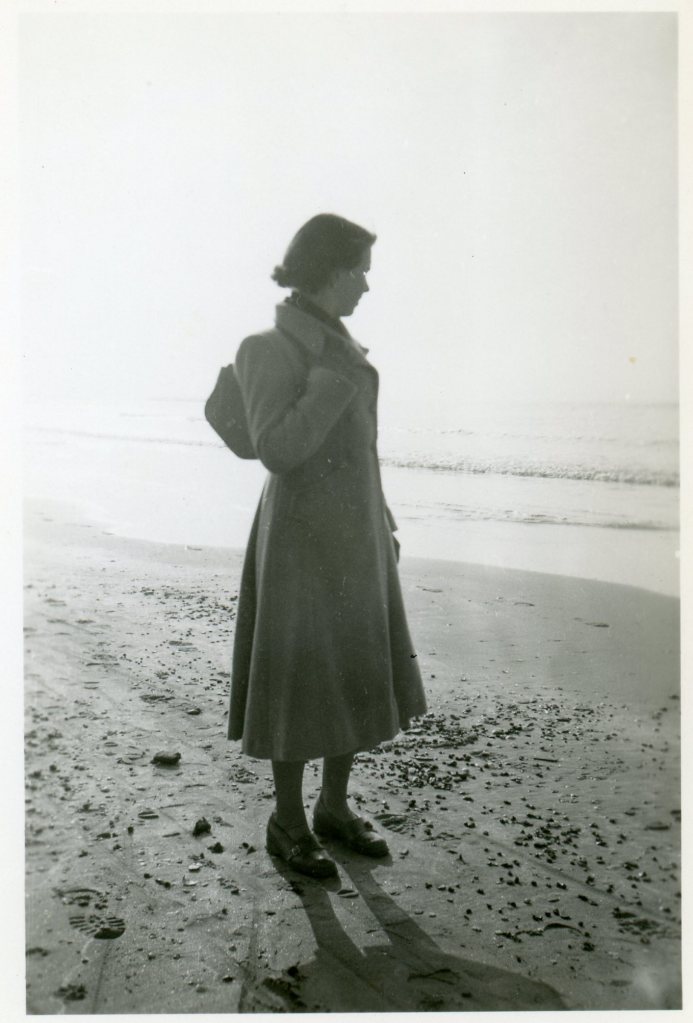
Wijk Aan Zee
Wijk Aan Zee is the coastal beach village you visited on your stay. Now a popular destination, in the early fifties it would have been a quiet escape, secluded, away from prying eyes, far from family in the south.
The date, the place, the smile, the face are clear; the reason, the why remains untold.
The pictures are of you alone, nothing of your company. Had the trip been with fellow nursing students, you would have saved a group shot to mark the occasion. You were in a relationship, a serious boyfriend I recall. His name forgotten now, if it was ever told. I am thinking he was the photographer, the person with you on this trip. The footprint in the sand beside you is the only the evidence of his accompaniment. Here he wants to capture the sun, your silhouette, the moment. It remains a lasting memory of a previous love, long-gone, but not forgotten.
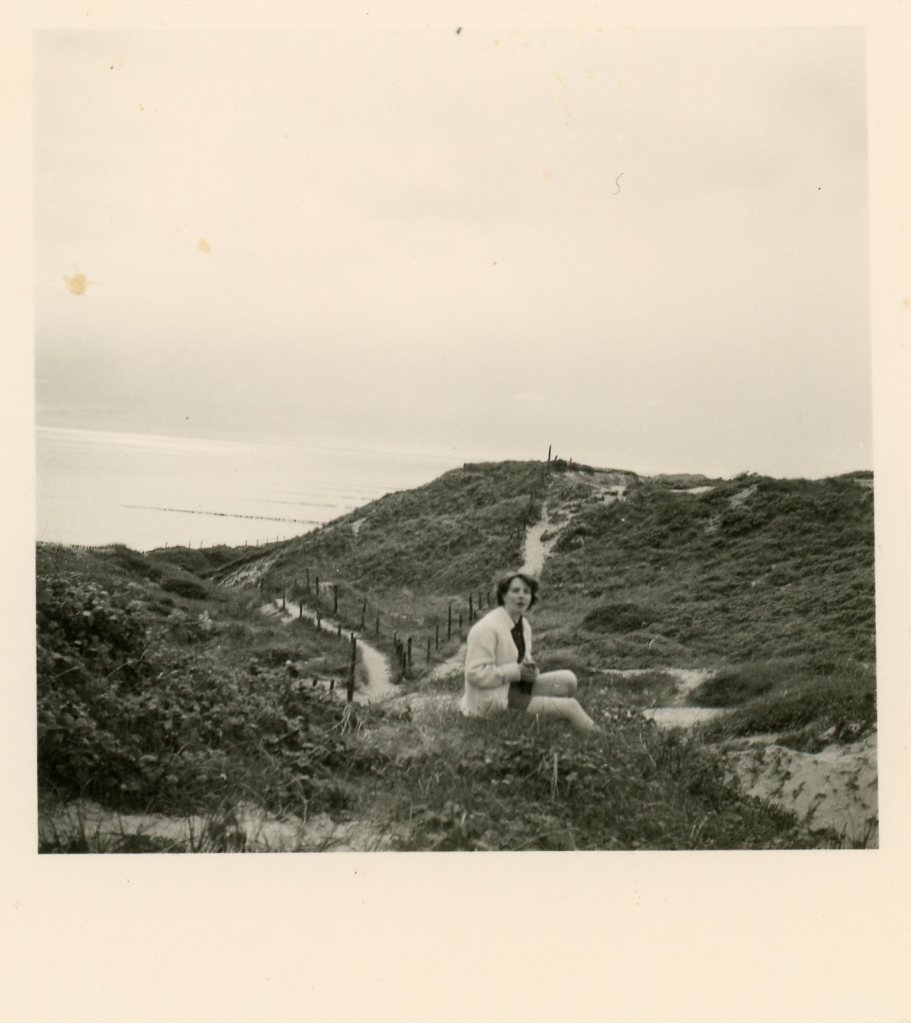
Zoutelande, 1956
And you went away again, in 1956, to another resort town, this time to the south in the town of Zouteland, part of the ‘Zeeland Riviera’, with long and vast beaches. It was likely with him again, sharing time once more in a place meant for togetherness. And why not? You were young, mid-twenties, you were becoming a nurse, the war was over, your world was opening up.
And then he died suddenly, tragically. You didn’t explain, I did not persist in knowing.
In our digital , social media world, images are easily circulated , impossible to expunge, forever out there, somewhere, because someone has a copy. In your printed world, two or three were made, easily discarded when you want to purge their existence, finalized when the negative is destroyed. And that is what you did. All that remains are these few photographs, nothing of him except the places you enjoyed. The thousand words are missing, leaving lots of blank space for questions.
How much do we share with our children of our earlier lives, who only know our current partner, who cannot imagine another? And as adult children how much do we want to know? Does it matter? Should it remain a mystery, a story deduced from piecing together tidbits of information?
What parts of our past do we discuss, what will remain hidden until we are gone? How many pictures of us will go unexplained?
The list of Irish Canadian authors is surprisingly short, or at least what I was able to ascertain with a Google search. The number is even shorter when the works need to be part of my existing collection. As such, Brian Moore is not on this month’s reading list; my collecting could not keep up with the output of this prolific writer. Nevertheless, the variety of this month’s authors provides an array of styles and settings, transporting the reader through time and place, from the 19th century Irish potato famine to the Tiannamen square massacre in China.
Anansi. 2006. 394 pages.
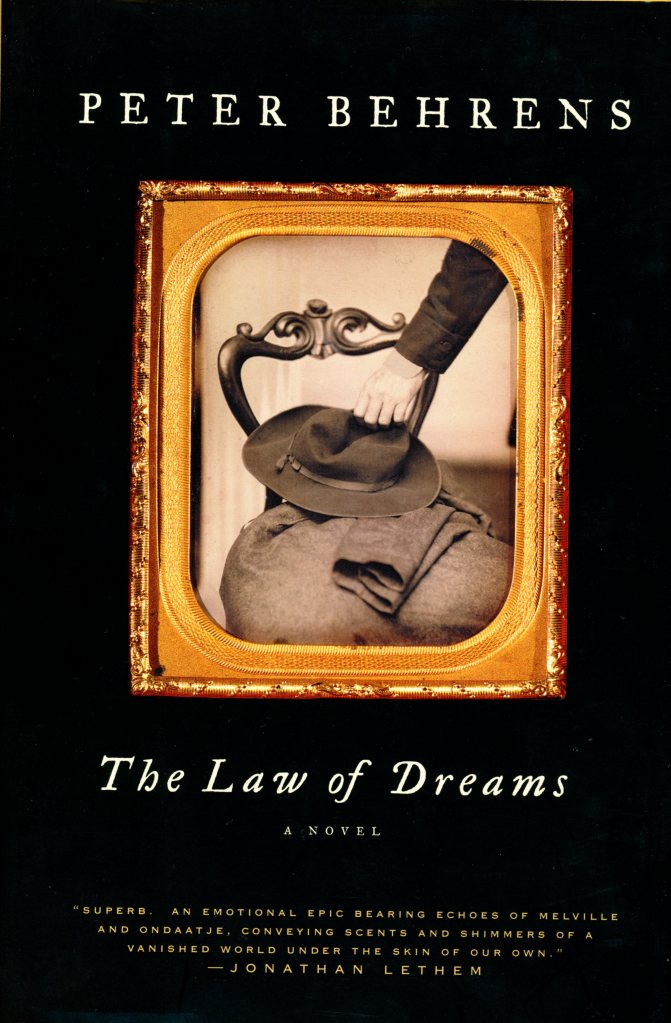
The Law of Dreams is Peter Behrens first novel which begins in the Great Irish Famine and follows the voyage of Fergus from the hills of rural Ireland across Great Britain and the Atlantic to the port of Montreal in 1847. The book was the 2006 winner of the Governor General’s English Literature award and shortlisted for numerous other prizes. Fergus’s journey endures the indignity of the poor house, the desperation of a marauding gang, the temptation of Liverpool, the drudgery of railway work, the deception of men and women, and the deadliness of crossing the ocean in coffin ships. He persists against the odds because “that is what you do in dreams. The law of dreams is, keep moving.” It is a refrain repeated often, one which fuels Fergus’s survival.
The density of some early pages was a dramatic shift from my previous novel making the transition challenging. As the characters evolved and the story expanded, the desire to uncover Fergus’s next days drew me into long stretches of reading and discovery. I could not relate personally to the times or the conditions but I could certainly imagine the heroic tale resonating with economic migrants in all parts of the world today. The trials and tribulations reminded me of my mother-in-laws escape from western Ukraine after the second World War which eventually led her to a life in Toronto (https://wordpress.com/post/henrydecock.org/687). I expect the book resembles, as well, the plight of Syrian refugees crossing the Mediterranean Sea into Europe seeking some new, promised land. The book keeps reminding us of the basic motivation: “What you wanted must keep you going”; “What you lost weakened you, could kill you. What you wanted kept you going. What you wanted gave you strength”; and finally, “Is courage just the awareness that gestures, journeys, lives have intrinsic shape, and must, one way or another be completed?” I enjoyed the book and glad I finally picked it off my shelf.
Harper Collins. 2010. 321 pages
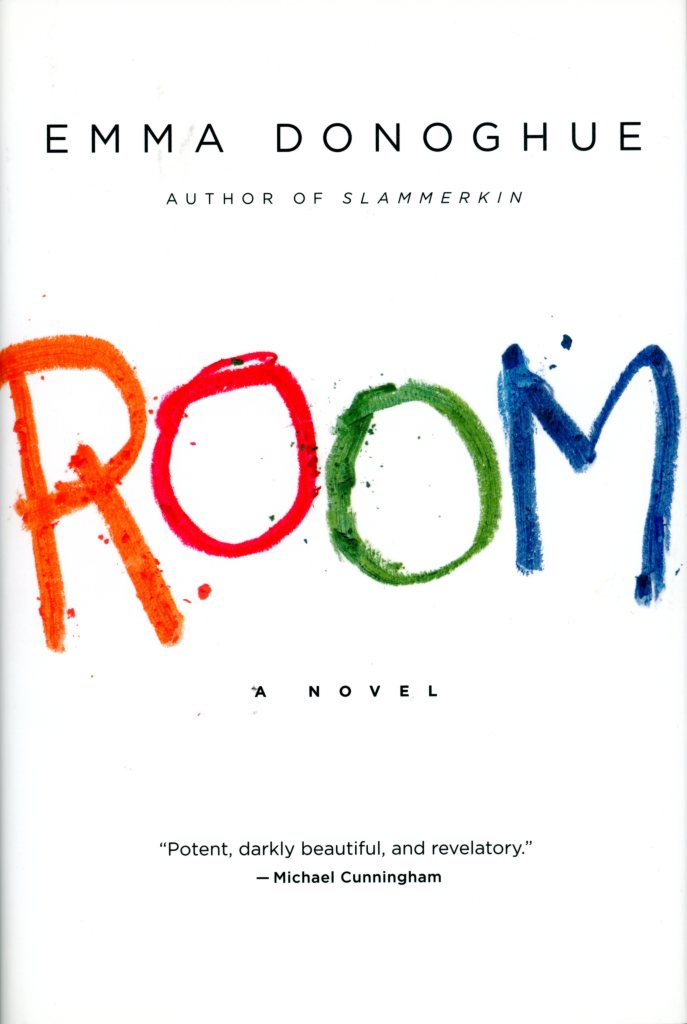
Room is another highly acclaimed, award winning book which won the 2011 Commonwealth Writers’ Prize, and shortlisted for the 2010 Booker, Rogers Writers’ Trust Fiction, and Governor General’s Awards. The film adaptation was released in 2015, nominated for four academy awards in that year. Emma Donoghue was already an accomplished writer earning recognition with two previous books. She was born in Ireland and is now living with her partner in London, Ontario. The story is told through the words of 5 year old Jack who was born in captivity, living only within the four walls of a shed with his Ma, where the only exposure to the outside world is the skylight and a TV. They eventually escape as the pair must carefully and scarily acclimatize themselves to their new reality.
The language, the observations, the thoughts from start to finish are completely from the five year old boy, and one with very limited understanding and experience. Jack does not use prepositions and he names objects; for example, they live in Room, not the room, and he sleeps in Wardrobe. I eventually became accustomed to the structure and slowly realized the brilliance in Ms. Donohue’s writing craft. Rather than long descriptions, the reader must piece together numerous observations and statements to understand the conditions; for example, Jack details the list of items Ma orders, including painkillers, and later we learn she moves candy “to her front teeth that are less rotted.” The reader also understands Ma is being raped several times a week while Jack is presumably asleep in Wardrobe: “When Old Nick creaks Bed, I listen and count fives on my fingers, tonight its 217 creeks. I always have to count till he makes that gaspy sound and stops.”
When Jack describes the actions and words of the growing number of people he encounters after the brazen escape, we are confronted with some of the absurdity of our everyday living: “There’s a dog crossing a road with a human on a rope, I think it’s actually tied, not like the daycare that were just holding on” ; “He talks on his little phone, he says it’s Deana on the other end. The other end is the invisible one.” And Jack understands only the literal interpretation of a word or phrase, offering moments of humour amidst the troubling story Donoghue imagined from real life news stories about instances of reintegration after years of imprisonment.
Room offered me one of the most compelling and profound truisms when Jack reacts to the psychiatrist’s assurances that he no longer needed to be frightened. “I don’t say because of manners, but actually he’s got it backwards. In Room I was safe and Outside is the scary.” This adage is applicable in so many situations where we do not venture into something new, or do not make ourselves vulnerable, hiding in the safety of our own small entity, physical or emotional. The accolades for Room and Emma Donohue are well deserved.
Harper Collins. 1996. 308 pages.
My third book of the month was Butterfly Lovers by Charles Foran, who graduated with degrees in literature including a Masters from the University College, Dublin. He taught at a university in Beijing for a period of time which included the democratic uprising of 1989. Previous work, fiction and non-fiction, had been nominated for awards in Canada where he is now teaching as an adjunct professor at the University of Toronto after a stint as president of PEN. He is also known for his biography on Mordecai Richler which was the recipient of the 2011 Taylor Prize and the Hilary Weston Writers’ Trust Prize for Non-Fiction. I have a couple of Charles Foran’ fictional works but have never opened one until now.
After twenty pages I began to regret my selection, wondering if I could tolerate it until completion. There were numerous passages which felt as if the author was attempting to impress other writers: “Remy Fidani’s clientele is predominantly grant-happy student, dole-fed radical, Canada Council-crumbed artist. Smokers of Marlboros and Gauloises, consumers of cafe au laits and Bradors from the bottle, readers of Le Devoir and the weeklies, journals unavailable except in shops with names like “Dis-Ease” and books special-ordered from one of the university stores, never collected, and then stolen from the shelves once staff have given up trying to place the title in the proper hands” (p.9). What the hockey puck! The first nine chapters are filled with image after image catering to literature professors who teach and treat books as an intellectual exercise rather than a source of enjoyment, whose classes are sure to kill any love of reading. Numerous sentences span half a page utilizing commas and semi-colons which make them grammatically correct but exceedingly annoying.
Suddenly, when the protagonist, David, moves to China to teach English, the sentences are shorter and succinct, as if mimicking the structure of a second language learner. The book redeems itself in the second half with a story which retained my interest in the outcome as the tension builds in the aftermath of Tiannamen and the relentless attacks on protesting intellectuals persists. There are also instances of thoughtful statements emanating from the ashes of the tragedy: “Besides, politics is almost never about ideas. Always personalities. Always power. We said so ourselves: to change the world, we first had to change our skins” (p. 302). I ended up with mixed feelings about the book.
Penguin Canada. 2011. 166 pages.
It was finished while I was the cottage where I had not brought the planned fourth read. However, I remembered the Extraordinary Canadian series was stored away in our basement. All 17 books in that collection are written by novelists about a well known Canadian; Charles Foran wrote Maurice Richard. True to his previous form Foran demonstrates a penchant for unnecessarily lengthy sentences made possible with the utilization of dashes, creating sentences within sentences, melding separate but related ideas such that you lose track of the original thought. Every other page seems to have an example. Yet there are moments of simplicity and clarity with vivid descriptions to situate you in the French working class mind of Montreal. It is a quick, entertaining read.
McClelland & Stewart. 2015. 396 pages.
Finally we get to one of my favourite authors, Jane Urquhart. Years ago I salvaged a very early book, Changing Heaven, from the delete bins at the local bookstore and immediately fell for her beautiful prose. I am in possession of all her books, even reaching back through online booksellers to acquire out of print copies of almost all her work except for some of her first poetry. She may be best known for Away, about Irish immigration to Canada which won the 1993 Trillium award, and The Underpainter, winner of the 1997 Governor General’s Literary award. My favourite continues to be the 2001 book, The Stone Carvers.
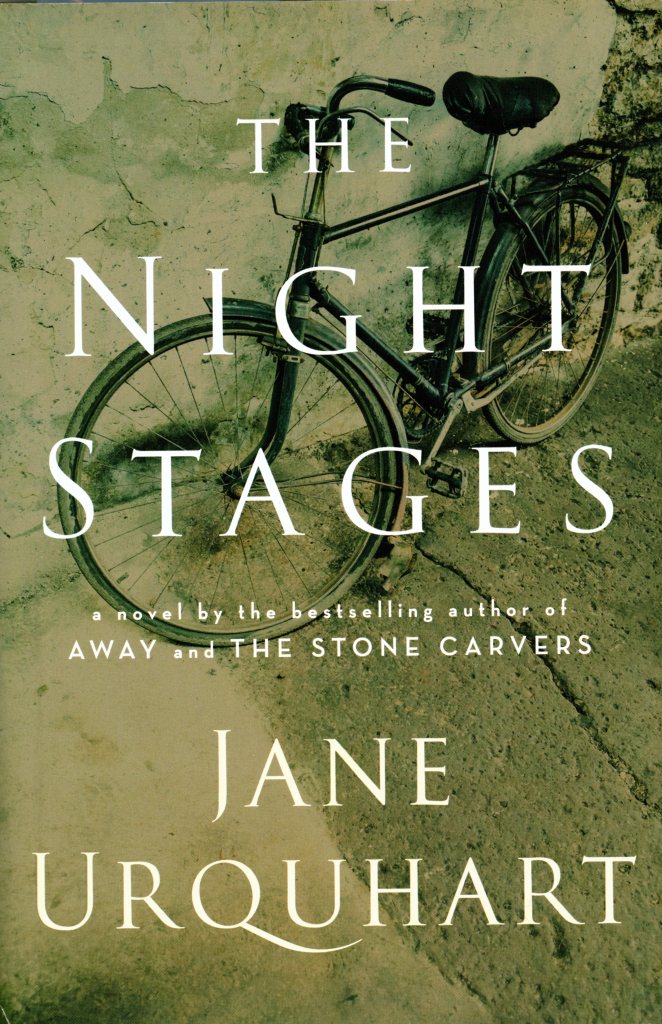
Curiously, I had yet to read her last book, The Night Stages, released in 2015. Set in 1950’s Ireland, the story is a weaving together of Kenneth Lochead’s earlier creation of a mural in the lounge of the international airport in Gander, Newfoundland where Tamara, pilot of planes during WWII, is stranded for three days after escaping the emotional clutches of Niall, a successful meteoroligist and athlete, and older brother to an estranged sibling, Kieran who is training for an epic bicycle race across Ireland.
The profundity of Jane Urquhart’s work is in the evocation of art and the written word. True to her education and passion, Jane Urquhart paints a vivid picture of the Irish countryside, capturing the sights, sounds and smells of Kerry county. At the same time, she delves deeply into her characters minds and emotions, reaching back into affective memories. Back and forth, between time and countries, we begin to piece together the connections among the protagonists and the parallels with the content and creation of the mural. There were moments in the early pages when I had to look back to help understand some of the linkages. The pieces all came together in the final chapters and the much anticipated cross-country race, The Ras. It is a story full of Irish lore, with its own brand of storytelling and myth making, although I am still working through the author’s intentions. The essence may have been captured in this quote: “Anything that moves forward, anything at all progressive, leaves something raw and wounded behind it.” The reference was to the building of a roadway but the belief applies to all manner of change.
I really enjoyed reading this novel. I am ever hopeful Jane Urquhart is continuing to write.
Next month I have decided to delve into mystery novels. You might think I would devote April to baseball books given the new season begins on the first. Alas, those will wait until the summer unless someone out there can recommend a baseball mystery.
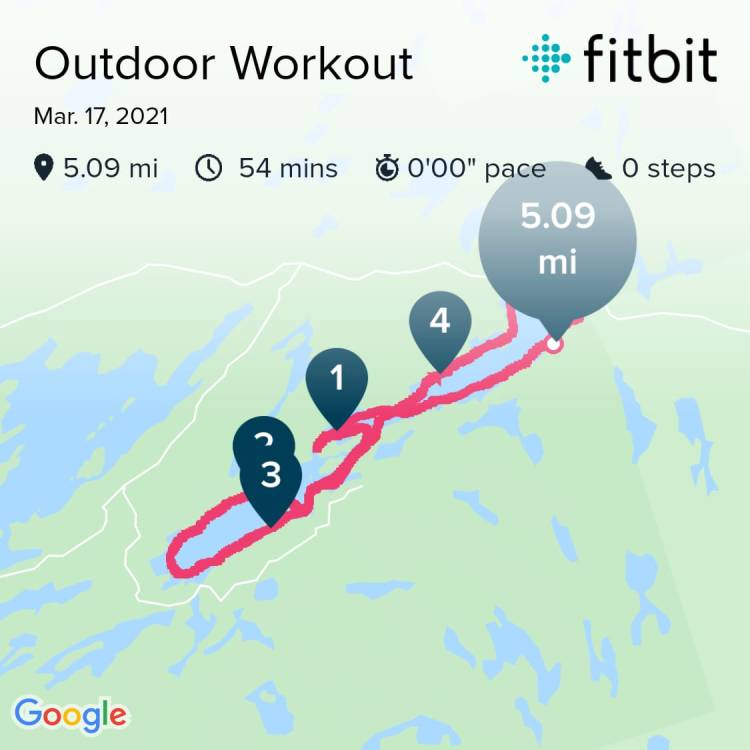
The forecast was predicting warmer temperatures so I knew my opportunities to skate were dwindling. On Wednesday morning, therefore, I decided to traverse the entire lake around the perimeter. The trip lasted 54 minutes, including several stops for a few snapshots, travelling 5.09 miles or 8.2 kilometres.
Naturally, I completed the journey with hockey stick in hand, pushing the puck ahead, catching up to shove it further along the shore. I was proud of the accomplishment and figured it would be my last chance to don the blades.
The warming air throughout the day created pools of water in the lower areas. The thermometer only dropped to marginally below freezing overnight before bouncing back to register plus seven on Thursday. The result was a very soft ice surface, still walkable but not suitable for skating. I figured the adventure around the lake was my last and I was ready to pack the skates away.
However, Environment Canada was calling for another reversal of warm to cold, dropping down to as low as minus 12; plus, the night sky foreshadowed the promise of a beautiful day. Maybe…..
View from our deck on March 18.
The ice appears solid this morning. Downing two cups of coffee, rustling up some breakfast, playing the bonus word for Jumble and the daily Wordsearch and I am ready. I woke up to minus 10; it is now minus 7 so no more time to waste. Onto the bench, on with the skates and back on the ice.
Entrails of ice dust marks my first path across the bay, eventually disappearing amongst the crisscross mix of trails back and forth and around. A slight breeze from the north whistles past my ears as I skate into it head on, only to be chased back from whence I came. Around and around, staying close to home, weaving with the puck, cutting in here, circling forward and backward, breathing heavier, heart pounding to build up those FitBit zone minutes. The ice resembles monochrome white stained glass, decorating every corner of the bay. A sudden crack spawns another new pattern, creating an even more elaborate design. Ice meets metal.
The sound of skating into the northerly wind. You can hear the ice meeting metal as I circle the bay.
Tired, I glide to a standstill and stand surveying the open space before me. Silence. No cars in the distance, no jets high overhead, no people around, just the voices of the lake. I imagine a male choral choir, dominated by the bass and baritone, rumbling beneath the surface, first to the left then from a distance, the next one closer, in a continuous symphony of sounds. The ice is singing farewell.
The temperature rose four degrees in my hour and a quarter of 11.3 circular kilometres, with the forecast predicting double digit plus days accompanied by wide blue clear skies for the next week. Maybe another morning skate is in the offing but even without, I will have finished the season fully contented, ready to welcome the spring.