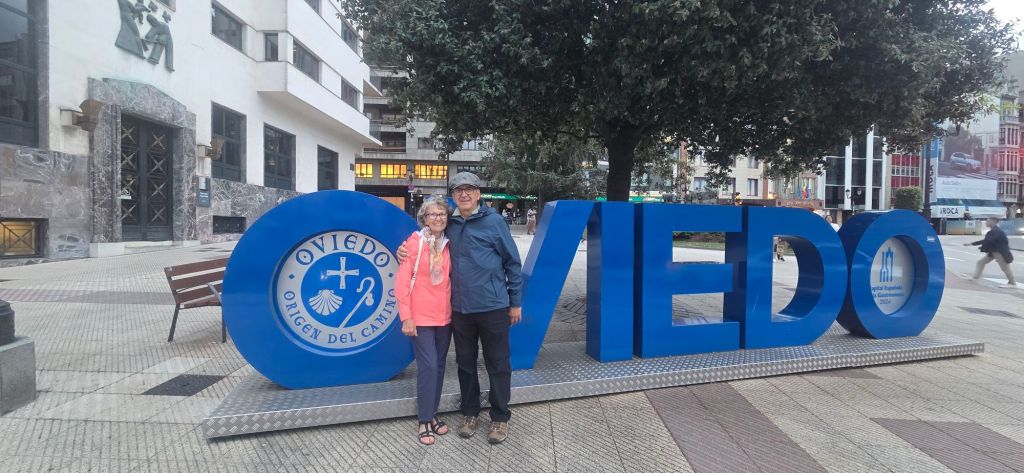
Oviedo to Grado to Salas

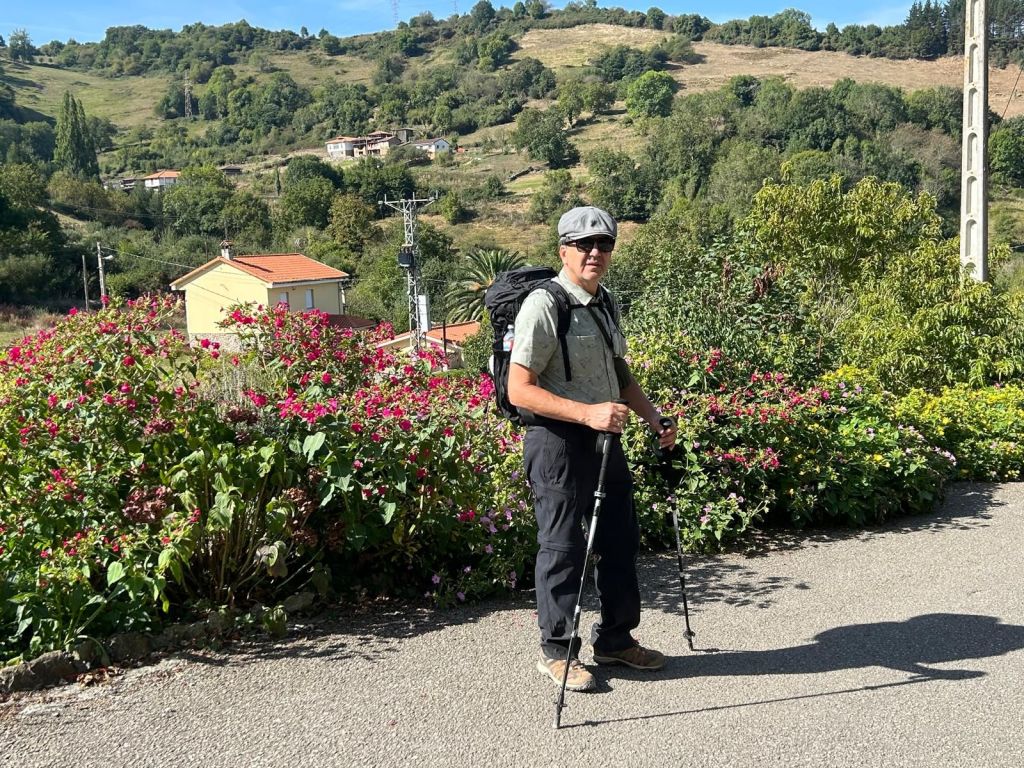
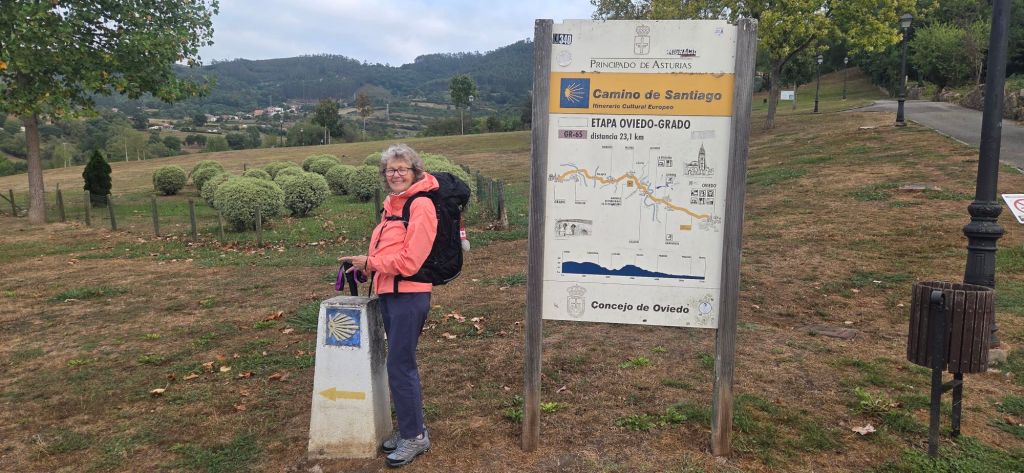
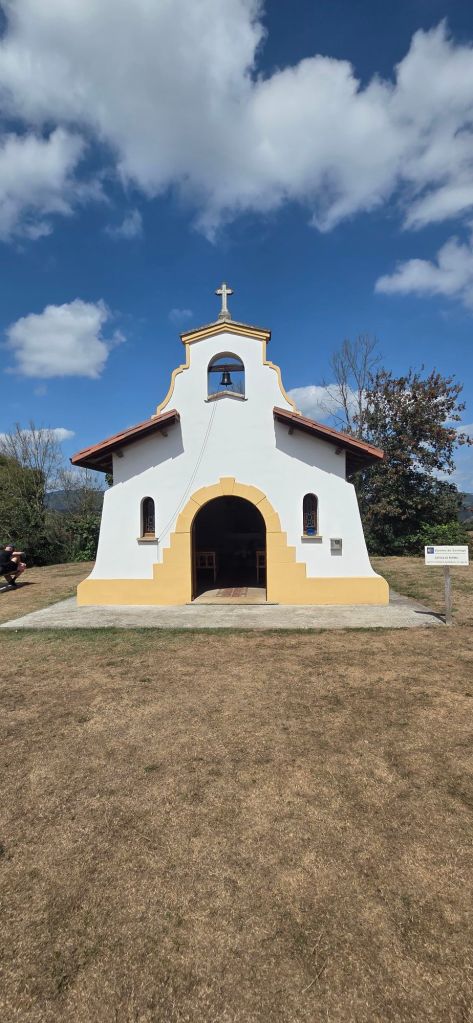
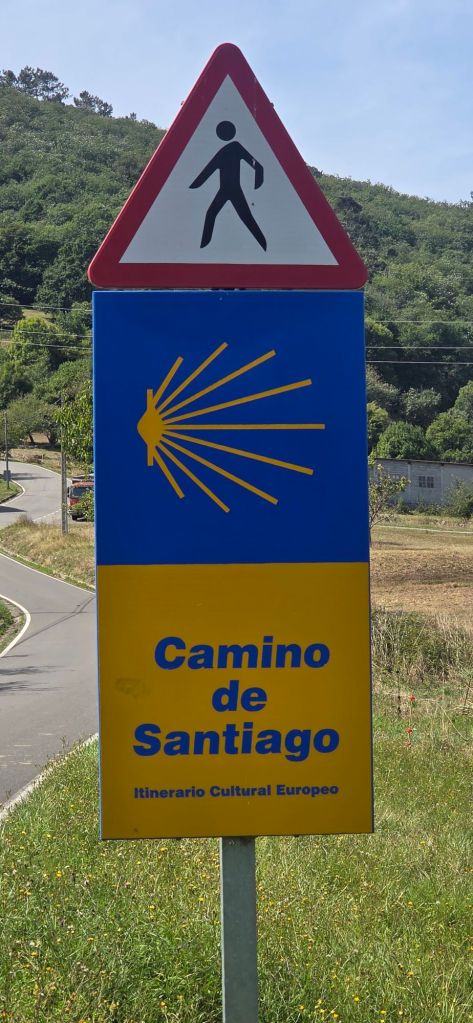
The guide book estimated 7 – 9 hours. It took us 10.5. We left our bachelor apartment in Oviedo at 8:20 am We finally arrived in Grado at 6:50 pm.

The authors also declare the distance to be 25.5 km. My Pacer app measured 29.1 km; and counted 49,980 steps. New league record. For Olga and myself, by far.

We started well, meeting several fellow peregrinos, engaging in brief chats, pleasantries. The first was a couple from France on their 5th Camino asking why we picked the Primitivo, the most difficult, as our first. Then two British women, in our age bracket, on their first as well. We asked them the same question. After we encountered a couple from South Africa, at least 10 years or junior, also new. Later we were passed by three young women, 20 somethings, each carrying enormous backpacks, larger than mine. Ming, from China, tiny, was carrying equipment larger than herself. Then there was Michael, 50s range, from Canada, Creemore, Ontario to be exact, another veteran asking why the Primitivo as our first. He wished us well.

What did all these people have in common? They all passed us, kept walking and we never saw them again after the halfway point. (The British women stopped at that juncture.) We passed no one. Like the car driving in the slow lane, under the speed limit.

We were spent when we reached Escamplero, 15.8 km into the first leg. A rest, copious amounts of water, a meal (albeit not very good) and we thought, let’s finish. We can do it. And we did. Barely.

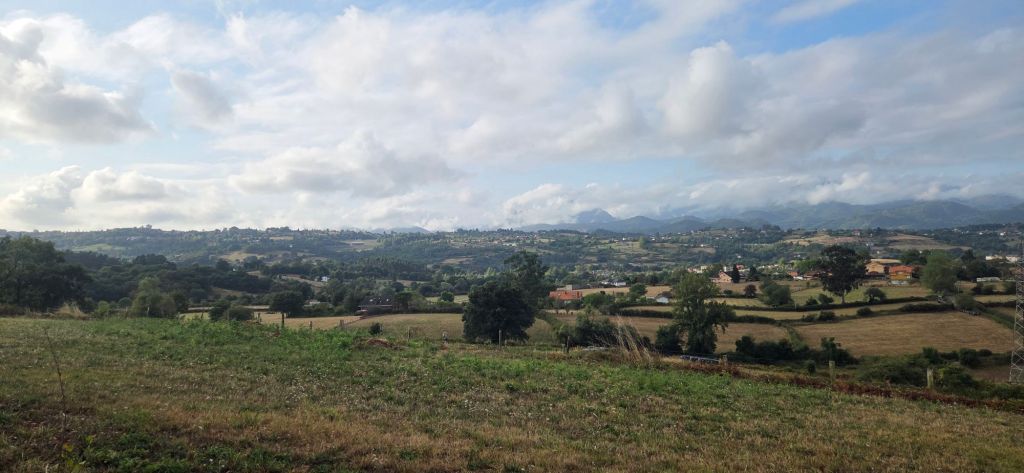
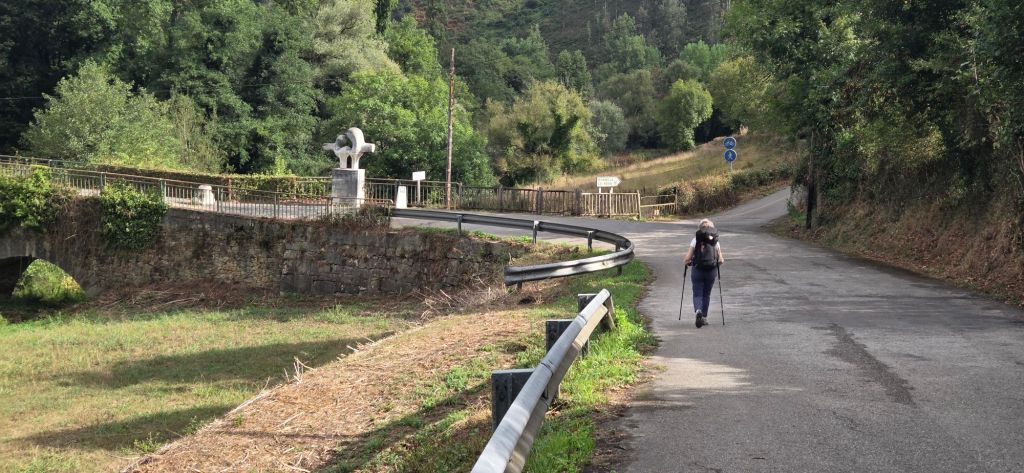
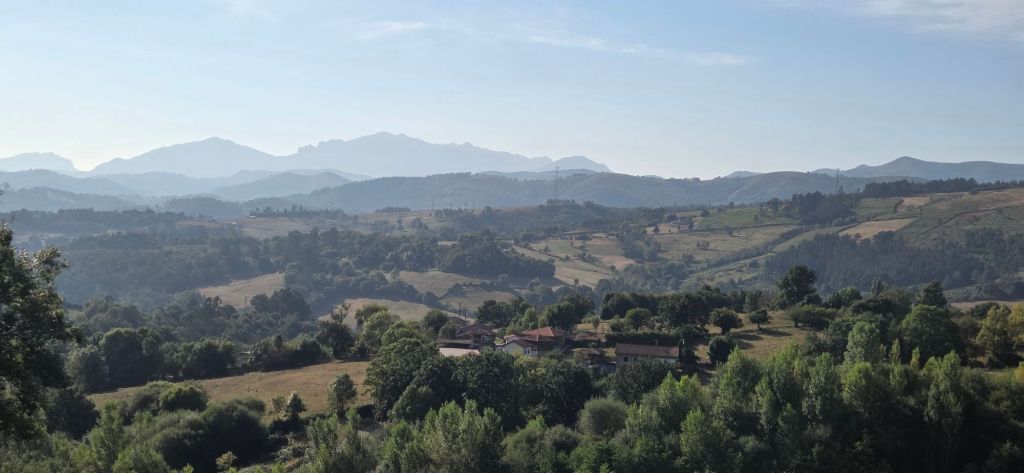
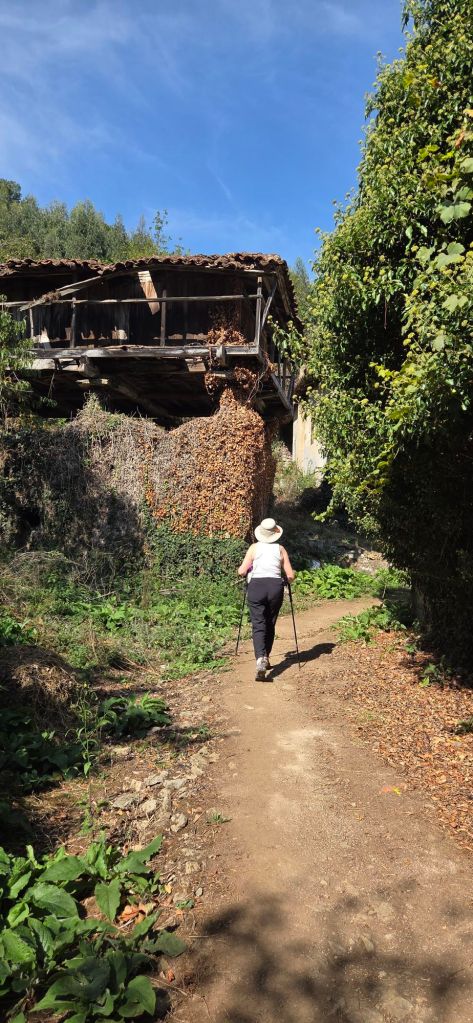
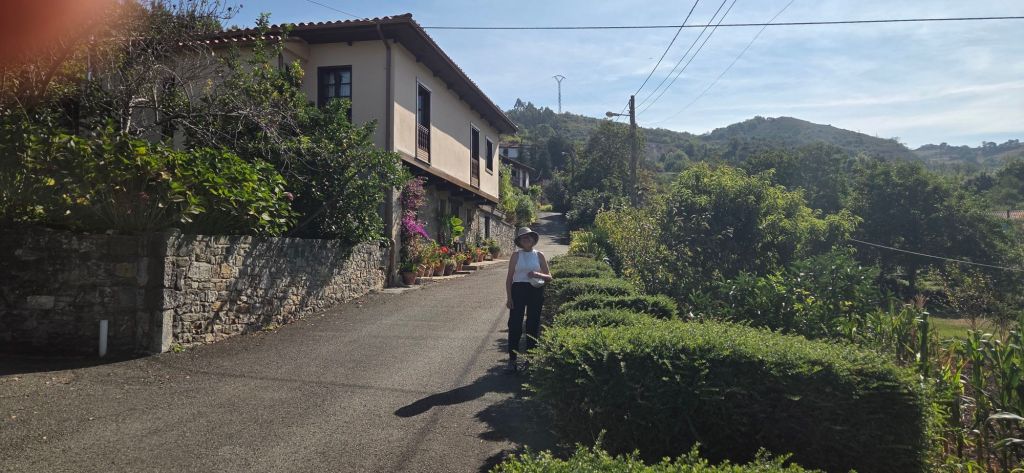
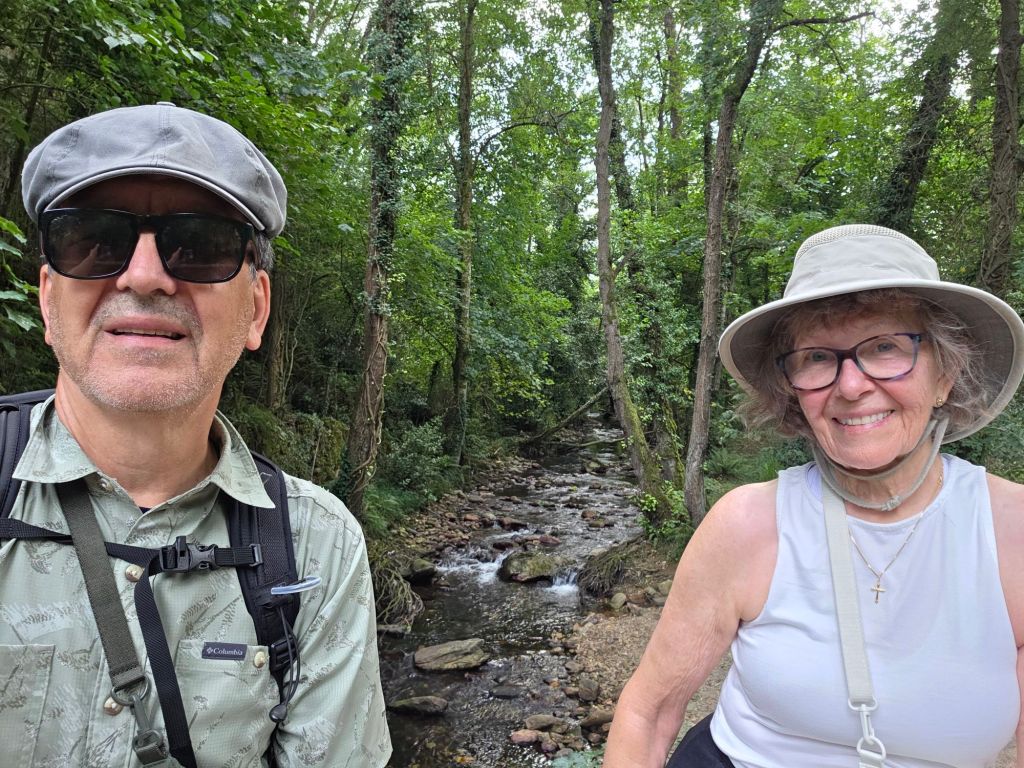
The scenery was gorgeous in parts; the stretches through forests, beside streams, winding past quaint collection of houses,  all lovely. They sustained us until we reached the sign for Grado, 3 km, over the bridge and turn right. It was the longest, hardest three kilometres of our lives.

By then we had been walking for nine hours. Our feet were sore. Our calves ached. Both of us hunched from the weight of our backpacks. The road into Grado was inhospitable; pavement, concrete, weeds, abandoned stores, tattered businesses, cars racing past. Our steps shortened by half, resting more frequently, Google Maps always seeming to say we were 20 minutes away.  Finally, Gusado greeted us on the street to present the keys and the apartment.

A shower, unpacking our material across the floor, gorging on the stored cheese sandwich and sausage, medicating on Tylenol, rubbing various parts with Voltran and then collapsing into bed. How will we manage tomorrow? Don’t know. Can’t think. We did not set an alarm, letting our bodies tell us when to wake. We will figure it out in the morning.

The light of a new day brought clarity. The guide book warns the reader to be prepared for a 350m climb out of Grado. “Take it easy and enjoy the wonderful views.” Should we delay? The room in Salas is already paid, as well as the third leg in Tineo, with zero refund for canceling. Besides where would we camp out in Grado. Not really an option. Our current apartment is not available. Yet we cannot continue as before. The solution? Send the biggest bag, jammed to its fullest, by taxi to our next destination, an option we read about on Facebook. Gusado, who does not speak a word of English, arranged it. I would carry Olga’s pack, smaller, lighter, with only the day time essentials.  Problem solved. We hope.

It was a late start, 9:40 am. A gorgeous morning, quiet even for a Saturday, expecting sun, high of 30⁰ C. We felt better, the rest healed our soreness, (some bandages around ankles and potential blisters helped), the plan making us feel optimistic. Izzy from England passed us after a brief exchange; Michael from Creemore passed us again having already put in 10 km that morning; the guy sleeping on the bench at the beginning passed us without a word. We carried on in our slow lane. We walked nearly the entire leg of Grado to Salas by ourselves. Again.

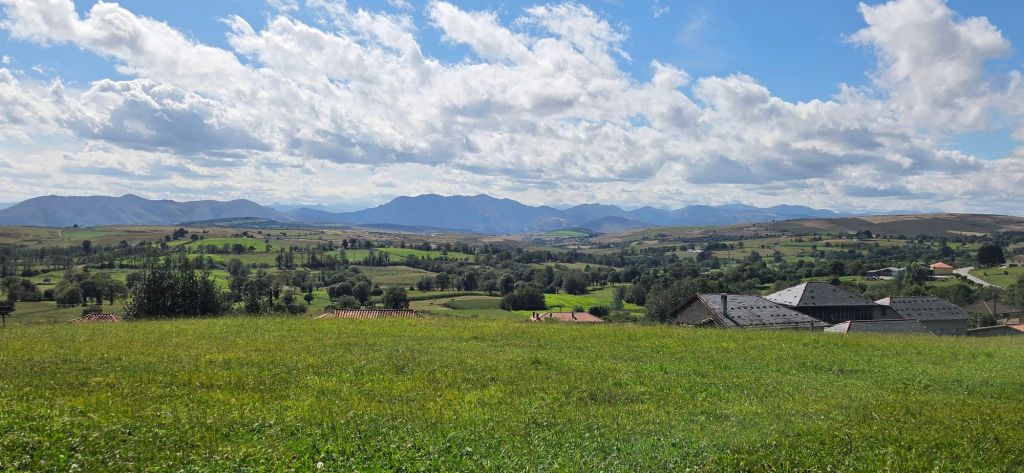
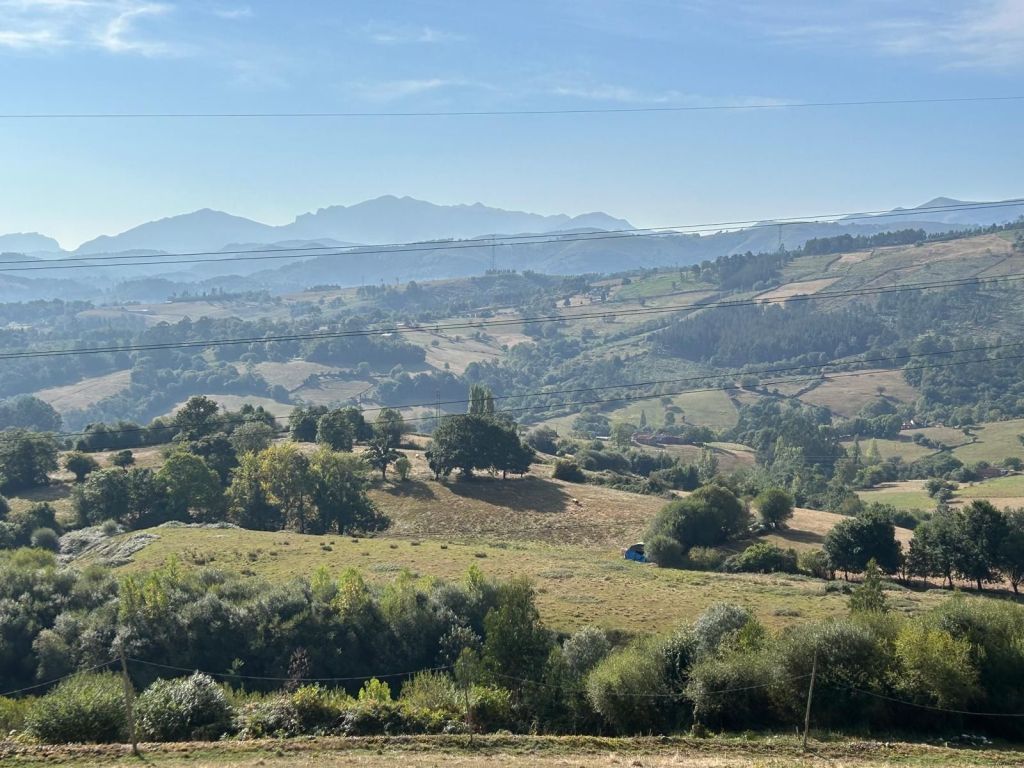
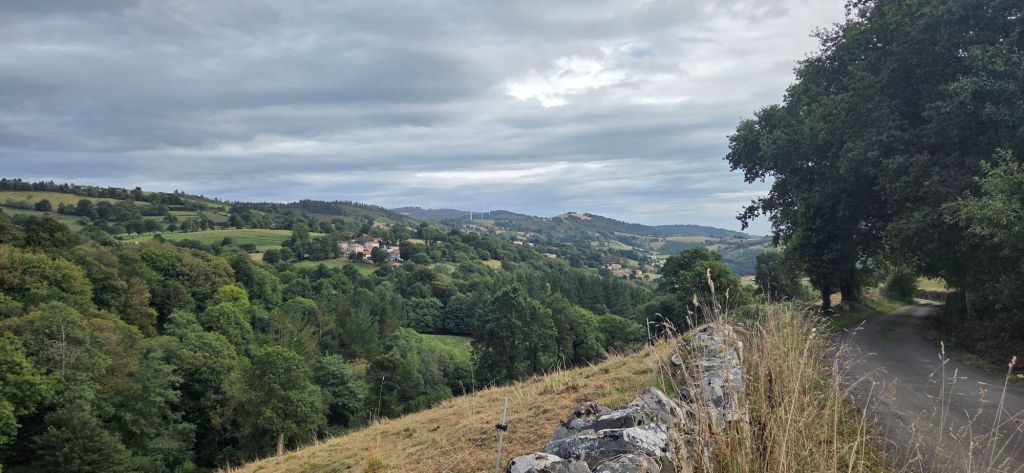
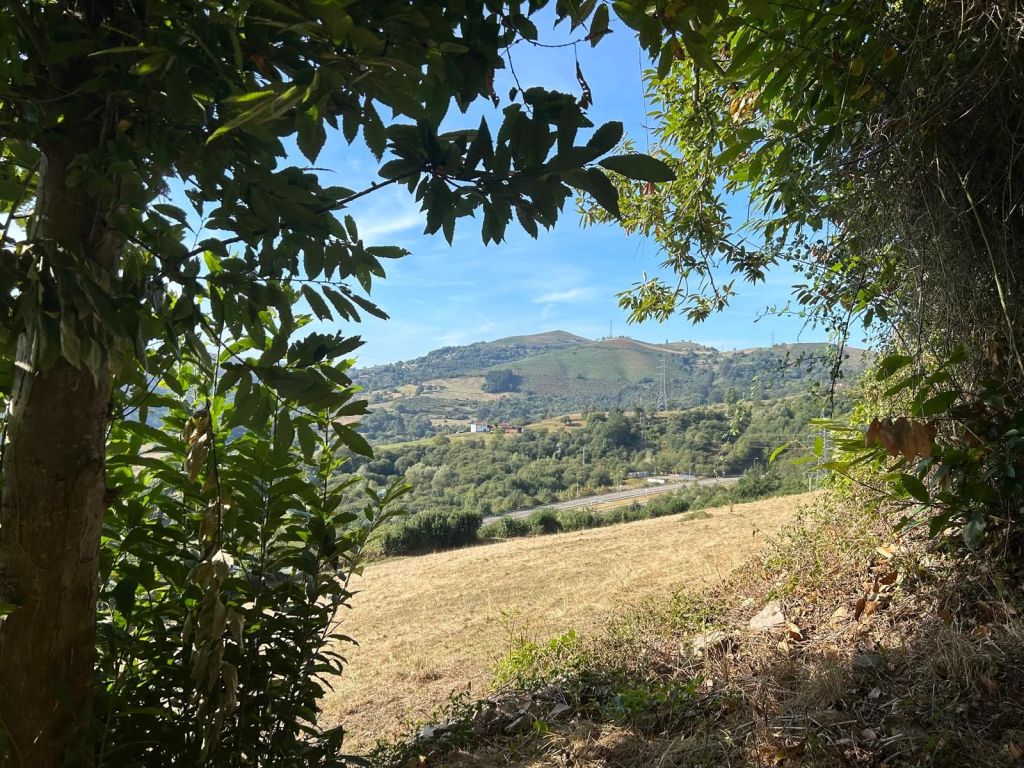
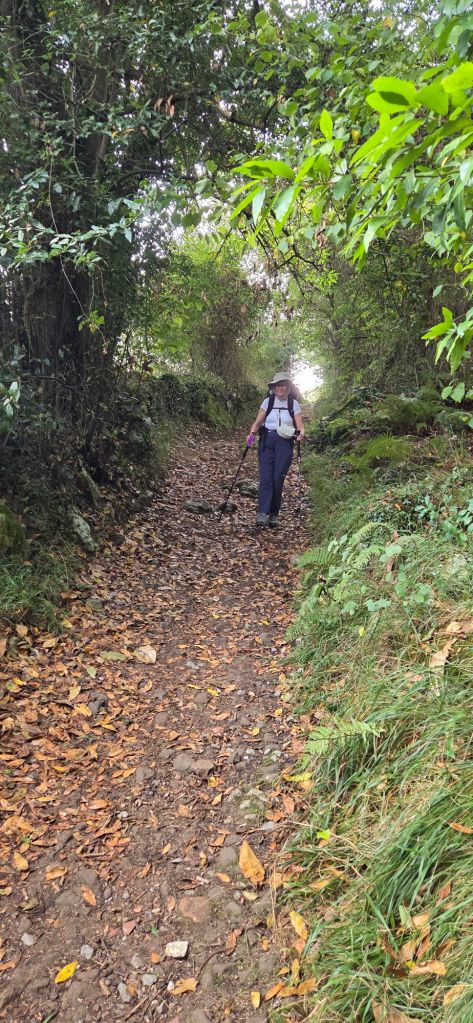
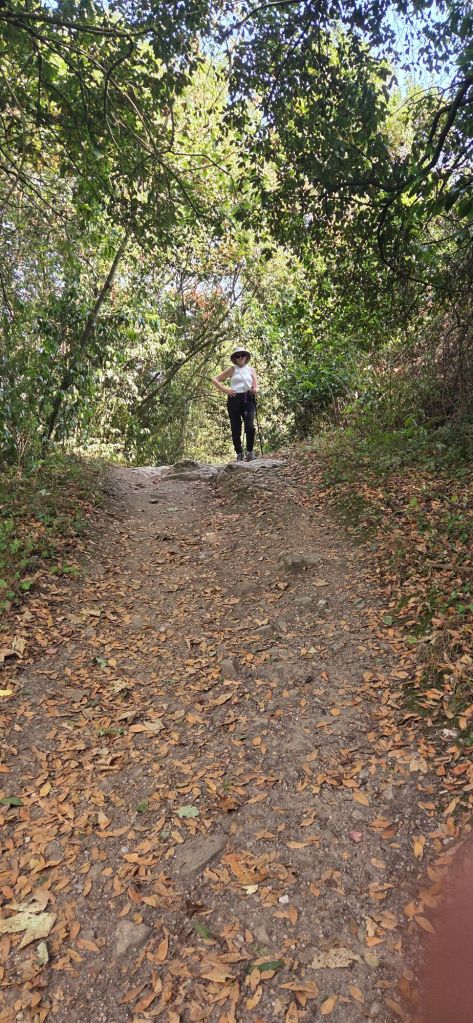
The views were as gorgeous as advertised. We spent more time off the roads, traversing through forests along smooth and rocky trails (one steep and treacherous). We stopped to take pictures, embraced the ambience, soaked in the atmosphere. The air was as fresh as we felt for three quarters of this section. We were tiring again by the end, yet not exhausted as the day before.

The guide book predicted the 22.7 km walk from Grado to Salas would take 6.5 – 8.5 hours. We arrived in 9 hrs, clocking in at 25.6 km and 36,042 steps. And felt better overall. A good day.

We are encouraged by the success of today and await tomorrow in anticipation.

Buen Camino.

Oviedo

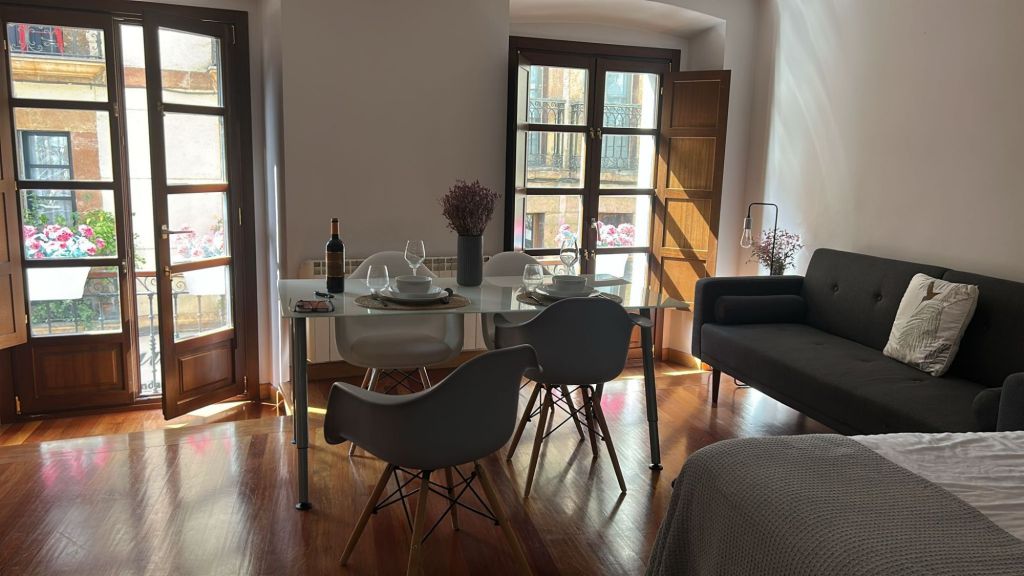
The flight was ahead of schedule, the train was behind. A nearly lost Maria during the security screening, a frustrating technology connection, challenged my patience and left me wanting. We arrived in Oviedo, sleep deprived, to a lovely room, grateful, in the heart of the old centre, amidst a quaint downtown vibe.

The plan to spend a couple nights here turned out to be a prudent decision. We slept twelve hours, languishing in the morning, waking to a city doing the same.

Our room in Oviedo

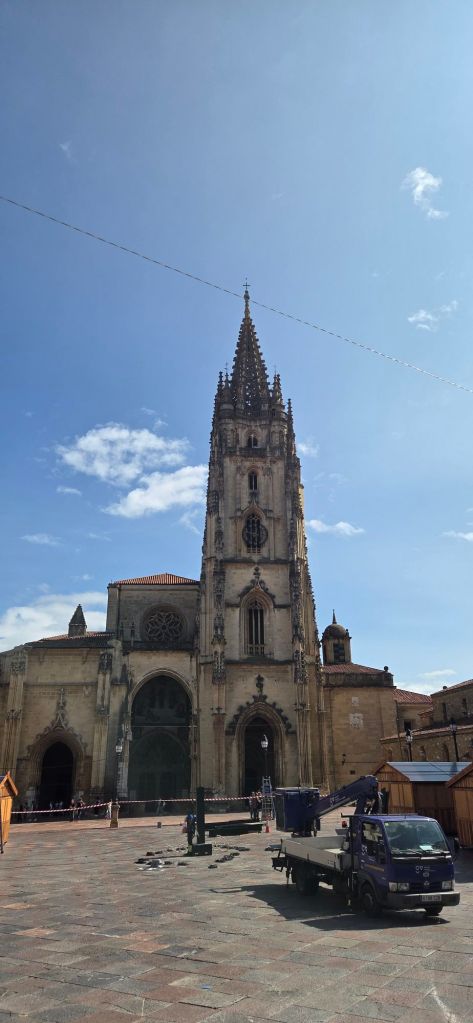
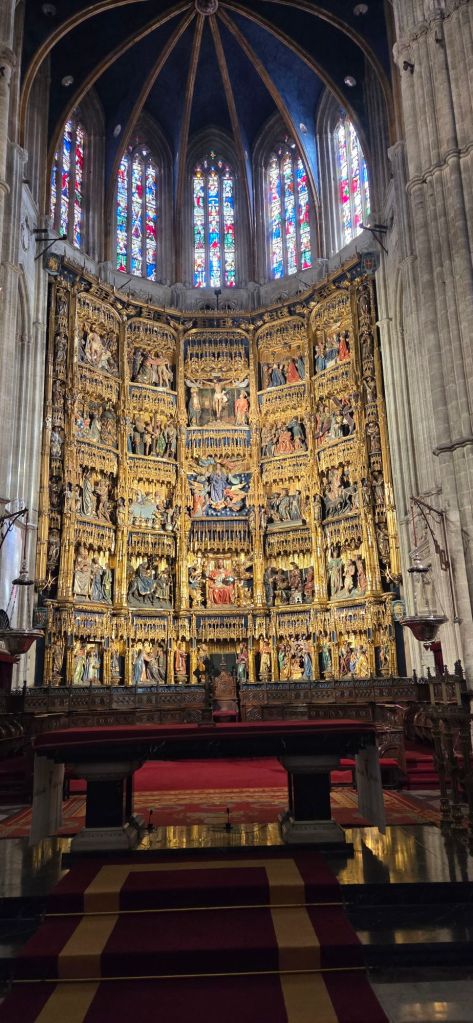
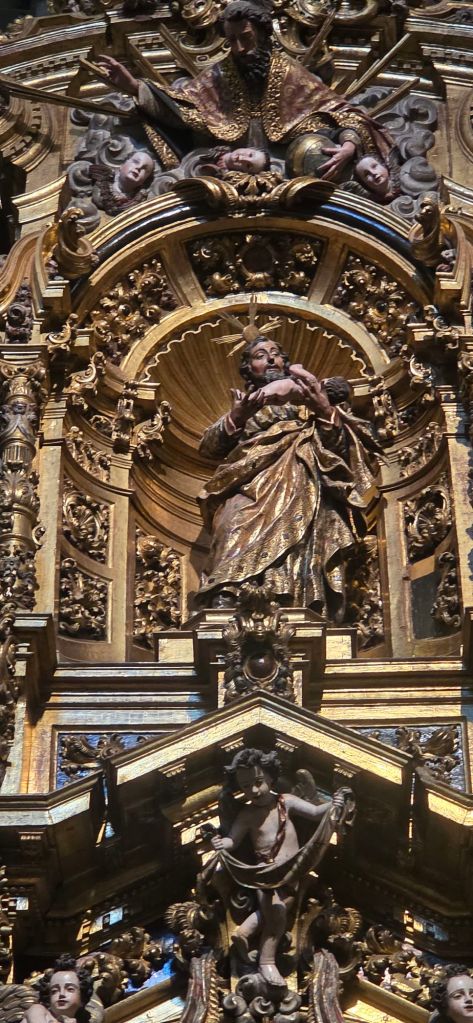
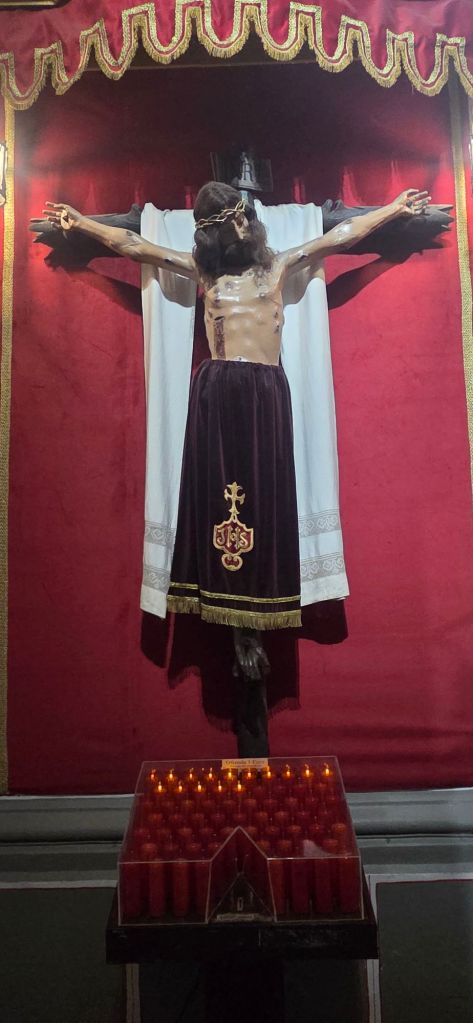
The delayed start to walking the Primitivo provided Olga and myself an opportunity to explore Oviedo. It does not appear to be a  tourist town for international travelers yet there is much to be explored. The Catedral Metropolitana Basilica de San Salvador alone worth the visit. Ornate wood iconography, jeweled treasures and religious museum honour the Catholic history of the town. Smaller churches, such as Iglesia de San Juan El Real offer unusual depictions of Jesus upon the cross perhaps reflective of the region.

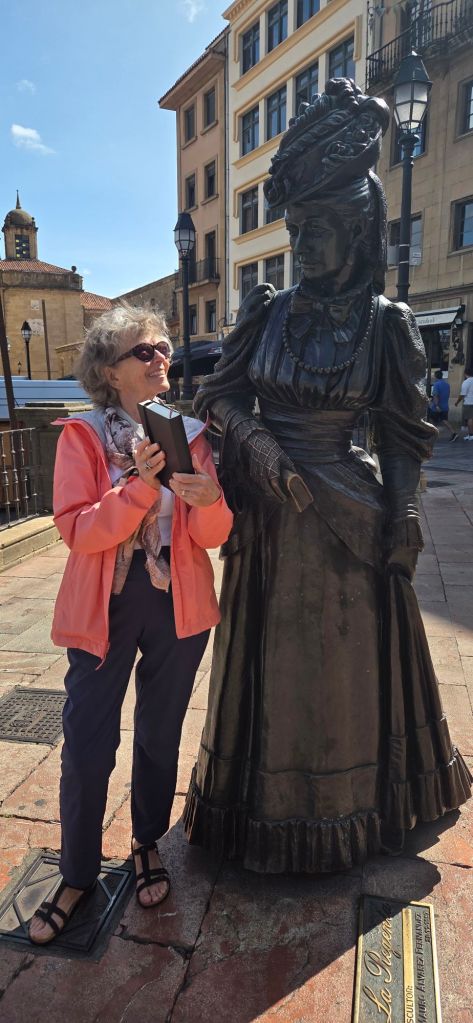
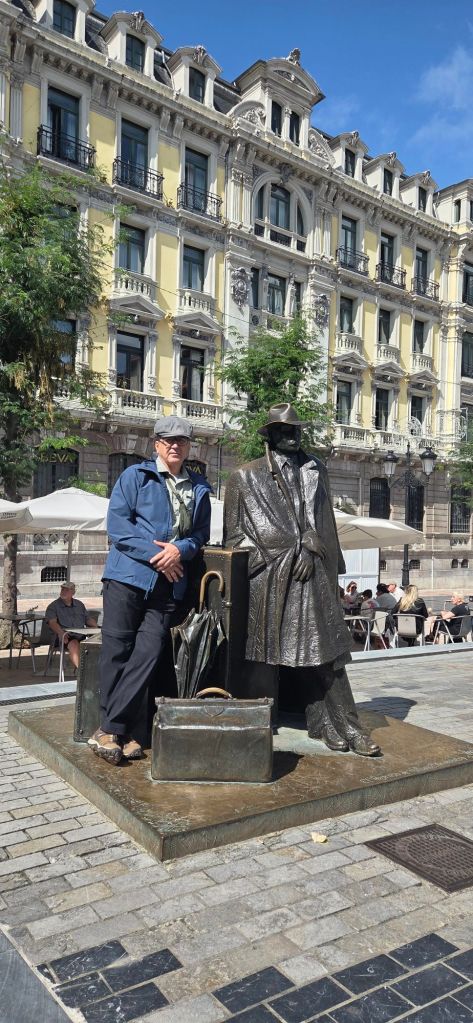
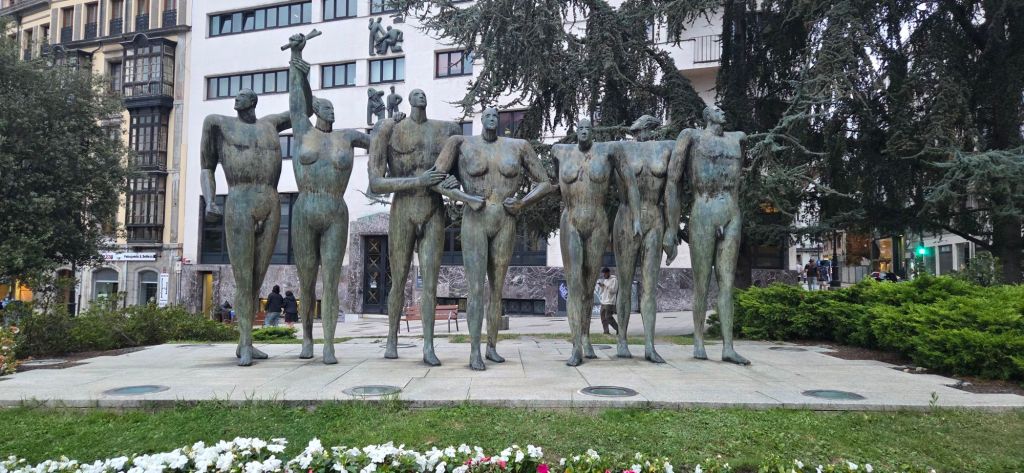
The town itself boasts public art in the form of fountains and statues in pedestrian courtyards scattered throughout. People gather to shop and socialize and enjoy the ambience of a busy community. It attracts locals and other Spanish citizens, the occasional European and seemingly few North Americans. English is seldom spoken or translated in the signs, making for a delightful adventure to order or ask directions. Google translate has been handy supporting hand gestures and pointing and help from friendly standersby.

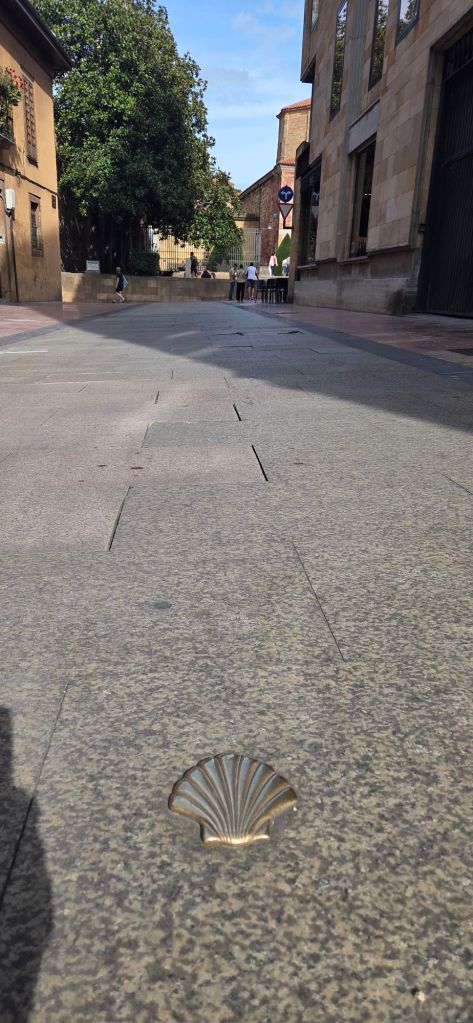
A  practice walk to find the Camino markers that would take us out of the city lead us through the modern section and the working class district, while walking back found us amongst a party spilling out onto the streets in the pub district. In the meantime we purchased our Camino passport, the peregrino shell, a pair of scissors for the medical kit, and a pocket knife because I cannot manage to travel without one.

We have made further adjustments to our back packs. We are rested and psyched.

We are ready for tomorrow.

Buen Camino
The Wind

The documentary, Walking the Camino: Six Ways to Santiago, follows several pilgrims across the French route, each with their own story. One was a young Danish woman, traveling on her own who eventually partners with another solo traveler, a French Canadian, because they are both walking the same pace. Agnes ported a heavy backpack, jammed full, stretching from above her head to her hips, an increasingly burdensome load with each day on the path. Simon, on the other hand, carried a pack at maybe one third the size. He finally convinced Agnes to shed most of the contents, have them shipped home and carry on with the minimalist of supplies.

During this scene, the camera flips to an elderly Spanish couple, wise in the ways of the pilgrimage, who explain how pilgrims on the Camino fill their backpacks with fear. Extra warm clothing for fear of the cold; rainwear for fear of inclement weather; bandages and medicine for fear of falling ill; books and i-phones for fear of being alone with themselves; boots for fear of wet feet; additional food for fear of hunger; sleeping bags for fear of nighttime discomfort.

I replay the scene in my mind each time another item is sought or purchased in these last days of preparation. Worried about sleeping accommodations, so we purchase sleeping bag liners, which are recommended for bedbugs. The temperature appears to be dropping so I question the adequacy of the my raincoat and include a compact one for warmth. Concerned about the accumulating weight, I forego an extra pair of pants. I can live with three pairs of underwear  and socks realizing the need to wash and the small amount of powder detergent weighs less. I survey the paper material to determine what can be scanned or photographed to my phone for reference.

Picked up my prescription sunglasses.
Haircut earlier in the week.
Hiking shoes have been worn in.
Sufficient Euros acquired.
Train tickets to Oviedo purchased.

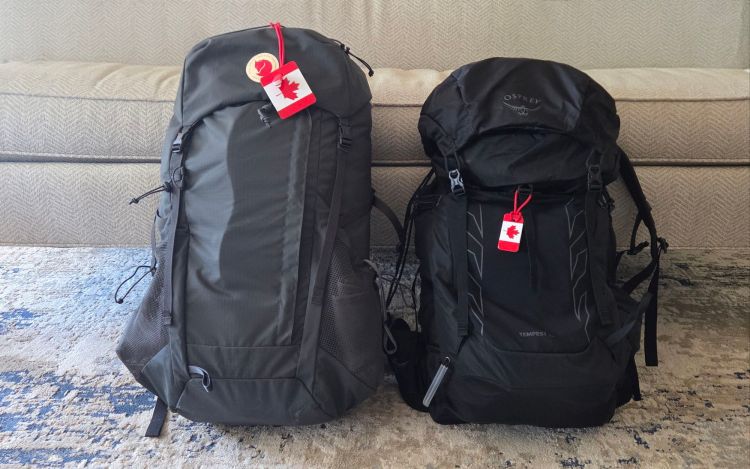
The backpacks are full; mine weighs 17 pounds, Olga’s amounts to 15. I am below the recommended 10% of body weight; Olgas is a couple above, but then again she is not very heavy to begin with. Both are carry-on size as planned.

One change of clothes, one warm coat, pair of sandals.
Socks, underwear, night shirt.
Toiletries, emergency kit, sun hat.
Hiking poles, water bottle, whistle.
Euro plug, phone charger, notebook.

Anything else? Have we forgotten something?

Our plan to walk ever greater lengths at home was supplanted by a need to we are well rested. We will probably need an extra tube of Voltran and a full bottle of Advil.

What is left to consider?

The threatened strike by flight attendants was resolved on time to ensure our flight is not canceled. The rotating protests of grounds crew at Spanish airports are not scheduled for our destination. The wild fires which were encroaching on the path have subsided and remain south. I am checking the week ahead forecast every morning which changes every day. The temperature is expected to be a comfortable 23 Celsius on our first day of walking, mostly sun; it rises to 26 the following. So far so good.

I have been consuming information from all corners of the web; checking on places to stay in possible towns, depending on our pace, taking into account the weather, with an eye on the terrain, allowing for stops along the way, bearing in mind posts on the Facebook page, considering all the advice on Camino websites, cross tabulating with STOP. Let. It. Be.

Nothing left to do. Nothing to fear.
As long as we have each other, we will figure it out.
On Tuesday, we set sail on our journey.
Buen Camino.

I listen to the wind
To the wind of my soul
Where I’ll end up, well, I think
Only God really knows

On The Road To Find Out

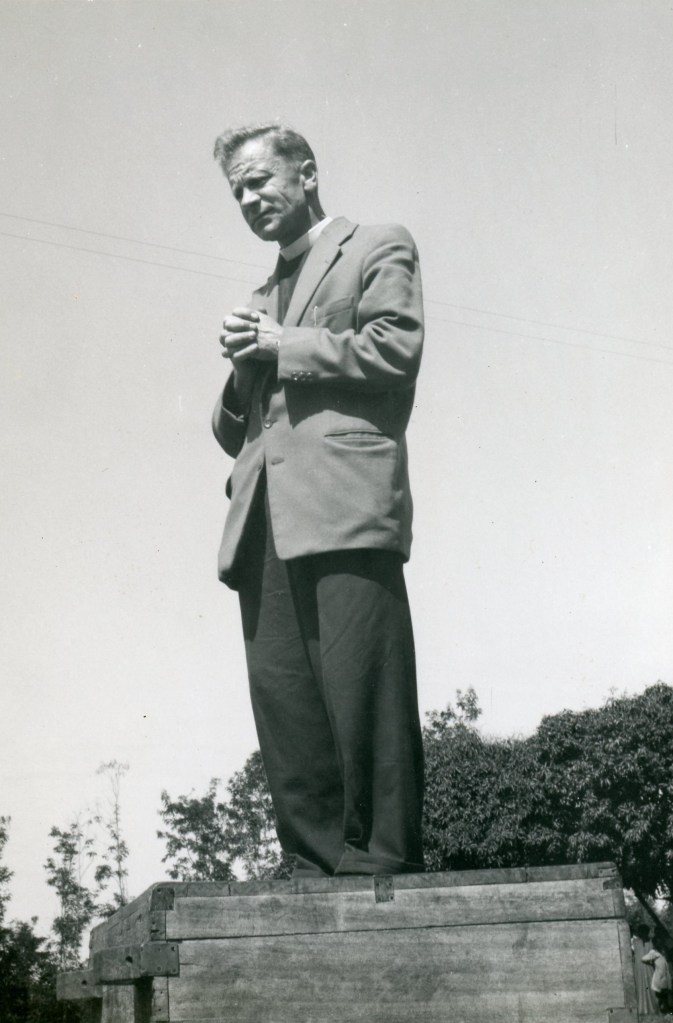
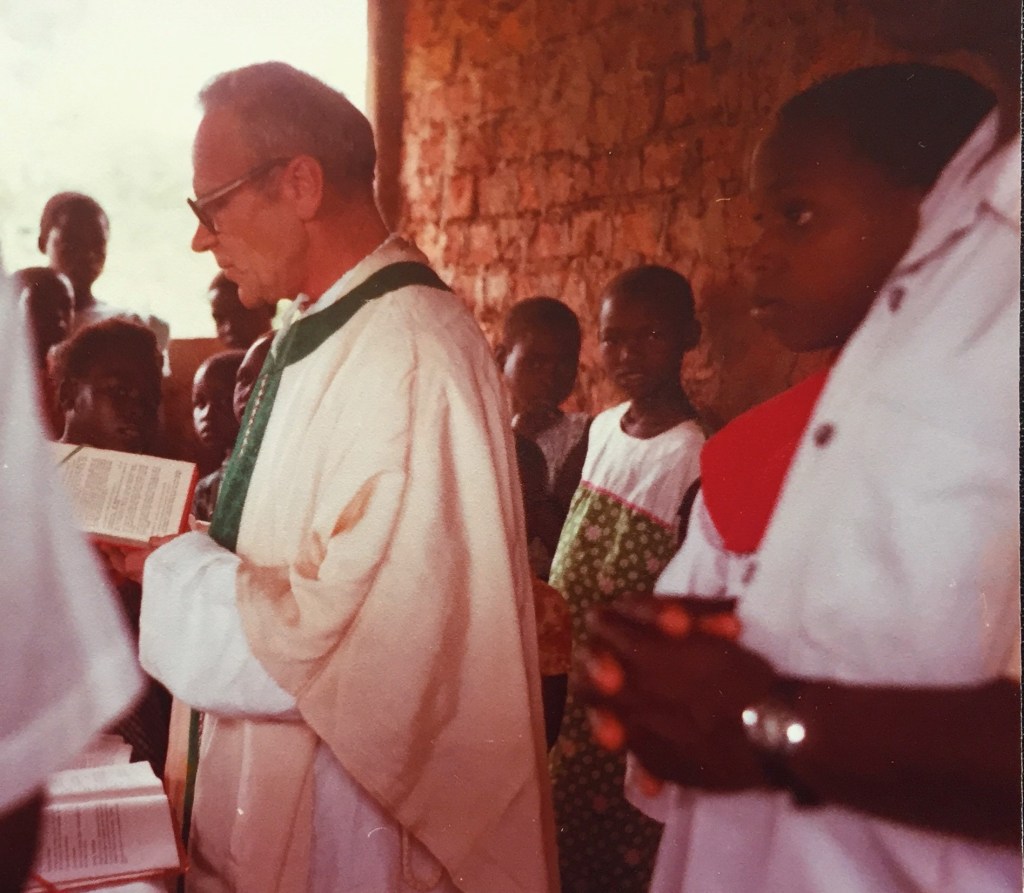
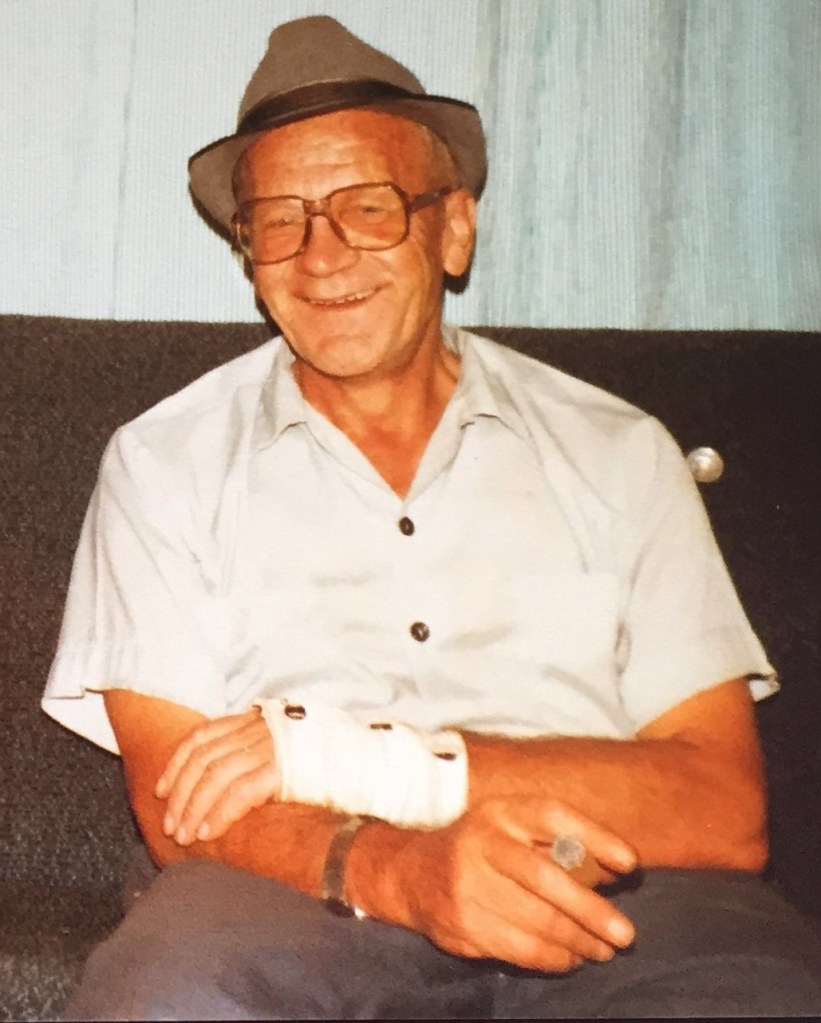
My father passed on to me several small possessions of my Uncle, Fr. Kees de Cock who died in 1981. I received his reading glasses, his pipe, two prayer books and his crucifix, all showing loving wear. In a 2017 family pilgrimage, I visited the Kamuli church where Fr. de Cock, a Mill Hill missionary in Uganda since 1947, was the parish priest until his death, I decided to include the small, metal crucifix in my luggage for the trip. I was traveling light with one carry-on suitcase and one personal computer bag because there would be several airplane changes and I did not want to tempt fate with checked baggage. As my items rolled through the scanner at Pearson Airport in Toronto, my hand bag was pulled aside for additional scrutiny. 

“Do you have anything sharp in your bag?”, to which I answered no as the border security rifled through it to pull out the cross.

“And what is this?”

I responded with the obvious. He observed it carefully, rubbed his fingers along the edges before departing to consult with his supervisor. He returned, satisfied it did not pose a threat and let it continue. Curiously, I passed through metal scanners in Kampala, Kigali and Dar es Salaam without any issues. I won’t risk having the crucifix confiscated on our Camino Primitivo trip. Instead, I will carry two wooden works of art from Italy.

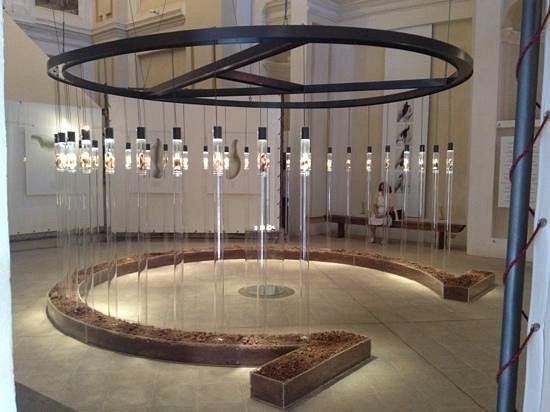
During a meandering stroll of the streets of Assisi in May, Olga and I stumbled upon the Chiesa Santa Maria delle Rose advertising MARIA, a permanent art display. Inside was an altar like structure with 33 glass tubes, 10 feet in height, lighted, sitting in an Omega shaped planter of local soil, illuminating wooden shapes of a Maria sculpture, topped by an Alpha pergola, .

One tube of MARIA
Full installation of MARIA

The artist, Guido Dettoni della Grazia, creates tactile sculptures inviting people to interact with his works. At the center of MARIA stood a plinth with several larger versions of the statue molded in white ceramic enabling visitors to touch and feel and hold. We were astounded by the beauty and solemnity of the installation.

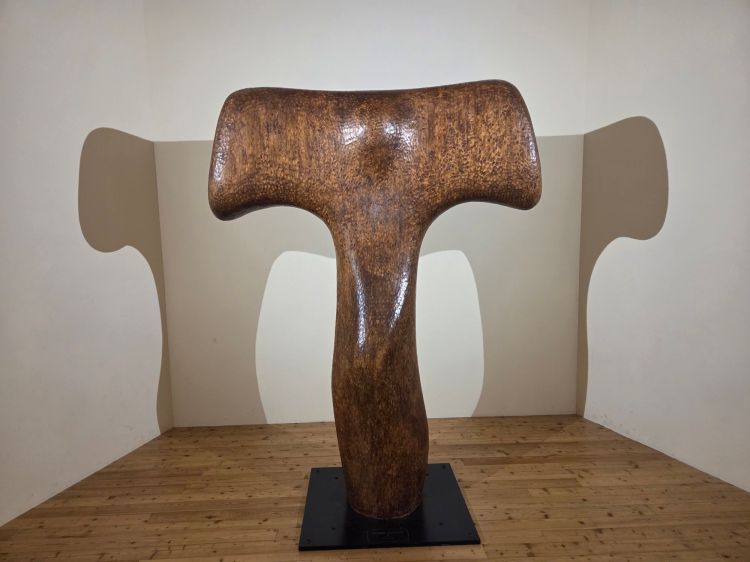
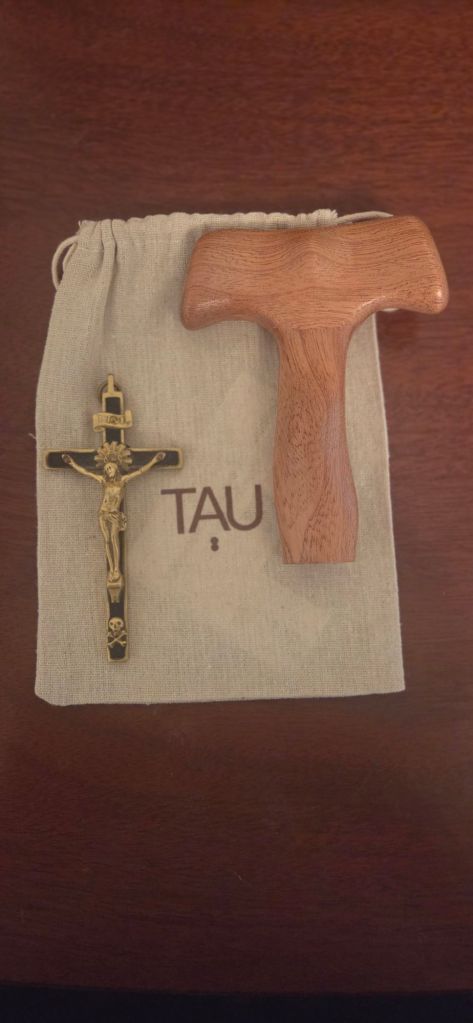
Behind the display was another large piece, a Tau, completely wooden, life size, with molded body features, intended to be hugged. The last letter of the Greek alphabet, it’s shape has been shown in early paintings as the cross on which Jesus was crucified. The Tau became the signature of St. Francis of Assisi and the symbol of the St. Francis Way. For the Franciscan order, the posture that forms the Tau shows openness to the needs of others, that all are loved and welcome. It was stunning. And yes, we did hug it.

Uncle Kees’ crucifix and a miniature wooden Tau
The Tau

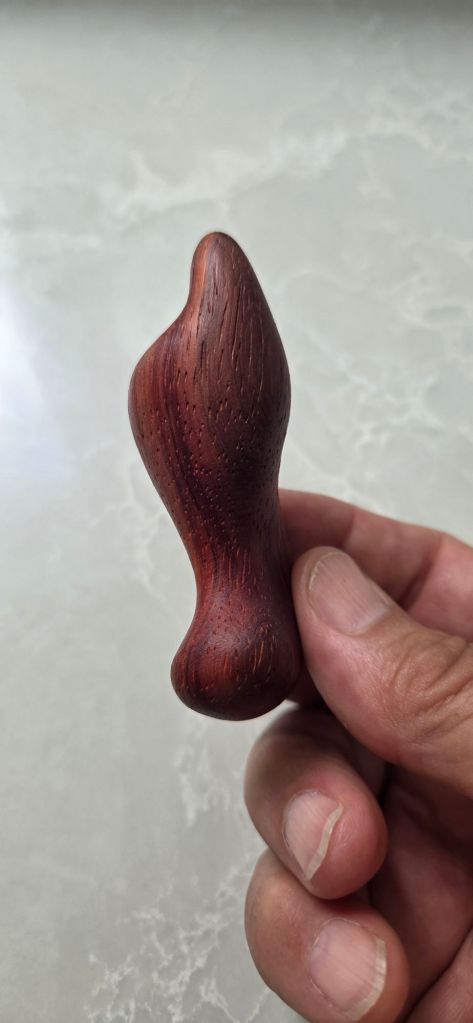
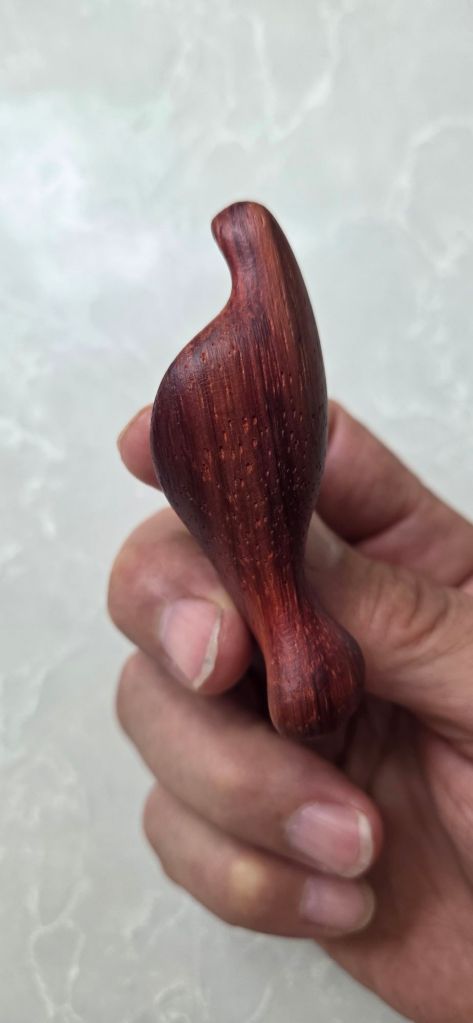
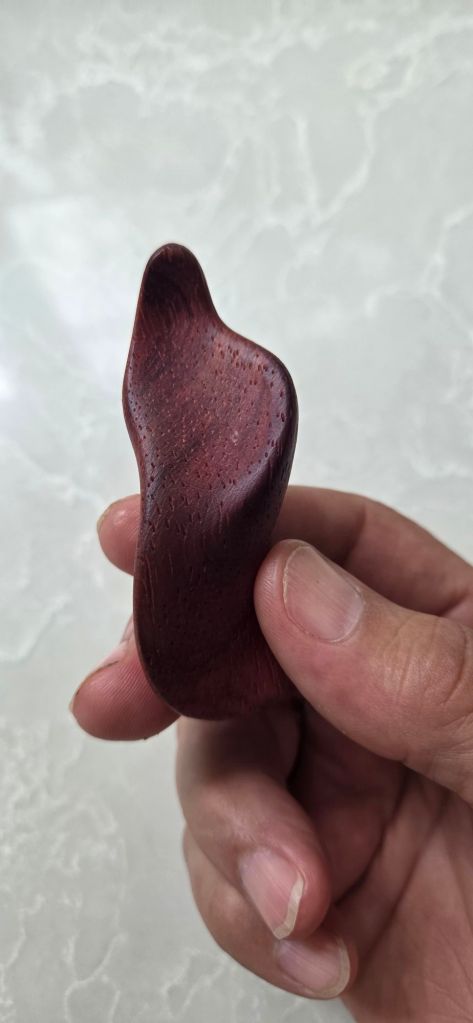
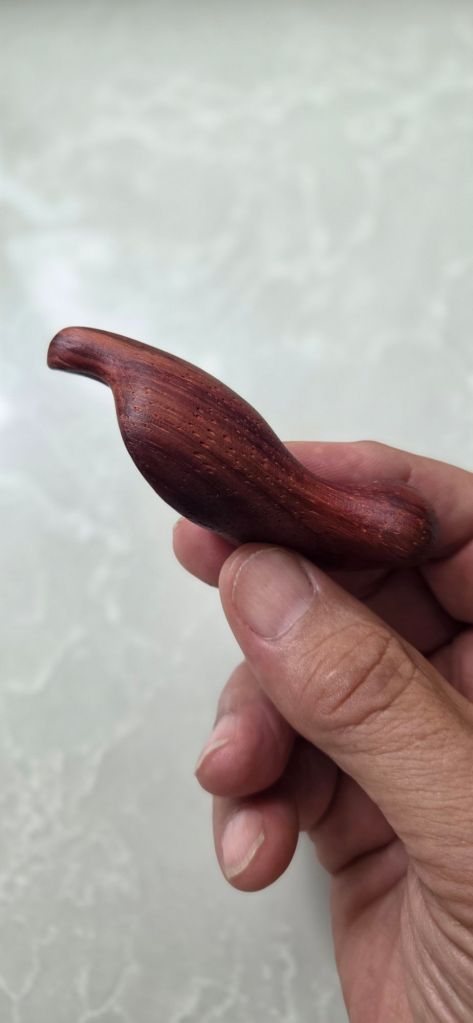
The young woman hosting the exhibit explained the significance and offered pieces for purchase. Maria was available in different sizes although it was intended to meld into your hand as a contemplative instrument. We were encouraged to fold our right hand around an array of Maria sculptures in the wood of our choice assessing the fit before selecting the one most comfortable. Olga picked a piece made from an olive tree; mine is shaped from African wood. Maria immediately found a home in my right hand pocket, replacing my knife. which was relocated to my left side. I reach in and hold the tiny sculpture in moments of stillness. We also purchased a Tau to accompany our journey. A chance discovery transformed into one of my more memorable moments of our Italian trip and produced two valuable artefacts for our impending walk of the Camino Primitivo.

King Alfonso II was the first to walk the Camino route in the early 9th Century traveling to Santiago to confirm the bones laid there were that of St. James. The construction of a Romanesque cathedral over the burial site, beginning in 1078, helped grow the Camino into one of the three important pilgrimages for Catholics.  Now more than a religious road, 500,000 people in 2024 walked the four different versions of the Camino for varying reasons: a religious trek, a hiking challenge, a nature tourism walk, a cultural experience, a journey of self-discovery. In the Hollywood movie, The Way, and in a subsequent documentary, Walking the Camino, the question of individual purpose for walking is a dominant theme. My answer might be a somewhat flippant, “because Olga is going”. In truth, I feel a pull, an inner sense, an intuitive appeal of the religious and historical significance of the St. James Way.

Maria nestled in my hand

I have been reading and listening these last several weeks to Father Richard Rohr, a Franciscan priest based in New Mexico. His interpretation of the Old and New Testament amounts to what I would describe as humanistic Catholicism, a faith emphasizing humility, inclusion and service, a perspective which resonates with my view of the world and of spirituality. Relevant here is Fr. Rohr’s discussion on contemplation and transformation in his book, The Universal Christ. He spoke of learning some acts of contemplation in the practice of a “meditation” or any “prayer of quiet”, a form of inner silence, to help transform our dualistic mind to one of unity. The practice does not necessarily or exclusively require stillness. It can also involve some aspect of walking, particularly with nature, or an element of action, two modes which suit my personal preferences. The Camino Primitivo is 320 kilometres and 15 days of mountains and valleys, towns and countryside, walking and reflection; a time for inner silence.


“Everyone has a reason to walk the Path, but everyone lives a unique journey. Enjoy.
Just go.” 1
The Tau in my backpack, Maria in my pocket, Olga at my side. Buen Camino.

So on, and on I go, the seconds tick the time out
So much left to know, and I’m on the road to find out

And I found my head one day
When I wasn’t even trying
And here I have to say
Cause there is no use in lying, lying

Yes the answer lies within
So why not take a look now
Kick out the devils sin
Pickup, pickup a good book now
Cat Stevens

1 Camino Primitivo Facebook site, August 12, Canevo Cavanah Filho

The picture of Maria changes with each perspective. From left to right: Mary praying; carrying a water jug as seen from behind; side view of a pregnant Mary; front view of Mary holding the child; dove of peace; Maria nestled in my hand.

Walk the Way

We got our first taste of the Camino in Italy.

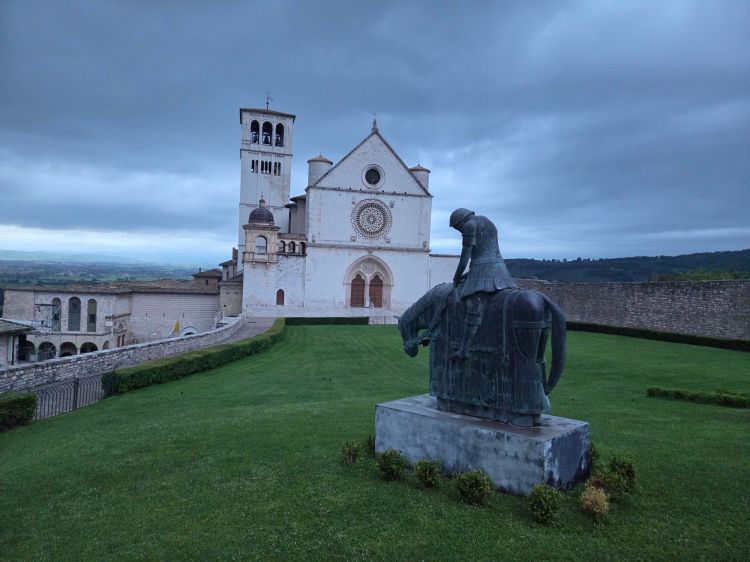
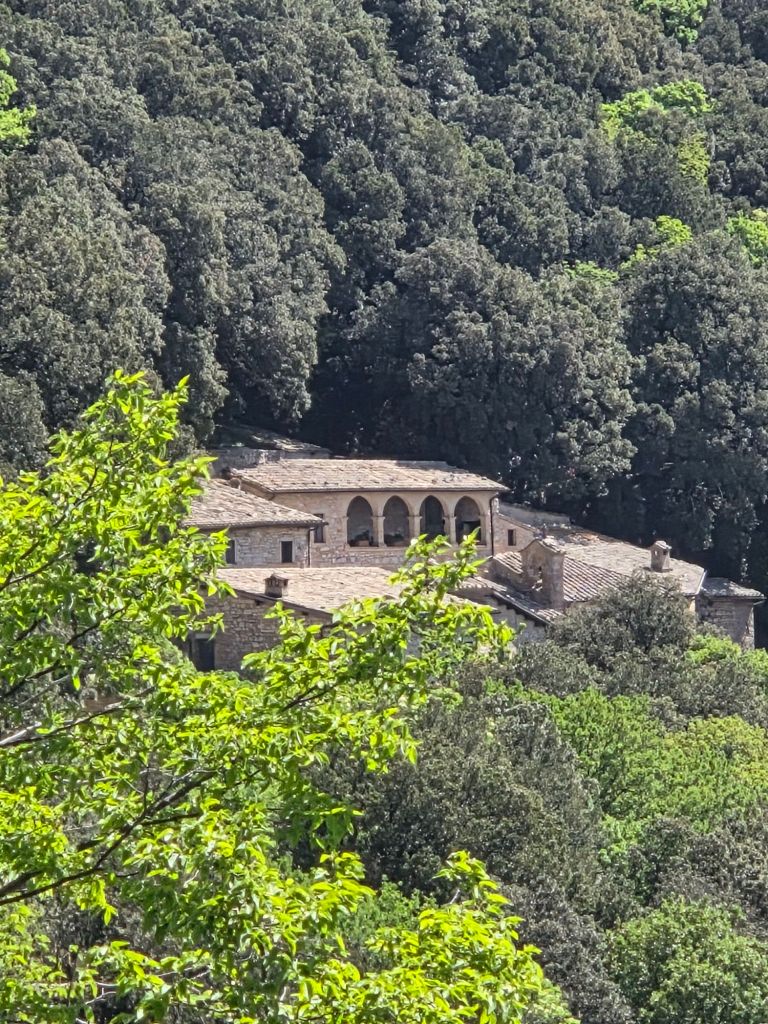
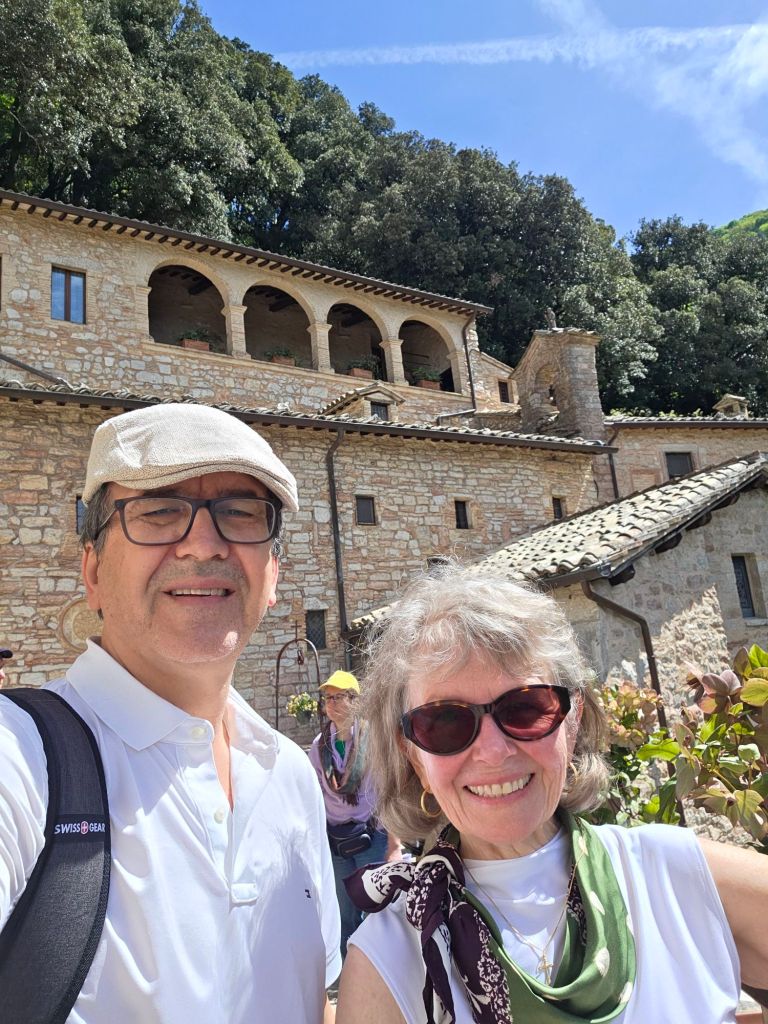
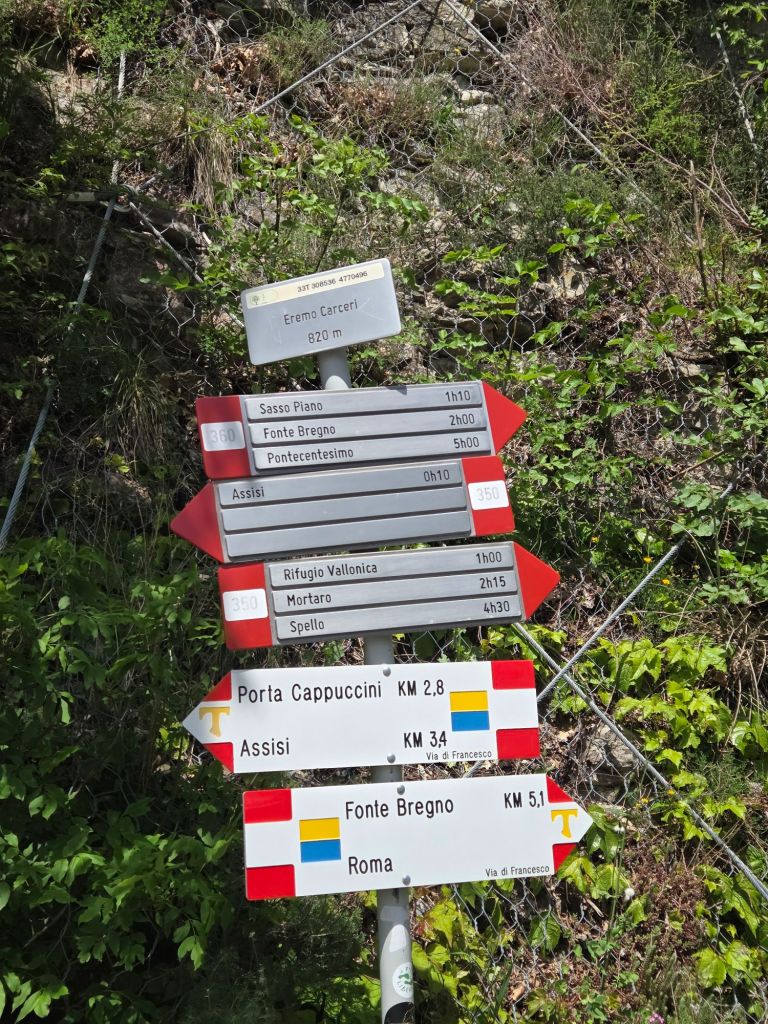
Olga and I were making another pilgrimage, to the medieval town of Assisi as part of our travels this past May. The three city trip was a return to Italy, the first ten days on our own, Assisi then Florence; the last third in Venice to meet up with Bohdan and Danya. Home of the St. Francis Basilica, Assisi is the destination of the Italian version of the Camino, La Via di Francesco, with paths traversing the Umbria countryside; the southern portion starts in Rome, the northern side can begin in Florence although officially in the town of La Verna. The last stage of the southern route winds through the town of Spello, fourteen kilometres away from Assisi. We had scouted the route as an opportunity to hike in one direction and return by taxi. Separately, we had intended as well to visit Eremo delle Carceri, a Franciscan hermitage, 4.5 km from Assisi. Both walks would be weather permitting.

St. Francis Basilica, Assisi

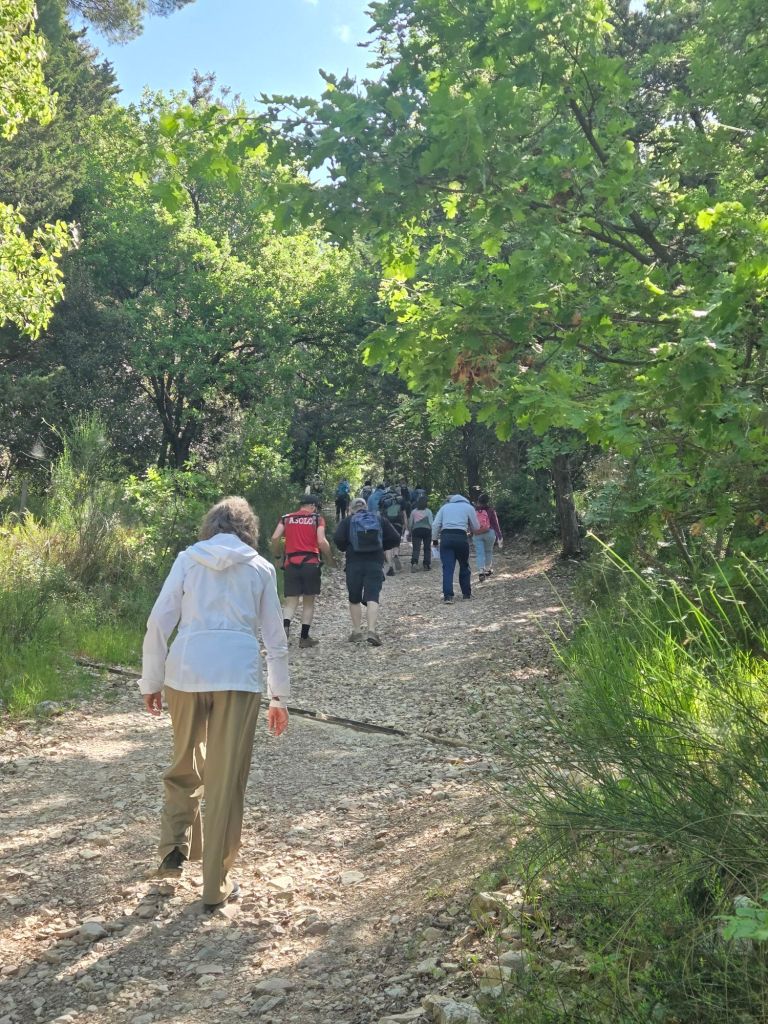
The forecast called for rain in the final three days of our stay; so, in order to ease into hiking, the plan would be to begin with a walk to the hermitage. We were unfazed by the distance, the kilometres one way something we would do on a morning constitutional with our dog, Odin. We discussed our goals with the tourism office in town where we were given directions to find the beginning of the trail. Exiting the town’s southern gate, we turned immediately left onto a dirt path that began as a continuous, gradual incline until a sharp turn onto an increasingly rocky road and a steeper climb.

Our pace  slowed into deliberate movements, leaning forward with each step, lifting one leg in front of the other, huffing after several, stopping to catch our breath after an extended exertion. A group of teenagers engulfed us, chatting and laughing and complaining, passing us, eventually disappearing around the next curve.  Later we encountered an Australian couple, our generation, sweating, breathing heavy, resting, on their way down, assuring us we were almost at the top and encouraging us to keep going – the destination was worth the effort. After a final incline, we popped onto a paved road to complete the last half kilometre to the hermitage.

The downward walk was equally difficult, navigating the large, loose stone and dirt crevices, carefully stepping to maintain balance, avoiding surges forward, scoping the most secure passage. A gaggle of 20ish hikers decked out in outdoor apparel and toting walking sticks raced past us at one point. An hour and a half up; an hour and a half down.

We realized the walk to Spello would entail returning to the same path past the hermitage with a further climb to the top of Mount Suboto. That idea was abandoned.

View along the walk to the hermitage

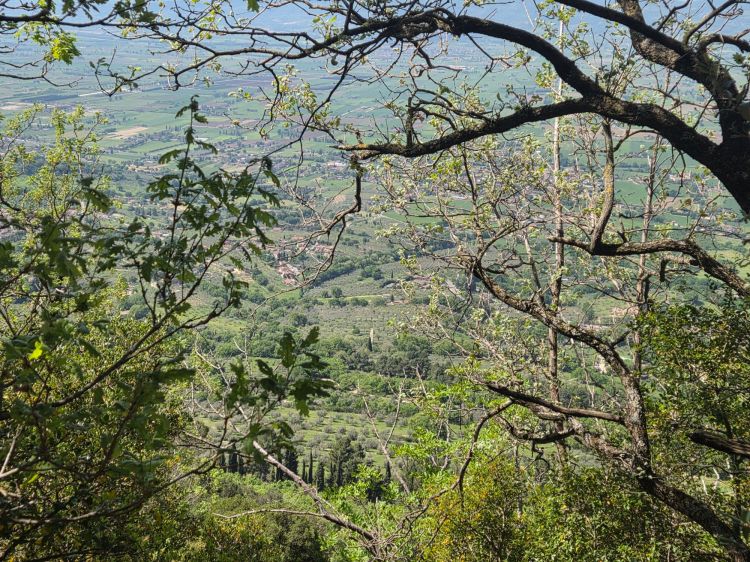
Would this short stretch define our expieriences of the Primitivo Camino? My reading suggests we can anticipate encountering  this terrain in numerous spots particularly in the early stages. I have studied the maps and I still do not have any concept of the inclines, if what we walked was more or less difficult than the roads in Spain. We climbed with no water and no sustenance, both of which would have helped. The Primitivo is described as the most rugged as compared to the French way. How does it compare to the St. Francis Way? In some respects, the path appears to be a miniature version of the Camino: up hill and down, along a wooded path of dirt and rocks, plus some distance of paved road, through towns and villages, all surrounded by gorgeous scenery overlooking a lush valley.  The Assisi experience engendered more questions than it answered.  That was 9 kilometers; how would we fare for 320 km? It illustrated how little we were prepared.

Our path forward became clear. Physically, we would need to focus on building leg strength and stamina. Longer walks over undulating terrain would be good training to achieve both objectives. Proper shoes would be of critical importance. Appropriate clothing would help endure the heat or cold or whatever the weather brings.

The first lesson meant we needed to exercise regularly, the second meant we needed to acquire proper gear. More walking and more shopping. We took the path of least resistance – and went shopping.

Canadian Tire advertised a sale on foldable walking sticks although slightly too tall for Olga. No problem, she found one on line for even less. We stopped by Mark’s Work Wearhouse with an in store discount on all Columbia attire. Two cargo pants, two waterproof jackets, two light, collared shirts, and a pair of hiking boots for me were rung into the till. Next stop, Mountain Equipment Coop, the mecca of outdoor equipment. We returned Olga’s hiking boots which were not quite right, tried on some more, and fitted a backpack for each of us. Our experienced salesperson sold us on additional gear like waterproof compartmental bags to sort and separate our supplies. Toss in several pairs of Merino wool socks and my Visa card was heating up. Two weeks later at UniQlo we discover the quick dry clothing for the wet days and the compact puff jackets for the cool nights. Constant review and re-evaluation, some return visits to all these stores and our packing list now shows more checks than blanks while our credit card bills are rising as high as the hills we will climb.

A consistent exercise and walking regiment has proven more of a challenge. Olga has mastered the most beneficial movements learned in her Yoga teacher training certifications and from her ongoing research into helpful body movements. She has carved out a routine to loosen my tight hips and stretch out my hamstrings except my lack of discipline has meant spotty times of practice. On the other hand, I walk Odin twice a day, exceeding 10,000 steps, or approximately 8 km. Olga has typically only participated in the morning outing which we have gradually increased each week. Inclement weather heat waves, and visits to the cottage have curtailed our walking efforts such that we have reached 21 km only once, the  average daily distance needed to complete the Camino in our self imposed time.

I have no concern with Olga physically completing the Camino. She is in tune with her body and what it needs. Me on the other hand….

Confidence. Belief. Faith.

We have been working on that aspect of our preparation for some time.

Camino Primitivo

There is no turning back now, the tickets have been purchased.

AC824, seats 26A and 26C, September 2, Toronto to Madrid. A short subway jaunt the next morning to Madrid Chamartin in time to catch the 11;23 train for a 3.5 hour ride to Oviedo where our pilgrimage to Santiago de Compostela begins.

In truth, Olga and I have been thinking about this venture for at least two years only committing ourselves last October to a Fall 2025 attempt of the Camino without immediately identifying the specific route or the precise dates. We are not getting any younger and further delay would increase the odds of not reaching our goal; not so much a bucket list check mark as a calling to follow the spiritual path to the mortal remains of St. James purportedly to have been buried in the cathedral on the Iberian peninsula. We spoke with friends and relatives of our intentions when asked about future travel plans, all the while searching the internet for more details on the possible routes and the necessary preparations.

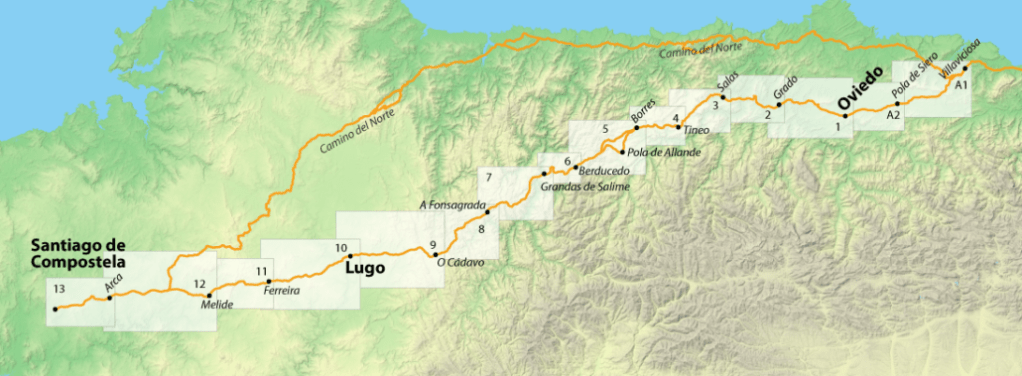
The most famous path, made all the more popular with the release of the 2010 movie, The Way, starring Martin Sheen, is known as the French Way, beginning in Saint-Jean-Pied-de-Port, through the Pyrenees, spanning 800 kilometres across France and Spain. Another path traverses the northern coast of Spain; a third begins in Porto, Portugal, following the ocean shoreline; a fourth, the least busiest, the most rugged, and by many accounts the most beautiful, is the Camino Primitivo or the “Original Way”, the oldest official Camino route. The typical starting point is Oviedo, the capital of Asturia, 320 kilometres away from Santiago, a seemingly doable distance for an expected two week trip. The seclusion and length appealed to our sensibilities so Olga and I began searching You Tube for videos to enhance our understanding of what to expect. We followed the journey of one young couple, marvelling at the scenery, awestruck by the views, shuddering at the daily mileage, laughing at their experiences. Having walked each of the four most common Camino routes, they declared the Primitivo to be their favourite. We were convinced.

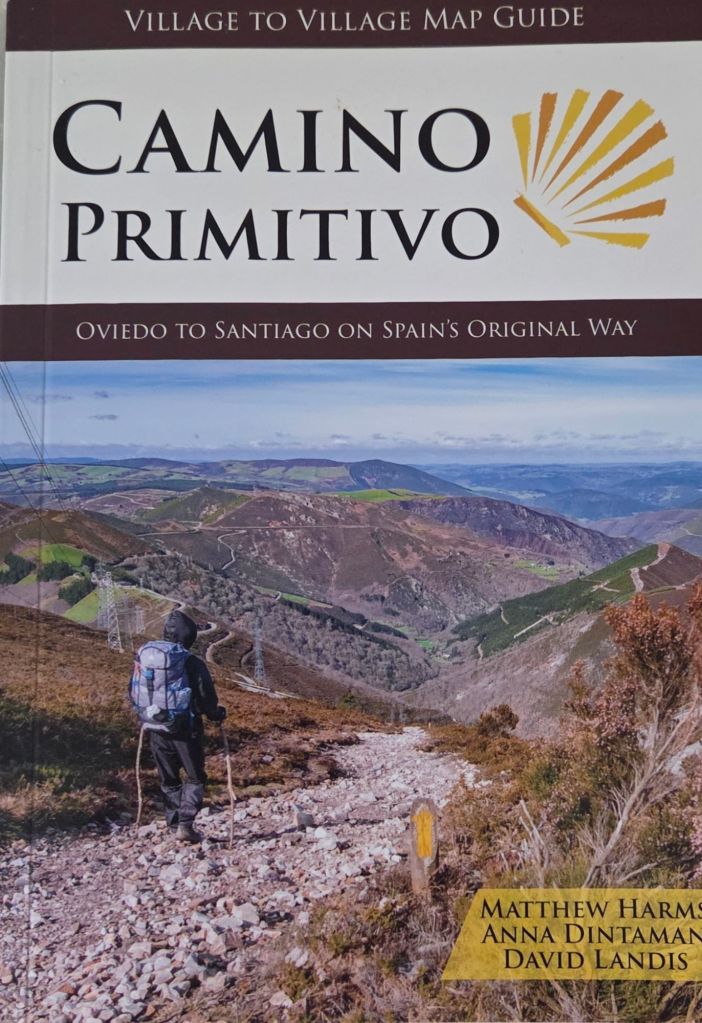
The first decision complete, Olga and I began our exploration into all things Camino Primitivo. I ordered a village-to-village map guide chock full of information about distances, elevations, road conditions, amenities, services and history. I read the 64 page booklet in detail, imagining the trek, scoping the accommodations, contemplating the daily experiences. The packing list began the consideration of equipment, what we currently owned, what would need to be purchased.

Olga discovered a Facebook page specific to the Camino Primitivo, populated by previous, current and expected pilgrims, providing advice, displaying accomplishments and asking questions. How long is needed for the full distance? What can a person expect for weather? Any recommendations of shoes, backpacks, sleeping gear? How would a senior couple fair given the conditions? There were several postings daily in the fall, helping us to better understand the route and our needs. Still, by Christmas, the only concrete acquisition was a head lamp, suggested gear for those early morning starts, something I requested as a gift from my secret Santa.

We would need to average 25 kilometres a day for fourteen days if the intent was to follow the stages as set out in the guide. Practicing to walk that distance would need to be delayed until later given the winter snowfall in Toronto, although walking Odin provides a foundation. The time was drawing nearer, the trip still a plan, the preparations still in infancy.

In the spring, Rachel and Zachary announced their wedding for October 4, clarifying our next decision. We would schedule the pilgrimage in September, avoiding the heat and crowds of summer, still on the tail end of high season, before the inevitability of regular rain. We remained unclear on the number of days needed so hesitated to pin down anything more specific. The Facebook page picked up steam again, spouting a raft of advice – give yourself a day to recover from jet lag; it is not a race, enjoy the environment; allow for a break once in a while to recover; obtain an app to carve out your own pace; be sure to arrive in Santiago in time for the pilgrim mass at noon each day. Some self-doubt was also beginning to creep into our thoughts. How will our aging bodies react? What will happen if we have over estimated our own physical abilities?

Slowly we came to the conclusion that we need to schedule a three week trip, allowing for buffer days to account for needed extra time. On June 16, Olga and I sat down at the computer, pressed the buttons, and laid down a credit card to secure a return flight to Spain, September 2 to 24, 2025.

That decision opened the flood gates of even more decisions, including my own to mark this pilgrimage with posts about the preparation, the journey and the aftermath. For followers of Wonderings, I have created a separate category, Camino Primitivo, to house the story. I hope you will enjoy our journey.

Buen Camino
Hockey morning in Canada

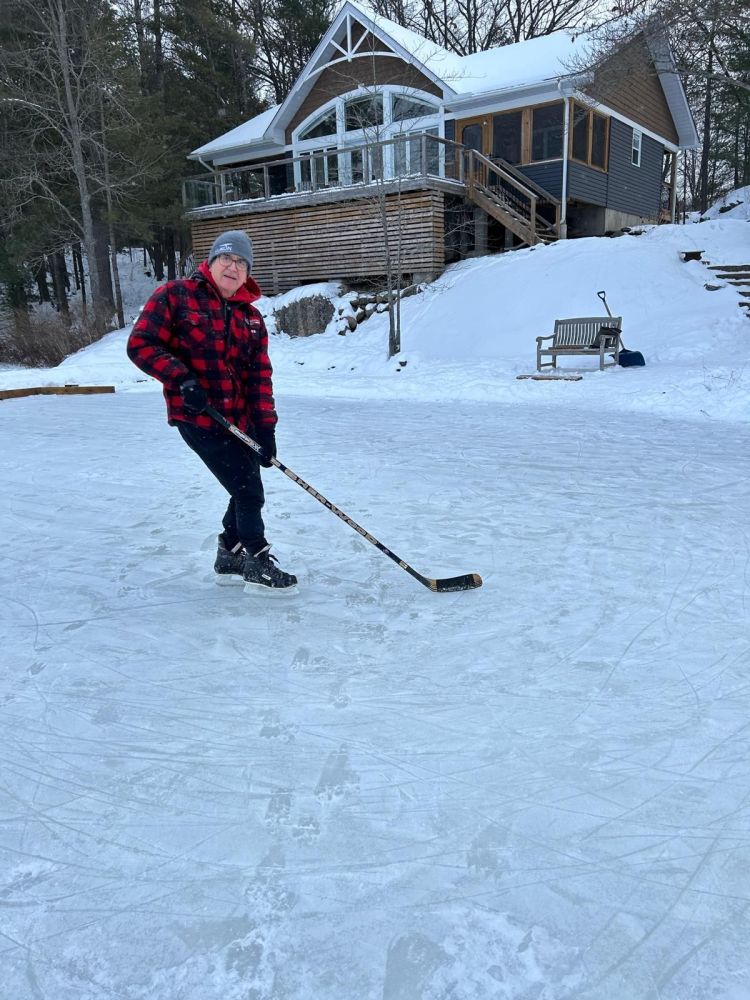
Odin has been patient, waiting quietly until we rolled out of bed a little later than usual. He noses the back door, exits quickly in order to conduct his business before a yelp to open it again for re-entry. Odin swallows his breakfast; time for play.

The temperature is warmer than most mornings this week, -8 Celsius, having risen from a low of -14 overnight. I flooded the rink for a second time yesterday at dusk in anticipation of the cold, hoping to smooth out the last wrinkles. The expectant precipitation was supposed to be nominal, snow showers, according to Environment Canada, one of those moments happening as I ponder the conditions. No time like the present.

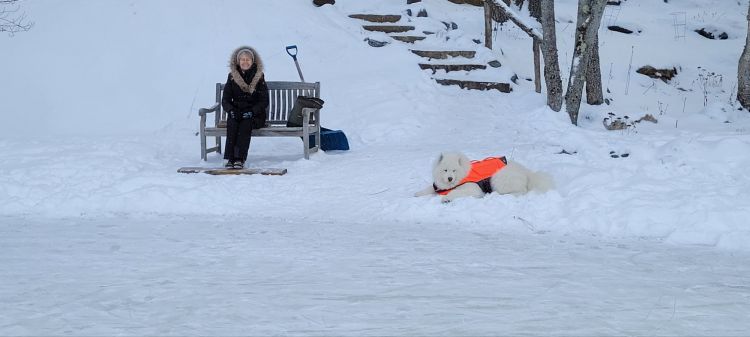
Odin bounds out the door, florescent vest strapped around his body – better to see you, my boy – following me to the basement to fetch my equipment and eventually to the edge of the rink, excited to begin. The past week has been in preparation for this moment. I have shovelled and watered and coddled the ice each day hoping to reach the point of skateability. I am not expecting Maple Leaf Garden quality, lake rough will be an accomplishment.

I prop the boots upside down on the bench to prevent the snowflakes from nestling at the bottom. The extra thick socks require more push into the skate as I lean back, stretching the lace taut before securing them with an especially tight knot on each foot. My skates have not been sharpened in years, assuredly dull from the hardness of outdoor ice, so my strides are strained, an ache in my lower back, my feet hurting.

Without thinking, I circle the rink withershins, bouncing the puck off the boards, picking it up for another round, repeating slowly. Odin decides he wants to join in and gingerly crosses to intercept me on the other side, sliding past with my sudden stop. Undeterred, Odin scrambles back, persists with his nose close to the surface, pawing at the black biscuit as I slide it between his legs, an intermittent bark in frustration before his head pops up and he parades the puck in jubilation. His success acknowledged, Odin plops the puck at my feet to await the reward, a doggie treat, before the game begins again.

Olga, my loyal and faithful fan, ventures out to her seat, quietly cheering, laughing at the antics, commenting that the ice looks good. The scene is idyllic. Snow blanketing the landscape, gently fluttering from the sky, the serenity of winter morning interspersed with the sounds of pond hockey on this Canadian morning.

After an hour the game is over. Olga has since returned to the cottage to get breakfast ready; Odin is ensconced in the snowbank on the sidelines, knawing on the spare puck. The first skate complete, hot oatmeal and some pure maple syrup awaits.

Ever since we rebuilt the cottage, winterized for twelve month usage, I have made the effort to construct a skating rink on the frozen waters of Loon Call. The challenge with weather and inconsistent visits have made each year an adventure, sometimes without success. I have learned from mistakes, experimented with improvements. This year I have plunged the manual auger at centre ice for the submersible pump and focused on thinner layers of water deliberately dispersed to build the base. And a new piece of equipment, the battery operated, self-propelled snow blower has saved this aging body.

The snow is falling more steadily, heavier now. The weather network warns of 5 to 10 cm by tomorrow with the temperature rising to 1 degree. There will be a good chance the combination will make for slush once the snow is removed, which will require a few waterings before the rink becomes skateable again. The next hockey game with Odin is probably a couple mornings away.

No matter. The effort will be worth the joy.

Bricks and Souls

We had gone around the table, asking each of my cousins from the van der Weil family for one word to describe Oom Cees. Finally coming to Margaret, she proclaimed, without hesitation, “modern ideas”.

Olga and I were in the Netherlands in part to meet with my relatives and to conduct some research into the life of Fr. Cees de Cock. The van der Weil siblings are older and in one of the best positions to remember him, everyone with a story, many with a photo or an artefact of significance. My cousins and their spouses gathered in Trus’ home, the eldest, in Tilburg, for some coffee and drinks and pastry. It is a family which loves the opportunity to get together and a visit from a Canadian cousin seemed as a good a reason as any. Most answered the describe-in-one-word question with predictable adjectives – integrity, modesty, humility. Margaret’s words did not truly resonate until last year when I was reviewing the material in preparation my visit to the Mill Hill archives and our return to the Netherlands this past spring.

In advance of our arrival, I wrote to Margaret to ask what she meant, could she elaborate. Not surprisingly she could not recall her answer eight years earlier. Thinking back, Margaret wrote she may have been attempting to express the notion, open mindedness. “He was not a missionary who started preaching strict rules of the Catholic Church. Of course he did preach the Christian faith. And he put the Christian faith into practice, literally rolled up his sleeves himself. And that appeals to people. Anywhere in the world.”

In April, the family was again gathered, this time at Margaret’s house in Waalwijk. And as per these reunions, there was plenty of stories and laughter, remembering the past. The topic of conversation inevitably led to Oom Cees. Geert addressed me directly, wanting to expound upon Margaret’s response to my inquiry. Clearly they had been talking about my question. Geert viewed Oom Cees as a missionary more concerned with work that contributed to the lives of the people, supporting them with the development of buildings and schools and hospitals rather than focusing on saving their souls. The explanation was aligned with my own understanding.

Recently, I was reviewing material from my week in the archives. The discoveries included reports on the conditions of Uganda for the clergy and the people. I did not read them in detail at the time, instead electronically scanning them for future reference to help place the life of my uncle in context. One such report for the Diocese of Tororo in 1956 by the Society Superior, spent several paragraphs briefing the Superior General on “Spirituality”. In his opinion, many of the Fathers were lacking in the spirit of piety, not deriving inspiration from spiritual exercises such as community prayers, meditation, or mass; rather, they gave preference to external activities, not properly priestly, such as building. As one piece of evidence, the Society Superior observed priests, both old and young, “rarely entering the church for a short visit to Our Lord despite passing the church several times in the course of the day’s work”.

“To put it rather bluntly, some prefer bricks to souls, finding perhaps the former more pliable than the latter.”

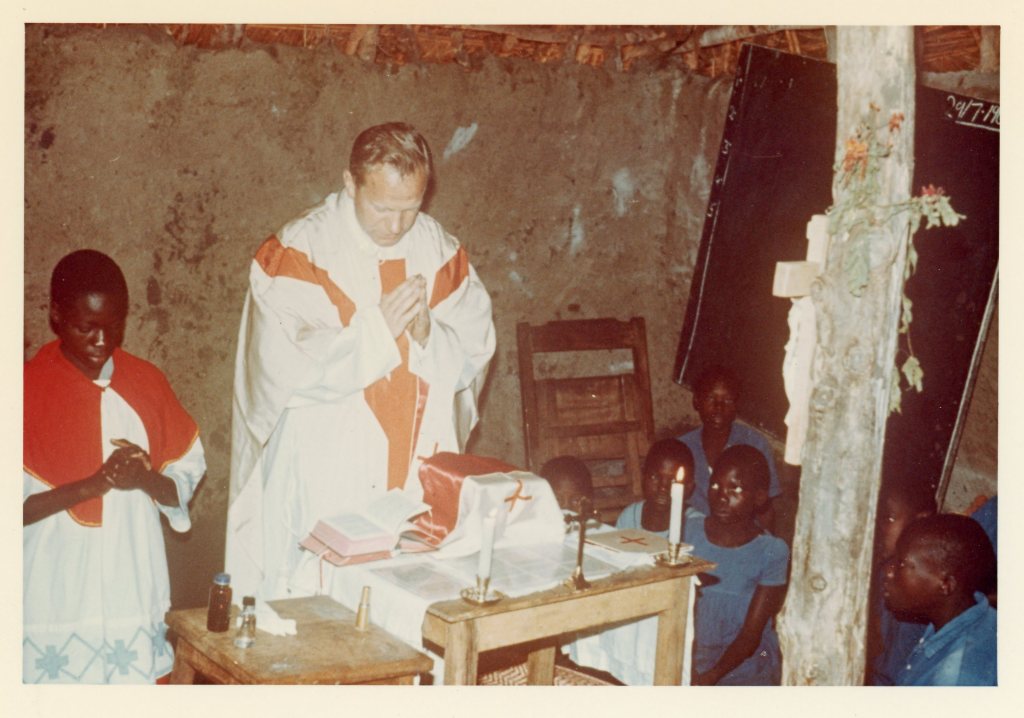
Uncle Cees would likely have been considered amongst the young at the time of this report. Freshly ordained, Fr. Cees de Cock arrived in 1947 at the age of 25, and similar to other new priests, he moved around among the various parishes as a temporary curate, replacing those on scheduled or medical leaves. Whether he would have been amongst the ones who preferred “bricks to souls” may not have been evident to the Society Superior. Uncle Cees was on home leave in that year and given his “spare part” assignments, may only have been involved in the ongoing projects started by the residing pastor.

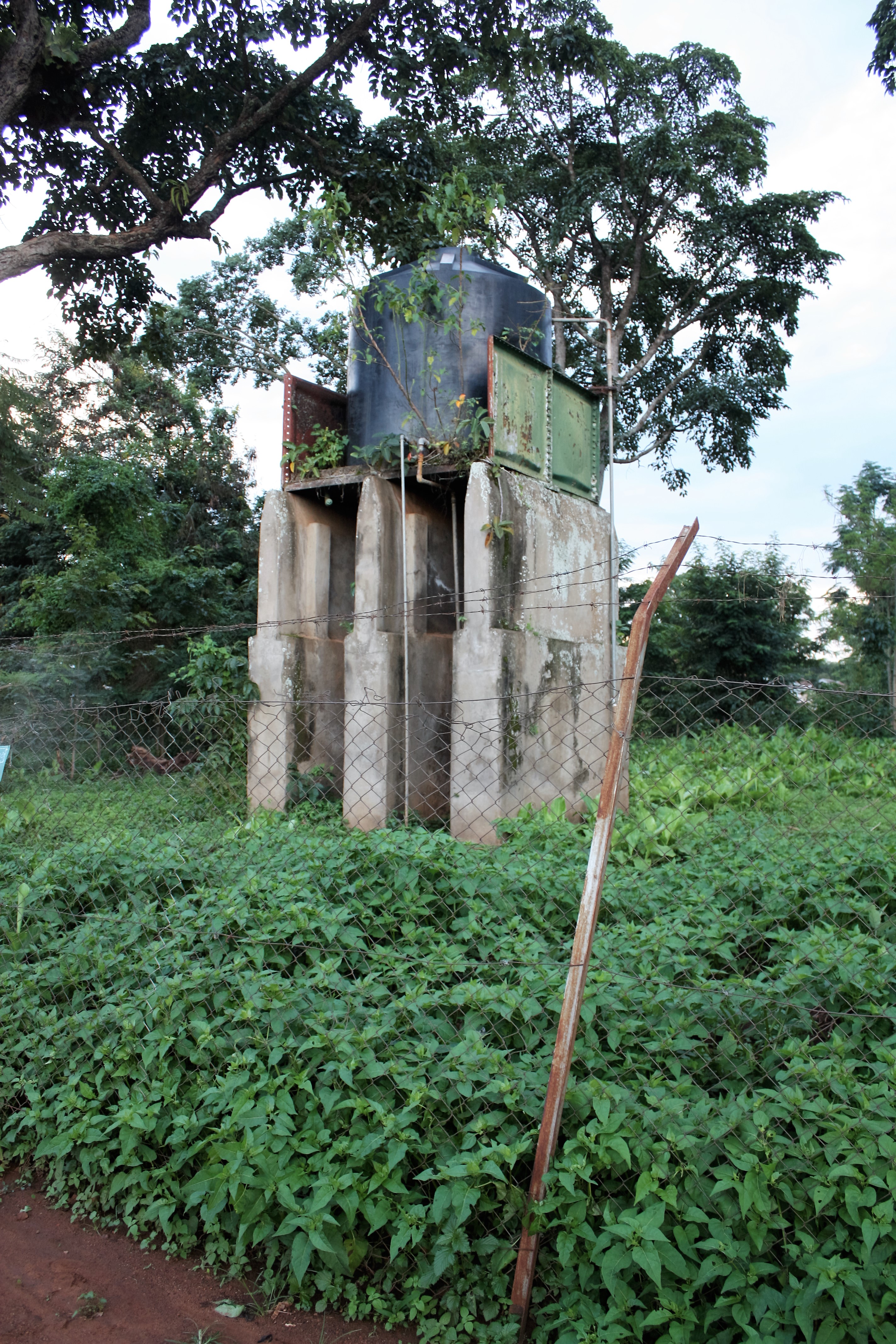
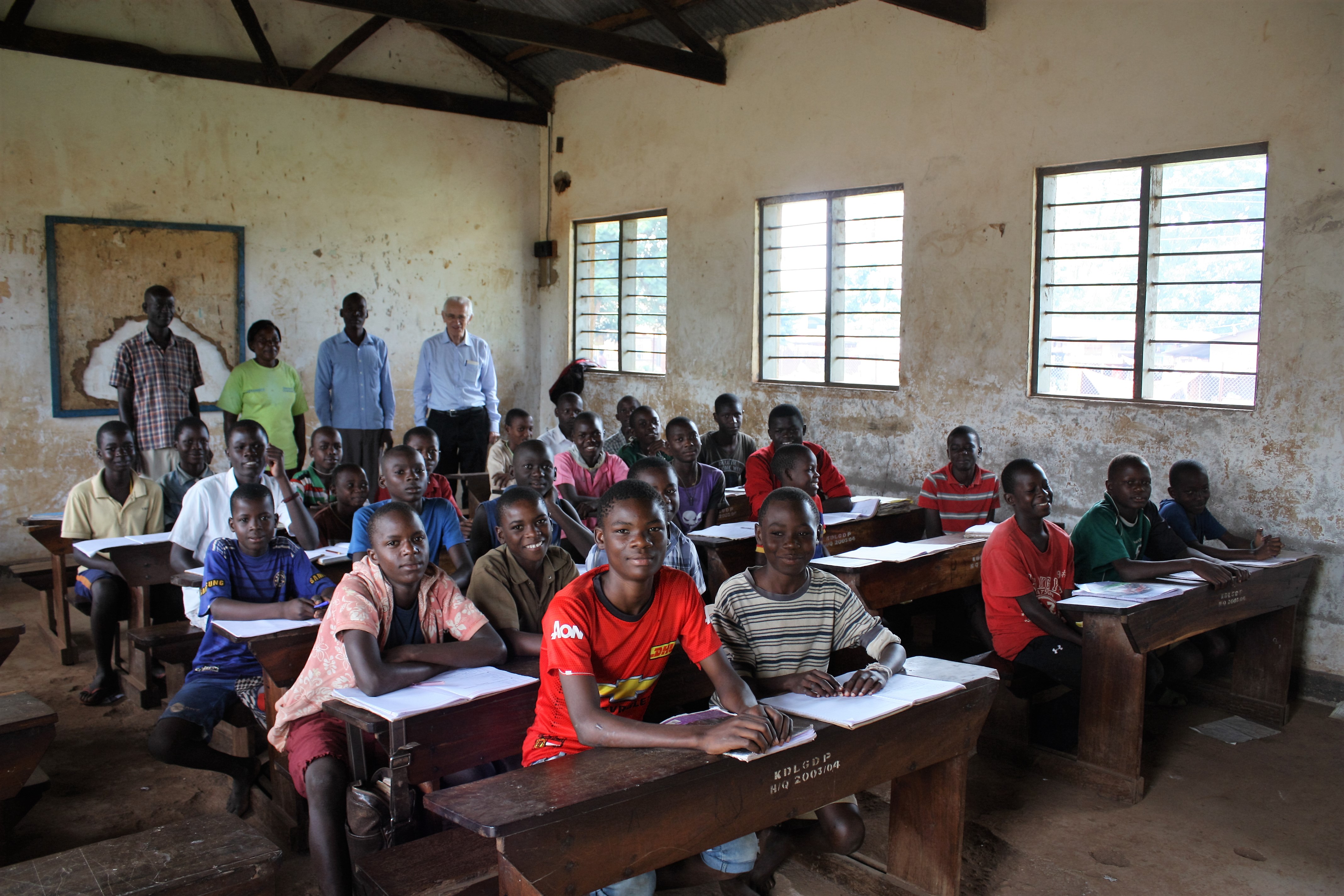
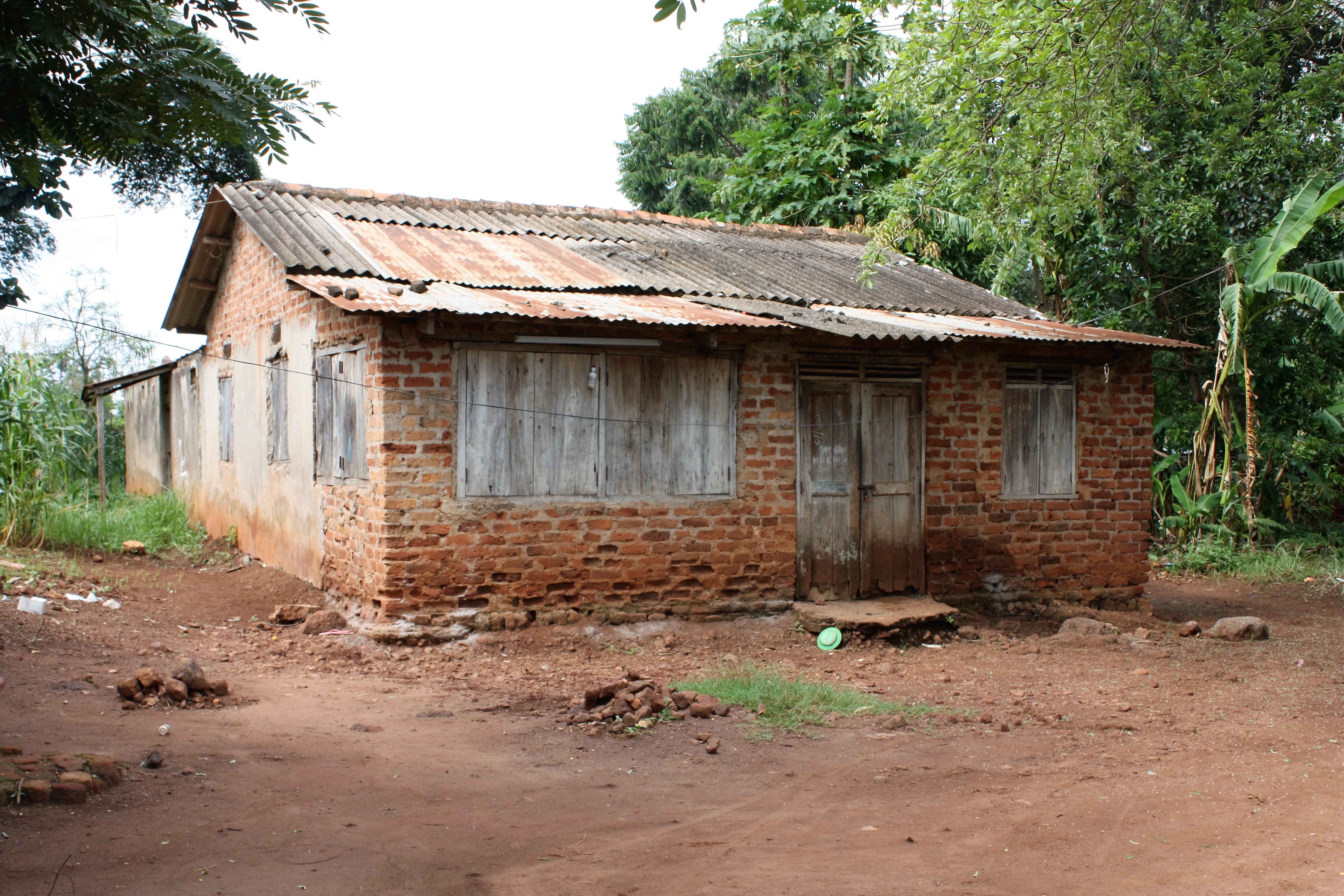
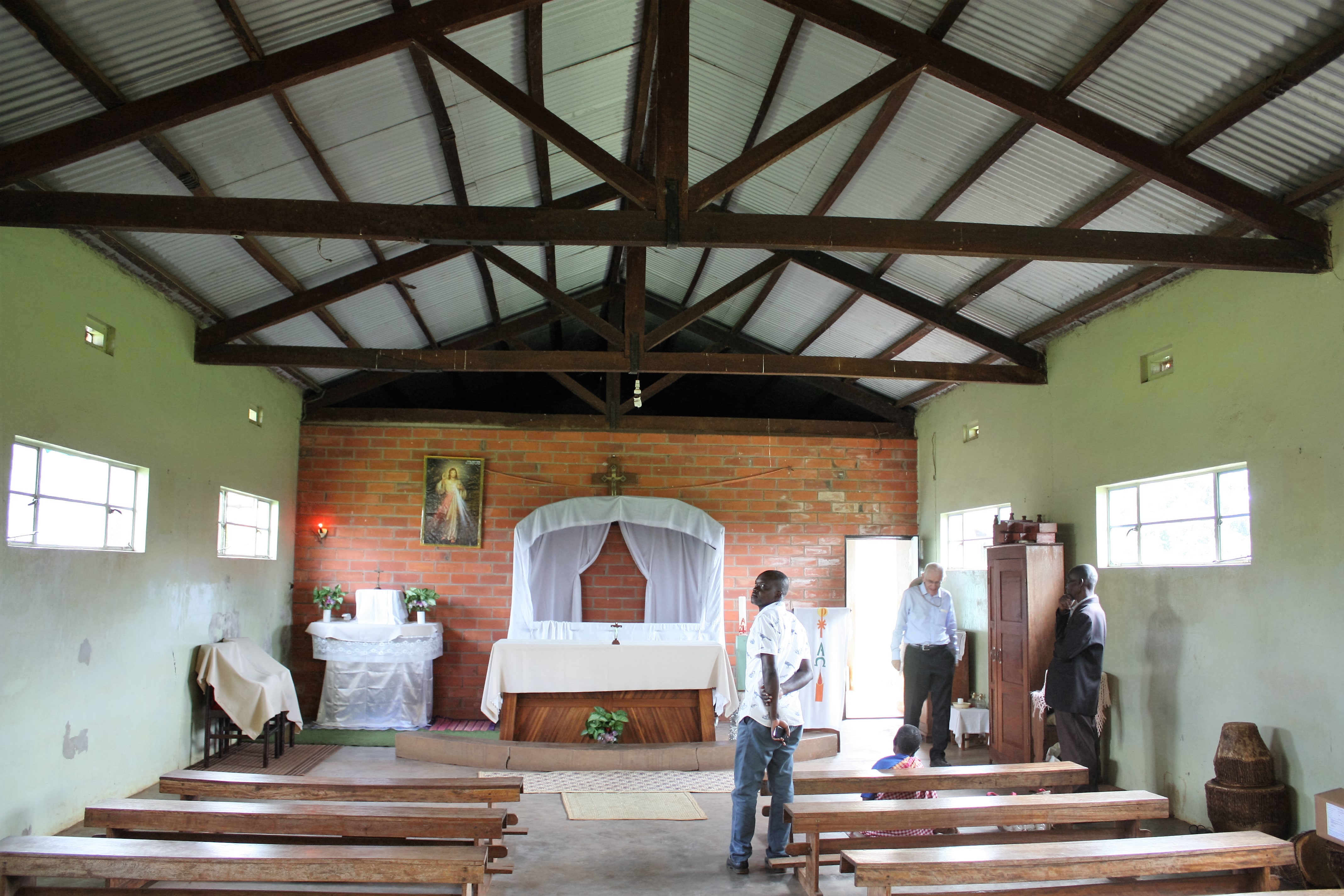
In 1957, Fr. Cees de Cock became the pastor for Kamuli Parish where he remained until his untimely death January 2, 1981. Uncle Cees was responsible for a long list of accomplishments in those 33 years many of which were provided to me with much enthusiasm and pride during my very brief visit in 2017. The “Late Rev. Fr. C. De Cock’s Profile in Kamuli Catholic Parish” described him as possessing “many practical skills”, including, Engineer/Mechanic, Builder, Plumber and Hunter. He was responsible for the Lubaga Boys Primary School, St. Pius X Junior School, St. Francis block in Kamuli Mission Hospital, the water pipes/system for Kamuli Mission Hospital, the Headmaster home for St. John Bosco Secondary School, and the De Cock Memorial Hall so named in his memory. His talents were utilized to establish churches at Nawanyago, Matuumu, Kidiki, Balawoli, and Bugulumbya. During my visit, Stephen Dhizaala and Fr. Wijnand Huis guided me on a tour to a handful of examples of the local development.

Simultaneously, Fr. Cees de Cock was revered as a priest and a person, one who was an integral member of the community, a spiritual leader remembered for his generosity, his humour, his quiet demeanor, his dedication to the people. Mention of his priestly obligations were numerous although his willingness to work with them, his effort to be one of them, his respect for them comprised the sentiments they wanted to impress upon me on that auspicious day.

Uncle Cees appeared to be a priest in mind and practice consistent with the words of Herman Hofte, a classmate and fellow missionary in Uganda. In his depiction of the work, Fr. Hofte attended to the priestly functions – mass, confessions, baptisms – but thought missionary work was mostly about Christians living as an example, as part of a “welcoming church” for those who became interested. Fr. Hofte spoke about people working behind desks, who invented the rules, whereas he found the practice of daily life much more important.

In my estimation, the Society Superior misread the activities of the missionaries he observed. Rather than preferring bricks to souls, they won over souls in tending to the bricks.

An academic interpretation of missionary work  would suggest that the act of  building was a tactic for the long-term strategy of conversion to Catholicism. Indeed, the intent of the church in Uganda  would follow this logic. And it would be naive to believe this goal wasn’t their aim.

My reading of the individual priests and brothers, however, suggests the experience of living amongst the Ugandan people converted many of the missionaries, a transformation of their own souls to a personal destiny to support the needs of the communities they served. The schools and the hospitals were built for the community regardless of religion. The inadequate infrastructure was not being addressed by the government or any other social agency, so the missionaries stepped up and were able to contribute. Yes, the churches they built were Catholic although I can speculate with confidence that credentials were not checked at the door.

Uncle Cees happened to be in the Netherlands when Idi Amin staged the military coup to attain power. The gravity of the situation would have handed him an easy excuse to delay or cancel any return to what would become several years of terror. Instead, he made arrangements immediately to fly to Uganda, to the diocese, to the people. Francis Isabirye related this story during my visit as evidence for Uncle Cees’ love for the people. From the outside, Francis emphasized, he could be conceived as a mad man or a very foolish man; yet, he defied conventional logic so he could be with his people.

In an earlier letter exchange with Cees van Deursen, I had asked what he recalled as my Uncle’s approach to Catholic theology. Dr. van Deursen couldn’t answer directly except to compare Fr. de Cock’s approach to his own uncle, a Benedictine monk who preferred working to praying, adapting St. Benedictine’s adage, “ora et labora” (pray and work) to ‘my working is praying”. My Uncle, according to Cees, operated in the same manner.

I am reminded of the words written by Bishop Willigers in memory of Fr. Cees de Cock, a tribute which continues to shepherd me in this journey of discovery: “Those from Kamuli recognized in Cees what a true priest really is according to the model of our Lord.”

Margaret remembered Oom Cees as a serious student of the faith with a deep understanding of the Bible. She recalled a story whereby Oom Cees greeted a Jehovah Witness couple at the door where he was residing while in the Netherlands. The pair cited passages from the Bible, largely Old Testament, which portrayed a foreboding of doom and the need for salvation to which Oom Cees listened and responded with other quotes on the same subject that contained a positive message of hope. “In any case, he was an intelligent, wise priest. It was always very nice and easy to listen to him, for everyone. He also was an ordinary and modest man; close to the people and I think open minded in his time. Maybe that is why I called him “modern”?”

Uncle Cees helped build a community with bricks and shaped the people’s souls. The buildings may crumble but his soul will be remembered.

Even so faith, if it hath not works, is dead, being alone. Yea, a man may say, Thou hast faith, and I have works: shew me thy faith without thy works, and I will shew thee my faith by my works. James 2: 17-18. King James version.

Blood Lines

Are you feeling well today?

An easy one to begin the online eligibility questionnaire. Heck, if I wasn’t felling well, this blood donor appointment would have been rescheduled to another time. It will be the only question to which I answer “Yes” today.

In the last month have you taken Toctino, Hanzema or alitretinoin?

I don’t even know what those medications are for? Nor Proscar, Propecia or finasteride, Avodart, Jalyn or dutasteride. I seldom succumb to Tylenol or Aspirin and certainly not within three days of donating.

In the last 6 months have you consulted a doctor for a health problem, had surgery or medical treatment?

One of the reasons I have been able to give blood continuously is my good health. I have been fortunate, rarely visiting a doctor, using these blood donor appointments to track my blood pressure, at least when that testing was part of the procedure. The nurse would strap the device to my upper arm, pump in some pressure, then slowly release. 120 over 80. Pulse 63. I had no idea what the numbers meant but the nurses never appeared alarmed so I assumed all was good. The pulse has always been on the low side, a nurse asking once if I worked out because I had the count of an athlete. That comment made me smile. I don’t know why they stopped.
In the last 3 months, have you had a new sexual partner?
In the last 3 months, have you had more than one sexual partner?

In the last 6 months, have you had sex with a sex trade worker or anyone else who has taken money or drugs for sex?

What happens if a donor answers “yes” to any of these rather personal, seemingly intrusive questions? I have never found out, happily married for 41 of the 46 years in which I have been donating.

I donated my first pint of blood at 18, the minimum age in 1978. My dad drove me to a permanent clinic at the London Health Centre on Commissioners Road. He would roll up his sleeve regularly when the Red Cross set up a clinic at the 3M plant where Dad worked. He would boast that the workers from the plant would outnumber the donors from the office, as a testimony to the superior virtues of those in the working class. I don’t know how many units he donated or recall how long he continued to give.

My volunteering in the early years was scattered, relying primarily on King’s College at the University of Western Ontario to host a clinic which occurred in the Spring and Fall semesters. The waiting time in between donations was three months (now two), amounting to four possible donations (now six) in a calendar year and only if the first occurred in very early January. When Olga and I moved to Toronto in 1984, the nearby shopping mall, Sherway Gardens, regularly held a clinic in the round court in front of Hudson’s Bay. I attended inconsistently, depending on how the timing intertwined with my schedule.

In the last 3 months, have you travelled outside Canada and the US?
In the last 8 weeks have you travelled outside Canada?

Answering “yes” to these questions over the years has prevented me from giving more blood, accounting for some of the gaps in my donation history. Nurses would consult binders to ascertain the trouble spots, looking at each city I visited on trips to China. My excursions to African countries almost always lead to an additional three or six month wait, depending on the prevalence of malaria. Our yoga retreat vacation to India in 2019 had me sidelined for a full year afterwards.

A few more questions to answer.

I have not taken any illegal drugs with a needle, handled monkeys or their body fluids, have not been in jail within the last six months, or attempted a donation at Hema-Quebec. Check off that I have answered all questions truthfully. Done.

Now the nurse begins the next step: determining my hemoglobin count.

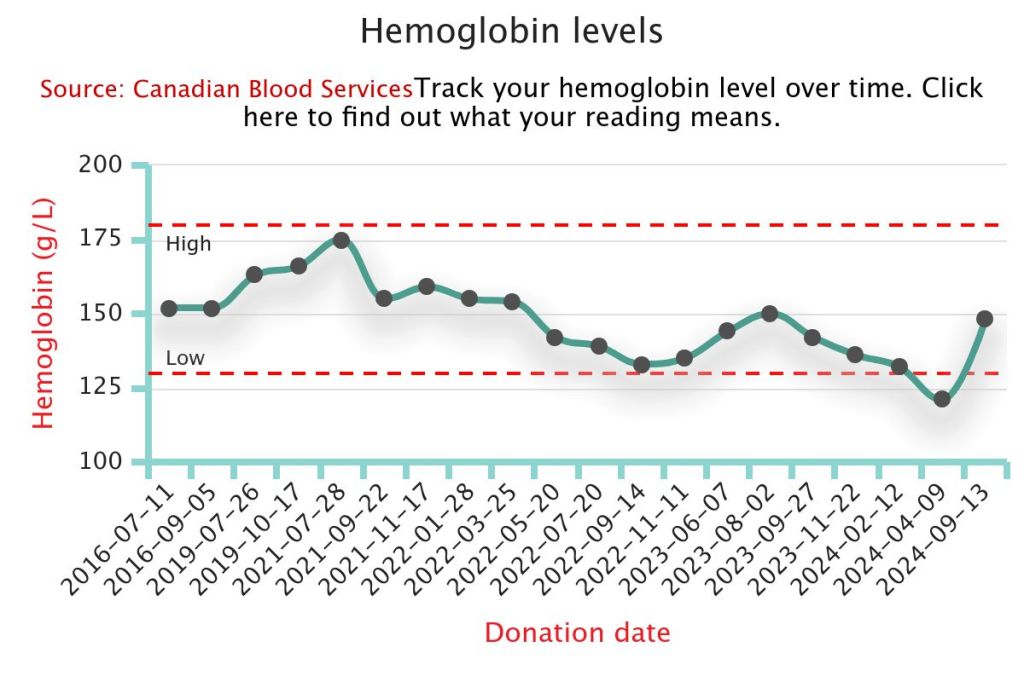
She pricks the tip of my left middle finger, squeezes a couple drops onto the plastic slat before sliding it into the tiny medical unit. Below 130 and males are unable to donate on that day, something that has tripped me up a couple times, the last in April. Not enough iron in the blood, sometimes a function of giving too often so I decided to take a break. Being a statistics guy who loves charts, I was excited to discover these numbers get posted on MyAccount, in a graph, so I can detect patterns. My hemoglobin bounced back in September. Today the count is 135. Good to go.

I am escorted to the next station and get comfortable in the reclining, lazy boy chair.

Would you like to use your left arm or your right arm?
“Whichever one you can find a vein?”
Audrey laughs.

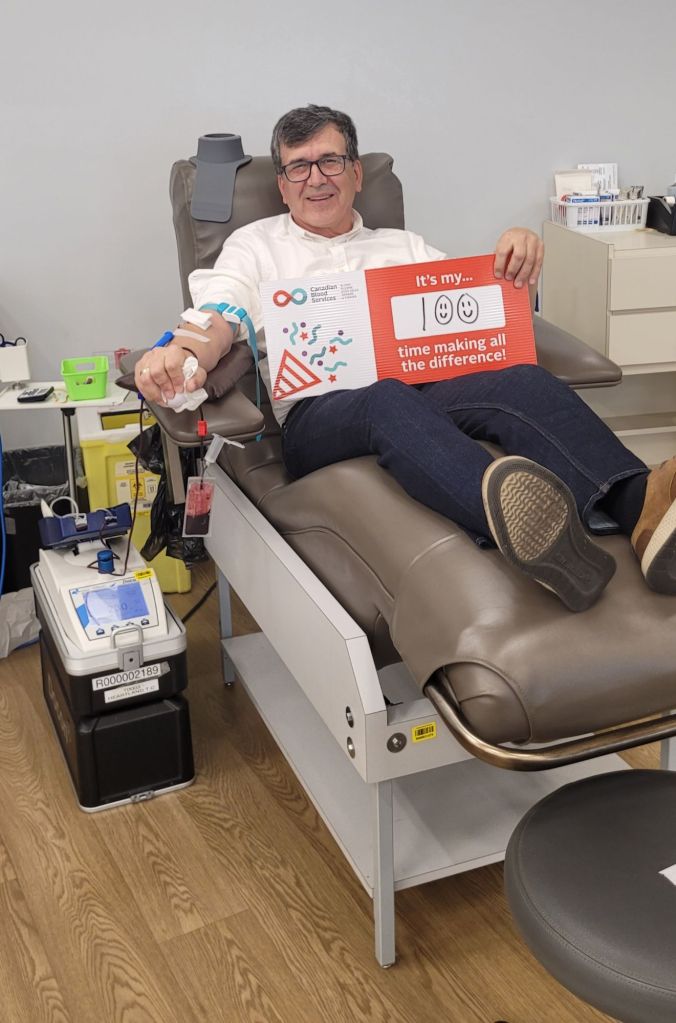
She begins reviewing my particulars and realizes I have reached a milestone donation. Audrey  gets excited…. and nervous, so she says…. because she wants to make sure the needle finds a good vein the first time. I never look. I just wait for the stab, then look over. Success. The blood snakes its way through the line to the waiting plastic bag oscillating up and down and up and down.

When Nicholas and Olena were young teens, I had attempted to generate interest in donating by asking them to accompany me on a few evenings at Sherway Gardens. The space was open so they could watch every step including the size of the needle shoved into the crux of the elbow. It is wide and imposing and if you are afraid of needles, as both my kids are, then this procedure will definitely scare you away. Neither have gotten into the practice.

At university, I had convinced Olga to join me at a clinic, you know, like every other dating couple. The nurses had difficulty finding a viable vein. Olga felt unwell through the process and needed help off the bed. She had such difficulty the nurses suggested not giving blood again as I supported Olga down the stairs to the parking lot for the drive back to her apartment. She has not attempted to give blood since.

I chit-chat with Audrey about her day, the weather, the news; all the while she draws several samples into glass tubes for testing, checks the flow, checks how I feel.

Seven minutes later and my 100th donation is complete.

Time for some salty snacks, the one time I can eat potato chips for health reasons.

My blood type is O negative, one of the more rare possibilities, found among only 7% of the population. Those with O negative blood have been dubbed, Universal Donors, because 100% of people in Canada can receive it, a fact especially useful in an emergency. O negative donors represent “a small percentage with a huge impact”.

I don’t recall ever knowing the blood types of my parents. My dad had black hair and brown eyes. I am the only one of the four boys with black hair and brown eyes. My three brothers are all O positive, so given my other features, it stands to reason I had also inherited Dad’s blood type. Or maybe it was my mother’s blood passed down the line. It doesn’t matter.

I volunteer to donate because I can. The process is simple, involving an hour every couple months. My next appointment has already been scheduled for January. And given the rarity of my blood and its universal usage, I feel obligated.

Donating blood is one way I can be of service.

Imprints

The Ones Beatles show began with three questions for the Roy Thomson audience:

Where were you when John F. Kennedy was shot?
Where were you when man first landed on the moon?
Where were you when the Beatles played the Ed Sullivan show for the first time?

November 22, 1963. I have no clue, the tragedy not registering for at least another decade.
July 20, 1969, 10:56 pm. I was asleep on the floor in front of the television. My parents had allowed us to stay up to witness the historic event except I could not keep my eyes open, relying on replays on the CBC news in the following days.

However, images of the Ed Sullivan show which aired February 9, 1964 flash into my head, the four lads from Liverpool, live, barely heard above the din of screaming fans. I would have been only 3 years, 9 months, most likely in bed, an improbability that I could remember anything from such a young age. Yet, the visual persists. Was the memory a function of repeated broadcasts years later? Did we own a television given that my parents took out two mortgages to buy the house on Kostis Avenue? My mother had always been a woman fascinated with gadgets, interested in acquiring the latest, particularly in appliances. The infancy of mass television programming would have been the experience she craved as a stay-at-home mother of three boys under four, the proof of succeeding in a new land, what her siblings back in the Netherlands would not have owned.

As the program proceeded, nostalgia overwhelmed me. The band performed, in order, the songs of the Beatles which reached Number One on the American Billboard Hot 100. Photographs displayed on the screen accompanied the note-for-note rendition beginning with “I Want to Hold Your Hand,” which vaulted to the top spot on February 1, 1964, remaining there for seven weeks. I recall the song being a favourite for Mom.

I could hear her voice singing to each subsequent hit.

She loves you, yeah, yeah, yeah

Say you don’t need no diamond rings and I’ll be satisfied
Tell me that you want the kind of things money just can’t buy.

When I’m home everything seems to be right,
When I’m home feeling you holding me tight.

Baby says she’s mine, you know
She tells me all the time, you know
She said so
I’m in love with her and I feel fine

Hope you need my love babe,
Just like I need you.
Hold me, love me, hold me, love me.

After 1966, it was time for intermission. Her voice continued to play in my mind. We have a tendency to forget our parents were young once. Mom listened to the radio, and she loved to sing out loud to the latest, and the Beatles were the band of the 60s. I don’t recall her being as fond of their studio albums from 1967 onwards. Those songs I eventually discovered on my own.

It was her recitation of the words while engaging in the necessary tasks of parenting, focusing on the lyrics of love, of family, of home, that evoked the memory of that historic Ed Sullivan show.

I watched it, I remembered it, through my mother’s voice.