The planning for the Camino Primitivo was intended to be fluid. September is still considered the high season and the Facebook posts pointed to challenges in finding space in the albergues. We were not inclined to sleep in these dormitory accommodations, preferring rather to find private rooms, hotel or otherwise. Believing we could manage the first three stages, I set to booking our resting spot in Grado, Salas and Tineo.
Tineo is a small town with very few options. The Palacio de Merás popped up in the search, rated 9.0 by 1200 users at $130 Cdn per night, with only a couple spots remaining. It met our criteria, the pictures were appealing, so we booked it for one night. Little did we know it would be our world for three nights, our only window to the town and the people.
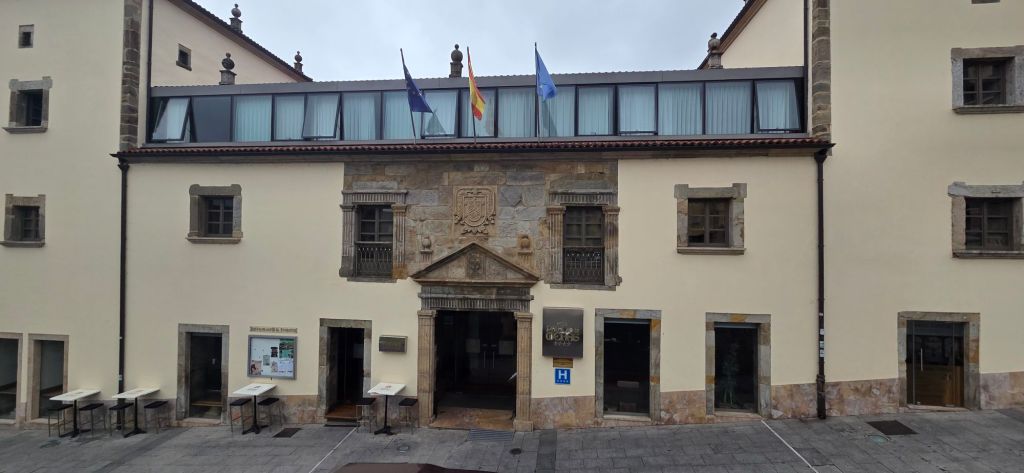
We limped in early evening on a Sunday when every store was closed. Even the 24 hour vending machine was locked. The combination albergue/hotel operated a bar and restaurant so we were not going hungry; however, I was desperate for Epsom salt so Olga could soak her failing right leg. The next day was a holiday, Asturia day, the birthday of Mother Mary, making finding a pharmacy equally difficult. The woman at the bar/cafeteria introduced us to her friend, Carlos, who could drive me to the one shop allowed to be open for the holiday.
Carlos did not speak a word of English. Only the back seat behind the driver was available, the remainder of the vehicle filled with newspapers for delivery. A series of exchanges through Google Translate but no Epsom salt, no alternative, no suggestions from the pharmacist except check with the doctor. Carlos kindly drove me there as well. Closed. Then he drove me back. His help was the second day in a row of a spontaneous selfless act.
The remainder of the time was spent in our room, resting, reading (on the little hand-held screen), and writing. By six, Olga and I ventured down to the bar/cafeteria for something to eat except we are in Spain and food does not get served until 8:00 pm. So, cerveza and vino in a little nook by the window.
Kitty corner to us was a table of two men about 10 years younger and an elderly man in deep conversation about tomatoes. Not that we understood, except they were observing each one atop a glass, holding it, smelling it, commenting before examining another. Olga was facing them directly, smiling, relaying the story to me when the elder gentleman walked over with a tomato in hand. He must have noticed our curiosity. Without a word of English, he conveyed obvious pride when handing it to Olga, explaining in Spanish as she squeezed it, smelled it, then passed over to me to repeat. Yes, these are fabulous tomatoes. He returned with grapes for us to taste. We thought the man was a local farmer supplying the hotel with produce.
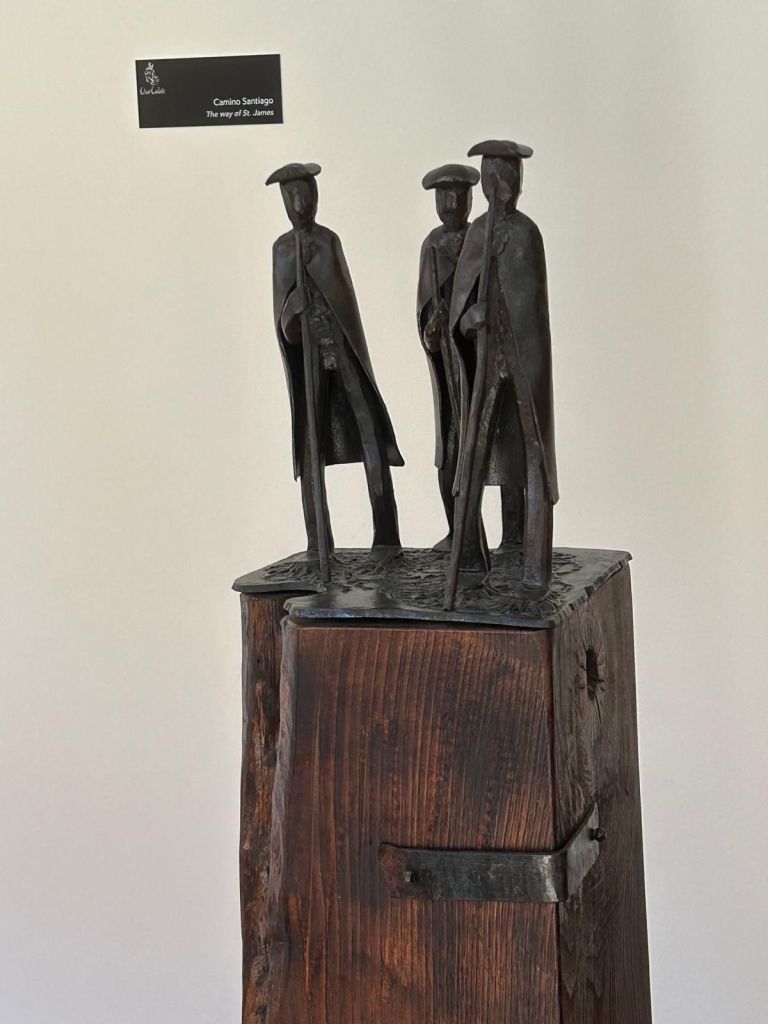
The burly man at the table got up to exit, passing by ours. Olga commented about how his father was very proud of his tomatoes. “He is not my father although he is like a father to me”. More English from any Spanish person to date, he introduced himself as Cesar, a blacksmith, whose iron art is displayed throughout the hotel as part of an exhibition celebrating the 500th anniversary of the Palacio de Merás. The elderly man is Benjamin, the owner of the hotel and a patron the Camino. The third man from the table, Lucas, the other artist with a special exhibition in the hotel, nudged into the conversation.
From broken English, poor Spanish, and Google Translate we learned how Benjamin himself had walked the Camino from Rome. Ever since his wife passed away, he promised to create a combination hotel/albergue for the pilgrims passing through Tineo. The Palacio de Merás is his creation. We also spoke about our admiration of the art. When Olga noted her favourite was the bagpipe player because of the soulful message, Cesar hugged her. That piece was special to him; he had played the bagpipes.
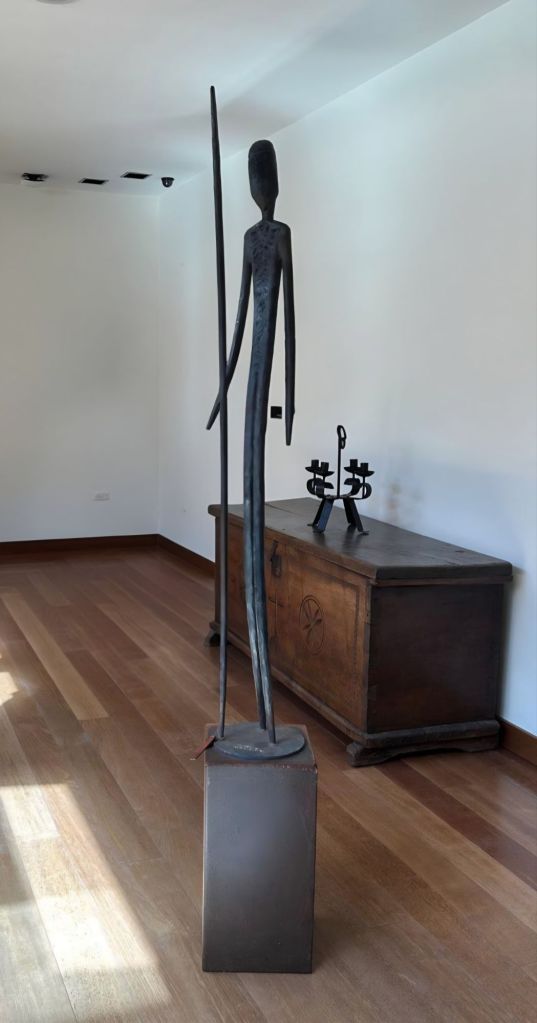
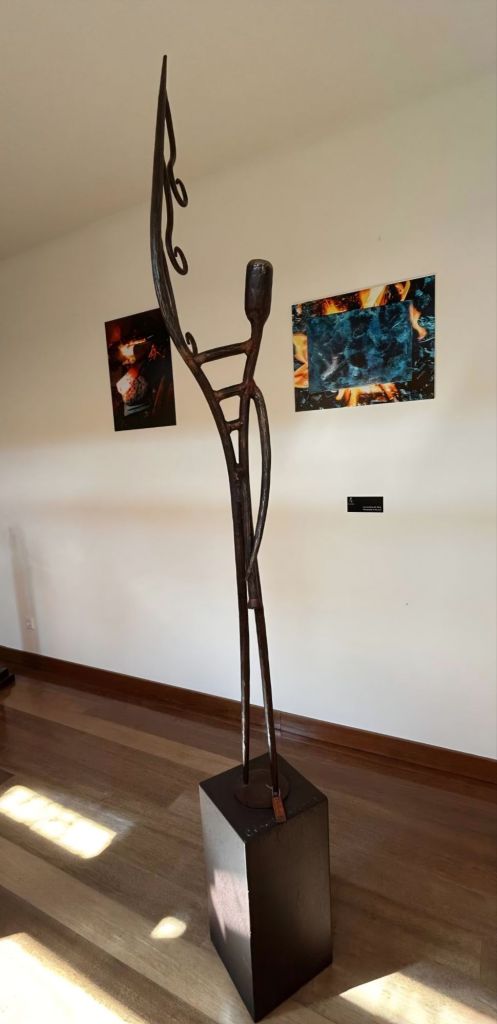
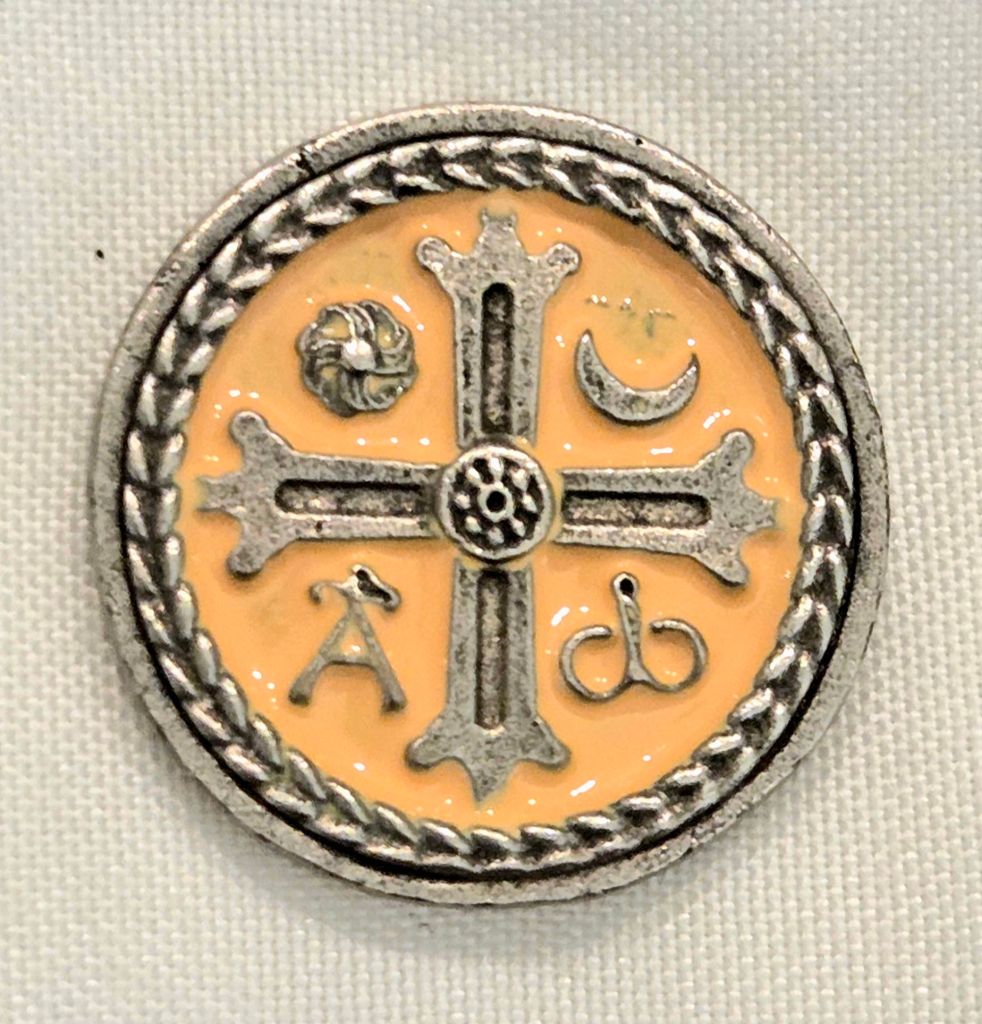
Lucas left quietly during that exchange and came back with two pins, one for each of Olga and myself. He proceeded to speak into my phone, in Spanish, in short sentences, so Google Translate could spill out the English explanation of the symbols in the pin he created to commemorate the anniversary. It could not be bought in any store. Only Benjamin could bestow them upon pilgrims with whom he had engaged in his establishment.
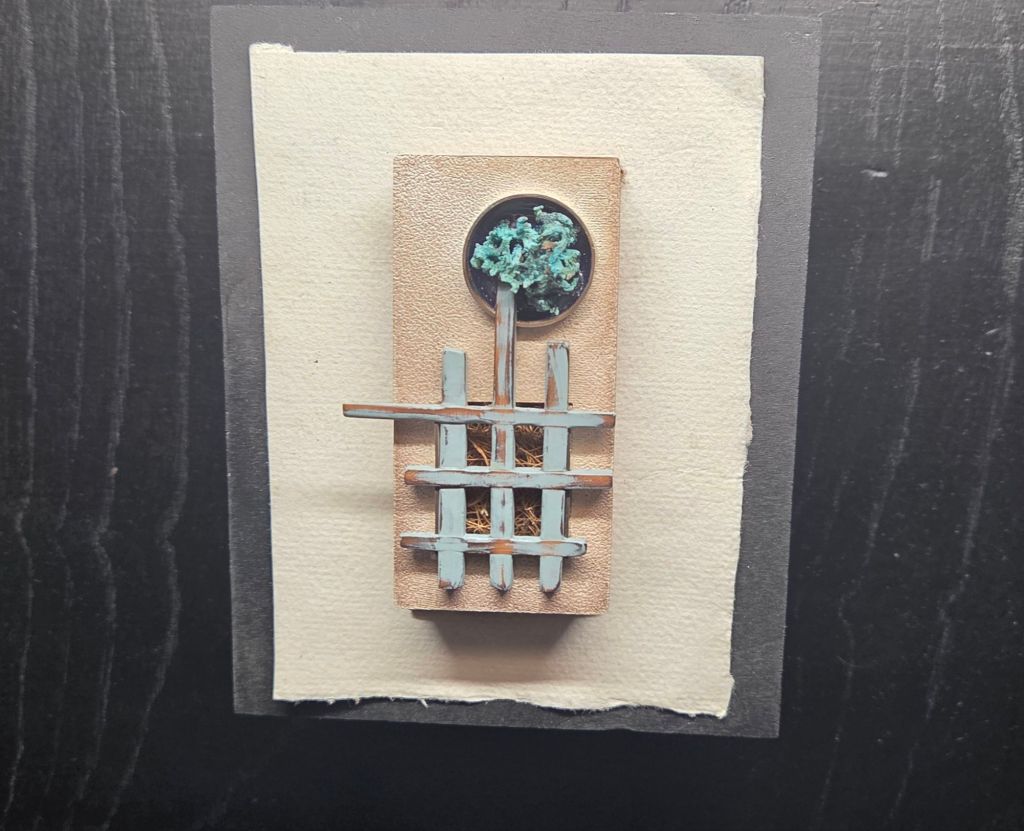
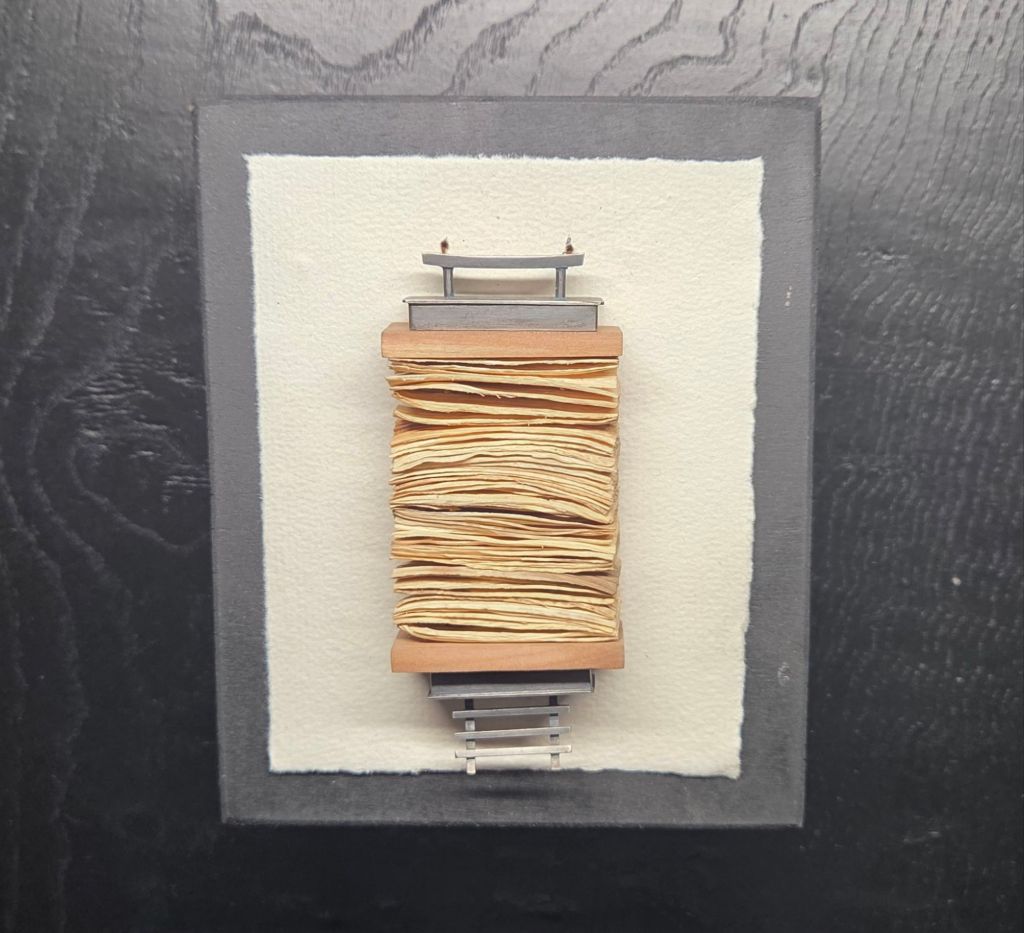
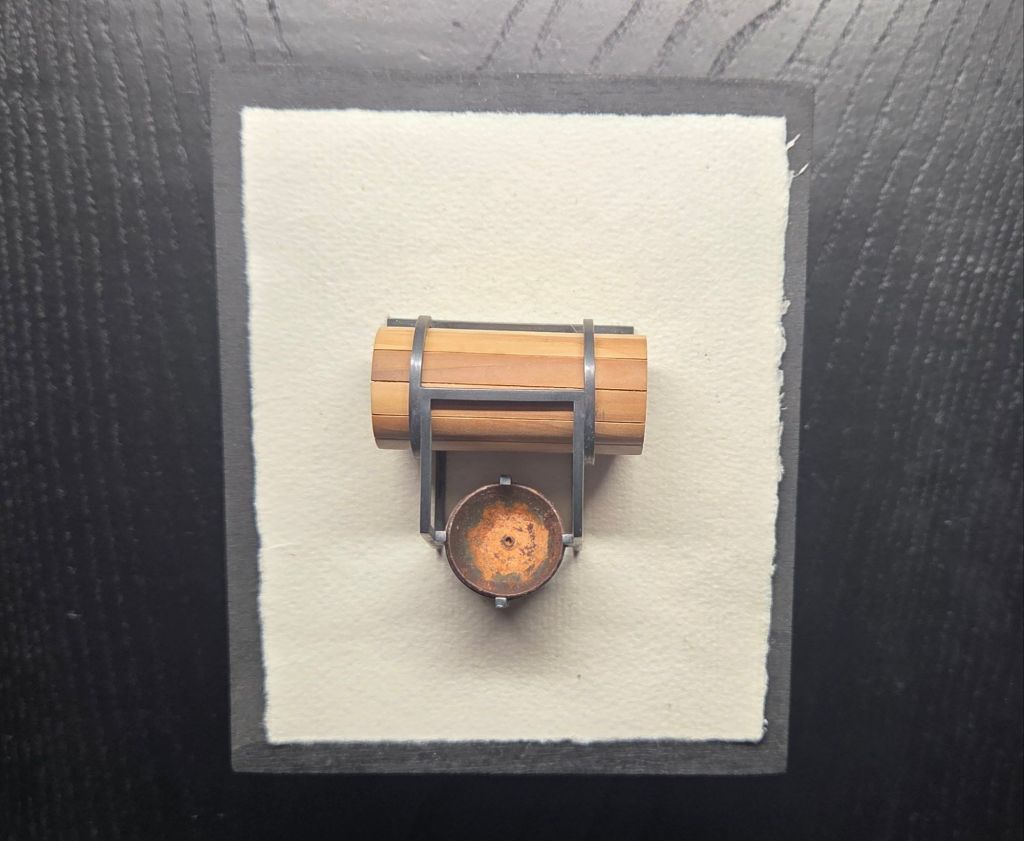
If I had my wits about me, I would have recorded the meaning behind the Alpha and the Omega, the Sun and the Moon, the inclusion of the Asturian cross. I did, however, manage to copy and save the last part of Lucas’ explanation:
It’s a decoration in Santa María de Naranco, a pre-Romanesque decoration, and it’s a circle because, in the end, everyone who follows the Primitive Way wants to do it again. So you’ve just entered a circle from which you won’t be able to escape.
Olga and I were honored and touched by this generosity of spirit and kindness and friendship.
I cannot forget mentioning Carlos, the only grocer open on the holiday who added a couple apples gratis to my grocery bag; Ariana, the front desk receptionist, always smiling, always patience with our many questions and requests; Eva, the busy service manager who secured us ice for Olga’s shin; and the waitress who dutifully served us every day for breakfast. Finally, on the last morning, cleaning the tables, we asked her name. She was delighted for the question which was followed up with more about her place of residence, her work, her own travels – we complimented her English skills. She smiled, continued with her work and walked toward the kitchen, turned around and repeated: “My name is Belen”.
Olga’s shin and ankle are not progressing as quickly as we wish; however, we need to move on from Tineo and have decided to skip the mountain stages to hopefully pick up the Primitivo when the terrain is flatter.
Buen Camino
 Wonderings
My very best to both of you. You’re both being very brave. With deep respect PrueSent from Prue’s iPhone
LikeLiked by 1 person
Good choice to forego the hostel experience Henry and Olga. A good friend of mine (my age) and his wife did the Camino 2 years ago. They stayed mainly in hostels. Got very little sleep. Most hostel Camino walkers were up before 6 am to get going. Depending on the time of year, they walk the first two hours of the day in darkness, with lights strapped to their heads.
Also a good idea to skip the elevation in favour of going easy on the ankles and shins. It’s not the destination H & O, it’s the journey!!
LikeLiked by 1 person
Yes, it is the journey and the memories created whilst undergoing that journey. When you get home, it will be remembering the people you have met and the kindnesses you have been dealt that will remain with you far longer than the pain or any frustrations you are currently experiencing. I admire you both for forging ahead.
LikeLiked by 1 person
Wasn’t sure where the tomato story was going but it was awesome!
LikeLike