Alone. Away. Anon.

The photographs were hidden in clear sight. You never talked about them and I never asked.

Beverwijk, 1953

You pose in a floral printed dress of red and green, lipstick and earrings to match. The picture was taken from inside the room looking out, photographer bending slightly to capture an upward look through the patio door of a Juliette balcony. A memento of a special time away. You frolic with an abandonment of caution on the edge of the rail, a look of contentment on a sunny afternoon.

The memories were amongst those from your nursing training, so naturally I assumed they were related, a day out with fellow students, a break from the expectations of school. On the back you marked it with a date, 1953, and a place, Beverwijk, a town half an hour northwest of Amsterdam, ten minutes from the coast.

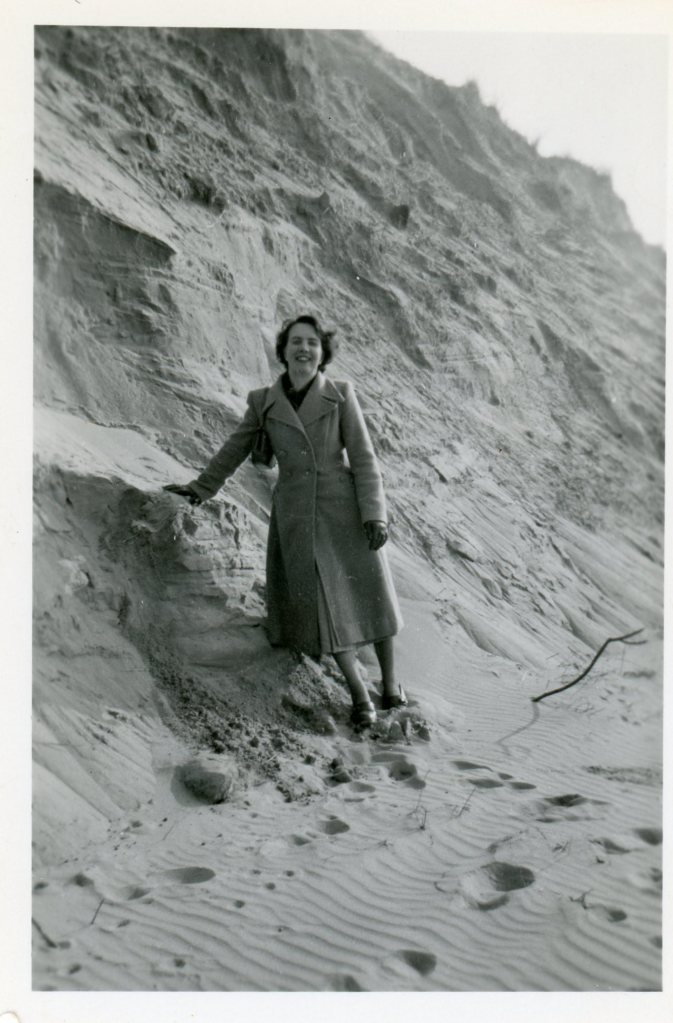
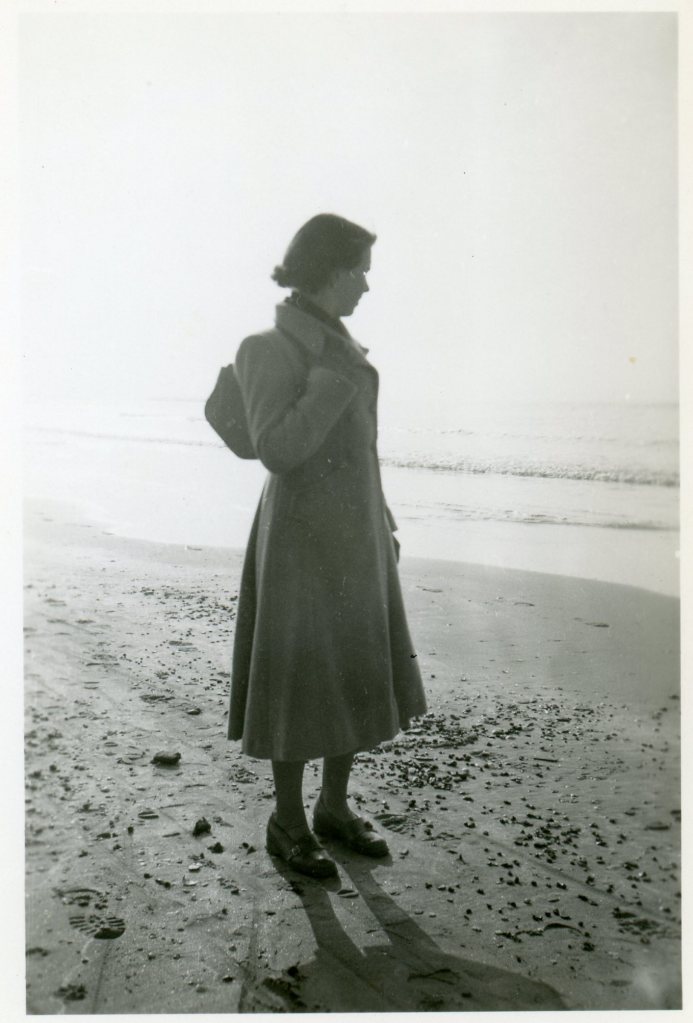
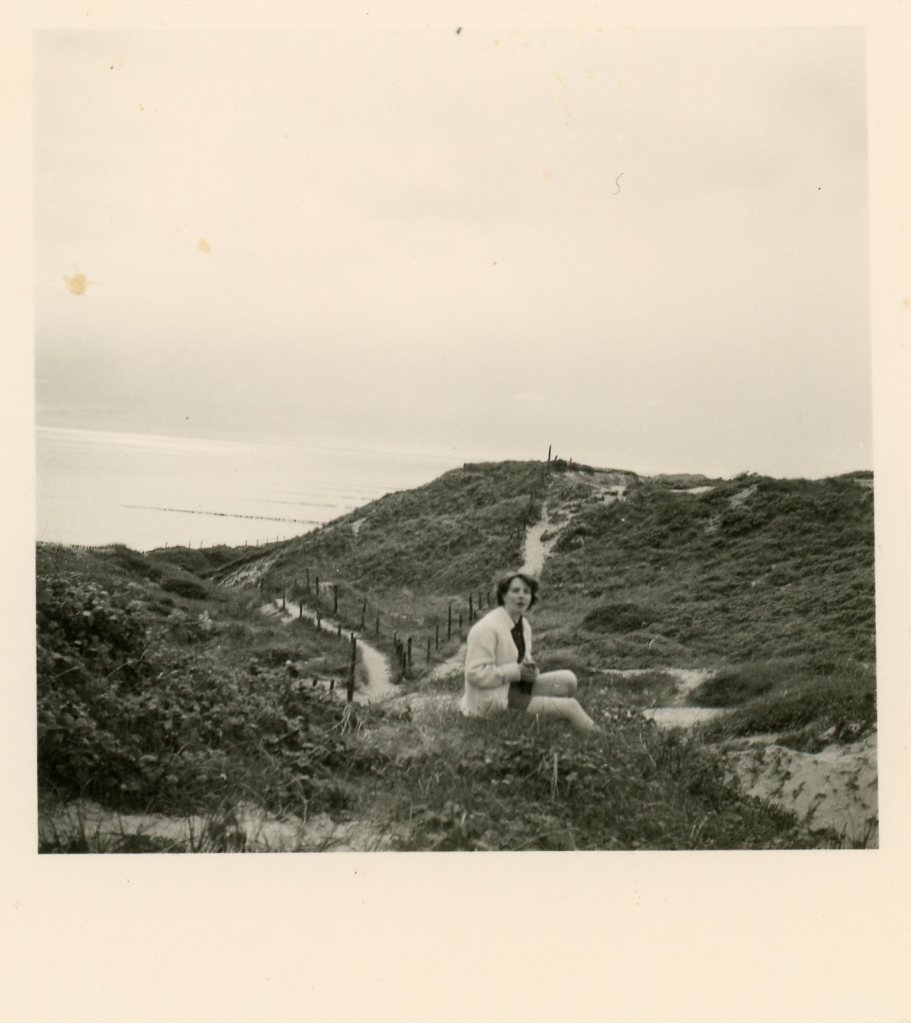
Wijk Aan Zee

Wijk Aan Zee is the coastal beach village you visited on your stay. Now a popular destination, in the early fifties it would have been a quiet escape, secluded, away from prying eyes, far from family in the south.

The date, the place, the smile, the face are clear; the reason, the why remains untold.

The pictures are of you alone, nothing of your company. Had the trip been with fellow nursing students, you would have saved a group shot to mark the occasion. You were in a relationship, a serious boyfriend I recall. His name forgotten now, if it was ever told. I am thinking he was the photographer, the person with you on this trip. The footprint in the sand beside you is the only the evidence of his accompaniment. Here he wants to capture the sun, your silhouette, the moment. It remains a lasting memory of a previous love, long-gone, but not forgotten.

Zoutelande, 1956

And you went away again, in 1956, to another resort town, this time to the south in the town of Zouteland, part of the ‘Zeeland Riviera’, with long and vast beaches. It was likely with him again, sharing time once more in a place meant for togetherness. And why not? You were young, mid-twenties, you were becoming a nurse, the war was over, your world was opening up.

And then he died suddenly, tragically. You didn’t explain, I did not persist in knowing.

In our digital , social media world, images are easily circulated , impossible to expunge, forever out there, somewhere, because someone has a copy. In your printed world, two or three were made, easily discarded when you want to purge their existence, finalized when the negative is destroyed. And that is what you did. All that remains are these few photographs, nothing of him except the places you enjoyed. The thousand words are missing, leaving lots of blank space for questions.

How much do we share with our children of our earlier lives, who only know our current partner, who cannot imagine another? And as adult children how much do we want to know? Does it matter? Should it remain a mystery, a story deduced from piecing together tidbits of information?

What parts of our past do we discuss, what will remain hidden until we are gone? How many pictures of us will go unexplained?

Alone. Away. Anon.

Irish eyes are smiling

The list of Irish Canadian authors is surprisingly short, or at least what I was able to ascertain with a Google search. The number is even shorter when the works need to be part of my existing collection. As such, Brian Moore is not on this month’s reading list; my collecting could not keep up with the output of this prolific writer.  Nevertheless, the variety of this month’s authors provides an array of styles and settings, transporting the reader through time and place, from the 19th century Irish potato famine to the Tiannamen square massacre in China. 

Anansi. 2006. 394 pages.

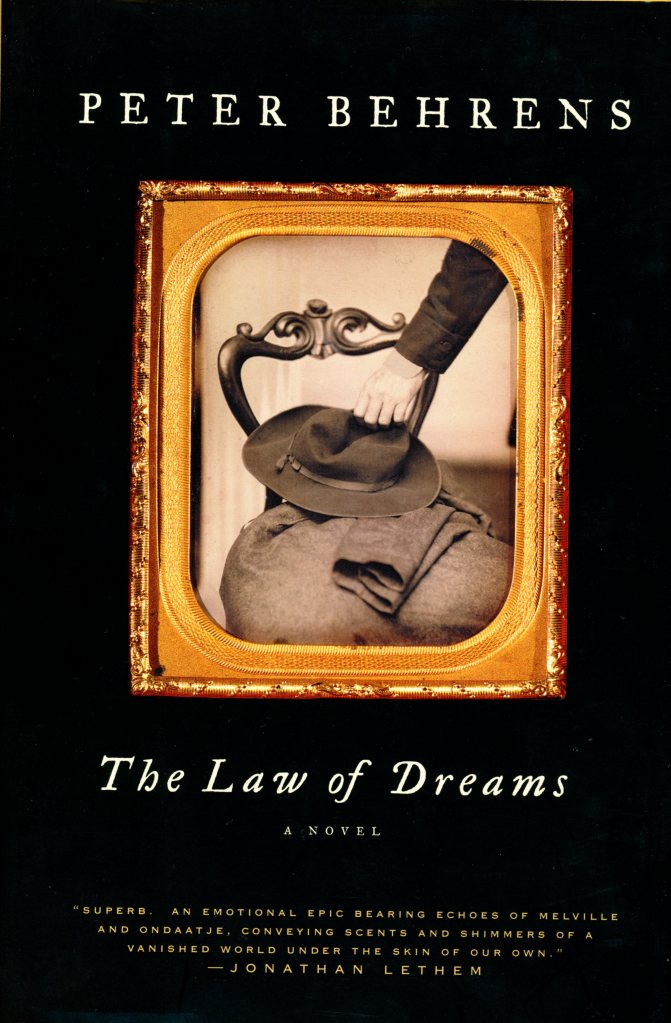
The Law of Dreams is Peter Behrens first novel which begins in the Great Irish Famine and follows the voyage of Fergus from the hills of rural Ireland across Great Britain and the Atlantic to the port of Montreal in 1847. The book was the 2006 winner of the Governor General’s English Literature award and shortlisted for numerous other prizes. Fergus’s journey endures the indignity of the poor house, the desperation of a marauding gang, the temptation of Liverpool, the drudgery of railway work, the deception of men and women, and the deadliness of crossing the ocean in coffin ships. He persists against the odds because “that is what you do in dreams. The law of dreams is, keep moving.” It is a refrain repeated often, one which fuels Fergus’s survival.

The density of some early pages was a dramatic shift from my previous novel making the transition challenging. As the characters evolved and the story expanded, the desire to uncover Fergus’s next days drew me into long stretches of reading and discovery. I could not relate personally to the times or the conditions but I could certainly imagine the heroic tale resonating with economic migrants in all parts of the  world today. The trials and tribulations reminded me of my mother-in-laws escape from western Ukraine after the second World War which eventually led her to a life in Toronto (https://wordpress.com/post/henrydecock.org/687). I expect the book resembles, as well, the plight of Syrian refugees crossing the Mediterranean Sea into Europe seeking some new, promised land. The book keeps reminding us of the basic motivation: “What you wanted must keep you going”; “What you lost weakened you, could kill you. What you wanted kept you going. What you wanted gave you strength”; and finally, “Is courage just the awareness that gestures, journeys, lives have intrinsic shape, and must, one way or another be completed?”   I enjoyed the book and glad I finally picked it off my shelf.

Harper Collins. 2010. 321 pages

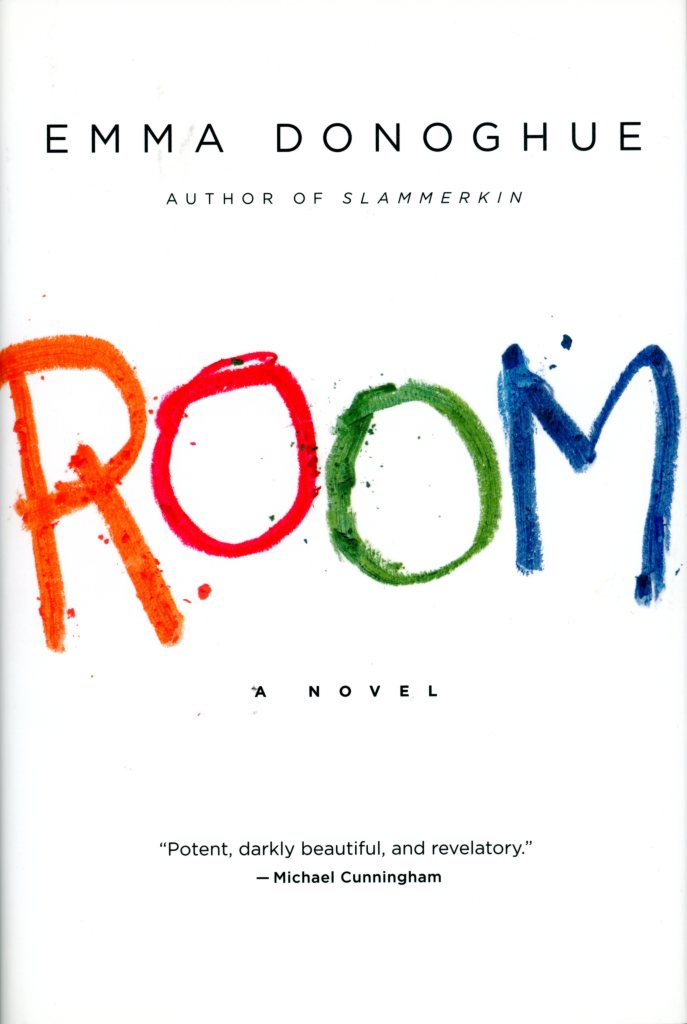
Room is another highly acclaimed, award winning book which won the 2011 Commonwealth Writers’ Prize, and shortlisted for the 2010 Booker, Rogers Writers’ Trust Fiction, and Governor General’s Awards. The film adaptation was released in 2015, nominated for four academy awards in that year. Emma Donoghue was already an accomplished writer earning recognition with two previous books. She was born in Ireland and is now living with her partner in London, Ontario. The story is told through the words of 5 year old Jack who was born in captivity, living only within the four walls of a shed with his Ma, where the only exposure to the outside world is the skylight and a TV. They eventually escape as the pair must carefully and scarily acclimatize themselves to their new reality. 

The language, the observations, the thoughts from start to finish are completely from the five year old boy, and one with very limited understanding and experience. Jack does not use prepositions and he names objects; for example, they live in Room, not the room, and he sleeps in Wardrobe. I eventually became accustomed to the structure and slowly realized the brilliance in Ms. Donohue’s writing craft.  Rather than long descriptions, the reader must piece together numerous observations and statements to understand the conditions; for example, Jack details the list of items Ma orders, including painkillers, and later we learn she moves candy “to her front teeth that are less rotted.” The reader also understands Ma is being raped several times a week while Jack is presumably asleep in Wardrobe: “When Old Nick creaks Bed, I listen and count fives on my fingers, tonight its 217 creeks. I always have to count till he makes that gaspy sound and stops.” 

When Jack describes the actions and words of the growing number of people he encounters after the brazen escape, we are confronted with some of the absurdity of our everyday living: “There’s a dog crossing a road with a human on a rope, I think it’s actually tied, not like the daycare that were just holding on” ; “He talks on his little phone, he says it’s Deana on the other end. The other end is the invisible one.” And Jack understands only the literal interpretation of a word or phrase, offering moments of humour amidst the troubling story Donoghue imagined from real life news stories about instances of reintegration after years of imprisonment.

Room offered me one of the most compelling and profound truisms when Jack reacts to the psychiatrist’s assurances that he no longer needed to be frightened. “I don’t say because of manners, but actually he’s got it backwards. In Room I was safe and Outside is the scary.” This adage is applicable in so many situations where we do not venture into something new, or do not make ourselves vulnerable, hiding in the safety of our own small entity, physical or emotional. The accolades for Room and Emma Donohue are well deserved.

Harper Collins. 1996. 308 pages.

My third book of the month was Butterfly Lovers by Charles Foran, who graduated with degrees in literature including a Masters from the University College, Dublin. He taught at a university in Beijing for a period of time which included the democratic uprising of 1989. Previous work, fiction and non-fiction, had been nominated for awards in Canada where he is now teaching as an adjunct professor at the University of Toronto after a stint as president of PEN. He is also known for his biography on Mordecai Richler which was the recipient of the 2011 Taylor Prize and the Hilary Weston Writers’ Trust Prize for Non-Fiction.  I have a couple of Charles Foran’ fictional works but have never opened one until now.

After twenty pages I began to regret my selection, wondering if I could tolerate it until completion. There were numerous passages which felt as if the author was attempting to impress other writers: “Remy Fidani’s clientele is predominantly grant-happy student, dole-fed radical, Canada Council-crumbed artist. Smokers of Marlboros and Gauloises, consumers of cafe au laits and Bradors from the bottle, readers of Le Devoir and the weeklies, journals unavailable except in shops with names like “Dis-Ease” and books special-ordered from one of the university stores, never collected, and then stolen from the shelves once staff have given  up trying to place the title in the proper hands” (p.9). What the hockey puck! The first nine chapters are filled with image after image catering to literature professors who teach and treat books as an intellectual exercise rather than a source of enjoyment, whose classes are sure to kill any love of reading. Numerous sentences span half a page utilizing commas and semi-colons which make them grammatically correct but exceedingly annoying.

Suddenly, when the protagonist, David, moves to China to teach English, the sentences are shorter and succinct, as if mimicking the structure of a second language learner. The book redeems itself in the second half with a story which retained my interest in the outcome as the tension builds in the aftermath of Tiannamen  and the relentless attacks on protesting intellectuals persists. There are also instances of thoughtful statements emanating from the ashes of the tragedy: “Besides, politics is almost never about ideas. Always personalities. Always power. We said so ourselves: to change the world, we first had to change our skins” (p. 302).  I ended up with mixed feelings about the book.

Penguin Canada. 2011. 166 pages.

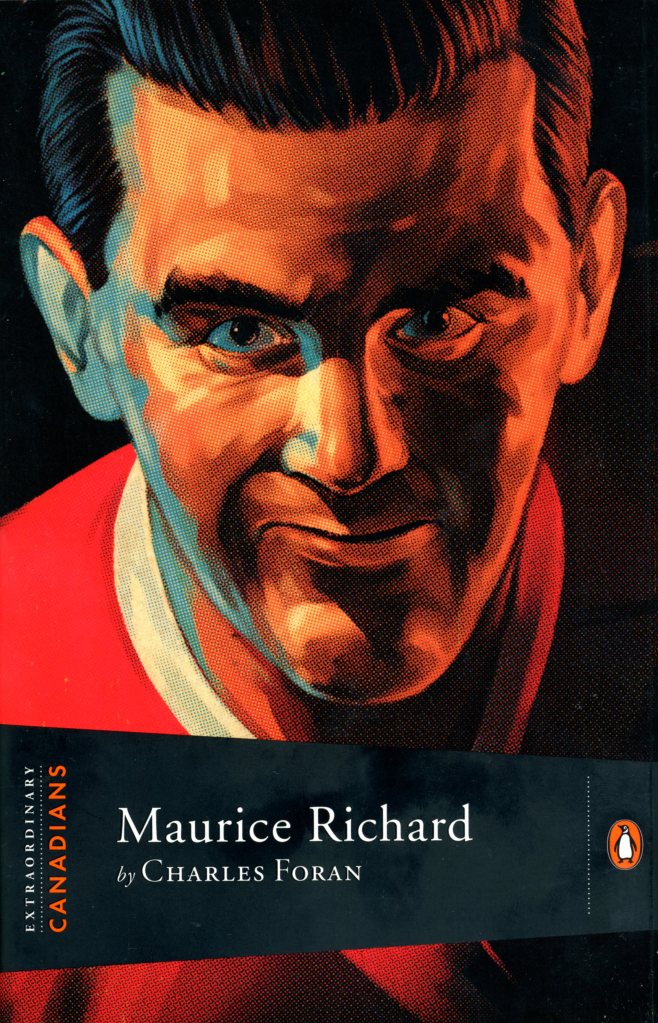
It was finished while I was the cottage where I had not brought the planned fourth read. However, I remembered the Extraordinary Canadian series was stored away in our basement. All 17 books in that collection are written by novelists about a well known Canadian; Charles Foran wrote Maurice Richard. True to his previous form Foran demonstrates a penchant for unnecessarily lengthy sentences made possible with the utilization of dashes, creating sentences within sentences, melding separate but related ideas such that you lose track of the original thought. Every other page seems to have an example. Yet there are moments of simplicity and clarity with vivid descriptions to situate you in the French working class mind of Montreal. It is a quick, entertaining read.

McClelland & Stewart. 2015. 396 pages.

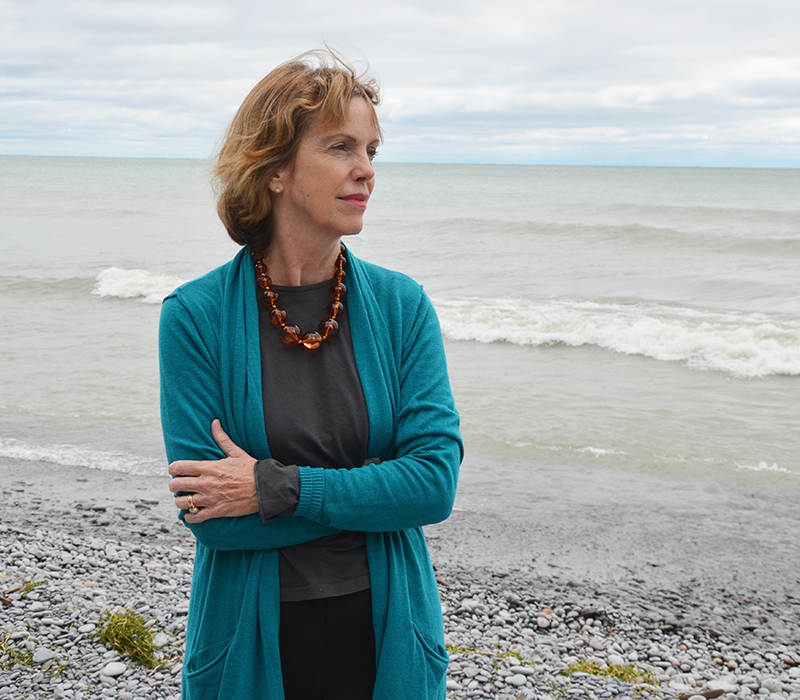
Finally we get to one of my favourite authors, Jane Urquhart. Years ago I salvaged a very early book, Changing Heaven, from the delete bins at the local bookstore and immediately fell for her beautiful prose. I am in possession of all her books, even reaching back through online booksellers to acquire out of print copies of almost all her work except for some of her first poetry. She may be best known for Away, about Irish immigration to Canada which won the 1993 Trillium award, and The Underpainter, winner of the 1997 Governor General’s Literary award. My favourite continues to be the 2001 book, The Stone Carvers.

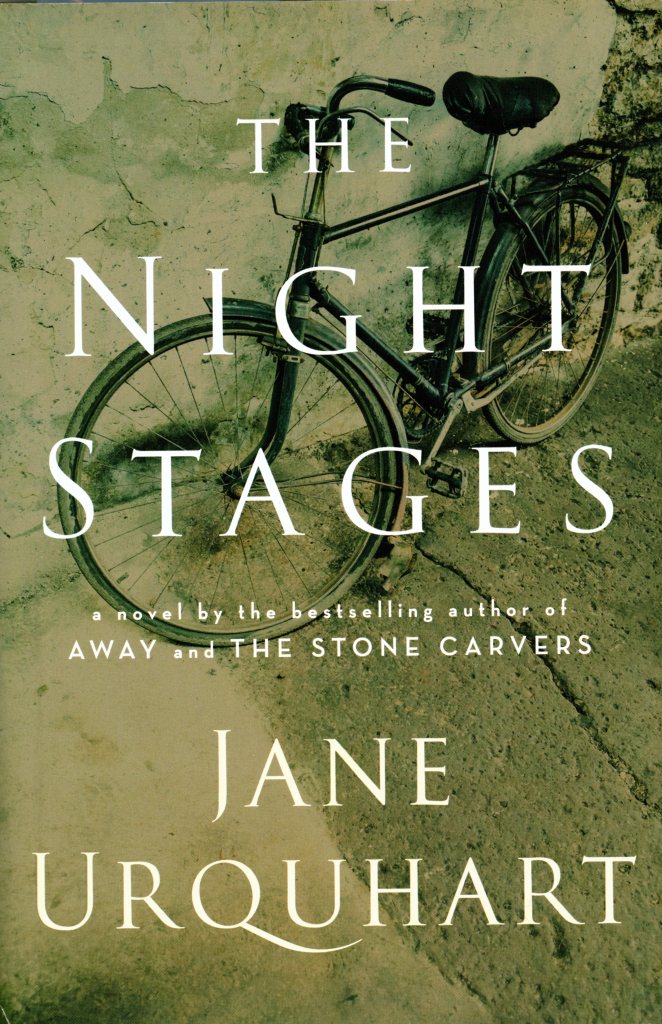
Curiously, I had yet to read her last book, The Night Stages, released in 2015. Set in 1950’s Ireland, the story is a weaving together of Kenneth Lochead’s earlier creation of a mural in the lounge of the international airport in Gander, Newfoundland where Tamara, pilot of planes during WWII, is stranded for three days after escaping the emotional clutches of Niall, a successful meteoroligist and athlete, and older brother to an estranged sibling, Kieran who is training for an epic bicycle race across Ireland.

The profundity of Jane Urquhart’s work is in the evocation of art and the written word. True to her education and passion, Jane Urquhart paints a vivid picture of the Irish countryside, capturing the sights, sounds and smells of Kerry county. At the same time, she delves deeply into her characters minds and emotions, reaching back into affective memories. Back and forth, between time and countries, we begin to piece together the connections among the protagonists and the parallels with the content and creation of the mural. There were moments in the early pages when I had to look back to help understand some of the linkages. The pieces all came together in the final chapters and the much anticipated cross-country race, The Ras. It is a story full of Irish lore, with its own brand of storytelling and myth making, although I am still working through the author’s intentions. The essence may have been captured in this quote: “Anything that moves forward, anything at all progressive, leaves something raw and wounded behind it.” The reference was to the building of a roadway but the belief applies to all manner of change.

I really enjoyed reading this novel. I am ever hopeful Jane Urquhart is continuing to write.

Next month I have decided to delve into mystery novels. You might think I would devote April to baseball books given the new season begins on the first. Alas, those will wait until the summer unless someone out there can recommend a baseball mystery.

Happy reading.

Ice meets metal

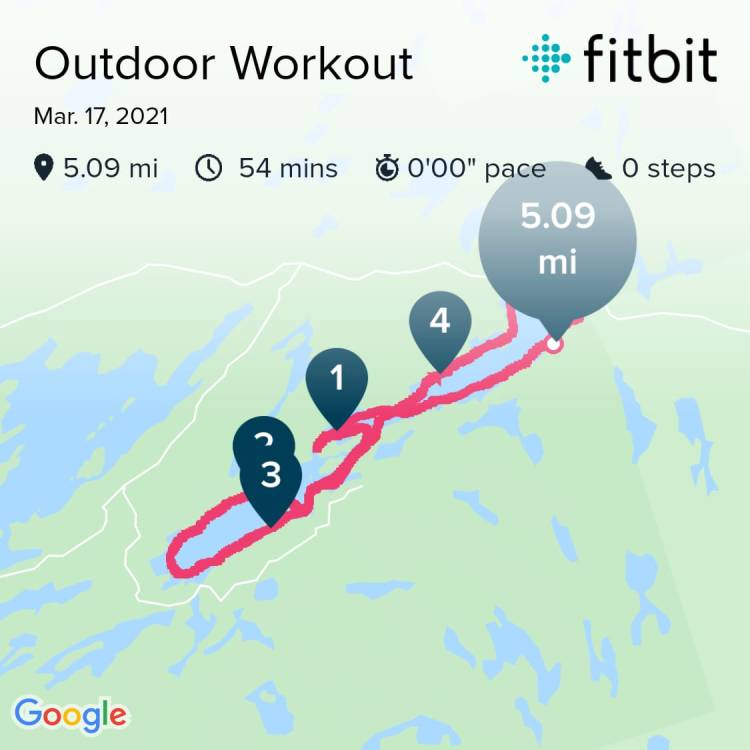
The forecast was predicting warmer temperatures so I knew my opportunities to skate were dwindling. On Wednesday morning, therefore, I decided to traverse the entire lake around the perimeter. The trip lasted 54 minutes, including several stops for a few snapshots, travelling 5.09 miles or 8.2 kilometres.

Naturally, I completed the journey with hockey stick in hand, pushing the puck ahead, catching up to shove it further along the shore. I was proud of the accomplishment and figured it would be my last chance to don the blades.

The warming air throughout the day created pools of water in the lower areas. The thermometer only dropped to marginally below freezing overnight before bouncing back to register plus seven on Thursday. The result was a very soft ice surface, still walkable but not suitable for skating. I figured the adventure around the lake was my last and I was ready to pack the skates away.

However, Environment Canada was calling for another reversal of warm to cold, dropping down to as low as minus 12; plus, the night sky foreshadowed the promise of a beautiful day. Maybe…..

View from our deck on March 18.

The ice appears solid this morning. Downing two cups of coffee, rustling up some breakfast, playing the bonus word for Jumble and the daily Wordsearch and I am ready. I woke up to minus 10; it is now minus 7 so no more time to waste. Onto the bench, on with the skates and back on the ice.

Entrails of ice dust marks my first path across the bay, eventually disappearing amongst the crisscross mix of trails back and forth and around. A slight breeze from the north whistles past my ears as I skate into it head on, only to be chased back from whence I came. Around and around, staying close to home, weaving with the puck, cutting in here, circling forward and backward, breathing heavier, heart pounding to build up those FitBit zone minutes. The ice resembles monochrome white stained glass, decorating every corner of the bay. A sudden crack spawns another new pattern, creating an even more elaborate design. Ice meets metal.

The sound of skating into the northerly wind. You can hear the ice meeting metal as I circle the bay.

Tired, I glide to a standstill and stand surveying the open space before me. Silence. No cars in the distance, no jets high overhead, no people around, just the voices of the lake. I imagine a male choral choir, dominated by the bass and baritone, rumbling beneath the surface, first to the left then from a distance, the next one closer, in a continuous symphony of sounds. The ice is singing farewell.

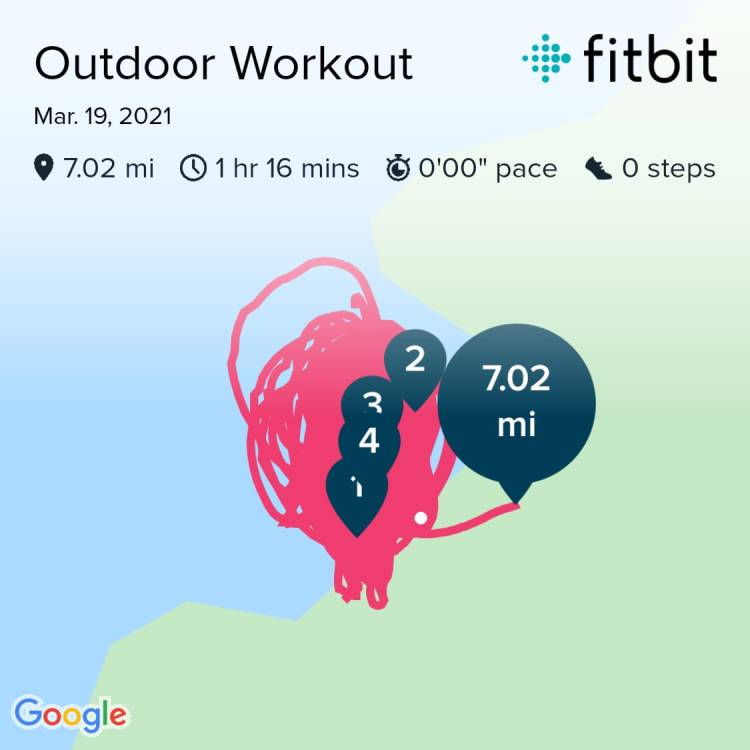
The temperature rose four degrees in my hour and a quarter of 11.3 circular kilometres, with the forecast predicting double digit plus days accompanied by wide blue clear skies for the next week. Maybe another morning skate is in the offing but even without, I will have finished the season fully contented, ready to welcome the spring.

Oh! Canada

Sometimes at night I can hear the ice crack
It sounds like thunder and it rips through my back*

For those following along, I reminisced about home made ice rinks and ended with this paragraph in my January post: “A good rink and a vigorous skate always makes for a promising start to another year. I have more opportunities this time round to make this one better than the previous year.” https://wordpress.com/post/henrydecock.org/720

This weekend, I finally got my good rink and a vigorous skate. The entire lake became my ice playground and I lived my dream skating experience.

Olga and I did not stay long enough at the cottage for my first attempt at a rink to have frozen completely solid. I skated in a small circle for five minutes before abandoning the trial. On our return in February, a deep snow blanketed the entire lake, warming the ice below. My futile shoveling resulted in a colossal mushy mess. The ice eventually froze into unrepairable craters. Running water from the cottage with a hose proved fruitless and we left disappointed. I needed a better way to flood and prepare the surface.

We returned last week to yet more evidence of precipitation. Days of fluctuating temperatures meant the snow was hard enough to walk on but not a clear patch was in sight. I spent several hours spread over two days scraping off the snow glued to the frozen surface of my original rink. Then the big melt. Two days of sunny plus 12 degrees shrunk the snow, revealing portions of rock and land unseen for several months. A brief thunderstorm added more water as the lake became a huge puddle. Knee deep snow reduced to ankle deep water. Just as quickly, the winds ushered in colder weather, dropping the temperature to below freezing overnight; then a brief bounce back before plummeting to minus 12 by Friday evening. Nature was doing the work for me, expanding my postage stamp rink into a massive outdoor arena.

We woke up Saturday morning to the frozen, golden pond crying out – get your skates! get your hockey stick! come and enjoy!
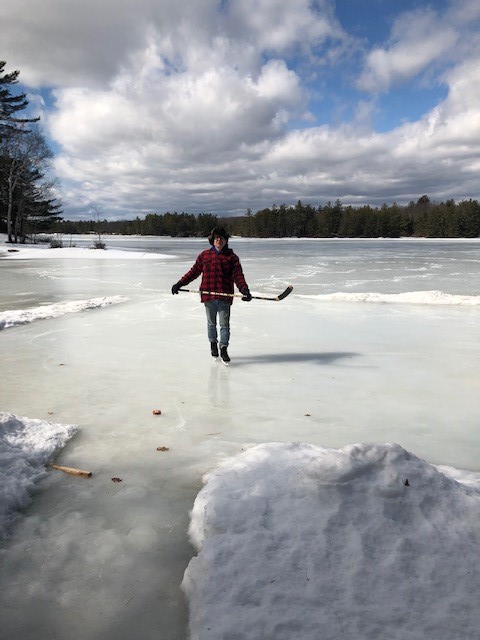
Exhilarated with the prospect, I gathered my skates warming over the floor heat register, donned the quintessential red plaid coat, grabbed the Paul Coffey hockey stick and rushed down the rocky stairs to the shore side bench. Yank and stretch then wrap and tie those laces tightly, a toss of the puck landing with a thud and sent skittering across massive ice cube, then that first step pushing off the back leg and I am gliding out into the expanse of our bay. What a beautiful feeling.

I chased the puck, each leg thrust propelling me further into the expanse, quicker than my row boat or canoe, heading for the opposite shore. The lake ice was outdoor smooth around the perimeter divided by an untenable scarred track through the middle from the snowmobile path not completely eradicated by the sun or the rain. With no one to stick handle around, I shot the puck further along until I arrived at the four ice fishers near the island. A hearty hello and a welcome chat, Steve informed me the ice was almost two feet thick. I reversed course and continued my tour past empty cottages, watched by the surrounding trees. Swish, swish, cold air against my face, push the puck along, circle back, accelerate and glide. What a wonderful feeling; sun shining, skating in the open air. No boundaries, no time limits, no worries. The only thing missing were others to play hockey.

Olga was excited for me and wanted to share in the joy by very gingerly meandering onto the ice, occasionally drifting with the wind, cautiously moving around the buried docks, laughing and smiling. She had not been on skates in 28 years and bravely took advantage of the irresistible moment.

Last night I went for an early evening skate in the remaining hour of daylight saving time. Alone, amidst the muffled quiet of a winter evening, I could hear the ice groan and crack. Tom Cochrane’s song popped into my head. I hummed the tune to myself, fortunate to be able to enjoy nature’s work.

I felt oh, so Canadian, oh so grateful.

You never can tell what might come down
You never can tell when you might check out
You just don’t know, no, you never can tell
So do right to others like you do to yourself
*

*Big League – Tom Cochrane

Smoke ’em if you got ’em

Warning: the content of this post might trigger urges to return to old habits or make you attempt to indulge for the first time.

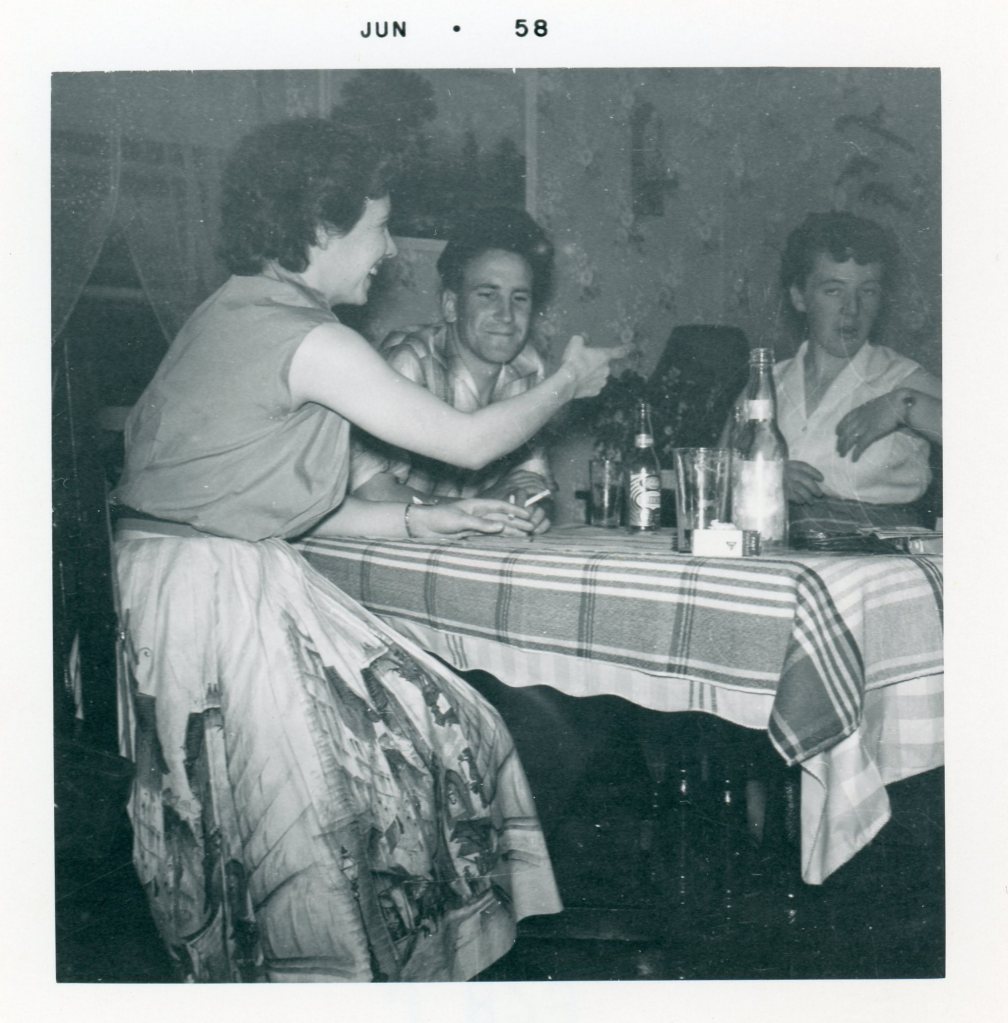
After scanning my parent’s photographs, I have been reviewing them regularly to evoke another memory and another story. On one of those time travels I could not help but notice the number of pictures showing Mom and Dad with a cigarette in their hand. The frequency prompted me to think about my experience with smoking growing up. Forty years ago this observation would have been met with perplexed looks; whereas today, knowing people who do smoke is rare in my world. 

1992 photograph of a get together with nieces and nephews from Aunt Ann. Evidence of five people, three with a cigarette in hand.

Smoking was ubiquitous. It appeared as if everyone indulged. Growing up, I did not think twice when someone and everyone lit up, inside. Rooms would be full of smoke yet no one appeared bothered; talking, laughing, eating within a perpetual cloud engulfing those gathered. Decorative ash trays were sold as furniture, needing to meld with the look of the room. Lighters were stylish accoutrements to a formal wardrobe. Gentlemen were measured in part by their timeliness and ease in offering a light for a lady’s cigarette.  Movie audiences understood the unseen bedroom encounter when someone fired up a post-coital cigarette.

My parents grew up with smoking, be it cigarettes, cigars or pipes. Scenes of them with a cigarette in hand abound.

Mom was a trained nurse which had no impact on her habit or other nurses for that matter.
Indoors or outdoors, there are many scenes where Mom or Dad have a cigarette in their hands.
A get together with others was sure to bring out a package.
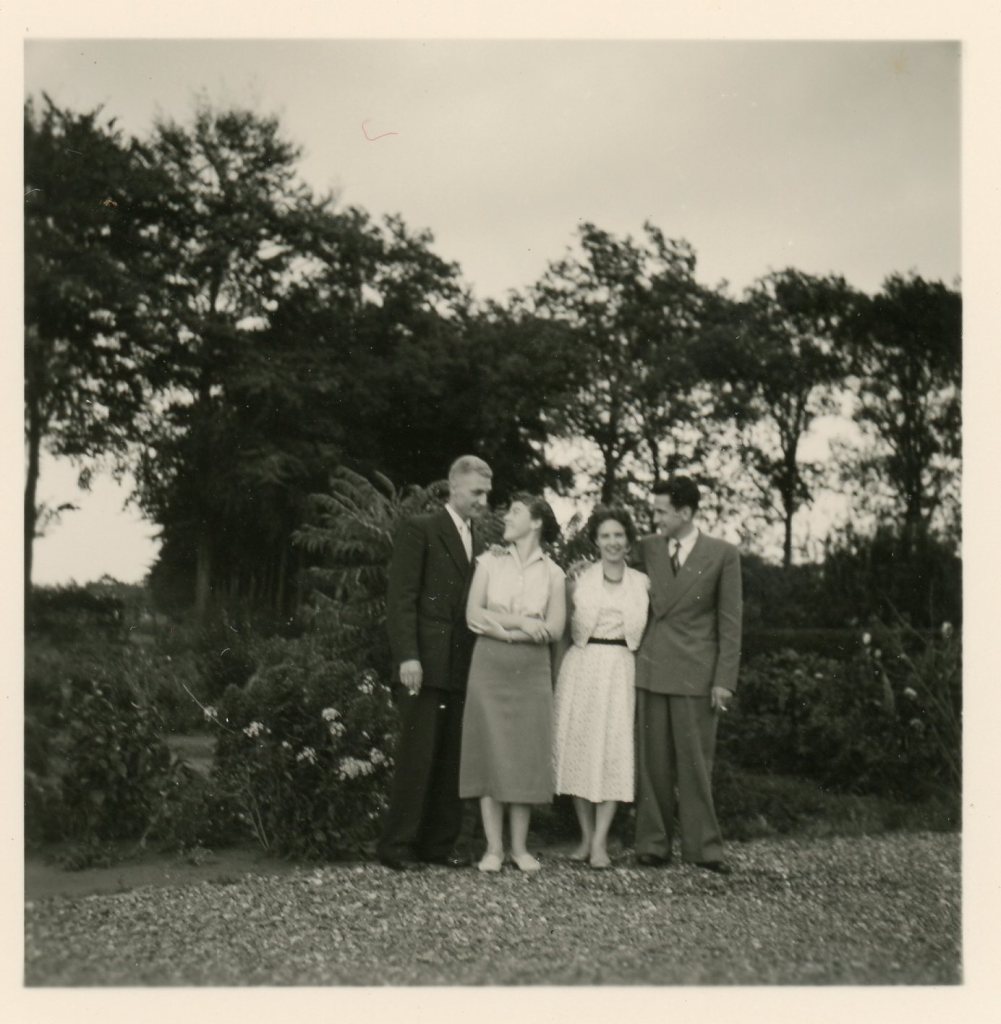
Two lovely ladies bookended by two gentlemen both sporting suits and holding a cigarette to complete the ensemble.

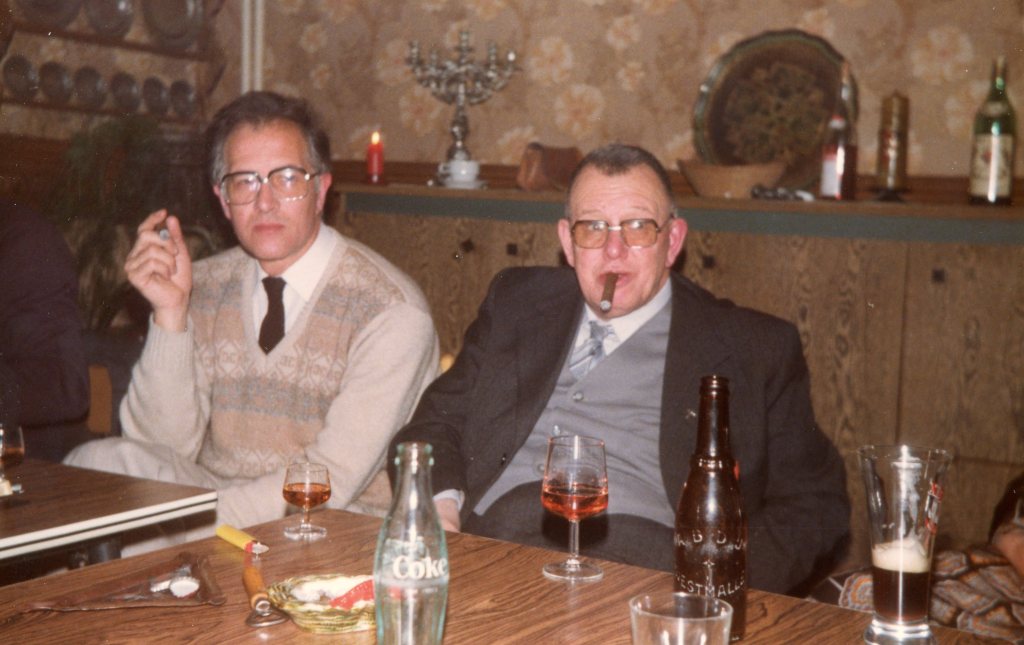
One of Dad’s stories described how his father, my Opa, would roll a fresh cigarette and place it on the table at his bedside, along with a packet of matches, before he went to sleep so he could wake up and immediately light it up. And almost everyone in their families smoked. I don’t recall my Aunt Ann on Dad’s side or Tante Lina from Mom’s family participating; otherwise, all of them enjoyed a pipe or a cigar or a cigarette or all three. Uncle Herman seemed to be perpetually puffing on a stogie, famous for his chortle, upper body bouncing up and down with a cigar in his mouth joining the ride.

1983 photo of Uncle Nico and Uncle Herman at a family gathering.

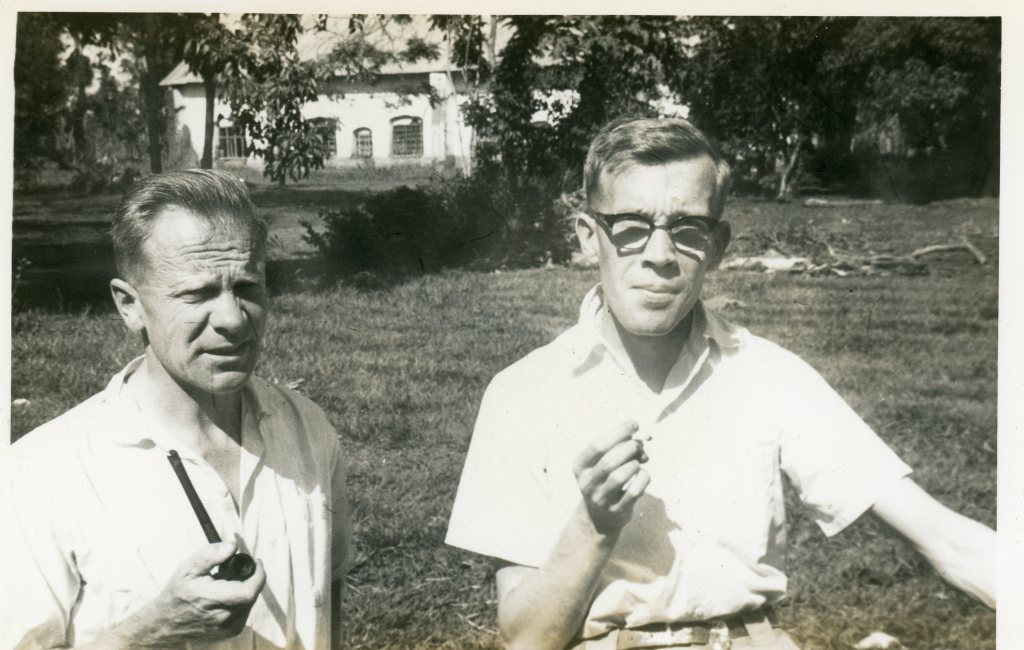
Uncle Kees also enjoyed cigars and there are pictures of him with cigarettes. Other photographs of his time in Uganda show numerous people indulging. Smokers were so nonchalant about the practice no one attempted to hide the appendage when the camera was present. 

Uncle Kees is on the left, standing with Father Korman who you see is smoking a cigarette.

When Uncle Kees passed away, the Mill Hill Mission had failed to transport some of his personal belongings. The family pursued the Order asking for his glasses and his pipe, items which formed a part of his identity. Dad passed the pipe onto me and it sits upon my book shelves along with his daily prayer bible as a fond reminder of his memory.

People were identified as well by the brand they smoked. Mom was a Rothman’s person, filtered cigarettes which she inhaled to the bitter end ensuring nothing was wasted. Dad preferred filter-less Pall Mall. He started with roll your own which I vaguely remember. Gary, my older brother, on the other hand recalls learning to select the right amount of tobacco, rolling the paper then licking the length to hold everything in place before passing it over to Dad.  The boys would accompany Mom on her weekly grocery run which included the purchase of cigarette cartons to replenish the depleted supply. I have strong memories of dismantling the carton and stacking the individual packets inside the narrow end of the all closet; one side for Pall Mall, the other for the Rothmans.

The number of pictures with someone smoking diminished over the years in part because an increasing number of people quit; as well, the posing for pictures meant you discarded the “cancer stick” to avoid recrimination. Increasingly, Mom became isolated as one by one, relatives and friends abandoned their packs. Places to smoke were being quickly eliminated to the point where those who continued were viewed as pariah. While writing this post, I read this passage which captures the changed perspective:

“Across the street, on a parallel balcony, is a man bundled in a coat and hat, also dragging on a cancer stick. Visible beneath his coat are pyjama bottoms and slippers. Visible on his face is the usual dumb defiance and creeping humiliation. It is four in the morning and, according to midnight news, minus twenty-five out. Nevertheless, there he stands, hunched over like a soldier too exhausted to properly duck enemy fire.” Charles Foran, butterfly lovers, page 43.

In this 1996 picture from the Netherlands, the ashtrays are gone from the table and Mom is the only person with a pack of cigarettes.

I remember when Dad decided to quit. The washing machine had broken down for the umpteenth time and he could no longer repair it into further use. The time had come to purchase a new one even though they had not yet accumulated the savings. Giving up smoking would help to find the money, so Dad quit, cold turkey. He did struggle but because smoking was not permitted inside the 3M factory, the transition was easier. Mom, on the other hand, failed in recurring attempts to break the habit. She was a stay-at-home parent, typically on her own with no one around to remind or to support her efforts. Eventually, she stopped smoking in the house, forbidding others as well, and slowly reduced the number of cigarettes consumed; however, Mom continued puffing until the end no doubt contributing, if not causing, the stroke that abruptly shortened her life.

Europe lagged behind Canada in regulation and social acceptance. In a 1992 visit to the Netherlands as part of a recruiting fair, I extended my stay with an extra week of vacation residing with a cousin, Riet and her husband Dolf, and visiting relatives in and around Tilburg. They hosted me at a local restaurant where Dolf and I indulged in some cigars, a favourite hobby of his, at our table, after the meal. I kept looking over my shoulder wondering if we were going to get busted. Later that week, I visited Tante Toos at her apartment where numerous cousins had also gathered. At least half the people were smoking as a cloud grew and hovered inside for the duration. Concerns with second hand smoke had not seemed to have crossed the Atlantic.

That neither of my brothers or I succumbed to the mindless routine is a small miracle by itself. My parents forbade their children from smoking, a “do as I say, not as I do” approach to this aspect of our upbringing. Fear kept me in line. Not to say the four of us did not light up on occasion, but none adopted the cigarette habit. I would borrow a few from drinking buddies in the bar, but god forbid I would ever purchase a pack for myself. Ironically, I experimented with cigars after Dad quit smoking. Uncle Gert and family visited Canada for the first time in 1980 and brought a box of cigars as a gift. Of course, Dad appreciated the thought but politely passed on the gesture. I accepted the box and thus began an on again, off again relationship with cigars.

My cigar smoking days have greatly diminished, typically resigned to a round of golf or  the occasional outdoor lounging with a dram of scotch with close friends. I consider the indulgence relaxing and a measure of my good fortune. I still appreciate a cigar as a gift understanding it’s unstated message and significance. 

Smoke ’em if you got ’em. 

If music be the food of love…

“Apollo, the god of music, had not very lavishly sprinkled musical talents within our family. Mother’s piano lessons were generally not a great success.”

So said my Uncle Nico in his family history book, “Pa vertel eens” ( Dad tell me – in English) which I just recently translated. It chronicles life for the van Rooij family from his birth in the early thirties (Nico was the youngest in the family) up until his marriage in 1958. The book is a personal and social account of the times detailing some family information previously unbeknownst to me. I was not aware, for example, that my grandmother had learned to play the piano and made every effort to get all of her children to play, without any success.

My Mom was not musical, apparently much like the rest of her siblings; but what she lacked in ability, Mom more than made up with enthusiasm for music. She loved to listen to music and her taste was eclectic. Classical. Country. Pop. Mom purchased records and then CDs which spanned her favourite singers, songs and symphonies. The radio was on from when she first got up in the morning, throughout the day and into the night, only to be interrupted when the television came on for some evening entertainment.

And when she really liked a particular piece Mom would sway to the beat with a joyous grin, humming and singing, usually out of tune and out of time. Her signature move was with her shoulders pulled up to ears, elbows in tight, arms bent up with the index finger pointing straight, her whole upper body stiffly bouncing, with that grin and half open eyes absorbing the sound. The image still makes me smile.

Every once in a while a number of her favourite songs play in my head . Singing them out loud you begin to understand how the lyrics were an expression of her beliefs on the experiences of life and marriage. First there was Petula Clark’s, The Other Man’s Grass (Is Always Greener):

Life is never what it seems, we’re always searching in our dreams
To find that little castle in the air
When worry starts to cloud the mind, it’s hard to leave it all behind
And just pretend you haven’t got a care

……………

The other man’s grass is always greener
The sun shines brighter on the other side
The other man’s grass is always greener
Some are lucky, some are not
Just be thankful for what you’ve got

And if Mom was not singing the words she would emphasize the sentiment to her children. Appearances can be deceptive and all you can affect are your own circumstances, so focus on your own well-being.

Petula Clark – The Other Man’s Grass (Is Always Greener). 1967-68

In a very similar vein, Mom sang Lynn Anderson’s, (I never promised You A) Rose Garden as a statement on marriage for any couple, perhaps, but especially for one that broke away from the rest of the family and ventured afar to a new world, on their own. You can imagine how that decision could be questioned when times were difficult:

I beg your pardon, I never promised you a rose garden
Along with the sunshine, there’s gotta be a little rain sometime
When you take you got to give so live and let live or let go
I beg your pardon, I never promised you a rose garden

So smile for a while and let’s be jolly
Love shouldn’t be so melancholy
Come along and share the good times while we can

I beg your pardon, I never promised you a rose garden
Along with the sunshine, there’s gotta be a little rain sometime

Lynn Anderson – (I Never Promised You A) Rose Garden. 1970

The flight to Canada meant leaving behind an extended family and the concomitant reality of missing the major life events of your parents and your siblings. There were two marriages, one from each of Mom and Dad’s sides, numerous births of nieces and nephews, and most tragically, the deaths of Mom’s parents in 1961 and 1962 long before my parents returned to the Netherlands for the first time in 1967. Peter, Paul & Mary’s Leaving on a Jet Plane seemed to reflect that narrative:

All my bags are packed
I’m ready to go
I’m standin’ here outside your door
I hate to wake you up to say goodbye
But the dawn is breakin’
It’s early morn
The taxi’s waitin’
He’s blowin’ his horn
Already I’m so lonesome
I could die

So kiss me and smile for me
Tell me that you’ll wait for me
Hold me like you’ll never let me go
‘Cause I’m leavin’ on a jet plane
Don’t know when I’ll be back again

Leaving on a Jet Plane. Peter, Paul & Mary. 1969.

Mom did not appear to sing the tune with any guilt or regret; her pride would never allow it. Yet you felt there was an element of longing for a family missed.

And if the music was not expressing a specific message then it needed a beat, one that would make you move your body, get you dancing to the rhythm. I will never forget Rasputin by Boney M.

1978.

Mom loved that the Euro sound. Mix it in with a few drinks, family and friends, and you have a party, an opportunity to let loose, to enjoy the good times while you can. My parents hosted parties with the neigbours in our living room and later in a newly built recreation room in our basement when we were young. As we got older and the family grew with spouses and grandchildren the partying focused on those occasions when we could get together and celebrate important milestones.

One of 24 blurry pictures from an impromptu dance party for their 30th anniversary.

Listening to music was not a significant component of Dad’s entertainment. He had a handful of favourite songs and performers: Don McLean’s American Pie and Harry Belafonte. He generally deferred to Mom’s selection. Dad loved to sing, however, never too shy to accompany a song with his loud, baritone voice. A good song was a singable song. Period. I remember him proclaiming The Night Chicago Died was going to be a hit because you could sing along. (He was wrong about Elton John, predicting no one would be playing him in 50 years. Oh well.)

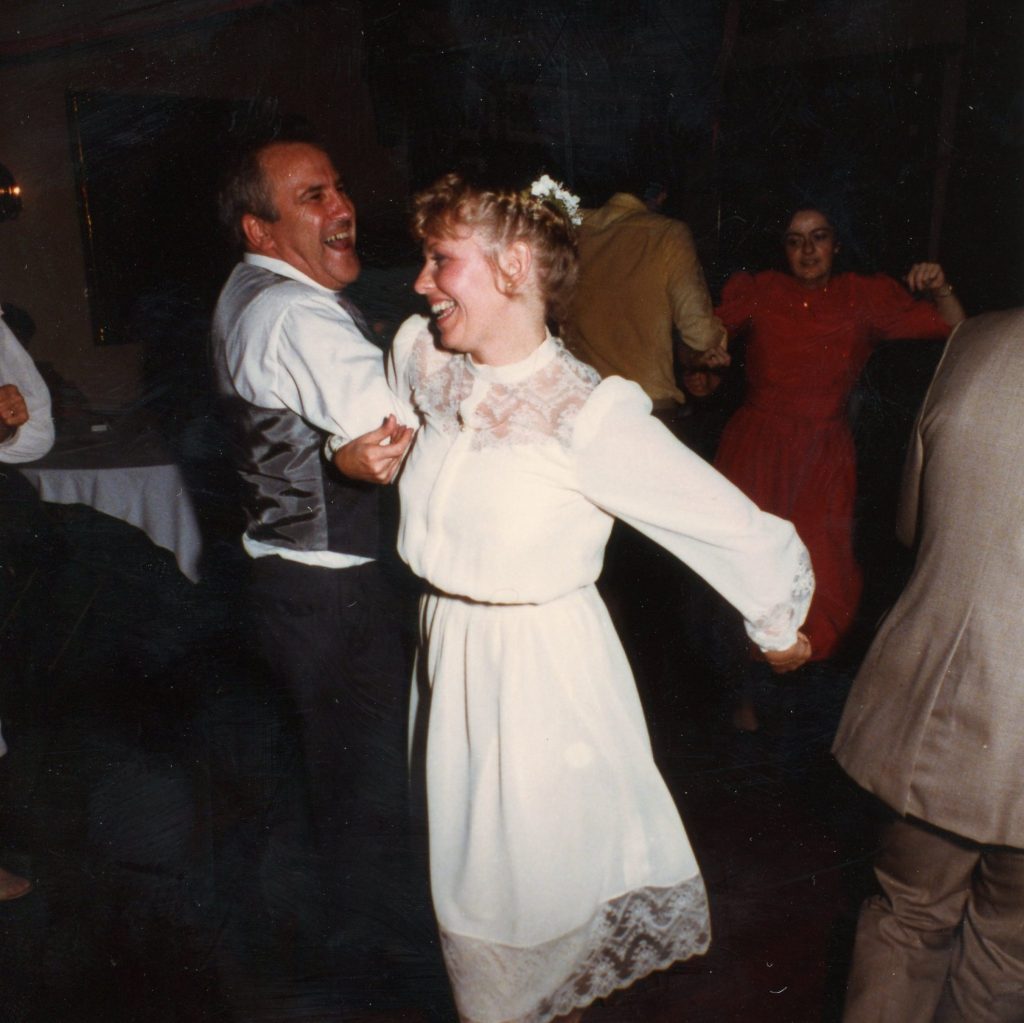
As much as my Dad loved a party, especially one involving singing those very catchy Dutch ditties, he did not dance. In the later years, he could be compelled to shuffle back and forth to a slow song when needed. When the tempo picked up, he headed for the chairs. You would be hard pressed to recall more than a handful of occasions when he could be coaxed to remain on the floor. Olga will always remember one specific time – at our wedding – when Dad exuberantly ran his way through the chicken dance. The proof is captured in this joyous photograph.

Dad dancing the Chicken Dance with Olga at our wedding in 1983.

For those who need to be reminded or for those unaware, the Lawrence Welk Show, a staple program for Mom and Dad, will demonstrate the Chicken Dance for you.

Dad will most be remembered for his love of Johnny Cash. Nicholas is fond of telling the story of watching the movie, Walk the Line, one evening while visiting Dad on a break from his studies at Western. Picture the scene when Johnny Cash is about to play at the infamous Folsom Prison. Prior to going on stage, he is waiting in the back room as the inmates were hollering and banging so loud the yellow water in the glass was shaking. Dad/Opa seemed to want to replicate that scene by cranking the volume on the TV to the max, making the floors and the windows rattle. In honour of that memory, turn the sound up to 11 when you play the clip.

Walk the Line. 2005.

When Mom passed away, the house went quiet. Dad did not turn on the radio. No more CDs were bought. The collection remained largely untouched until the house was sold and it was divided among the four boys.

As a kid growing up in the 70’s, I cringed at the music my parents played. Now, in looking back and remembering I have come to love to listen to many of those songs: Tony Orlando and Dawn, Knock Three Times, Candida; Herb Albert and the Tijuana Brass; James Last and his Beach Party records; Neil Diamond; and Mario Lanza to name a few more. All bring back memories.

Both Olga and I have continued that love of music, each of us bringing our own tastes and experiences and culture into a large and varied collection, old and contemporary. We listen to music constantly in our own home, buying records and CDs, installing a hardwired Sonos system in the house, subscribing to Spotify, breaking into a dance in the kitchen when the spirit moves us. Nicholas and Olena have grown up with the same passion, sometimes divergent tastes but always with the joy and love which comes with the sound of music and its expression through dance.

If I have learned anything growing up, it is that music is the food of love….so, play on.

Black Spring

I returned to my collection of Canadian literature and baseball books for February reads to commemorate Black History month. Lists from previous years published online recommended such well known Canadian authors as Lawrence Hill (Book of Negroes), and Esi Edugyan (Half-Blood Blues) both of which I have read and enjoyed. In perusing my shelves, I identified three fiction writers and a non-fiction baseball book to tackle.

McLelland and Stewart. 2018.

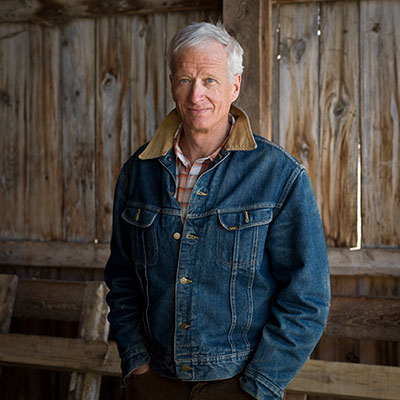
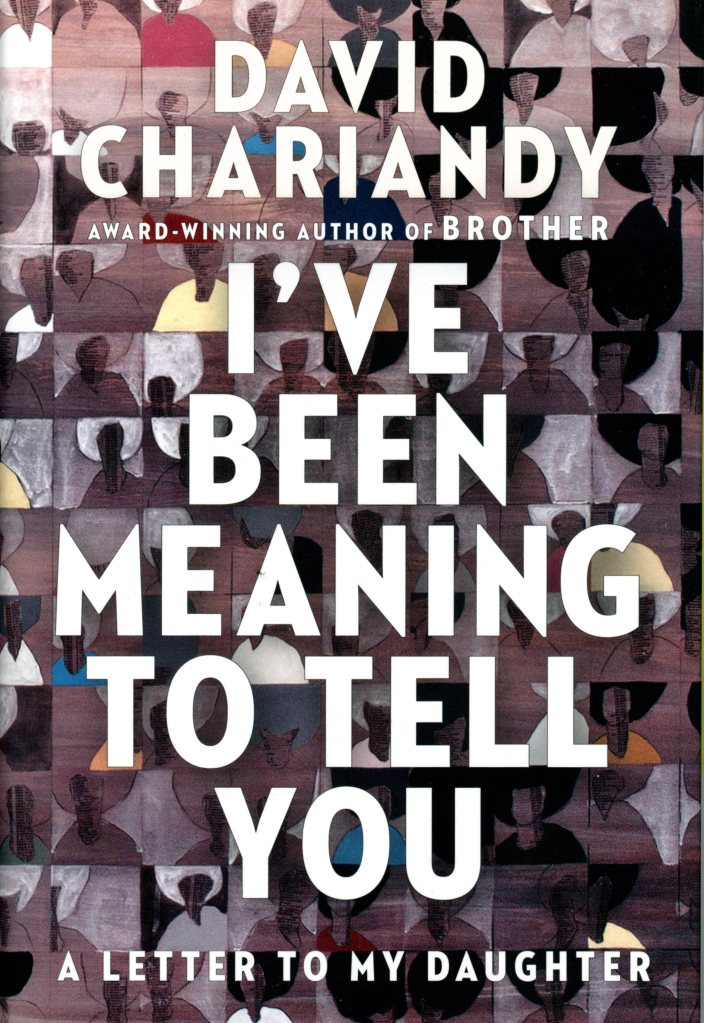
When you look for lists of books to read for Black History month, David Chariandy’s name appears regularly, typically with his earlier novel, Brother, which won the 2017 Writers Trust Fiction Prize. I’ve Been Meaning to Tell You was published very shortly afterwards and is oft mentioned as a necessary read. It became my first book for the month and its stated purpose established the message for the rest of my February indulgences.

Image result for david chariandy

The book is a letter to Chariandy’s daughter to talk about the history of his family, their mixed Black and South Asian background, and their slavery experience in Trinidad before arriving in Canada as migrants. Chariandy describes his childhood growing up in Scarborough to help his daughter understand her current world and as a plea for a more inclusive existence where “we will finally learn to read and respectfully discuss our differences”.

The small book is a quick 120 page read with thoughtful imagery and compassionate, parental insight. I was also intrigued with the jacket art by Sandra Brewster whose work forms part of Seneca College’s permanent art collection. “Untitled Smiths 2011” is part of a series in which artist Sandra Brewster mocks the notion of a monolithic Black community: “The surname Smith takes up the bigger section of a Western telephone directory. Its volume conjures up ideas of sameness and commonality and invisibility as there are so many.”

Arsenal Pulp Press. 2017

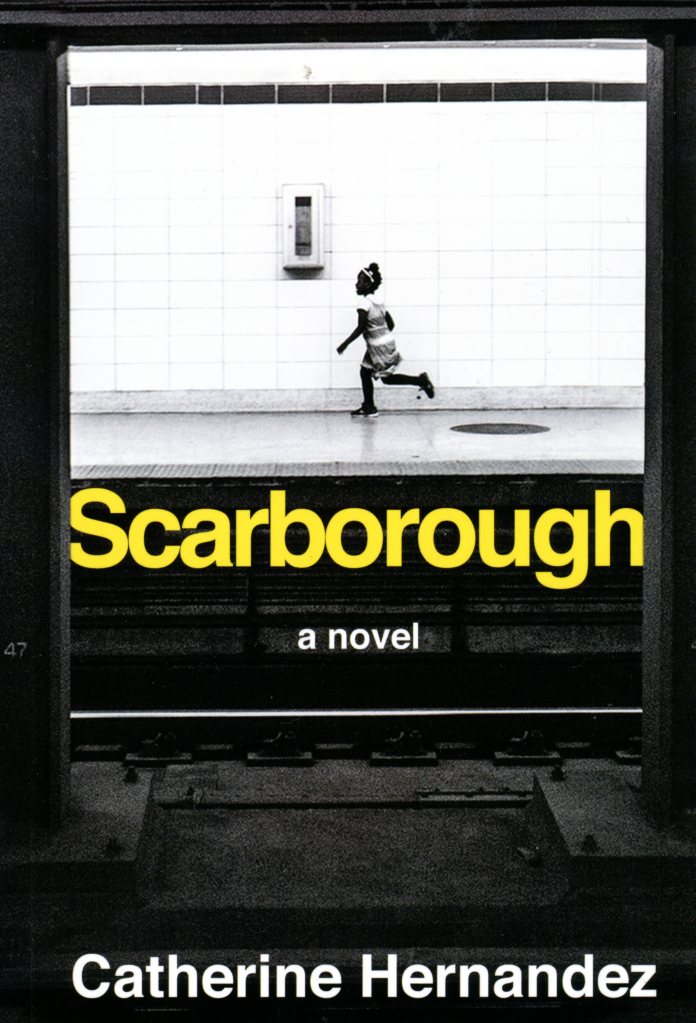
Catherine Hernandez’s debut novel, Scarborough, was shortlisted for the 2017 Toronto Book Awards. Self-described as a book about community, Hernandez takes us through the lives of children and adults living in precarious situations, revolving around a community education project. The chapters alternate between the diverse characters, taking us into their homes and thoughts, spanning one school year in the at-risk neighbourhood. The people of the book represent the gamut of visible minorities within the city.

Image result for catharine hernandez

I found parts of the 255 pages to be heavy handed at times in its description and characterization of some of the people in the stories. Cory, for example, is the white, racist father of Laura who was dumped by her maternal parent. In the first chapter, Cory talks about “chinks”, “pakis”, “towelheads” and “crazy bitches” in his interactions with the people he meets trying to attend to the needs of his daughter. Near the end of the chapter, his actions are described as “awakened by his purebred, white trash instincts”. I did not need that label to understand the point; his actions and words alone would have clearly painted the picture. Nevertheless, the book did help me to understand a world which I have only witnessed from the periphery. The hopeful outcomes for some of the characters raises the importance of community togetherness and sends a message for survival and success.

Routledge. 2002.

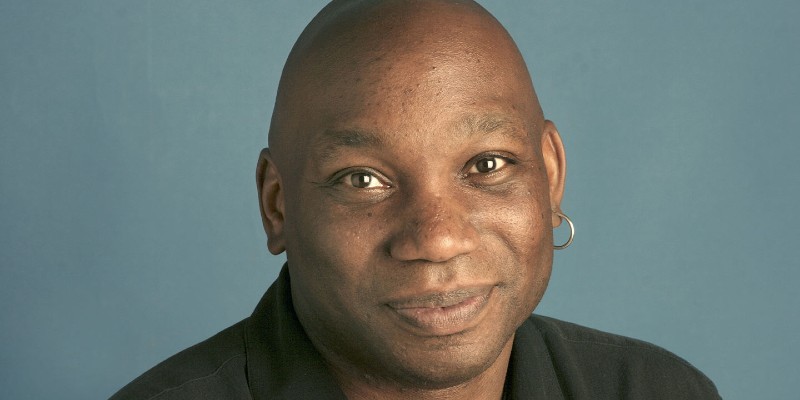
February is also the start of spring training, signaling the beginning of another baseball season for watching and for reading. Henry Aaron passed away in January which prompted me to look for his biography. Howard Bryant published a work about the previous home run king, so I ordered it online. In the meantime, I remembered another baseball book by the same author on my shelves and thought to read it until the new one arrived.

Image result for howard bryant

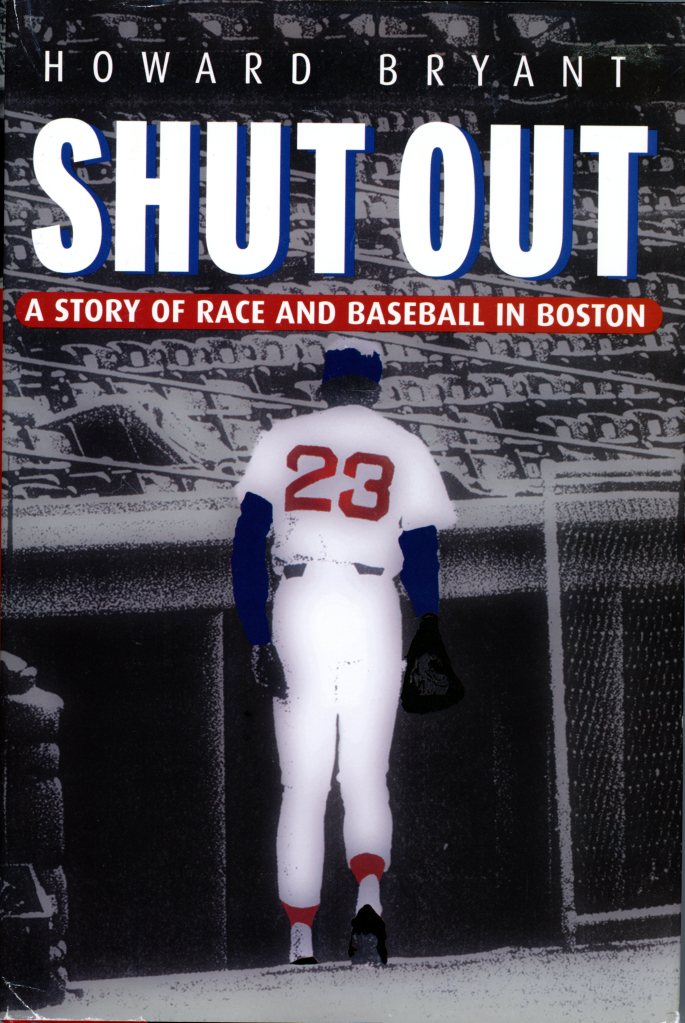
Shut Out: A Story of Race and Baseball in Boston lays to bare the long-standing, organizational culture of racism against the inclusion of black ball players on the major league roster of the Boston Red Sox. The book details the rejection of Jackie Robinson and Willie Mays as possible recruits resulting in the team being the last one in major league baseball to field a black player in 1959. Starting at the top with the owner Tom Yawkney, the team overtly and subtly kept out black ball players, described in great detail by Bryant, against the backdrop of a city reeking with racial issues.

My challenge with the book is the structure. I found myself rereading the same points in subsequent chapters as if for the first time. It seems to me a better editor would have asked for the text to be tightened up. The most egregious example occurred on page 128 in a discussion of the pitcher, Luis Tiant: “There are a million stories about what Luis Tiant meant to the Boston Red Sox…..of how he kept the Red Sox loose and was the backbone of those exciting, perilously flawed teams. Tiant also knew how to keep a clubhouse loose.”

I also kept asking myself for comparisons and statistics about other baseball teams. Bryant hammered home the point about the number of years Jim Rice and then Ellis Burks would be the only black position players on the squad (a careful distinction because there were black pitchers) yet we are not made aware of the make-up of other teams. Only when Ellis Burks signs with the White Sox does the reader finally learn about another clubhouse with a “black presence” which included leaders like “Frank Thomas, Tim Raines, Lance Johnson and Bo Jackson, as well as Latino players…”. Similarly Bryant repeated in each chapter the inability of the Boston Red Sox to sign black free agents, when suddenly, on page 231 (of 252) he mentions that two had signed in 1993. Given Bryant spent several pages describing how the BoSox could not sign Kirby Puckett, you would have thought he could provide more than a sentence on the acquisition of Andre Dawson and Billy Hatcher.

Despite some of my issues with the structure and style, Shut Out is a significant contribution to the public acknowledgement of the racist history of the Boston Red Sox and baseball, a necessary precursor, as Howard Bryant describes, to rectify the wrongs of the past and change the direction of the organization and the league. For this reason alone, the book merits a read for baseball fans and social historians.

Astoria. 2019.

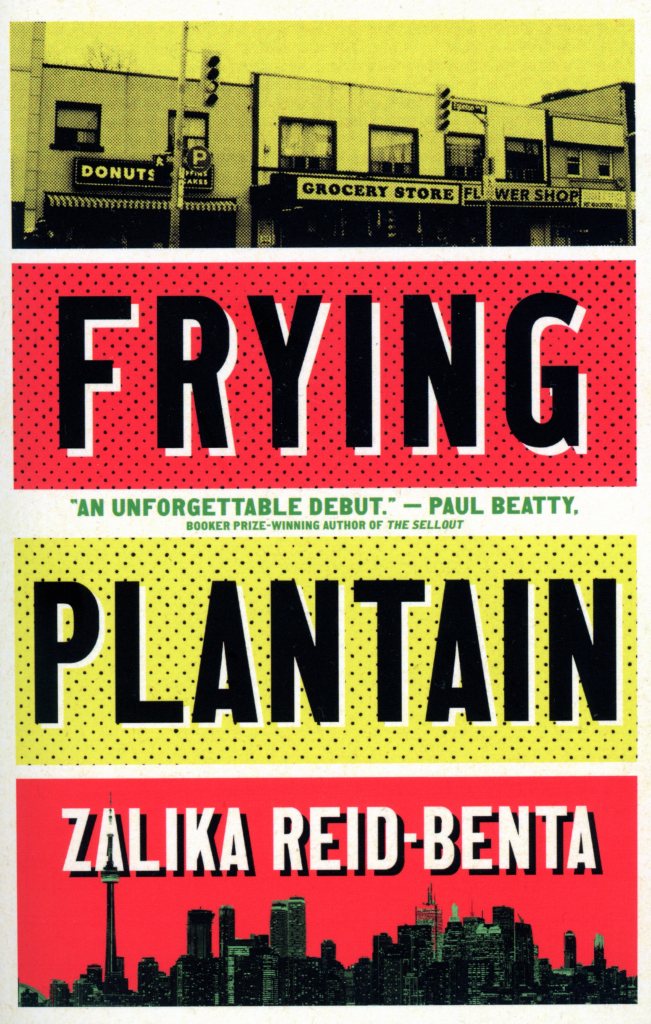
Frying Plantain is a collection of linked short stories, the debut work of Zalika Reid-Benta. It had been nominated for the 2020 Toronto Book Awards, the Trillium Awards and it was long listed for the 2019 Scotia Bank Giller Prize while winning a handful of less commonly known literary awards. No wonder the work made numerous lists for Black History Month. In an efficient 257 pages of unadorned, highly effective prose, the stories are told from the perspective of Karla growing up in Toronto’s little Jamaica, trying to navigate relationships with her mother, her grandparents, her friends and her neighbourhood.

Image result for zalika reid-benta frying plantain

The stories are relatable and a reader can easily imagine the situation or the conversations. The scenarios made me smile or nod my head and envision how they played out in some manner growing up. For example, there is a scene from middle school where a number of jaded students are brought to the gym to sit in a sharing circle for some group therapy led by two earnest counselors. A talking stick is introduced and is handed to the first student to talk about his biggest fears:

She gave him the stick and he immediately passed it to the person beside him, who handed it off to the girl next to her. Jason watched the Talking stick get transferred from student to student without pause. “Guys, remember, this is a safe space….” It was stupid of them to think that mattered, to think that something like that existed simply because they said it did.

Many of the incidents are specific to being a teenage girl and to living in the Jamaican community:

[Kara] hates the way [the dress] falls on her like it’s a sheet. Hates the way it accentuates her lack of breasts, lack of curves, lack of the voluptuous beauty that makes her aunts and cousins laugh behind their hands and say, Yuh sure you a Jamaican gyal?

Reid-Benata sprinkles the stories with pieces of information, single sentences to build the background, fill-in the story of Kara’s mother, Eloise. Each mention guides the reader to build the narrative in their own imagination. Flying Plantain allows the reader to feel the experience for themselves rather than be told by the author.

[Kara] opened the car door to leave but Eloise had grabbed her by the wrist, pulling her back into the passenger’s seat. “I just want you to imagine something,” she said. “I was your age when you were born.”

I very much enjoyed the book and would highly recommend it for others.

St. Patrick’s Day is March 17, so the books for next month will be by Irish-Canadian writers. As always, suggestions are welcome. Happy reading everyone.

I hope your honeymoon lasts forever

My parents were married to each other twice, in the same month of the same year.

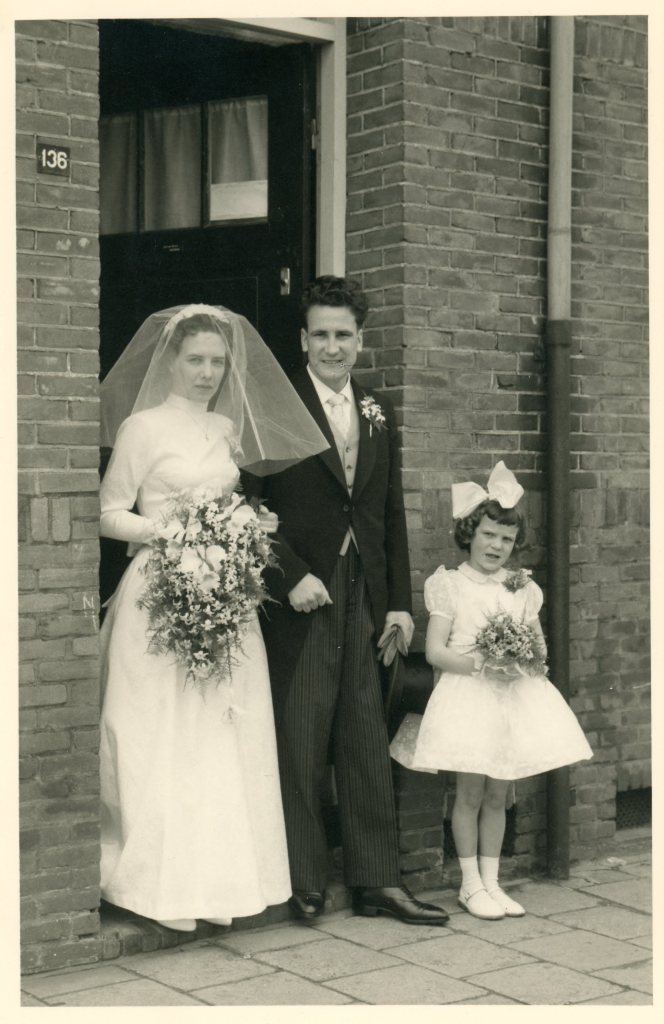
Dutch Catholic practice meant a couple would start their life together first with a civil wedding followed by a religious ceremony a short time later. Both days are captured in my parent’s photo collection, each revealing in comparison and in the details.

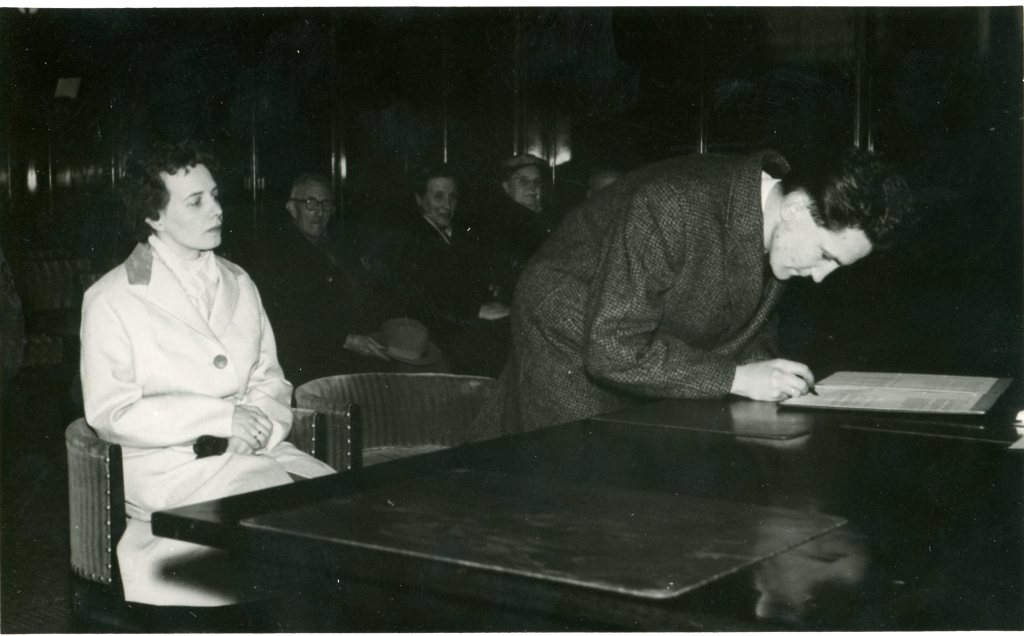
My father signing the registry at City Hall, the parents in the background.

The civil wedding took place on April 10, 1958 at the city hall in Tilburg. My parents would mention this occasion, bringing attention to the date each year, but never pretending to celebrate, just acknowledging its existence. They treated the day like the mere formality it appeared to be, a necessary step to ensure the legality of the marriage. Not even the bride and groom removed their winter coat indicating the brevity of the whole process.

The four photos in my parents collection documents the moment as if an official record. One shows an officer of the city, suitably dressed, standing behind a simple desk in a meeting room with rows of chairs, presiding over the pronouncement. There are two pictures, one each of Mom and Dad signing the document. And finally a fourth one of another civil servant handing a copy to the newly married couple. There are no smiles to be found. My Dad’s face is expressionless; my mother looks scared in two of them.

I recall seeing these pictures before but did not heed them any attention. Now, in the process of scanning, I noticed how the two sets of parents were in attendance; and in another photo, the two younger siblings from each side were seated, perhaps the designated witnesses. Given it was a Thursday, I expect the ceremony took place later in the afternoon enabling everyone to attend without losing a day of work. A careful examination also reveals a ring on the right hand of both my Mom and Dad. Whether the ring was placed there during the ceremony or they came to the service wearing them already is unclear. My mother never had an engagement ring so the wearing of the rings on the right hand may have been the sign of commitment.

The day always struck me as a curious process: Was the event celebrated in some manner? Did everyone go to my father’s home for coffee afterwards? At the end of the evening, did my parents go their separate ways or did they begin to cohabitate?

The second wedding took place in Kaatsheuval at St. Josef Kerk on Wednesday, April 30, 1958, the day my parents celebrate as their anniversary, the one forged in memory. The invitation announced two simultaneous events: the celebration of my maternal grandparents 40th wedding anniversary and the marriage between Piet de Cock and Riet van Rooij. My parents would be married by my Uncle Herman, one of Mom’s older ordained brothers, at 9:30 am followed by a mass which also commemorated the anniversary. All were invited to a reception from 1:30 to 2:30 across the street from the van Rooij home at a local bar/eatery.

One of the official photographs outside my Mom’s home in Kaatsheuvel.

The day also coincided with Queen Beatrix’s birthday, a national holiday. Coupled with the poverty of the van Rooij family, I expect it made sense to combine the two celebrations into one on a day when people could attend without missing any work time and the family saved the cost of two separate events.

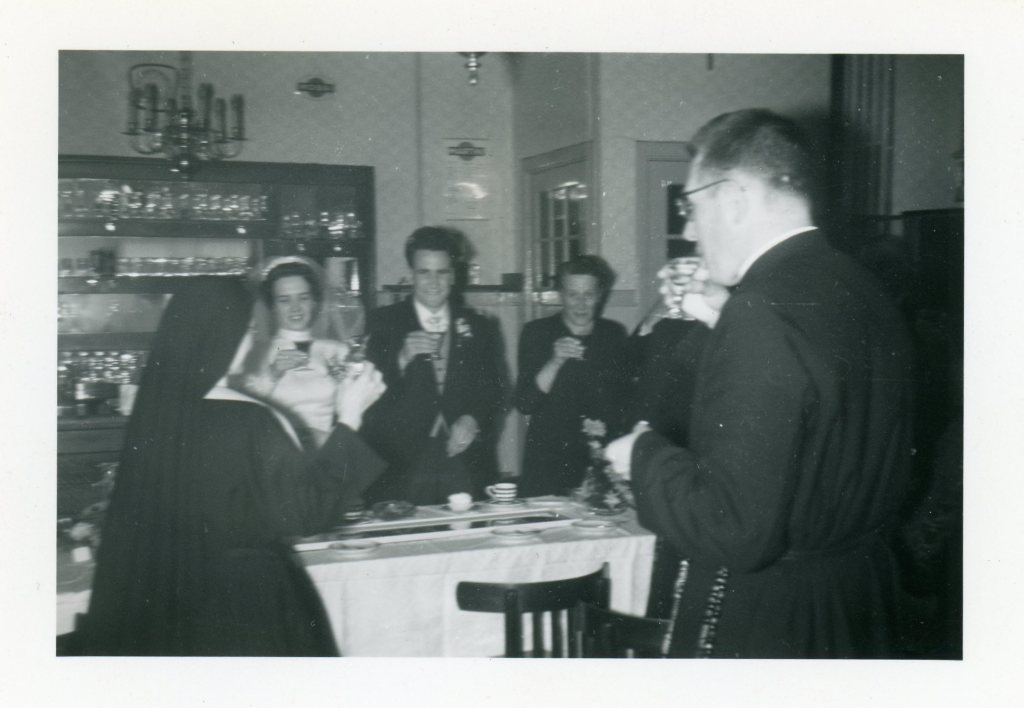
Nevertheless, it was the big day, the one to remember. A professional photographer was hired as numerous staged shots are part of the picture collection. The rings from the civil ceremony are not evident until you see them on each of their left hands by the end of the ceremony. The handful of amateur pictures at the reception reflect some celebration and toasting of the new couple, a marked contrast to the earlier proceedings. Only years later did my Mom talk about some of the stresses of the day, particularly an ongoing friction with her mother.

A raising of glasses to the newly married couple at the afternoon reception.

As I sort through the pictures, the day also raises numerous questions. For example, the invitation lists the address of my Dad, not at the home of his parents, but rather at another place, on the same street, in what appears to be an apartment above a business. Was he living in his own place at the time? Is that where my parents retreated after the reception and began living? Did they go to work the next day or were they in the midst of preparing for their next move?

I expect when our kids look back at our wedding photos, questions will arise for which they can only speculate. There are always stories behind the pictures which unless unveiled in some manner will remain a secret or a mystery. I am reminded of a passage from The Saturday Night Ghost Club by Craig Davidson:

Reality never changes. Only our recollections of it do. Whenever a moment passes, we pass along with it into the realm of memory. And in that realm, geometries change. Contours shift, shades lighten, objectivities dissolve.

Memory becomes what we need it to be.

What we do know about my parents is that less than a month later, the newlyweds boarded a plane headed for Canada.

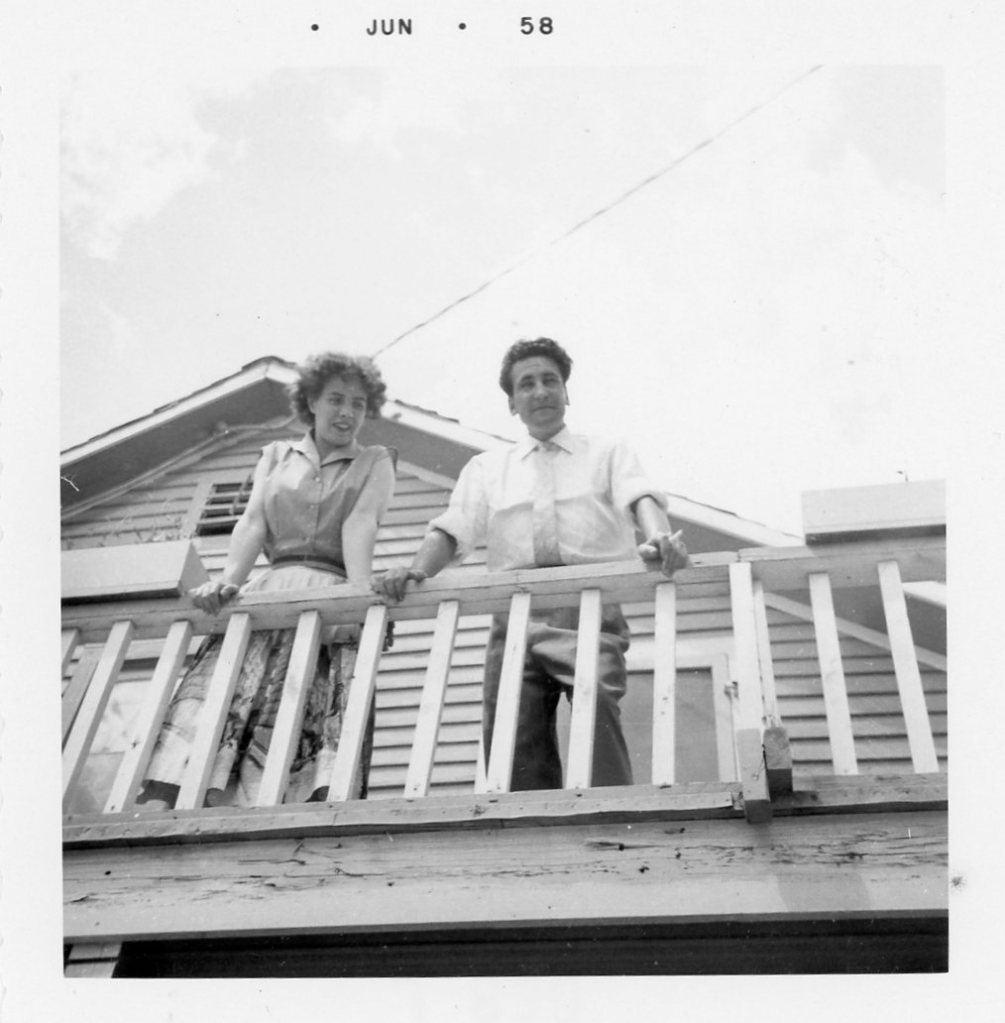
Their flight landed in Montreal, May 28. They passed through customs after midnight before joining a train headed for Woodstock to meet a “girlfriend” who would ferry them to the small town of Belmont. Their time there was short as was the relationship with this woman given there is no evidence of her after that summer. My parents eventually ended up in London, Ontario.

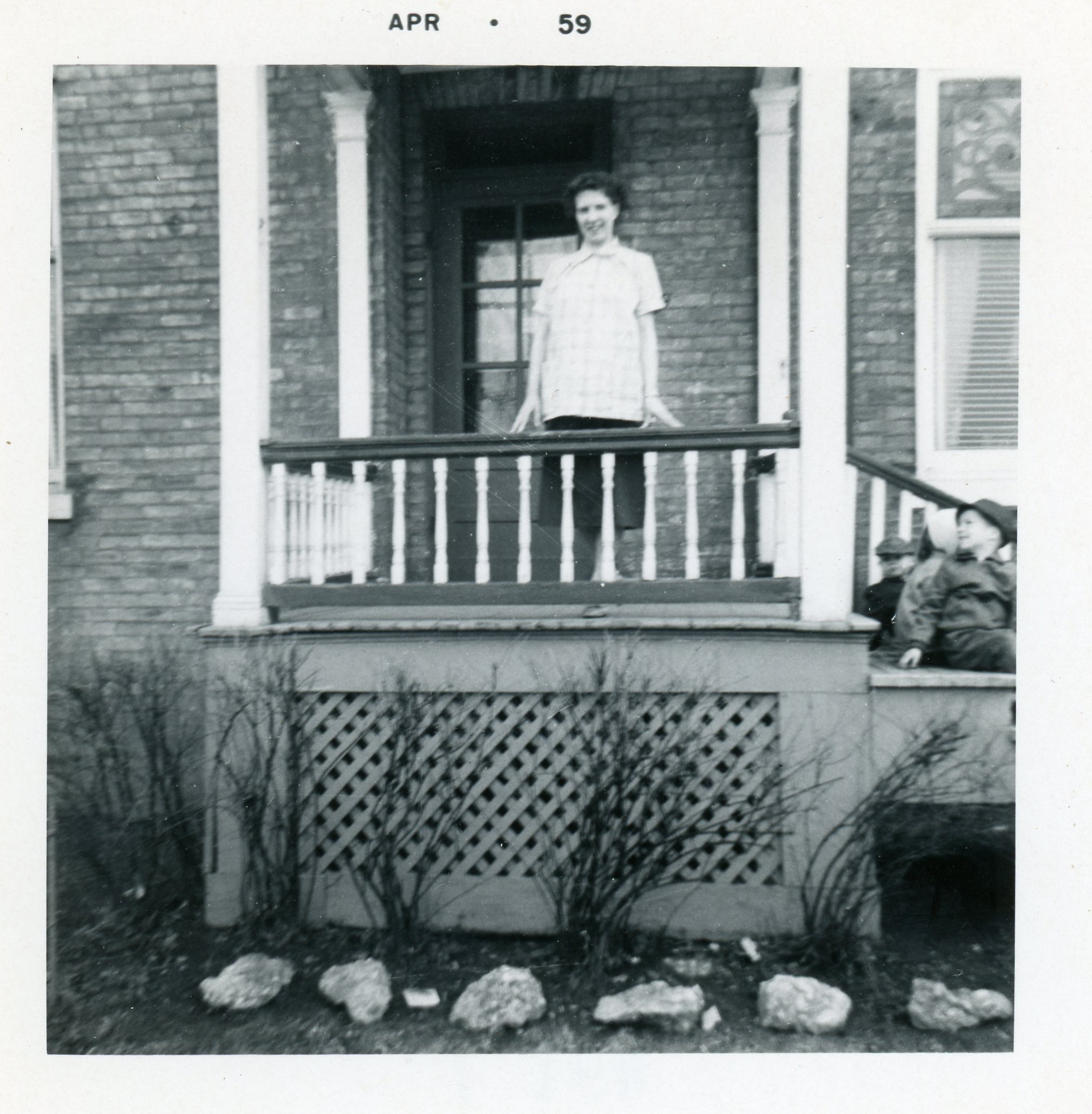
My parents pictured on second floor balcony of a duplex in Belmont, Ontario very shortly after their arrival.

They arrived as landed immigrants, acquired permanent resident status and attended English classes at Clarke Road Secondary School in order to help meet the test for passable English proficiency. Eight years later, with four boys in tow, having moved four times from one rental place to another before finally buying their home on Kostis Avenue, my parents became Canadian citizens on Thursday, May 19, 1966. There are no pictures to mark the day but they walked away with their papers and a congratulatory parchment from the Imperial Order Daughters of the Empire.

The most memorable story which my mother fondly repeated, however, was about the ceremony itself. At the beginning, the judge asked each of the candidates their reason for choosing Canada. Mom responded by saying they came here for their honeymoon and never left. After the swearing in, the judge handed each person their certificate. When he got to my parents, he presented the bible as a gift and welcomed them to the country with the unforgettable greeting,

“I hope your honeymoon lasts forever”.

Memoirs of a different time

Today I am beginning a new series writing about the books I have completed. At the end of each month I will provide a very brief description of the content and convey my impressions of the work. I do not intend these blogs to be book reviews; rather I hope they generate interest, or not, in something you had not considered or had your eyes on since the book was released.

I am a collector of first printing Canadian literature, a number of which are signed by the author. I own an extensive collection but have read only about a third. I continue to purchase, new and used, making them my first choice when I am looking for something new to indulge my reading pleasure. I have my favourite authors (Miriam Toews, Helen Humphries, Craig Davidson, Michael Redhill/Inger Ashe Wolfe) from whom I immediately purchase and consume everything they have published. Simultaneously, I am building a selection of baseball books which have become my preferred non-fiction genre for summer enjoyment. None of the first three books of 2021 match any of these criteria, making January an unusual reading month for me.

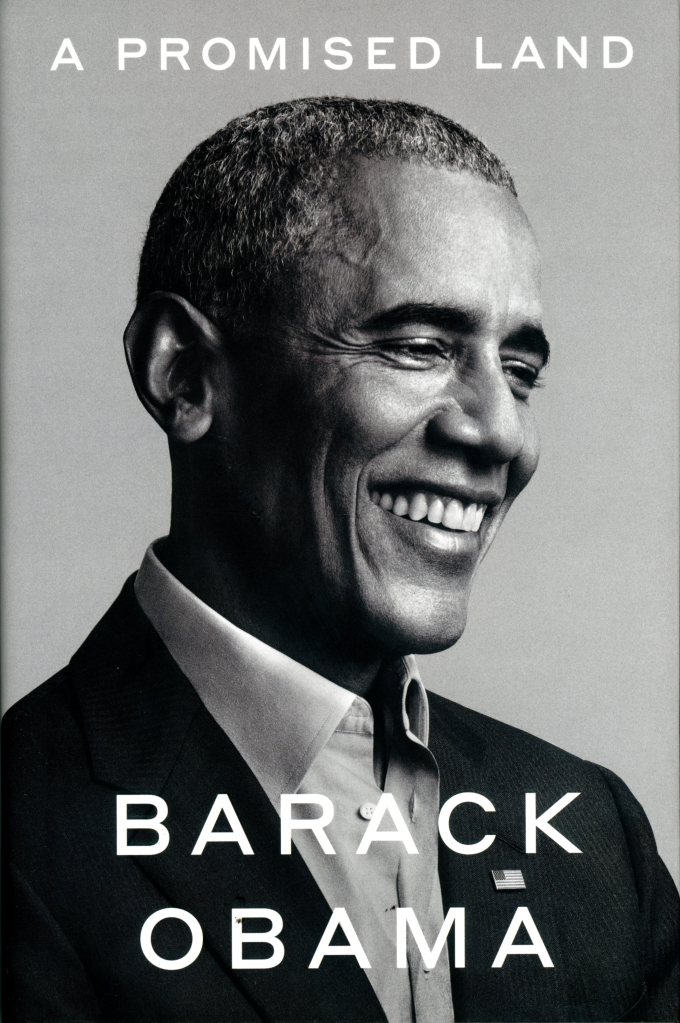
I received A Promised Land as a Christmas gift from Olga. In our home, regardless of whatever else is purchased, everyone receives a book. This 700 page tome is intimidating at the first flip through the pages. The print is small, the paragraphs long, and the dialogue minimal. I expected it would take me weeks to complete (being a slow reader), anticipating I would put it aside and peruse something else in between sections for a break. Once I started, however, I could not put the book down grabbing it at every spare moment of the day. The book is so well written, it’s length was a non-issue forgotten in the magnificent prose. He utilized “impact” properly as a noun and only once included a derivation (impactful…one of my literary pet peeves). Obama used the word “torpor”. West Wing fans will recall a debate about including it in a speech, those against arguing people would not understand its meaning. Jed Bartlett settled the decision declaring, “they can look it up”.

Indeed, reading this book was akin to watching West Wing which seemed to have played out years earlier many of the scenarios depicted in Obama’s biography during his time in the White House. The memoir starts with the idealism of fresh players in Washington becoming frustrated when much of their legislative intentions are compromised in order to make only incremental change. Obama provides considerable context to each situation, explaining arguments of competing sides, before delving into the actions and ending each chapter with honest, personal reflections. It is both a reminder and a primer of the major events in America during his first four years in office. I am anxiously looking forward to volume 2 (yes, this is the planned first of two).

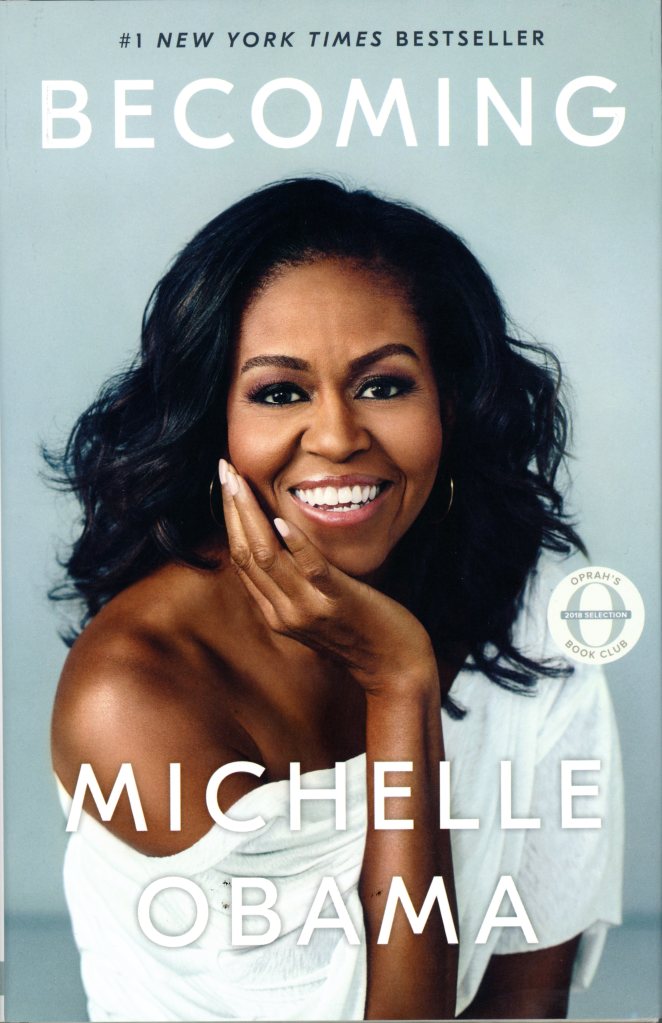
Having enjoyed A Promised Land, I was curious about Michelle Obama’s memoir, Becoming, published a few years earlier. It became an instant bestseller breaking all first week records for sales, only to be surpassed by Barack Obama’s own. Olga and I read the entire 421 pages out loud to each other in the span of a couple weeks.

The book is much more personal, detailing the thoughts and emotions and development of Michelle from her very early days growing up on the southside of Chicago, through her brief stint as a corporate lawyer, to her marriage and eventual First Lady of the United States. We got an insight into the life of a woman of colour striving to find her true calling in a country where the positions of power and influence are dominated by white males. Her analysis of the politics of Washington and the foreshadowing of recent events are prescient.

Becoming is also a complement to A Promised Land because Michelle reveals considerable detail into the personality of Barack himself. Combined, the two books are a compelling read into America’s first Black president. The book stands on it’s own as well. Olga and I would highly recommend it, suggesting couples might consider reading it out loud to each other.

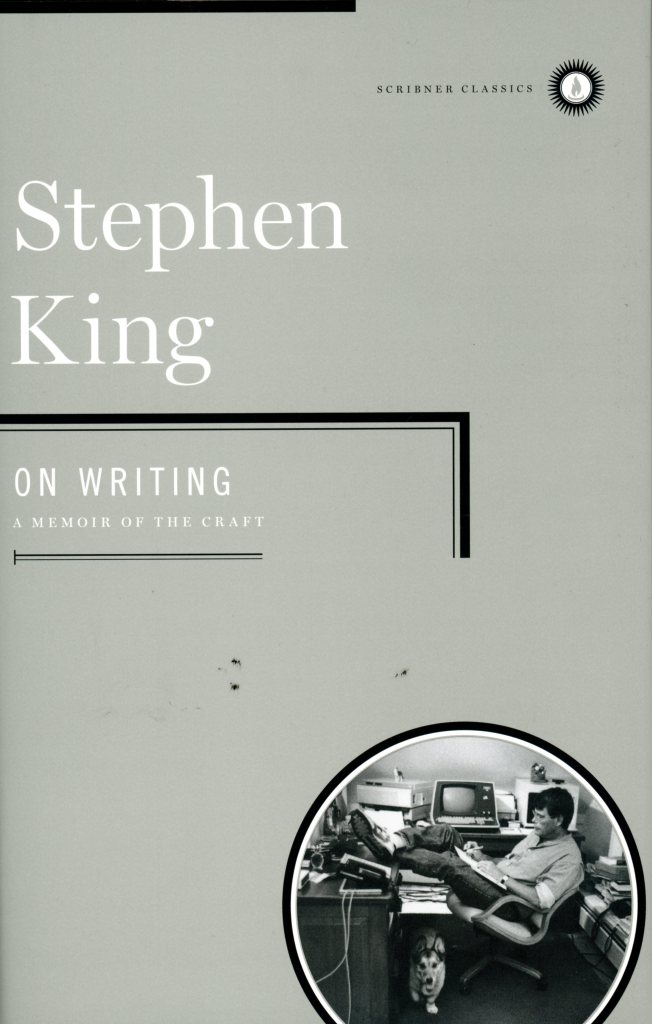
The final book for January was also a Christmas present, this one from Olena and Daniel. Olena has found various ways to support my aspirations to write more, including a notebook and a previous book on writing workshops. I started Stephen King’s, On Writing, after completing Obama’s memoir and as my evening entertainment when Olga and I retreated to our solo readings before bed.

King has some helpful advice on writing even if I question his dislike of descriptive prose and disdain for the use of unfamiliar vocabulary. His contempt for adverbs spans several pages in the section on the Toolbox, and we are constantly reminded of his opinion afterwards. The point is valid and the example of an edited first draft helps an aspiring writer look more critically at his/her work. Advice on second readers, the timing for revision and how to become published all have merits worth considering.

I did not enjoy the writing at all. The tone and the language resembled that of a nineteen year old who thinks vulgarity and macho imagery are appropriate descriptors. A number of his metaphors do not stand up well today. If he decides to publish a fourth edition, the editors would be advised to slash a number of those incriminating sections. I had not read a Stephen King novel before and this book did not entice me to seek them out.

In February I will be exploring new books to celebrate Black History month. I welcome any suggestions. Till then, happy reading.

For those who paint the rocks

When 2020 started, I made a commitment to walk an average of 10,000 steps per day.

I deliberately used the word average knowing there would be numerous days when I would not meet that target but would compensate on other occasions with a larger number of steps. My goal was publicly announced in front of a room full of professors at a new faculty orientation in the first week of January back when I was gainfully employed and everyone was going into work, in person. Remember those days?

While working, I was able to manage four to six thousand steps in a day through regular activity up and down the stairs at home, walking in from the parking lot to my office, attending meetings at multiple locations on the campus or visiting a colleague’s department. The remaining steps could easily be attained with a short walk around the neighbourhood after dinner. I found creative ways to hit the target even on days when sitting was the default position, such as walking loops around the airport waiting to board the plane or following a continuous path through the living room and kitchen in the house on stormy evenings, reversing the direction to get a different view.

The COVID shutdown meant work was completed exclusively in front of a computer screen for every interaction. Attending meetings was the click of a button and the only exercise was a trip to the bathroom to expel the increased number of coffees consumed or to pop downstairs for some lunch. Reaching my step target would mean, therefore, more deliberate attention to time and distance. I would eye the day’s calendar, determine where there would be a half hour window where I could walk the block with the knowledge the route would be about 20 minutes and accumulate 2,000 steps. I began to think only in step counts: back and forth to the drug store was 2,700 steps; the street circling the community was 5,200, a jaunt to the grocery store was 6,200. When I retired from work at the end of June the challenge was to discover longer walks for a change in scenery and to avoid a Groundhog Day scenario each time I ventured out the door.

One of the preferred paths took me through the local park, around the small ski hill, and back home along a paved trail beside the creek where I strolled past a fledgling display of encouragement assembling at the base of a tree.

May 5

The effort appeared very quaint. The square sign summed up the effort best: “Sharing joy through painted rocks. See a rock, paint a rock & bring a rock. Join our rock garden use our hashtag, #EtobicokeRocks”. I thought the idea to be sweet, a creative effort to keep people optimistic as we endured the restrictions of COVID. Walking was one of the only safe methods to maintain some exercise and this display provided encouragement, an appeal to all who pass to share in support of each other. The effort made me smile.

The idea appeared to catch on. Some garbage around the tree was cleaned up, more painted rocks were added, people were paying attention. Some smart aleck deposited an empty beer can amongst the rocks. It was gone a few days later as the more thoughtful additions were piling up.

August 5

The rock garden had grown with colourful and clever additions. The messages were for hope and happiness and fun, in an assortment of shapes (the square rubics cube) and sizes, some from children and a number from adults. The greenery of the tree contributed to an aesthetic of enjoyment for all passersby. I couldn’t help but stop to pause and scour the ground for new additions, read the words of wisdom, reflect on the message, and contemplate on what my contribution would be.

As the fall rolled around the number of COVID infections increased again, restrictions came back, and the fatigue of a prolonged pandemic settled into the psyche. The end appeared further away and new painted rocks were scarce. At the end of November we received our first snowfall, covering the collective effort to spread cheer and joy. Renewed lockdowns only added to the darker and gloomier days leading into the new year.

November 24

But rocks don’t melt. They are undaunted by foul weather. They remain firm and steadfast. The messages of joy and hope displayed in this grassroots monument to collective healing, however battered, persist to form the foundation for a spring, to help us endure and knowing all this too shall pass. It is the continued acts of kindness and consideration and every effort, small or large, to find ways to smile or laugh which keep our eyes on the horizon for the day when we will all get back together, again.

I completed my goal despite challenges in December to end the year with an average daily step count of 11,687. To answer the skeptics call of “pics or it didn’t happen”, I am including a screen shot from December 31st of the Pacer app on my phone which documented every leg movement in 2020. My new challenge will be to replace the time I spent walking with other forms of exercise. The discipline necessary to achieve this objective will prove more difficult than finding the time for walking but I will remember and recall the messages of the painted rocks with their words of encouragement and hope to overcome and “bee happy”.

So for those who work in our hospitals and in our nursing homes, for those who abide by the protocols, for those who still greet you with a smile and a good morning as you pass them six feet apart, for those who share stories across driveways or balconies or computers, for those who paint the rocks, we salute you.