The recent passing away of Alice Munro and the subsequent scandal reminded me of a story.
I was Chair of General Education, a department responsible for teaching English and Liberal Studies to students in all programs. The diploma requirements for graduation included completion of at least one literature course, a bone of contention for many, and the subject of numerous complaints.
On this particular occasion, a couple sat in my office to lodge a grievance against the professor teaching Canadian literature. They showed me a short story that depicted a sexual encounter. I read it, thinking to myself the passage contained vivid descriptions, not graphic, well written. Then, I turned to the beginning of the story to discover the author was the famous Alice Munro.
I attempted to explain how she was a well renowned author, not just here but around the world. (She had not yet won the Nobel Prize for literature.) They didn’t know and didn’t care. They wanted some action taken to stop the purposeful spread of perversion. The professor was eventually exonerated.
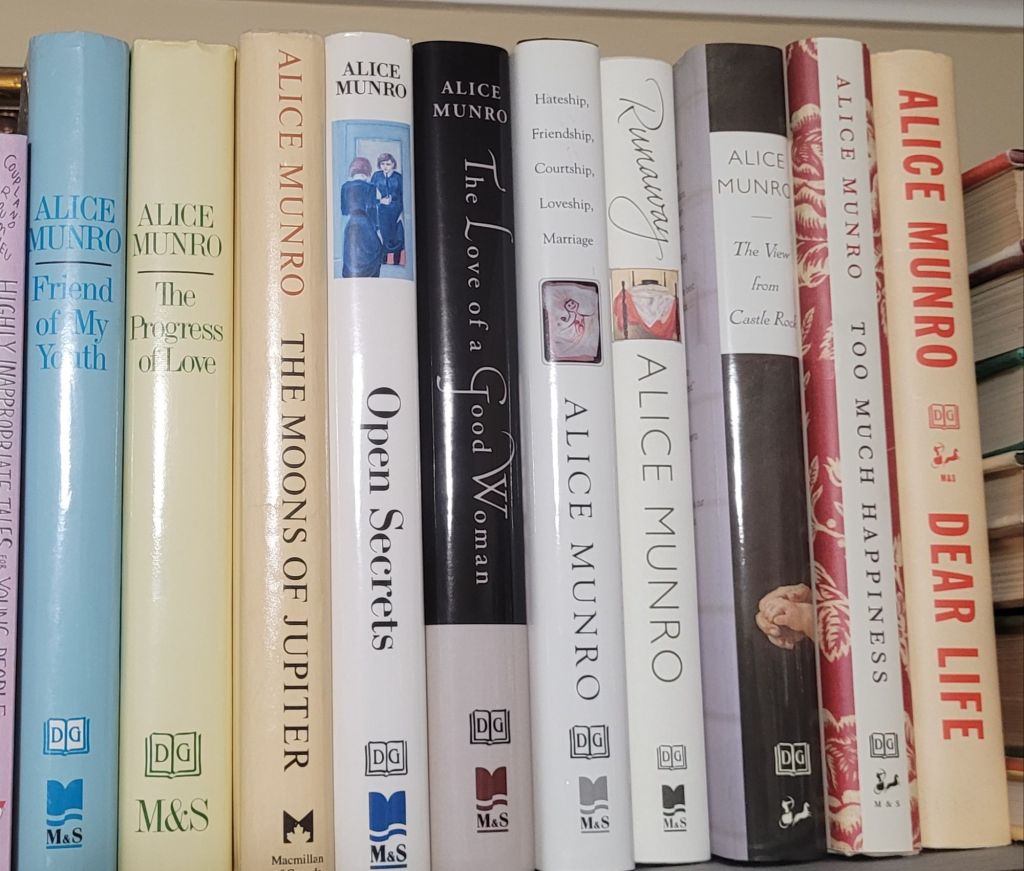
True confession: I have never read a complete book of Alice Munro despite owning ten first printings of her short story collections. It is not my favorite genre and besides, I have 1,265 other books, primarily novels, on my shelves, of which I have completed half. Maybe.
I have always been an avid reader of all genres. As a young teenager I was plowing through movie books – Jaws, The Toweing Inferno, The Omen; biographies of hockey players and hockey stories – Derek Sanderson, Bobby Orr, Hockey Showdown: The Canada-Russia Series ; true crime stories like Helter Skelter and selected political biographies such as The Northen Magus. In later years I began gravitating to literature, paperback classics I could pick up cheap at the second hand bookstore.
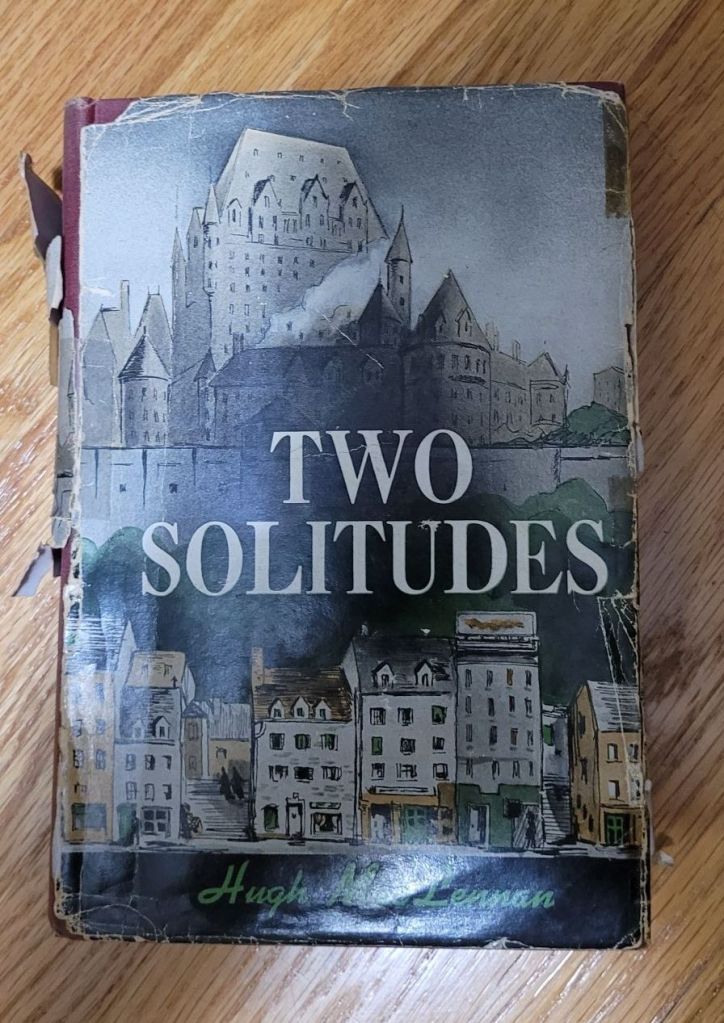
My foray into Canadian literature began with a used hard copy of Hugh MacLennan’s Two Solitudes, a primer of English-French relations in Canada. I kept searching for his other works, discovered The Watch that Ends the Night from my high-school English course, and eventually acquired every one published by the Governor General Award winning author. I did read them all.
Robertson Davies was next, although his early works were difficult to find and expensive. Margaret Atwood, of course, and Douglas Copeland and Alice Munro. The turning point to my near obsession happened in 1994 with the first awarding of the now annual Giller Prize. It became the largest monetary prize for Canadian literature, catapulting the winner to the top of the sales chart and rendering books as sexy. The Book of Secrets by M.G. Vassanjii was the inaugural winner. I managed to acquire only a second printing but the purchase was the beginning of a need to obtain the Giller winner each year and all the other nominated works.
I was aided in my “hobby” of buying books by two colleagues and friends, Mark and David, who consumed even more. They did not limit themselves to only Canadian, broadening to highly reviewed American and British writing. The discussion sometimes amounted to a series of one upmanships – “I have the first printing of Michael Ondaatje’s The English Patient.” “Yea, well, I have a signed copy.” “But do you have a signed British version where it was first released.” We also shared our love of reading, exchanging our discovery of new authors.
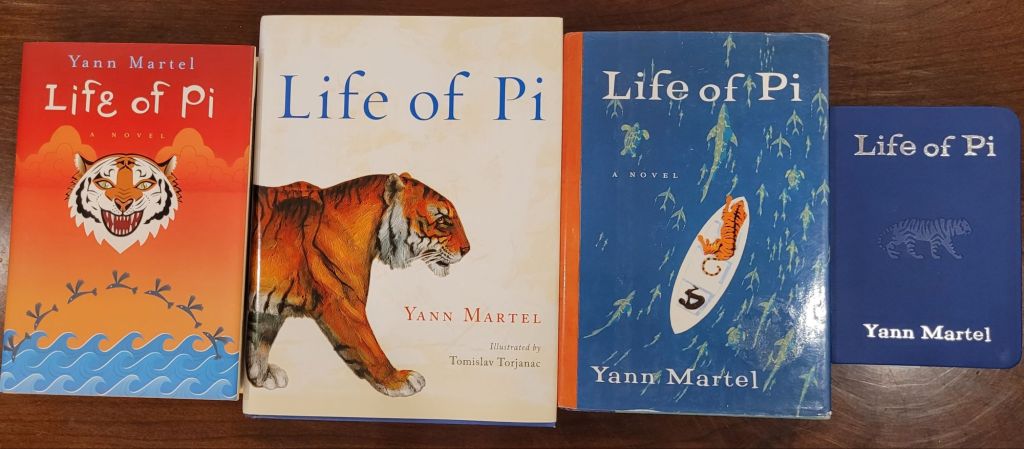
My jewel in the crown is a signed, first Canadian printing of Yann Martel’s Life of Pi, winner of the Man Booker Prize in 2002, turned into a movie in 2012 winning four Academy awards, translated into over 50 languages. I pulled it off the bookstore shelf, by chance, thinking to myself that I seemed to have read a review, didn’t recognize the author, but since it was signed, I should purchase it. Now I have the signed, illustrated Canadian and American edition and the American first printing. It is probably the single most valuable book on my shelves, should I ever decide to sell my collection.
Did you know Lawrence Hill’s Book of Negroes was published in the U.S. as Someone Knows My Name ? Yes, I scoured American airport bookstores during my work travels. I have found the first U.S. printings of Miriam Toews’ All My Puny Sorrows and Alex Ohlin’s Dual Citizens. I have done the same in Dutch bookstores and was excited to stumble upon De Gebroeders Sisters by Patrick De Witt.

Okay, if you are still reading, I can imagine your eyes rolling back, thinking Henry has a problem. He can’t read Dutch. This “hobby” had become an obsession. Where does he keep all these books? Olga would ask the same question, even stating we need a new house every time I returned home with yet another. It is cheaper to buy another shelf and leave money left over for more books.
Compounding my addiction, I taught Nicholas and Olena how to identify a first printing. The book may be a first edition, but still be a second or third or heavens forbid a double-digit printing. They wanted to buy books for me as gifts. The first step, I strongly suggested, was to peruse the bookcase before considering. There was a good chance it was already in the collection. In the month before Christmas, I was not allowed to buy any books. In the meantime, I pulled out the pages of the Globe with its top 100 books for the year, circling the ones that were not yet on my shelves.
Signed copies of the first printings are the most treasured. I would attend book launches so I could purchase one directly from the author. If a favorite author was reading at a book festival, I would bring copies of every title I owned for a signature. In the case of Helen Humphreys, I mailed a box of her books to an art store owner in Kingston, an apparent friend, so he claimed, promising to send them back….and he did!
Don’t think I am simply name dropping big time authors and their famous novels. There are plenty lesser known works – Douglas Ord’s Tommy’s Farm, Richard Scarsbrook’s Cheesburger Subversive, Margaret Sweatman’s The Players – bought because they could be popular some day. Maybe. Hopefully.
I have slowed down since retirement, deciding to focus on my favorite authors, understanding the limitations of this hobby, obsession, addiction. I have begun reaching back into the early years, cracking open previously unread novels. My interests now include memoirs, hoping to improve on my own craft, learning the art of writing, aiming to publish my own some day.
I have come to realize, in retrospect, how much of the world I have discovered and the people I have met, past and present and future. I have survived the slums of India, endured the Chinese cultural revolution, sailed the Drake passage, washed ashore on a Greek island, suffered the indignities of a reserve, scrounged for work during the depression, and marauded through an apocalyptic America. I have lived the life of a soldier, a mother, an artist, a boxer, a Mennonite, a miner, a cowboy, a refugee, a slave, and a priest.
“A literary work is thus a living and ever-fruitful text, always capable of speaking in different ways and producing an original synthesis on the part of each of its readers. In our reading, we are enriched by what we receive from the author and this allows us in turn to grow inwardly, so that each new work we read will renew and expand our worldview.”
LETTER OF HIS HOLINESS POPE FRANCISON THE ROLE OF LITERATURE IN FORMATION
I used to be embarrassed to talk about the number of works in my collection. Not anymore. I view my books as a window into the lives of others, a reflection of my own, a gift to be shared.
Let me know if you are interested in a recommendation or wish to borrow one.
 Wonderings
I have a few books signed by their respective authors, but living ‘out in the sticks’ as I do, I simply enjoy collecting books (both fiction and non-fiction) that interest me – as does my husband. Our home is filled with books and yet we keep on bringing home more. I have learned so much about other countries, different societies and cultures, wars, feuds, climatic changes and threats, the environment and so on from reading that I am unlikely to stop. Right now, my reading has me in France shortly after the First World War!
LikeLike
Thank you Anne. I know from your posts how much you enjoy the world of books.
LikeLiked by 1 person
I recall attending a conference in Palm Springs FLA and heading to the local Barnes and Noble to pick up a book to read on the flight home. The Book of Negroes had just come out and I couldn’t find it anywhere in this huge bookstore. I headed over to the customer service desk and asked the woman where I might find this book. She looked me squarely in the eyes, leaned over the desk, shook her index finger at me and said ‘We don’t appreciate that kind of language in here’.
I tried to explain the book was written by a well known and respected Canadian author and this truly was the title. She shooed me away and said I needed to go somewhere else for books ‘like that’.
By then, there was a small crowd around the customer service desk with other people tut tutting under their breath and giving me the stink eye.
My face went beet red and I couldn’t get out of the store fast enough. I certainly did not mean to offend anyone.
I had to wait until I returned home to pick up the book which was proudly displayed at the entrance of my local Chapters.
I was able to buy a first edition, but it’s the story about trying to buy the book that I remember most.
LikeLike
😊 Thank you. I love that story.
LikeLike
I have 5 different versions of Fahrenheit 451, including a French language version I found in a second hand book sale in France. It’s one of my favourite books and there’s something so fun to me about owning 5 copies of a book about burning books.
LikeLike